English

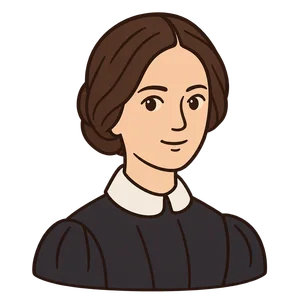
Charlotte Brontë
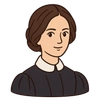
Charlotte Brontë was an English novelist and poet during the Victorian era.
Reads at Grades 6–8 Listens at Grades 4–8
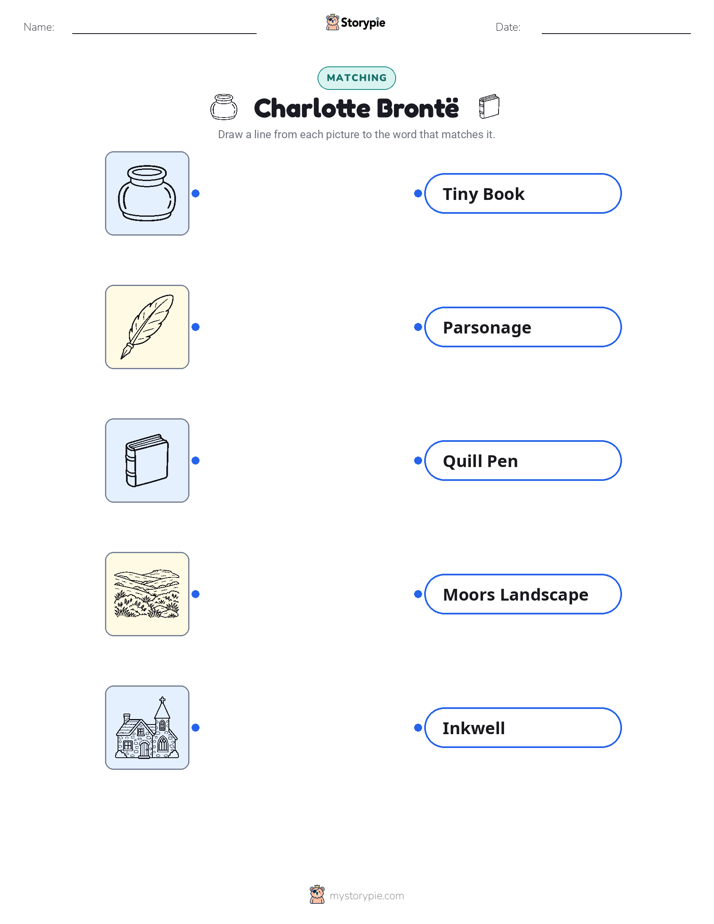
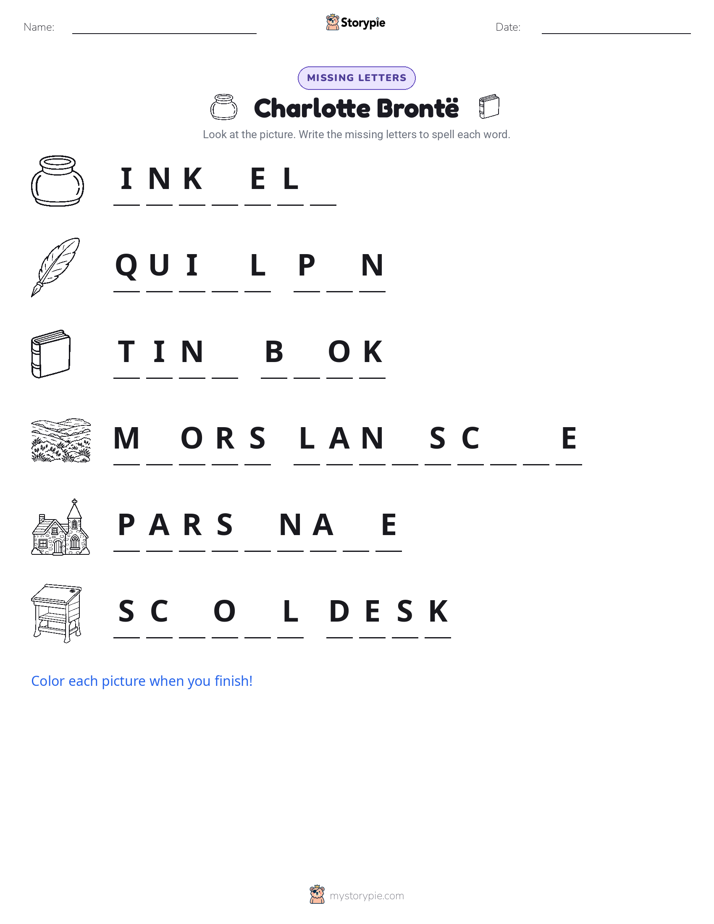
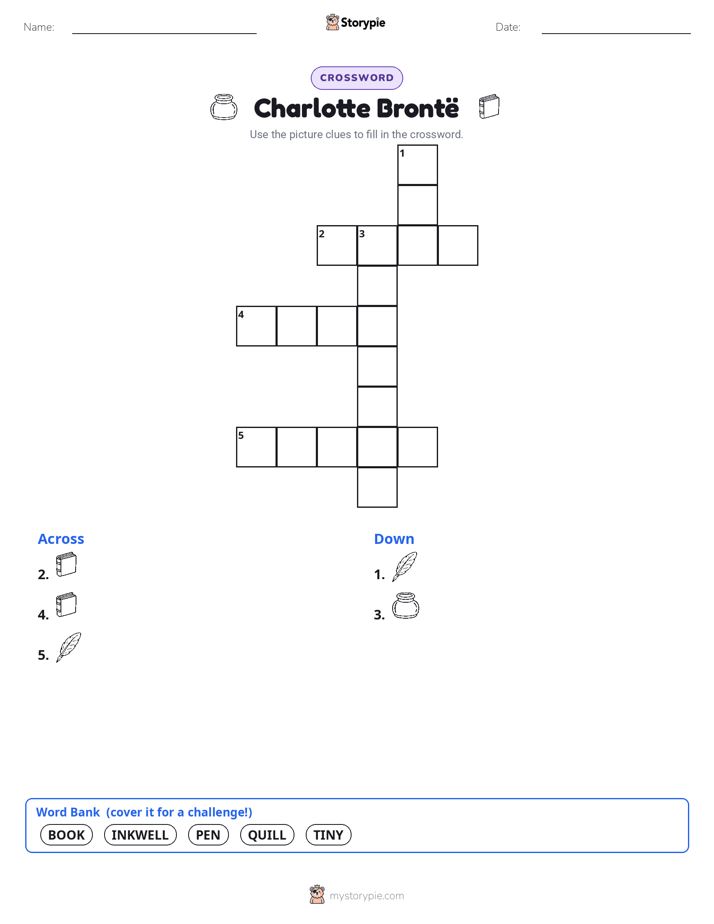
Print & create
Answer keys·No prep·Free with an account
28 worksheets · answer keys · full story · quiz · Ages 10-12 · CEFR B2
Plus adds 290,000+ more stories in 27 languages, audio for every one, and printables for all of them.
Just want Charlotte Brontë?
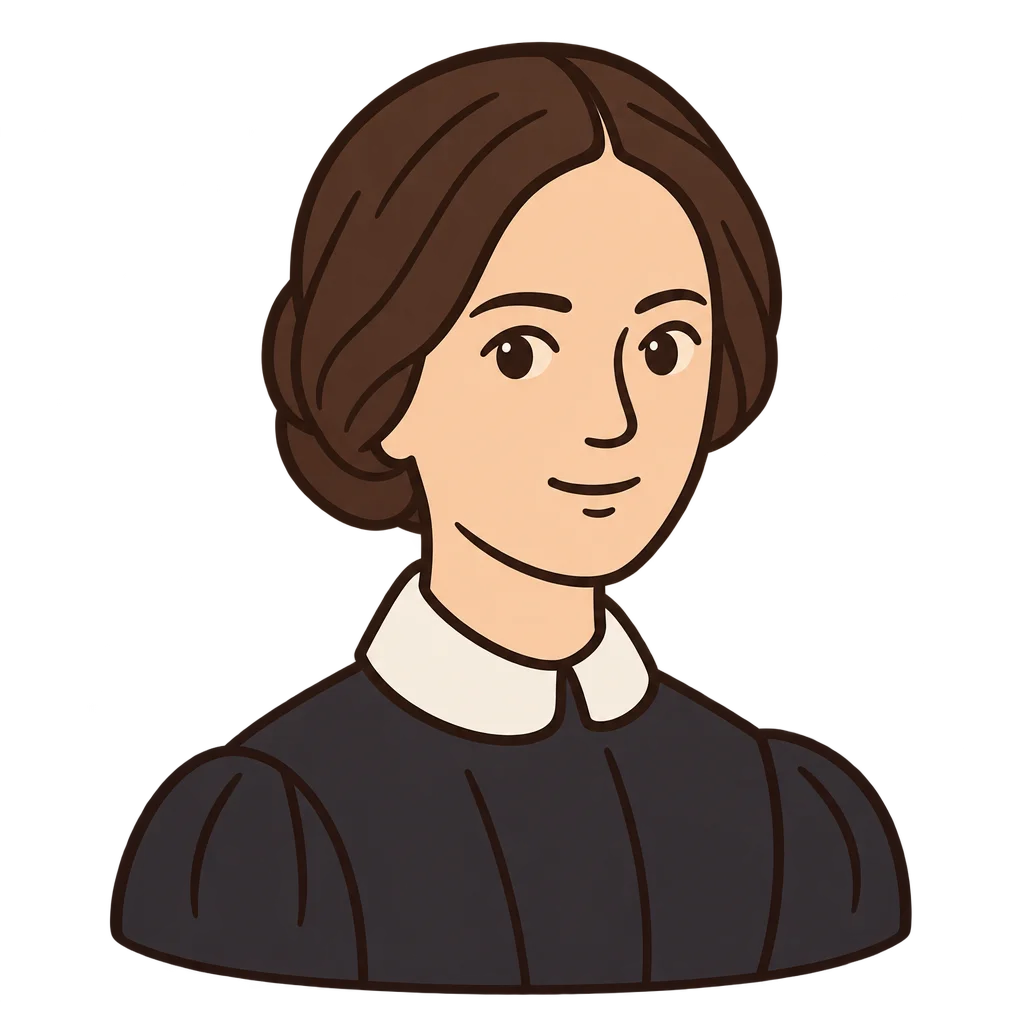
My name is Charlotte Brontë, and I was a storyteller. I was born on April 21st, 1816, in the beautiful, windswept region of Yorkshire, England. My father, Patrick, was a clergyman, and our home was filled with the lively energy of my five siblings: Maria, Elizabeth, Branwell, Emily, and Anne. We lived in a house called the Haworth parsonage, right on the edge of the wild, rolling moors. Those moors were our playground, a vast and mysterious landscape that fueled our imaginations. From a very young age, creativity was the center of our world. My brother Branwell and I were especially close partners in invention. We created fantastical kingdoms like 'Angria,' a world complete with its own history, politics, and passionate characters. We didn't just tell these stories; we wrote them down in tiny books, small enough to be read by our collection of toy soldiers. This was how I learned to build worlds with words, and storytelling became as natural to me as breathing.
My childhood was filled with imagination, but it was also marked by great sorrow. In 1821, when I was only five years old, my dear mother, Maria, passed away. This loss left a deep emptiness in our family. A few years later, in 1824, my sisters and I were sent away to the Clergy Daughters' School at Cowan Bridge. I had hoped for a place of learning, but the conditions there were terribly harsh, with cold rooms and little food. The following year, in 1825, a tragedy struck that would shape my entire life. My two older sisters, Maria and Elizabeth, fell gravely ill at the school and were sent home, where they passed away. After such a devastating loss, my father brought the rest of us home. Despite this sad start, a more hopeful chapter began in 1831 when I attended Roe Head School. There, I found kind teachers and made lifelong friends. I did so well that I returned in 1835 as a teacher. It was during this time that a dream took root: my remaining sisters, Emily, Anne, and I planned to one day open a school of our own.
Charlotte Brontë: A Story of Heart and Voice
My name is Charlotte Brontë, and I was a storyteller. I was born on April 21st, 1816, in the beautiful, windswept region of Yorkshire, England. My father, Patrick, was a clergyman, and our home was filled with the lively energy of my five siblings: Maria, Elizabeth, Branwell, Emily, and Anne. We lived in a house called the Haworth parsonage, right on the edge of the wild, rolling moors. Those moors were our playground, a vast and mysterious landscape that fueled our imaginations. From a very young age, creativity was the center of our world. My brother Branwell and I were especially close partners in invention. We created fantastical kingdoms like 'Angria,' a world complete with its own history, politics, and passionate characters. We didn't just tell these stories; we wrote them down in tiny books, small enough to be read by our collection of toy soldiers. This was how I learned to build worlds with words, and storytelling became as natural to me as breathing.
My childhood was filled with imagination, but it was also marked by great sorrow. In 1821, when I was only five years old, my dear mother, Maria, passed away. This loss left a deep emptiness in our family. A few years later, in 1824, my sisters and I were sent away to the Clergy Daughters' School at Cowan Bridge. I had hoped for a place of learning, but the conditions there were terribly harsh, with cold rooms and little food. The following year, in 1825, a tragedy struck that would shape my entire life. My two older sisters, Maria and Elizabeth, fell gravely ill at the school and were sent home, where they passed away. After such a devastating loss, my father brought the rest of us home. Despite this sad start, a more hopeful chapter began in 1831 when I attended Roe Head School. There, I found kind teachers and made lifelong friends. I did so well that I returned in 1835 as a teacher. It was during this time that a dream took root: my remaining sisters, Emily, Anne, and I planned to one day open a school of our own.
As a young woman, I had to find a way to earn a living. Starting around 1839, I took positions as a governess, teaching the children of wealthy families. While it was respectable work, I often felt like an outsider in these grand homes, a feeling of being neither a servant nor a member of the family. This experience of loneliness and observation gave me a great deal to think and write about. To prepare for our dream of opening a school, Emily and I traveled to Brussels, Belgium, in 1842 to improve our language skills. We studied French and German, hoping it would attract more pupils. When we returned home, I made a thrilling discovery. One day, I found a notebook filled with powerful, passionate poems written by my quiet sister Emily. It turned out that Anne had been secretly writing poetry, too. We realized that we all shared the same deep love for writing. In 1846, we made a bold decision. We used a small inheritance to publish a book of our poems together. However, we knew it was difficult for female authors to be taken seriously, so we chose to write under male names. I became Currer Bell, Emily was Ellis Bell, and Anne was Acton Bell.
Our book of poems was not a success; I believe we sold only two copies. But I refused to let that failure stop me. I had a story inside me that I needed to tell. I wrote a novel about a young, plain-looking governess who was intelligent, strong, and demanded to be treated with respect. I called it Jane Eyre. I sent the manuscript to a publisher in London, writing under my pen name, Currer Bell. To my immense joy, it was accepted and published on October 16th, 1847. Almost overnight, the book became a sensation. Readers all over England were captivated by Jane's story and her passionate spirit. Everyone was buzzing with curiosity, wondering who the mysterious and brilliant 'Currer Bell' could be. The secret couldn't last forever. In 1848, my sisters and I traveled to London and walked into my publisher's office to reveal our true identities. The world was stunned and fascinated to learn that Currer, Ellis, and Acton Bell were not men, but three sisters from a quiet parsonage in Yorkshire.
Though I had found success, my life was soon to be visited by unimaginable grief. In a heartbreakingly short period between 1848 and 1849, my beloved siblings Branwell, Emily, and Anne all passed away. I was left alone with my father in the parsonage, the silence of the house a constant reminder of my loss. To channel my grief, I continued to write, pouring my feelings into my novels Shirley, published in 1849, and Villette, in 1853. A few years later, in 1854, I found a period of happiness when I married Arthur Bell Nicholls, a kind man who had been my father's curate. I lived to be 38 years old. My life was short and filled with both deep sorrow and great passion, but my stories have lived on. My novel Jane Eyre continues to be read by people all over the world. I hope my work inspires you to be strong, to persevere through challenges, and to always believe in the power of your own voice.
Wow facts
About
Charlotte Brontë was an English novelist and poet during the Victorian era. She is best known for her classic novel 'Jane Eyre', published under the male pseudonym Currer Bell.
Take a Quiz
Question 1 of 5
Based on the story, what does it mean that Charlotte and her sisters used 'male names' because it was 'difficult for women to be taken seriously as authors'?
Explore next





Want to do even more?
Go beyond exploring. Unlock tools that turn every story into real learning.
Storypie Plus for families
Full stories, quizzes, and printables. Nights and car rides, sorted.
- Unlimited audio stories
- Create Mode: your child stars in the story
- Offline downloads
- Printable worksheets & coloring pages
Why Storypie for Schools
Students engaged. Prep in seconds. Evenings back to you.
- Worksheets & Quizzes
- Classroom Management
- Formative Assessment
- Custom Curriculum & Lesson Plans
- 27 Languages
Why Storypie for Homeschool
Curriculum done. They'll ask for more. Hours back in your day.
- Worksheet Generator
- First-Person Audio Stories
- Built-in Comprehension Quizzes
- Custom Curriculum & Lesson Plans
- Print & Go Activities