English

Emmy Noether
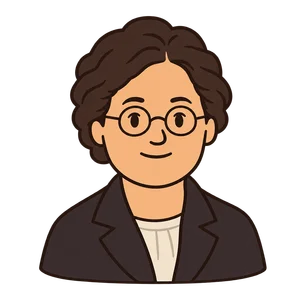
Emmy Noether was a groundbreaking German mathematician known for her landmark contributions to abstract…
Reads at Grades 3–5 Listens at Grades 1–5
Print & create
Answer keys·No prep·Free with an account
28 worksheets · answer keys · full story · quiz · Ages 8-10 · CEFR B1
Plus adds 290,000+ more stories in 27 languages, audio for every one, and printables for all of them.
Just want Emmy Noether?
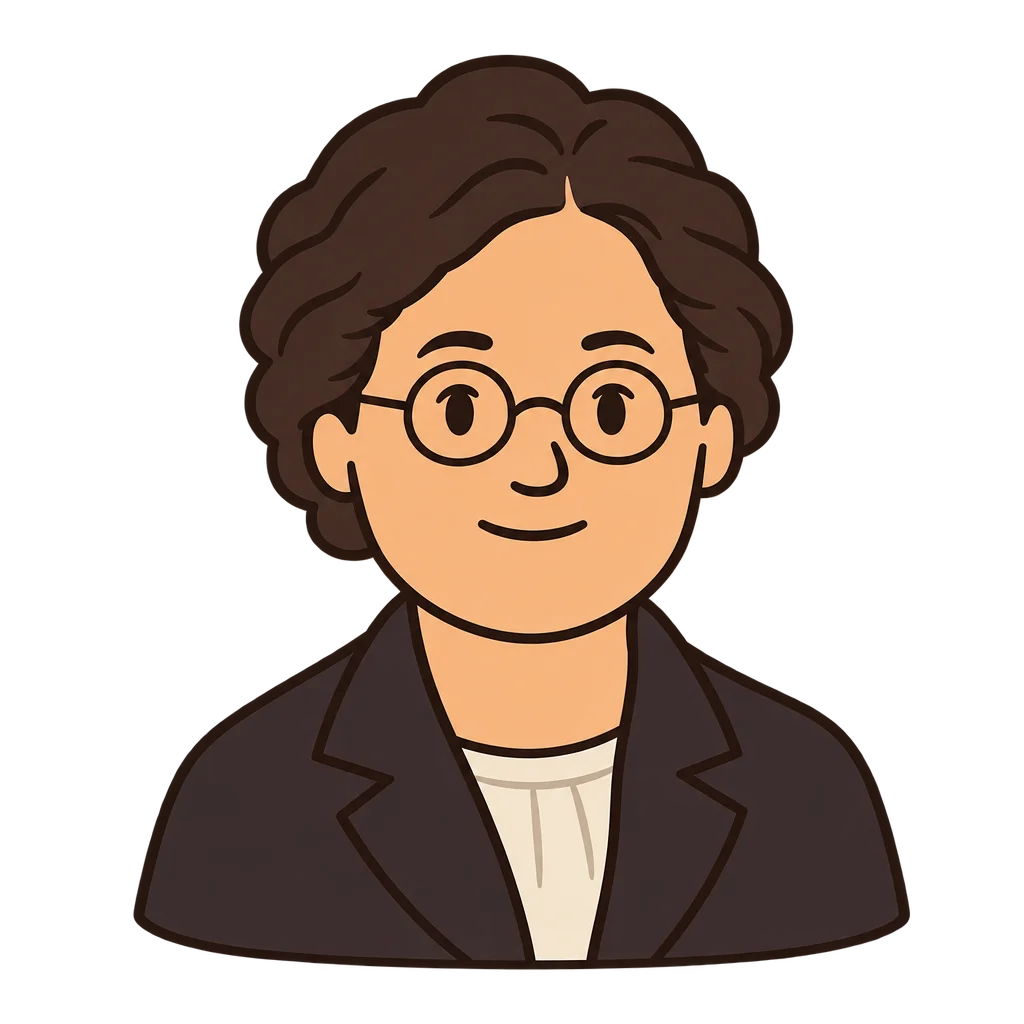
Hello! My name is Emmy Noether, and I was one of the most important mathematicians of my time. My story begins on March 23rd, 1882, in a town called Erlangen, Germany. My father, Max, was a math professor, and our house was filled with numbers and ideas. While other girls were learning to cook and sew, I was falling in love with solving puzzles. I didn't see numbers as boring homework; I saw them as clues to unlocking the secrets of the universe! Back then, it was very unusual for a girl to be interested in advanced math, but I didn't let that stop me. I knew I had to follow my passion.
When I finished school, I wanted more than anything to go to a university. But in the year 1900, women were not allowed to be official students. I was determined, so I asked for special permission just to sit in on classes at the University of Erlangen. For two years, I was one of only two women in a university filled with nearly a thousand men! It was a big challenge, but I was there to learn. Finally, in 1904, the rules changed, and I could enroll as a real student. I worked so hard, and in 1907, I earned my doctorate in mathematics. It was a huge achievement, but I knew my journey was just beginning.
In 1915, two of the world's most famous mathematicians, David Hilbert and Felix Klein, invited me to the University of Göttingen, a world-famous center for math. I was so excited! But there was a problem: the university refused to hire a woman as a professor. My friends argued for me, but the other professors said no. Can you believe it? For years, I taught classes and shared my ideas without getting paid. I didn't care about the money; I just wanted to do the math. Finally, in 1919, I was given an official title, even though it was still unpaid.
Emmy Noether: A Mathematical Genius
Hello! My name is Emmy Noether, and I was one of the most important mathematicians of my time. My story begins on March 23rd, 1882, in a town called Erlangen, Germany. My father, Max, was a math professor, and our house was filled with numbers and ideas. While other girls were learning to cook and sew, I was falling in love with solving puzzles. I didn't see numbers as boring homework; I saw them as clues to unlocking the secrets of the universe! Back then, it was very unusual for a girl to be interested in advanced math, but I didn't let that stop me. I knew I had to follow my passion.
When I finished school, I wanted more than anything to go to a university. But in the year 1900, women were not allowed to be official students. I was determined, so I asked for special permission just to sit in on classes at the University of Erlangen. For two years, I was one of only two women in a university filled with nearly a thousand men! It was a big challenge, but I was there to learn. Finally, in 1904, the rules changed, and I could enroll as a real student. I worked so hard, and in 1907, I earned my doctorate in mathematics. It was a huge achievement, but I knew my journey was just beginning.
In 1915, two of the world's most famous mathematicians, David Hilbert and Felix Klein, invited me to the University of Göttingen, a world-famous center for math. I was so excited! But there was a problem: the university refused to hire a woman as a professor. My friends argued for me, but the other professors said no. Can you believe it? For years, I taught classes and shared my ideas without getting paid. I didn't care about the money; I just wanted to do the math. Finally, in 1919, I was given an official title, even though it was still unpaid.
While I was at Göttingen, I worked on a problem that even the great Albert Einstein was thinking about for his new theory of relativity. In 1918, I published my solution, which became known as Noether's Theorem. It's a bit complicated, but my theorem is like a beautiful secret code that connects two huge ideas in physics: symmetry and conservation laws. For example, it helps explain why a spinning ice skater goes faster when they pull their arms in. My idea was a breakthrough! Albert Einstein himself said I was a 'creative mathematical genius.' Hearing that from him made all my hard work feel worth it.
My life in Germany changed suddenly. In 1933, the government began treating Jewish people, like me, unfairly. I was forced to leave my job at the university and, soon after, my country. It was a sad and scary time, but my friends around the world helped me. I moved to the United States and was welcomed at Bryn Mawr College in Pennsylvania. There, I could be a professor again, surrounded by bright young women who were eager to learn. I was so happy to be back in a classroom, sharing my love for the beautiful world of mathematics.
I found great joy in teaching in America, but my time there was short. I lived to be 53 years old, passing away in 1935. Though my life had many challenges, I never gave up on what I loved. Today, my ideas are fundamental to modern physics and algebra—they help scientists understand everything from tiny particles to the entire universe. I am remembered not just for my theorems, but for breaking down barriers for women in science. I hope my story shows you that with passion and perseverance, your ideas can change the world, no matter who you are.
Wow facts
About
Emmy Noether was a groundbreaking German mathematician known for her landmark contributions to abstract algebra and theoretical physics, including Noether's theorem, which connects symmetry with conservation laws.
Take a Quiz
Question 1 of 5
Why couldn't Emmy Noether be an official university student in 1900?
Explore next






Want to do even more?
Go beyond exploring. Unlock tools that turn every story into real learning.

Storypie Plus for families
Full stories, quizzes, and printables. Nights and car rides, sorted.
- Unlimited audio stories
- Create Mode: your child stars in the story
- Offline downloads
- Printable worksheets & coloring pages

Why Storypie for Schools
Students engaged. Prep in seconds. Evenings back to you.
- Worksheets & Quizzes
- Classroom Management
- Formative Assessment
- Custom Curriculum & Lesson Plans
- 27 Languages

Why Storypie for Homeschool
Curriculum done. They'll ask for more. Hours back in your day.
- Worksheet Generator
- First-Person Audio Stories
- Built-in Comprehension Quizzes
- Custom Curriculum & Lesson Plans
- Print & Go Activities