English

Fannie Lou Hamer
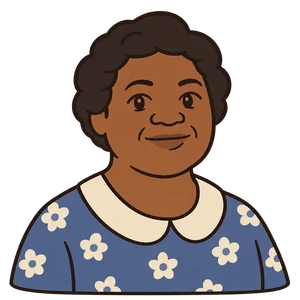
Fannie Lou Hamer was an American voting and women's rights activist, community organizer…
Reads at Grades 6–8 Listens at Grades 4–8
Print & create
Answer keys·No prep·Free with an account
28 worksheets · answer keys · full story · quiz · Ages 10-12 · CEFR B2
Plus adds 290,000+ more stories in 27 languages, audio for every one, and printables for all of them.
Just want Fannie Lou Hamer?
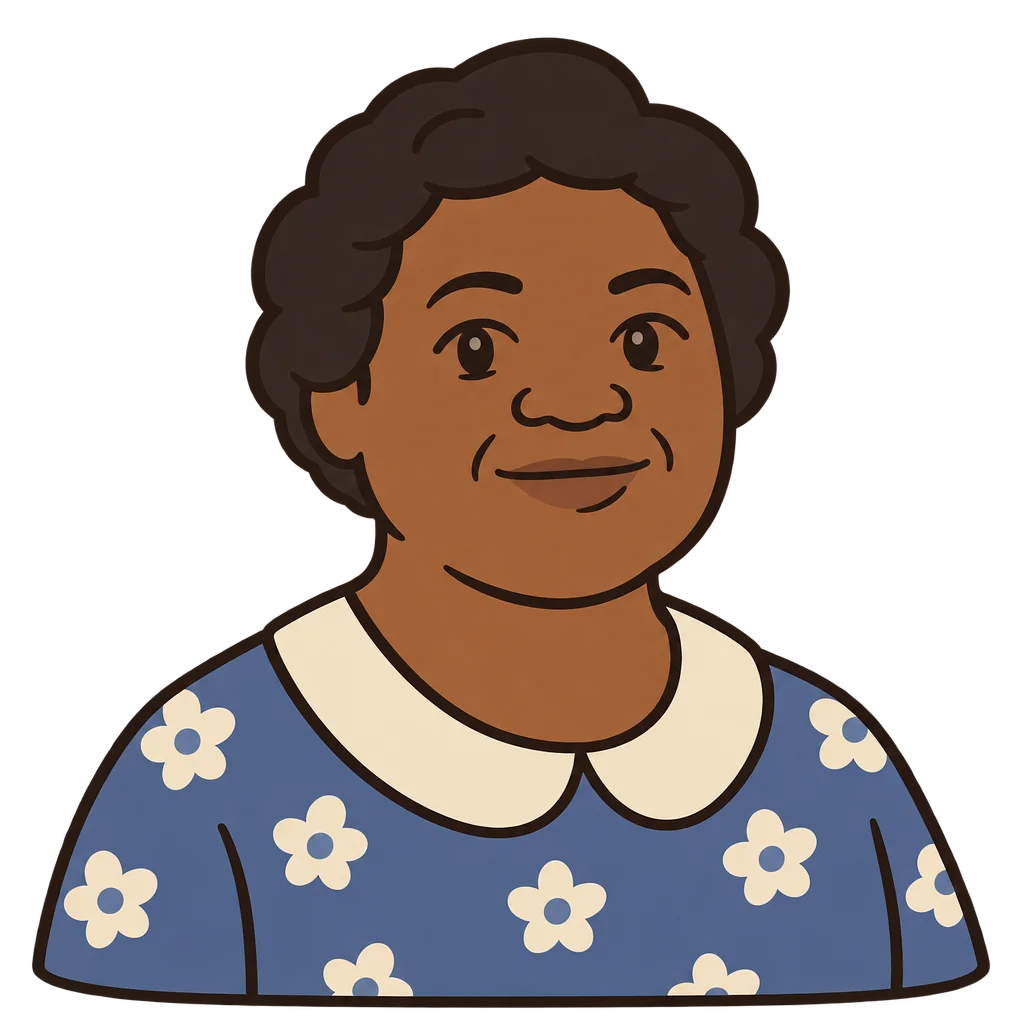
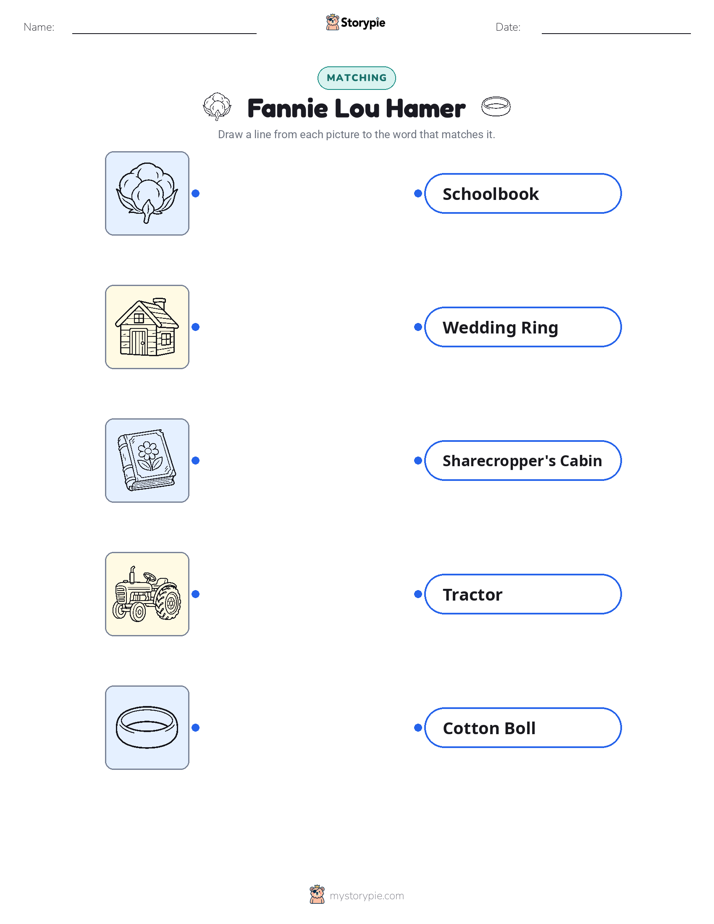
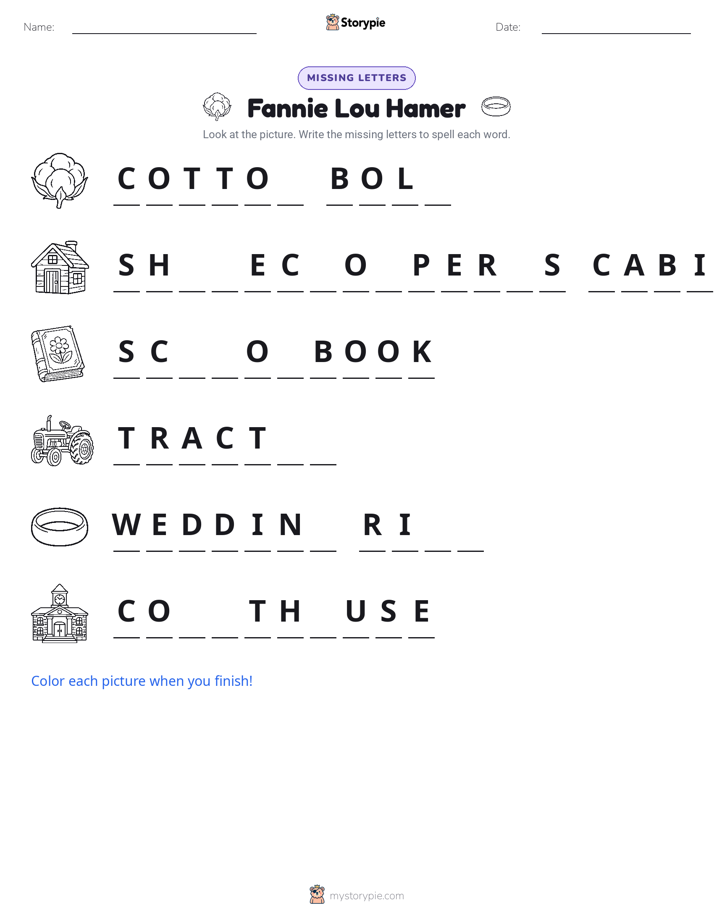
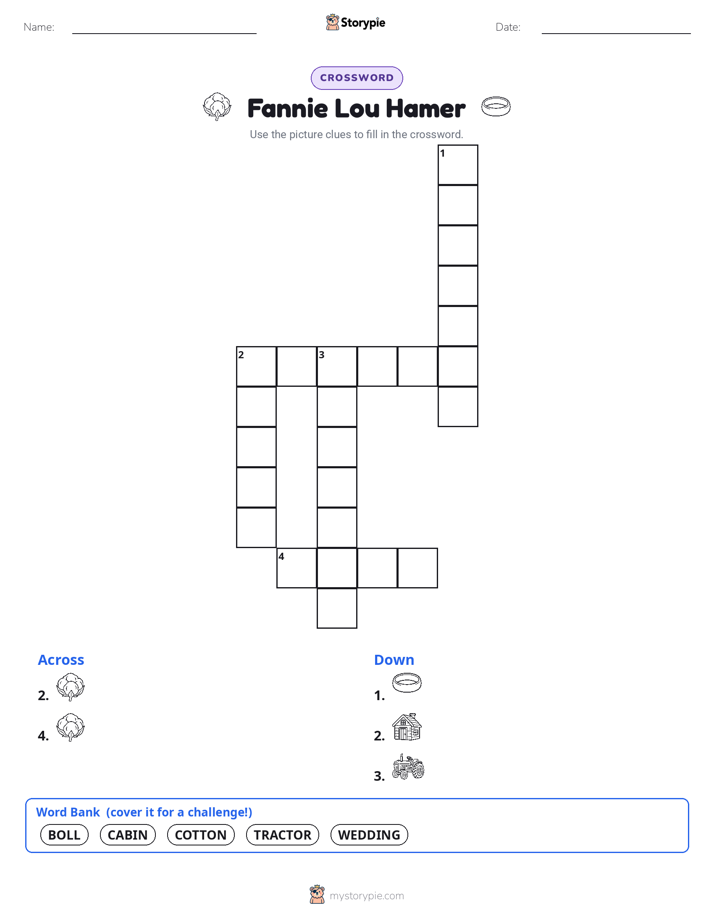
Hello, my name is Fannie Lou Hamer. I want to tell you my story. I was born on October 6th, 1917, in Montgomery County, Mississippi. I was the youngest of twenty children! My parents were sharecroppers, which meant we farmed land owned by someone else and gave them a large portion of our crops as rent. Life was very hard. From the time I was just six years old, I was out in the fields picking cotton alongside my family. I loved to read and did well in school, but I had to drop out when I was 12 to work full-time to help my family survive. Even though I couldn't stay in school, I never lost my love for learning or my belief that things could be better.
For many years, I lived a life similar to my parents. I married a good man named Perry 'Pap' Hamer in 1944, and we worked on a plantation in Ruleville, Mississippi. I was a timekeeper, which meant I had to keep track of all the cotton the other sharecroppers picked. I saw every day how unfair the system was. Then, in the summer of 1962, everything changed. I went to a meeting organized by activists from the Student Nonviolent Coordinating Committee, or SNCC. They talked about the right to vote. At that time, in Mississippi, it was almost impossible for Black people to vote because of unfair rules and tests. That night, I knew I had to do something. On August 31st, 1962, I went with a group to the courthouse to try to register. Because of that, the plantation owner fired me and kicked my family off the land we had called home for 18 years. But I wasn't going to turn back.
Fannie Lou Hamer
Hello, my name is Fannie Lou Hamer. I want to tell you my story. I was born on October 6th, 1917, in Montgomery County, Mississippi. I was the youngest of twenty children! My parents were sharecroppers, which meant we farmed land owned by someone else and gave them a large portion of our crops as rent. Life was very hard. From the time I was just six years old, I was out in the fields picking cotton alongside my family. I loved to read and did well in school, but I had to drop out when I was 12 to work full-time to help my family survive. Even though I couldn't stay in school, I never lost my love for learning or my belief that things could be better.
For many years, I lived a life similar to my parents. I married a good man named Perry 'Pap' Hamer in 1944, and we worked on a plantation in Ruleville, Mississippi. I was a timekeeper, which meant I had to keep track of all the cotton the other sharecroppers picked. I saw every day how unfair the system was. Then, in the summer of 1962, everything changed. I went to a meeting organized by activists from the Student Nonviolent Coordinating Committee, or SNCC. They talked about the right to vote. At that time, in Mississippi, it was almost impossible for Black people to vote because of unfair rules and tests. That night, I knew I had to do something. On August 31st, 1962, I went with a group to the courthouse to try to register. Because of that, the plantation owner fired me and kicked my family off the land we had called home for 18 years. But I wasn't going to turn back.
After I was fired, I became a full-time activist with SNCC. The work was dangerous. People who tried to register voters were threatened, arrested, and hurt. In June of 1963, I was traveling home with other activists when we were arrested in Winona, Mississippi. In that jail, I was beaten so terribly that I suffered from serious injuries for the rest of my life. It was a terrifying experience, but it didn't break my spirit. In fact, it made me more determined. It was during this time that I started saying something that many people remember: 'I'm sick and tired of being sick and tired.' I was tired of the injustice, tired of the fear, and tired of people being treated poorly just because of the color of their skin. I knew I had to keep fighting, not just for myself, but for everyone.
One of my biggest fights was in 1964. We knew that the regular Democratic Party in Mississippi wouldn't allow Black people to participate. So, we started our own party: the Mississippi Freedom Democratic Party, or MFDP. Our goal was to challenge the all-white Mississippi delegation at the Democratic National Convention in Atlantic City. On August 22nd, 1964, I was chosen to speak to the credentials committee. I told them my story—about the poverty, about being fired for trying to vote, and about the brutal beating in the Winona jail. My testimony was broadcast on national television. President Lyndon B. Johnson was so worried about what I was saying that he called a last-minute press conference to try and get the TV networks to cut away from my speech. But it didn't work. The networks played my speech later that night, and people all over America heard the truth about what was happening in Mississippi. We didn't get the seats we demanded that day, but we showed the whole country that we would not be silent.
My work wasn't just about voting. I knew that for people to be truly free, they needed economic power, too. I wanted to help the poor families in my home, the Mississippi Delta. In 1969, I helped start the Freedom Farm Cooperative, a project to help Black families own and farm their own land, so they wouldn't have to depend on the unfair sharecropping system. We had a 'pig bank' to provide families with pigs for food and income, and we started a Head Start program for young children. In 1971, I also helped found the National Women's Political Caucus because I believed that women, and especially Black women, needed to have a stronger voice in our country's politics. I believed that freedom meant having enough to eat, a decent place to live, and a say in your own future.
My fight for justice was my life's work. I lived to be 59 years old, and my journey ended in 1977. Though my life was filled with hardship, it was also filled with hope and purpose. People remember me for my powerful voice, both when I was singing freedom songs and when I was speaking truth to power. My story reminds everyone that even one person, no matter how humble their beginnings, can stand up, speak out, and help change the world for the better. The light of freedom I fought for continues to shine and inspire new generations to keep up the fight for equality and justice for all.
Wow facts
About
Fannie Lou Hamer was an American voting and women's rights activist, community organizer, and a leader in the Civil Rights Movement.
Take a Quiz
Question 1 of 5
What is the main lesson or message we can learn from Fannie Lou Hamer's life story?
Explore next






Want to do even more?
Go beyond exploring. Unlock tools that turn every story into real learning.
Storypie Plus for families
Full stories, quizzes, and printables. Nights and car rides, sorted.
- Unlimited audio stories
- Create Mode: your child stars in the story
- Offline downloads
- Printable worksheets & coloring pages

Why Storypie for Schools
Students engaged. Prep in seconds. Evenings back to you.
- Worksheets & Quizzes
- Classroom Management
- Formative Assessment
- Custom Curriculum & Lesson Plans
- 27 Languages

Why Storypie for Homeschool
Curriculum done. They'll ask for more. Hours back in your day.
- Worksheet Generator
- First-Person Audio Stories
- Built-in Comprehension Quizzes
- Custom Curriculum & Lesson Plans
- Print & Go Activities