English

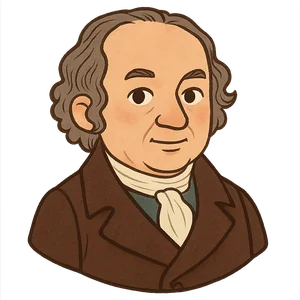
Francisco Goya
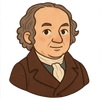
Francisco Goya was a Spanish romantic painter and printmaker.
Reads at Grades 6–8 Listens at Grades 4–8
Print & create
Answer keys·No prep·Free with an account
28 worksheets · answer keys · full story · quiz · Ages 10-12 · CEFR B2
Plus adds 280,000+ more stories in 27 languages, audio for every one, and printables for all of them.
Just want Francisco Goya?
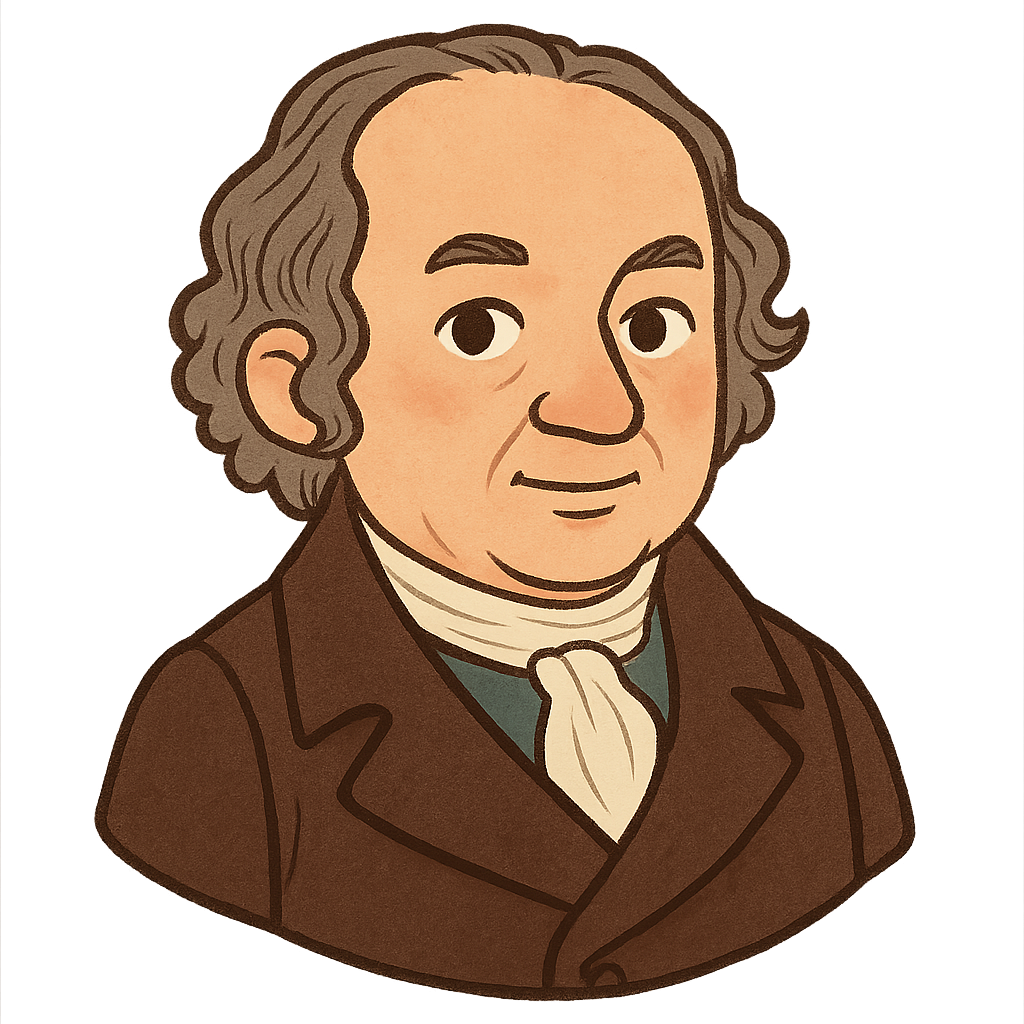
Hello! My name is Francisco José de Goya y Lucientes, but you may know me as Francisco Goya. I was born on March 30th, 1746, in a small Spanish village called Fuendetodos. From my earliest days, I saw the world with an artist's eyes. I didn't just want to draw what was pretty; I felt a powerful need to capture everything I saw and felt. I wanted my art to show the beauty of a festival, the humor in everyday life, the strangeness of a dream, and even the sadness of difficult times. The world was my canvas, and I was determined to paint its complete story, from its brightest light to its deepest shadows. This desire to show the truth, no matter what it looked like, would guide my hand throughout my entire life.
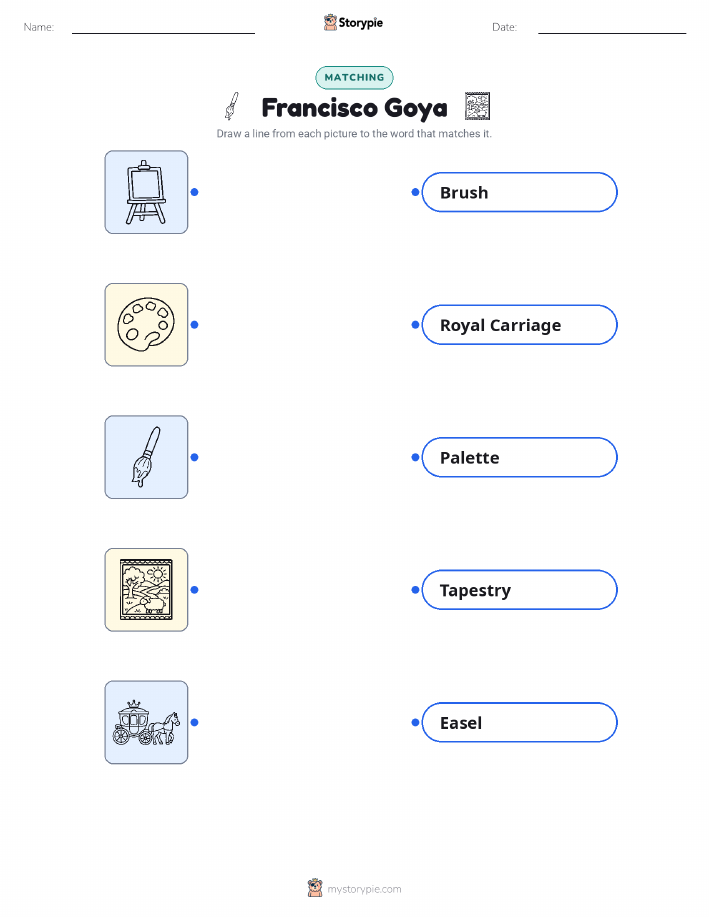
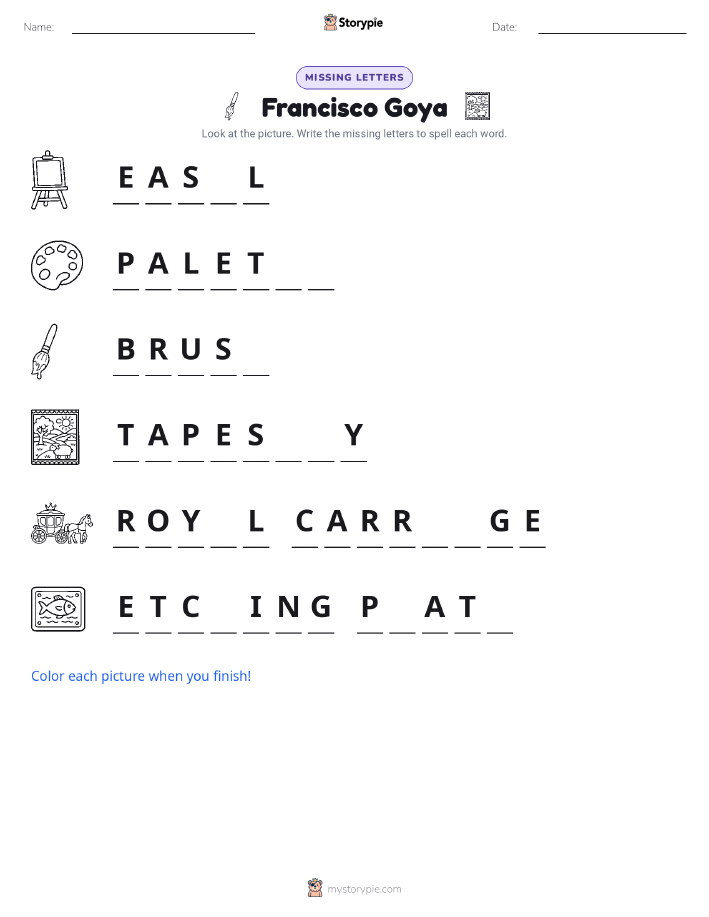
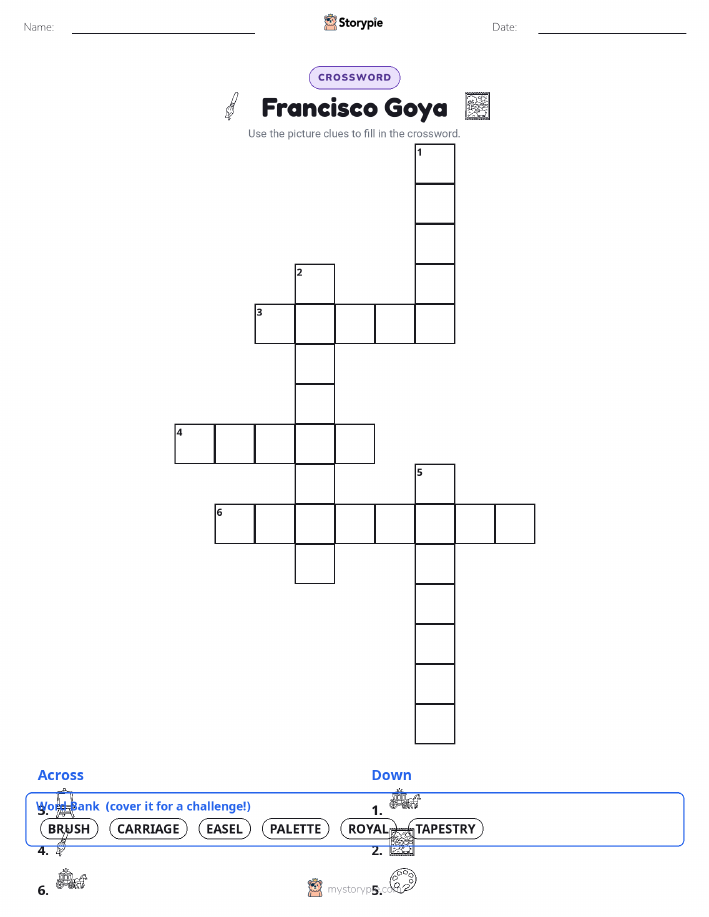
When I was a young man, I knew I had to go where the great artists were. Around 1763, I packed my things and moved to Madrid, the bustling capital of Spain, to follow my dream of becoming a painter. The city was full of energy and competition, and it was not an easy path. I had to study hard and prove my talent. In 1774, I earned a wonderful position designing large, colorful paintings called cartoons for the Royal Tapestry Factory. These were not the funny comics you might think of today. They were enormous, detailed scenes that skilled weavers used as guides to create magnificent tapestries to decorate the walls of royal palaces. During this exciting time in my career, I also found personal happiness when I married the wonderful Josefa Bayeu in 1773.
My dedication and unique style began to get noticed by the most important people in Spain. By 1789, I received one of the highest honors an artist could achieve in my country: I was appointed the official court painter to King Charles IV. This meant my primary job was to paint portraits of the royal family and the powerful nobles of the court. When I painted these portraits, I wasn't interested in just making everyone look perfect and grand. I wanted to capture their true character and personality in their faces and postures. If you look closely at my famous group portrait, *The Family of Charles IV*, you can see that I painted them as real people, not just symbols of power. I had reached the peak of my profession, trusted to create the official images of the Spanish monarchy.
Francisco Goya: A Painter of Truth
Hello! My name is Francisco José de Goya y Lucientes, but you may know me as Francisco Goya. I was born on March 30th, 1746, in a small Spanish village called Fuendetodos. From my earliest days, I saw the world with an artist's eyes. I didn't just want to draw what was pretty; I felt a powerful need to capture everything I saw and felt. I wanted my art to show the beauty of a festival, the humor in everyday life, the strangeness of a dream, and even the sadness of difficult times. The world was my canvas, and I was determined to paint its complete story, from its brightest light to its deepest shadows. This desire to show the truth, no matter what it looked like, would guide my hand throughout my entire life.
When I was a young man, I knew I had to go where the great artists were. Around 1763, I packed my things and moved to Madrid, the bustling capital of Spain, to follow my dream of becoming a painter. The city was full of energy and competition, and it was not an easy path. I had to study hard and prove my talent. In 1774, I earned a wonderful position designing large, colorful paintings called cartoons for the Royal Tapestry Factory. These were not the funny comics you might think of today. They were enormous, detailed scenes that skilled weavers used as guides to create magnificent tapestries to decorate the walls of royal palaces. During this exciting time in my career, I also found personal happiness when I married the wonderful Josefa Bayeu in 1773.
My dedication and unique style began to get noticed by the most important people in Spain. By 1789, I received one of the highest honors an artist could achieve in my country: I was appointed the official court painter to King Charles IV. This meant my primary job was to paint portraits of the royal family and the powerful nobles of the court. When I painted these portraits, I wasn't interested in just making everyone look perfect and grand. I wanted to capture their true character and personality in their faces and postures. If you look closely at my famous group portrait, The Family of Charles IV, you can see that I painted them as real people, not just symbols of power. I had reached the peak of my profession, trusted to create the official images of the Spanish monarchy.
Just as I reached the height of my success, my world fell into silence. In 1793, a sudden and severe illness left me completely deaf. I could no longer hear music, conversations, or the sounds of the city. This profound change forced me to look inward and observe the world with even greater intensity. My art began to change, becoming more personal, imaginative, and critical. In 1799, I created and published a series of 80 etchings called Los Caprichos, which means 'The Caprices' or 'The Follies.' In these prints, I used images of monsters, witches, and strange creatures to comment on the foolishness, greed, and injustices I saw in the society around me. My art was no longer just for decorating palaces; it became a way for me to express my deepest thoughts and challenge the world.
In 1808, a dark chapter began for my country when French armies under Napoleon invaded Spain. The years that followed were filled with brutal fighting and immense suffering for the Spanish people. As an artist, I felt it was my duty to be a witness. I could not turn away from the terrible things I saw. I had to record the truth of the war. After the conflict ended, in 1814, I painted two of my most powerful and famous works: The Second of May 1808, which shows a chaotic uprising in Madrid, and The Third of May 1808, which depicts the tragic execution of Spanish citizens. I also created a haunting series of prints called The Disasters of War, which unflinchingly showed the heartbreaking reality of conflict. I wanted to ensure that no one would ever forget the human cost of war.
As I grew older, I became more withdrawn from the world, perhaps because of my deafness and the horrors I had witnessed. Around 1819, I bought a house on the outskirts of Madrid that later became known as the Quinta del Sordo, or the 'Villa of the Deaf Man.' In this house, I did something very private and unusual. Instead of painting on canvases that I could sell or display, I painted directly onto the plaster walls of my dining and living rooms. These fourteen works, now known as the 'Black Paintings,' were never meant for a public audience. They came from the deepest, darkest corners of my imagination, filled with mysterious figures and unsettling scenes that reflected my fears and my thoughts about humanity and the passage of time.
In my final years, I chose to leave Spain and moved to the city of Bordeaux in France, searching for a more peaceful life. I lived to be 82 years old, passing away in 1828. My life was a long journey that took me from the bright, sunlit courts of kings to the dark, silent chambers of my own mind. I am remembered as an artist who painted both the dazzling clothes of queens and the grim realities of war. I wasn't afraid to show the truth, and because of this, my work inspired countless modern artists to be brave, honest, and expressive in their own creations.
Wow facts
About
Francisco Goya was a Spanish romantic painter and printmaker. He is considered the most important Spanish artist of the late 18th and early 19th centuries.
Take a Quiz
Question 1 of 5
What was the main purpose of the series of prints I created in 1799 called *Los Caprichos*?
Explore next




Want to do even more?
Go beyond exploring. Unlock tools that turn every story into real learning.

Storypie Plus for families
Full stories, quizzes, and printables. Nights and car rides, sorted.
- Unlimited audio stories
- Create Mode: your child stars in the story
- Offline downloads
- Printable worksheets & coloring pages

Why Storypie for Schools
Students engaged. Prep in seconds. Evenings back to you.
- Worksheets & Quizzes
- Classroom Management
- Formative Assessment
- Custom Curriculum & Lesson Plans
- 27 Languages

Why Storypie for Homeschool
Curriculum done. They'll ask for more. Hours back in your day.
- Worksheet Generator
- First-Person Audio Stories
- Built-in Comprehension Quizzes
- Custom Curriculum & Lesson Plans
- Print & Go Activities