English

Fridtjof Nansen
Fridtjof Nansen was a Norwegian explorer, scientist, diplomat, and humanitarian…
Reads at Grades 6–8 Listens at Grades 4–8
Print & create
Answer keys·No prep·Free with an account
28 worksheets · answer keys · full story · quiz · Ages 10-12 · CEFR B2
Plus adds 244,000+ more stories in 27 languages, audio for every one, and printables for all of them.
Just want Fridtjof Nansen?
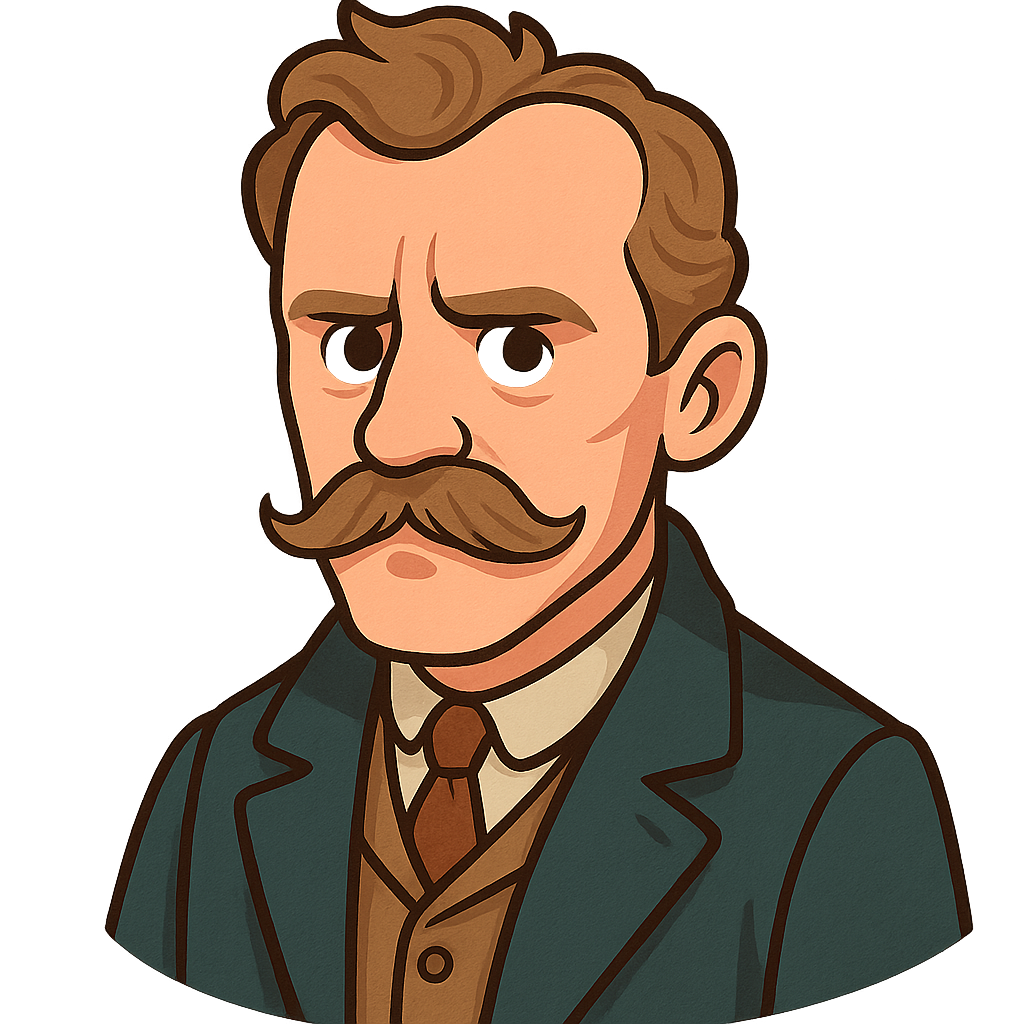
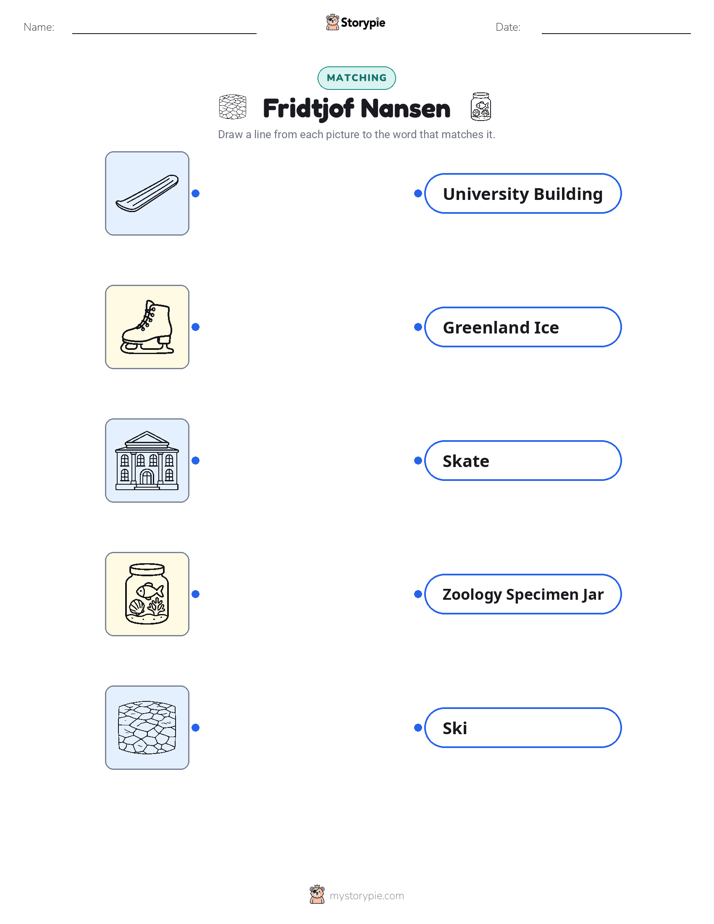
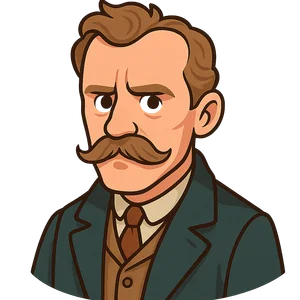
Hello! My name is Fridtjof Nansen, and I want to share the story of my life's great journeys. I was born on October 10th, 1861, near Christiania, which you now know as Oslo, the capital of Norway. The world I grew up in was one of dense, snowy forests and vast frozen lakes. I spent my childhood skiing and skating, which sparked a deep love for the wild outdoors. This passion for nature wasn't just for fun; it made me intensely curious. In 1881, I enrolled at the Royal Frederick University to study zoology, hoping to better understand the Earth's most remote and challenging environments. That desire set me on a path to become an explorer, a scientist, and something I never expected to be—a helper to people in need.
My first great adventure began in 1888. I proposed an idea that most experts believed was impossible: to be the first to cross the vast, icy interior of Greenland on skis. Until then, people had only ever explored its coastlines. My team and I started on the uninhabited east coast, a place no one had ever attempted to cross from, and traveled west. The journey was incredibly difficult. We battled bitter cold that sank far below freezing and faced fierce, blinding storms. Despite the dangers, we pushed forward, and after 49 grueling days, we reached the other side. This success taught me invaluable lessons about survival and the power of perseverance. When I returned home to Norway, I was celebrated as a national hero.
My experience in Greenland only fueled my ambition for a bigger challenge. I had developed a scientific theory that a current flowed across the Arctic Ocean, from east to west. This led to a radical idea: what if I could build a ship strong enough to be deliberately frozen into the sea ice and let that current carry it across the North Pole? To achieve this, I worked with a brilliant shipbuilder named Colin Archer. Together, we designed a special vessel we called the *Fram*, which means 'Forward' in Norwegian. Her hull was uniquely rounded, a clever design so that when the immense pressure of the ice squeezed in, it would lift the ship up rather than crushing it. In 1893, with a brave and dedicated crew, I set sail on the *Fram*, ready to test my theory and drift toward the top of the world.
Fridtjof Nansen
Hello! My name is Fridtjof Nansen, and I want to share the story of my life's great journeys. I was born on October 10th, 1861, near Christiania, which you now know as Oslo, the capital of Norway. The world I grew up in was one of dense, snowy forests and vast frozen lakes. I spent my childhood skiing and skating, which sparked a deep love for the wild outdoors. This passion for nature wasn't just for fun; it made me intensely curious. In 1881, I enrolled at the Royal Frederick University to study zoology, hoping to better understand the Earth's most remote and challenging environments. That desire set me on a path to become an explorer, a scientist, and something I never expected to be—a helper to people in need.
My first great adventure began in 1888. I proposed an idea that most experts believed was impossible: to be the first to cross the vast, icy interior of Greenland on skis. Until then, people had only ever explored its coastlines. My team and I started on the uninhabited east coast, a place no one had ever attempted to cross from, and traveled west. The journey was incredibly difficult. We battled bitter cold that sank far below freezing and faced fierce, blinding storms. Despite the dangers, we pushed forward, and after 49 grueling days, we reached the other side. This success taught me invaluable lessons about survival and the power of perseverance. When I returned home to Norway, I was celebrated as a national hero.
My experience in Greenland only fueled my ambition for a bigger challenge. I had developed a scientific theory that a current flowed across the Arctic Ocean, from east to west. This led to a radical idea: what if I could build a ship strong enough to be deliberately frozen into the sea ice and let that current carry it across the North Pole? To achieve this, I worked with a brilliant shipbuilder named Colin Archer. Together, we designed a special vessel we called the Fram, which means 'Forward' in Norwegian. Her hull was uniquely rounded, a clever design so that when the immense pressure of the ice squeezed in, it would lift the ship up rather than crushing it. In 1893, with a brave and dedicated crew, I set sail on the Fram, ready to test my theory and drift toward the top of the world.
For more than a year, the Fram drifted perfectly, held tight in the polar ice, proving my theory about the current was correct. We were moving, just as I had predicted. However, by the early months of 1895, I analyzed our position and realized that the current's path was not going to take us directly over the North Pole as I had hoped. We would pass by it, but not over it. I couldn't stand being so close to this historic goal without making an attempt to reach it on foot. So, I made a bold and risky decision. On March 14th, 1895, my companion Hjalmar Johansen and I left the safety and relative comfort of the Fram. With teams of sled dogs and specially designed kayaks, we set off across the treacherous, shifting sea ice, hoping to become the first human beings to stand at the North Pole.
The journey on the ice was harder than anything I had ever imagined. The surface was not a flat sheet but a chaotic maze of massive pressure ridges we had to climb and open channels of freezing water we had to cross. After weeks of exhausting travel, we reached a latitude of 86°14′ North—we had traveled farther north than anyone in history! But our food supplies were dwindling, our dogs were exhausted, and the North Pole was still too far away. With heavy hearts, we had to turn back. We survived the winter of 1895 by building a tiny stone hut on a remote Arctic island, living on polar bears and walruses. Then, in June of 1896, we had an incredible stroke of luck. We encountered a British explorer named Frederick Jackson, who rescued us and brought us home. In a final amazing turn of events, the Fram also survived its long drift and arrived back in Norway just days after we did.
After my years of exploration, my life took a different direction. I dedicated myself to science and became a diplomat, using my influence to help my country of Norway achieve its peaceful independence in 1905. After the terrible devastation of World War I, I saw a new kind of challenge facing the world. Millions of people had been displaced by the conflict, left without a country or a home. They were refugees, and I knew I had to do something to help. I began working with the newly formed League of Nations to organize the return of prisoners of war and to find solutions for these stateless people who had nowhere to go.
One of the biggest problems for refugees was their lack of official papers, which meant they couldn't travel across borders to find safety or build new lives. In response, I helped create a special identity document in 1922 that countries across the world agreed to recognize. This document became known as the 'Nansen Passport.' This simple piece of paper was life-changing, giving hundreds of thousands of displaced people the freedom and legal status to start over. For this humanitarian work, I was honored to receive the Nobel Peace Prize in 1922. That award meant more to me than any record I had set as an explorer because it represented helping my fellow human beings.
I lived to be 68 years old, and looking back, my life was a journey that began by exploring the coldest places on Earth and ended by exploring the warmest parts of the human heart. I learned that the greatest adventures are not always about reaching a geographic destination, but about helping others along their own difficult journeys. Today, I am remembered not just for my expeditions to Greenland and the North Pole, but for my belief that we all share a responsibility to care for one another. The Nansen Refugee Award is still given each year to people who do extraordinary work for refugees, carrying forward the idea that compassion is our truest and most important guide.
Wow facts
About
Fridtjof Nansen was a Norwegian explorer, scientist, diplomat, and humanitarian, famous for his Arctic expeditions and for winning the Nobel Peace Prize for his work with refugees.
Take a Quiz
Question 1 of 5
Why was the ship *Fram* designed with a special rounded hull?
Explore next




Want to do even more?
Go beyond exploring. Unlock tools that turn every story into real learning.

Storypie Plus for families
Full stories, quizzes, and printables. Nights and car rides, sorted.
- Unlimited audio stories
- Create Mode: your child stars in the story
- Offline downloads
- Printable worksheets & coloring pages

Why Storypie for Schools
Students engaged. Prep in seconds. Evenings back to you.
- Worksheets & Quizzes
- Classroom Management
- Formative Assessment
- Custom Curriculum & Lesson Plans
- 27 Languages

Why Storypie for Homeschool
Curriculum done. They'll ask for more. Hours back in your day.
- Worksheet Generator
- First-Person Audio Stories
- Built-in Comprehension Quizzes
- Custom Curriculum & Lesson Plans
- Print & Go Activities