English

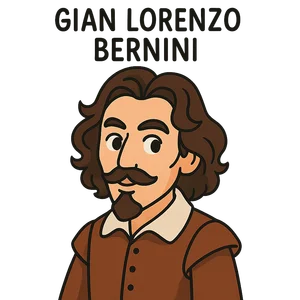
Gian Lorenzo Bernini
Gian Lorenzo Bernini was an Italian sculptor and architect who was a leading figure in the Baroque style.
Reads at Grades 6–8 Listens at Grades 4–8
Print & create
Answer keys·No prep·Free with an account
28 worksheets · answer keys · full story · quiz · Ages 10-12 · CEFR B2
Plus adds 244,000+ more stories in 27 languages, audio for every one, and printables for all of them.
Just want Gian Lorenzo Bernini?
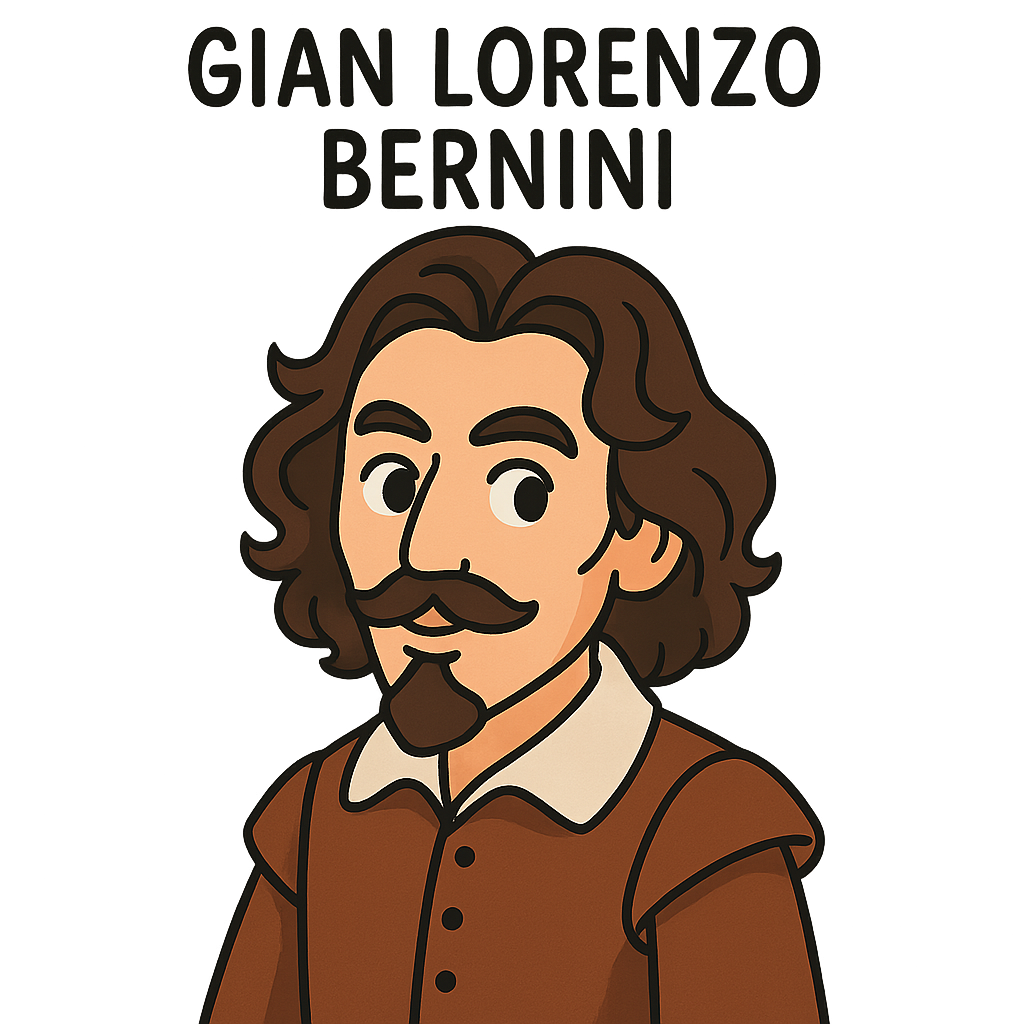
Hello, my name is Gian Lorenzo Bernini, and I am known for making stone come alive. My story begins in Naples, where I was born on December 7th, 1598. My father, Pietro, was a talented sculptor himself, and from him, I learned how to hold a chisel and see the shapes hidden within a block of marble. He was my very first teacher. Around the year 1606, my family moved to the magnificent city of Rome. For a young artist like me, Rome was a city of wonders. The ancient statues and grand buildings were everywhere, standing like silent teachers from a long-ago time. The entire city felt like a giant playground for my imagination, and it was there that I knew I wanted to spend my life creating art that would move people's hearts.
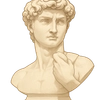
My first great opportunity came from a powerful and wealthy man named Cardinal Scipione Borghese. He believed in my talent and gave me the chance to create sculptures that would truly challenge me. My greatest challenge was making hard, cold marble look as soft as skin, as light as a leaf, or as intense as a real human expression. I wanted to capture a single, dramatic moment in time. Between 1622 and 1625, I carved one of my most famous works, 'Apollo and Daphne.' In it, I showed the very instant a nymph named Daphne transforms into a laurel tree to escape a god, with bark creeping up her legs and leaves sprouting from her fingers. A few years earlier, in 1623, I sculpted my version of 'David.' Unlike other statues that showed him calm and victorious, I carved David in the middle of the action, his face twisted in concentration and his body coiled with energy as he prepares to sling the stone. My goal was always to fill my art with powerful drama and deep feeling.
Gian Lorenzo Bernini: Sculpting Life from Stone
Hello, my name is Gian Lorenzo Bernini, and I am known for making stone come alive. My story begins in Naples, where I was born on December 7th, 1598. My father, Pietro, was a talented sculptor himself, and from him, I learned how to hold a chisel and see the shapes hidden within a block of marble. He was my very first teacher. Around the year 1606, my family moved to the magnificent city of Rome. For a young artist like me, Rome was a city of wonders. The ancient statues and grand buildings were everywhere, standing like silent teachers from a long-ago time. The entire city felt like a giant playground for my imagination, and it was there that I knew I wanted to spend my life creating art that would move people's hearts.
My first great opportunity came from a powerful and wealthy man named Cardinal Scipione Borghese. He believed in my talent and gave me the chance to create sculptures that would truly challenge me. My greatest challenge was making hard, cold marble look as soft as skin, as light as a leaf, or as intense as a real human expression. I wanted to capture a single, dramatic moment in time. Between 1622 and 1625, I carved one of my most famous works, 'Apollo and Daphne.' In it, I showed the very instant a nymph named Daphne transforms into a laurel tree to escape a god, with bark creeping up her legs and leaves sprouting from her fingers. A few years earlier, in 1623, I sculpted my version of 'David.' Unlike other statues that showed him calm and victorious, I carved David in the middle of the action, his face twisted in concentration and his body coiled with energy as he prepares to sling the stone. My goal was always to fill my art with powerful drama and deep feeling.
My most important and longest-lasting job was working for the popes, who were the leaders of the Catholic Church. Their goal was to make Rome the most beautiful city in the world, and they trusted me to help them. Beginning in 1624, under the direction of Pope Urban VIII, I started my work on St. Peter's Basilica, which is the heart of the Vatican and the most important church for Catholics. One of my first tasks was to create something incredible for the main altar. I designed a gigantic bronze canopy, called the Baldacchino, with huge twisting columns that soared toward the ceiling. This enormous project was a feat of engineering and art, and it took until 1633 to complete. But I was not only a sculptor; I was also an architect. I designed the grand public square in front of the basilica. I created two massive, curving colonnades that reach out from the church like, as I described them, the 'motherly arms of the church,' welcoming all who come to visit. This project was finally completed in 1667 and remains one of my proudest achievements.
Beyond the Vatican, my work filled the city of Rome. In the city's famous Piazza Navona, I designed the spectacular 'Fountain of the Four Rivers' between 1648 and 1651. It features an ancient obelisk balanced over a hollowed-out cavern, with powerful figures all around it representing the four major rivers of the world known at that time. I also created a very special piece inside a small chapel called the 'Ecstasy of Saint Teresa,' which I worked on from 1647 to 1652. For this, I combined sculpture, architecture, and even a hidden window for lighting to create a scene that felt like watching a play unfold on a stage. During these years, I had a professional competition with another brilliant architect, Francesco Borromini. We were rivals, always trying to outdo one another. This rivalry wasn't always easy, but it pushed both of us to do our most creative and daring work, making Rome an even more amazing city.
My reputation as an artist eventually spread far beyond Italy. In 1665, I received an incredible invitation from one of the most powerful rulers in Europe, King Louis XIV of France. He asked me to travel to Paris to help design a new section of his grand palace, the Louvre. It was a tremendous honor to be recognized by the French king, and the journey was a major event. I spent several months in Paris presenting my ideas and plans. In the end, the king chose a design by a French architect, but the experience showed that my work was admired all across the continent. After my time in France, I returned to my beloved Rome, where I continued to be busy with new commissions and ideas, always eager to create something new.
I lived a very long and busy life, creating art until I was 81 years old. I poured all of my energy and passion into my work, and it is a joy to know that it still stands today. When you visit Rome, you can see my sculptures and buildings everywhere, from the grand embrace of St. Peter's Square to the lively fountains that splash in the city's plazas. I hope that when people see my art, they feel the energy, emotion, and wonder that I felt as I chipped away at the marble, trying to bring a simple piece of stone to life.
Wow facts
About
Gian Lorenzo Bernini was an Italian sculptor and architect who was a leading figure in the Baroque style. His work, primarily located in Rome, is characterized by its emotional intensity, dramatic movement, and technical brilliance.
Take a Quiz
Question 1 of 5
According to the story, what was Bernini's main artistic goal when creating his sculptures?
Explore next


Want to do even more?
Go beyond exploring. Unlock tools that turn every story into real learning.

Storypie Plus for families
Full stories, quizzes, and printables. Nights and car rides, sorted.
- Unlimited audio stories
- Create Mode: your child stars in the story
- Offline downloads
- Printable worksheets & coloring pages

Why Storypie for Schools
Students engaged. Prep in seconds. Evenings back to you.
- Worksheets & Quizzes
- Classroom Management
- Formative Assessment
- Custom Curriculum & Lesson Plans
- 27 Languages

Why Storypie for Homeschool
Curriculum done. They'll ask for more. Hours back in your day.
- Worksheet Generator
- First-Person Audio Stories
- Built-in Comprehension Quizzes
- Custom Curriculum & Lesson Plans
- Print & Go Activities