English

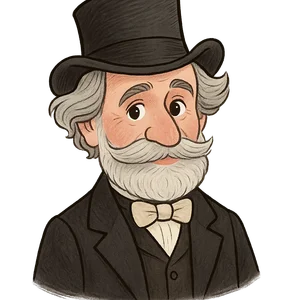
Giuseppe Verdi
Giuseppe Verdi was an Italian composer, primarily of opera…
Reads at Grades 6–8 Listens at Grades 4–8
Print & create
Answer keys·No prep·Free with an account
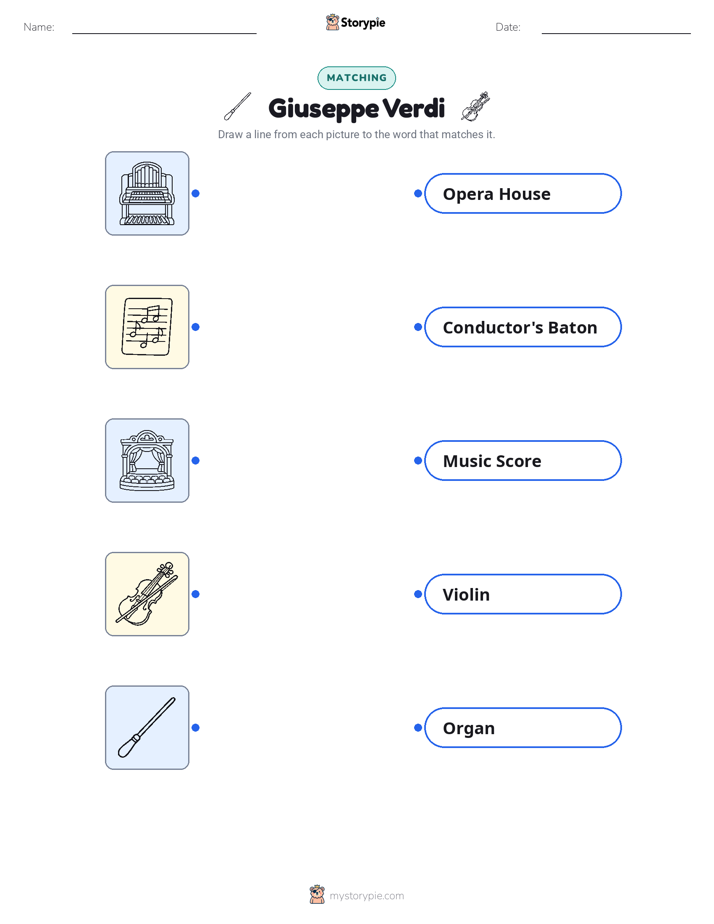
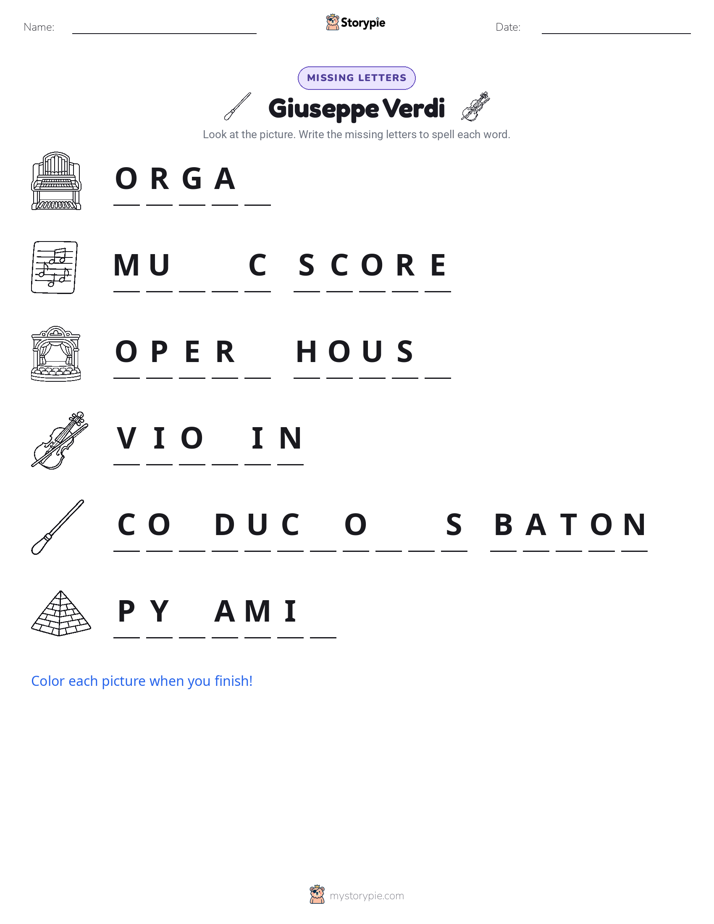
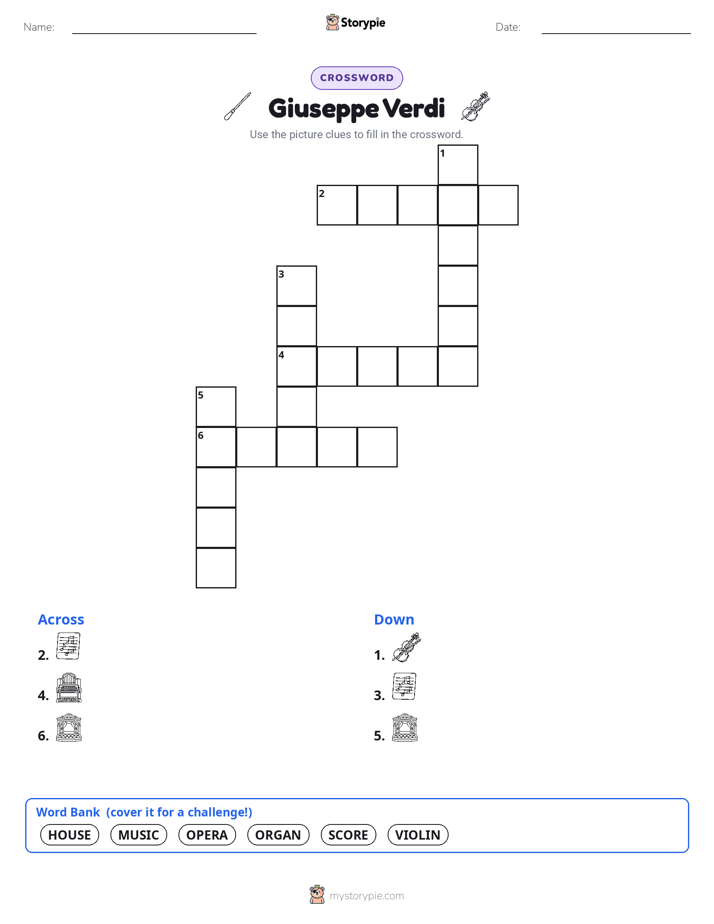
28 worksheets · answer keys · full story · quiz · Ages 10-12 · CEFR B2
Plus adds 280,000+ more stories in 27 languages, audio for every one, and printables for all of them.
Just want Giuseppe Verdi?
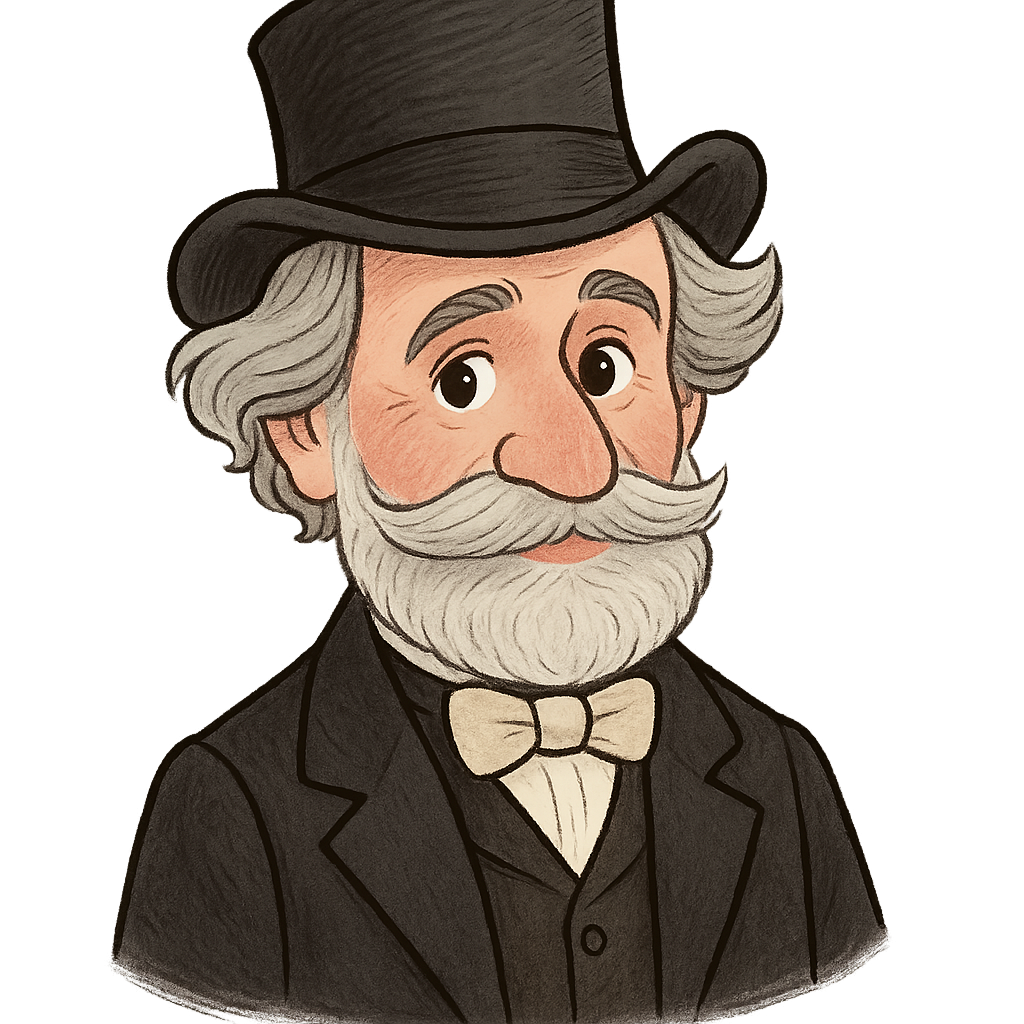
Ciao! My name is Giuseppe Verdi, and I want to tell you the story of my life, which was filled with music, drama, and passion, just like one of my operas. I was born on October 10th, 1813, in a small village in Italy called Le Roncole. My father was an innkeeper, and even though we lived a simple life, he saw the passion I had for music. When I was just a boy, he bought me a keyboard instrument called a spinet. That small gift opened up a whole world for me. I spent countless hours playing it, learning every note I could. Soon, my talent grew, and I began taking lessons and was even trusted to play the organ at our local church, filling the building with powerful music.
When I turned 18, I felt ready to take on the world. In 1832, I traveled to the grand city of Milan to audition for its famous music conservatory. I dreamed of formally studying music there, but my hopes were dashed. The conservatory rejected me, telling me I was too old and that my style of playing the piano wasn't traditional enough for them. I was completely heartbroken, but I refused to let their decision define my future. I found a private teacher in Milan and dedicated myself to my studies before returning to my hometown of Busseto. There, I became the town's music master. It was also where I married my love, Margherita Barezzi, in 1836. Our happiness grew as we welcomed two beautiful children. But a terrible sorrow soon fell upon our lives. Both of our children passed away as babies, and then, in the year 1840, my beloved Margherita also died. I was so overwhelmed with grief that I vowed I would never compose music again.
Giuseppe Verdi: The Maestro of Italy
Ciao! My name is Giuseppe Verdi, and I want to tell you the story of my life, which was filled with music, drama, and passion, just like one of my operas. I was born on October 10th, 1813, in a small village in Italy called Le Roncole. My father was an innkeeper, and even though we lived a simple life, he saw the passion I had for music. When I was just a boy, he bought me a keyboard instrument called a spinet. That small gift opened up a whole world for me. I spent countless hours playing it, learning every note I could. Soon, my talent grew, and I began taking lessons and was even trusted to play the organ at our local church, filling the building with powerful music.
When I turned 18, I felt ready to take on the world. In 1832, I traveled to the grand city of Milan to audition for its famous music conservatory. I dreamed of formally studying music there, but my hopes were dashed. The conservatory rejected me, telling me I was too old and that my style of playing the piano wasn't traditional enough for them. I was completely heartbroken, but I refused to let their decision define my future. I found a private teacher in Milan and dedicated myself to my studies before returning to my hometown of Busseto. There, I became the town's music master. It was also where I married my love, Margherita Barezzi, in 1836. Our happiness grew as we welcomed two beautiful children. But a terrible sorrow soon fell upon our lives. Both of our children passed away as babies, and then, in the year 1840, my beloved Margherita also died. I was so overwhelmed with grief that I vowed I would never compose music again.
I was lost in my sadness, but a man named Bartolomeo Merelli, who was the director of the famous La Scala opera house, refused to let my talent go to waste. He kept encouraging me and one day pressed a script into my hands for an opera called 'Nabucco'. I wanted nothing to do with it, but one night, I opened the pages and my eyes fell upon the words of a chorus sung by Hebrew slaves longing for their homeland: 'Va, pensiero, sull'ali dorate'—'Fly, thought, on golden wings.' The words spoke directly to my own feelings of loss and longing, and they moved me so deeply that they relit the fire for music inside my soul. I began to compose again, pouring my heart into the opera. When 'Nabucco' premiered on March 9th, 1842, it was a massive success. The 'Va, pensiero' chorus resonated with the Italian people, who, like the slaves in my opera, dreamed of a united and free country. It became an unofficial anthem for their cause.
After the success of 'Nabucco', I entered a period I later called my 'galley years,' where I worked tirelessly, like a slave chained to an oar, composing opera after opera. It was an intense and demanding time, but it led to some of my greatest triumphs in the early 1850s. In just a few years, I composed three operas that would become my most famous and beloved works: 'Rigoletto' in 1851, 'Il trovatore' in 1853, and 'La traviata' in 1853. These operas were filled with powerful human emotions—love, jealousy, betrayal, and sacrifice—and audiences connected with them instantly. As my fame grew, my music became the soundtrack for Italy's struggle for independence. People saw the themes of freedom and justice in my operas and made them their own. They even used my name as a secret code for their political cause: V.E.R.D.I. stood for 'Vittorio Emanuele Re D'Italia'—Victor Emmanuel King of Italy! I was so proud of my country's fight that in 1861, I was elected to the very first Italian parliament.
As I grew older, I composed less frequently, but I did not stop creating. In 1871, I was asked to compose one of my grandest operas, 'Aida', for the grand opening of a new opera house in Cairo, Egypt. It was a spectacular story of love and war set in ancient Egypt, and it was a worldwide success. Many people thought 'Aida' would be my final work, a grand farewell to the stage. But I found new inspiration in the plays of my favorite writer, William Shakespeare. When I was in my seventies, I returned to the theater with a powerful and dramatic opera, 'Otello', which premiered in 1887. Then, at nearly 80 years old, I composed my final opera, a brilliant comedy called 'Falstaff' in 1893. After a career filled with so much tragedy and drama, I wanted to end my story with a laugh, and with 'Falstaff', I did just that.
I lived a long and full life, creating music until the very end. I lived to be 87 years old, and when my life came to an end in 1901, all of Italy mourned my passing. Today, my music is still played in opera houses all over the world, from Milan to New York. My operas tell stories about the deepest human feelings—love, loss, and hope—and that is why, I believe, they still touch people's hearts. I am remembered as the composer who gave a voice to the Italian people and whose melodies continue to soar on golden wings.
Wow facts
About
Giuseppe Verdi was an Italian composer, primarily of opera, who became one of the most influential composers of the 19th century. His works, such as Rigoletto, La traviata, and Aida, are frequently performed in opera houses worldwide.
Take a Quiz
Question 1 of 5
What major setback did Verdi face in 1832, and how did he overcome it?
Explore next



Want to do even more?
Go beyond exploring. Unlock tools that turn every story into real learning.

Storypie Plus for families
Full stories, quizzes, and printables. Nights and car rides, sorted.
- Unlimited audio stories
- Create Mode: your child stars in the story
- Offline downloads
- Printable worksheets & coloring pages

Why Storypie for Schools
Students engaged. Prep in seconds. Evenings back to you.
- Worksheets & Quizzes
- Classroom Management
- Formative Assessment
- Custom Curriculum & Lesson Plans
- 27 Languages

Why Storypie for Homeschool
Curriculum done. They'll ask for more. Hours back in your day.
- Worksheet Generator
- First-Person Audio Stories
- Built-in Comprehension Quizzes
- Custom Curriculum & Lesson Plans
- Print & Go Activities