English

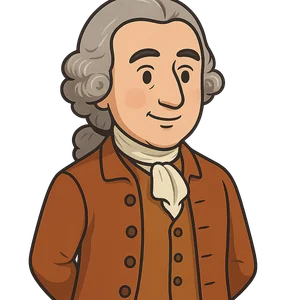
Henry Cavendish
Henry Cavendish was a reclusive but brilliant British scientist known for discovering hydrogen and for being…
Reads at Grades 6–8 Listens at Grades 4–8
Print & create
Answer keys·No prep·Free with an account
28 worksheets · answer keys · full story · quiz · Ages 10-12 · CEFR B2
Plus adds 244,000+ more stories in 27 languages, audio for every one, and printables for all of them.
Just want Henry Cavendish?
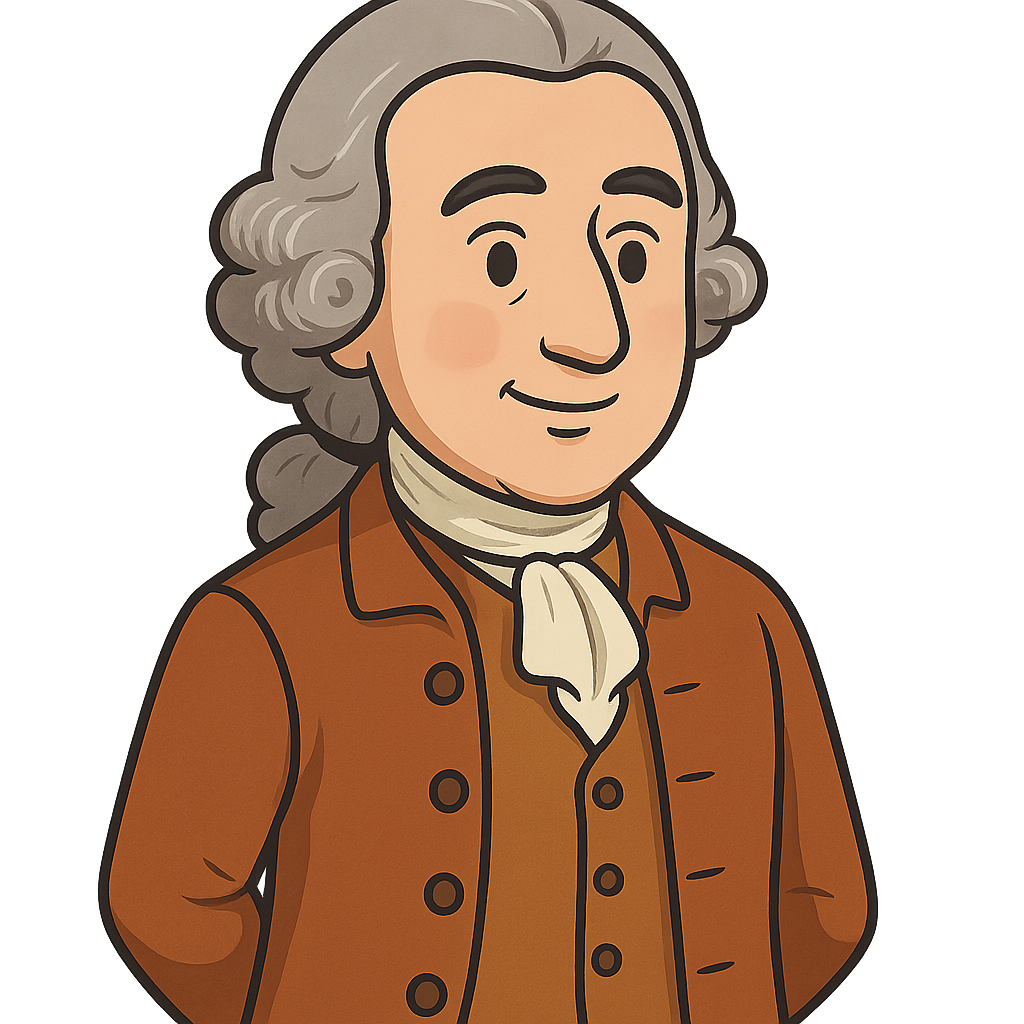
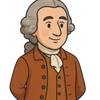
Hello! My name is Henry Cavendish. I was born on October 10th, 1731, in a sunny city called Nice, which is now part of France. My family was quite well-known in England; my father was Lord Charles Cavendish, and my grandfather was the Duke of Devonshire. Despite my noble background, I was always a very quiet and shy person. From a young age, I preferred reading books and learning about the world to attending big parties. Between 1749 and 1753, I studied at a college called Peterhouse at the University of Cambridge. I loved my studies, especially in science and mathematics, but I left without an official degree. In those days, it was quite common for someone in my position to do so. My real education was about to begin in my very own laboratory.
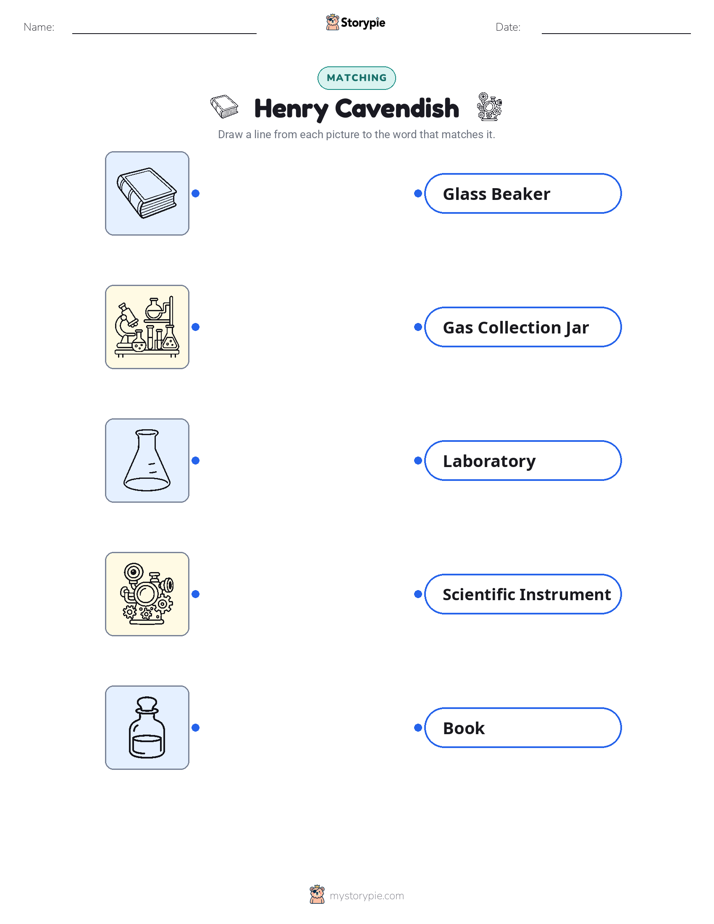
After my university years, I moved to London and, after inheriting a great fortune around 1773, I was able to build the laboratory of my dreams. It was my favorite place in the world, filled with scientific instruments, glass beakers, and endless possibilities for discovery. In 1766, I conducted a series of experiments that would change science forever. I mixed different metals with strong acids and noticed that a strange gas was produced. It was incredibly light—much lighter than ordinary air! I collected this gas and studied it carefully. When I brought a flame near it, it would burn with a pop. Because of this, I named it 'inflammable air.' Today, you know this gas by a different name: hydrogen. I was the first person to recognize it as its own unique substance.
Henry Cavendish: The Scientist Who Weighed the World
Hello! My name is Henry Cavendish. I was born on October 10th, 1731, in a sunny city called Nice, which is now part of France. My family was quite well-known in England; my father was Lord Charles Cavendish, and my grandfather was the Duke of Devonshire. Despite my noble background, I was always a very quiet and shy person. From a young age, I preferred reading books and learning about the world to attending big parties. Between 1749 and 1753, I studied at a college called Peterhouse at the University of Cambridge. I loved my studies, especially in science and mathematics, but I left without an official degree. In those days, it was quite common for someone in my position to do so. My real education was about to begin in my very own laboratory.
After my university years, I moved to London and, after inheriting a great fortune around 1773, I was able to build the laboratory of my dreams. It was my favorite place in the world, filled with scientific instruments, glass beakers, and endless possibilities for discovery. In 1766, I conducted a series of experiments that would change science forever. I mixed different metals with strong acids and noticed that a strange gas was produced. It was incredibly light—much lighter than ordinary air! I collected this gas and studied it carefully. When I brought a flame near it, it would burn with a pop. Because of this, I named it 'inflammable air.' Today, you know this gas by a different name: hydrogen. I was the first person to recognize it as its own unique substance.
My discovery of 'inflammable air' led to another, even more surprising one. For thousands of years, everyone believed that water was a basic element—one of the fundamental building blocks of the universe. But I had my doubts. In 1784, I designed a clever experiment. I took a carefully measured amount of my 'inflammable air' (hydrogen) and mixed it with another gas that my fellow scientists Joseph Priestley and Carl Scheele had recently discovered, which they called 'dephlogisticated air' (oxygen). Inside a sealed glass container, I passed an electric spark through the mixture. BANG! There was a small explosion, and the inside of the glass became coated with a clear liquid. When I tested it, I found it was pure water! I had proven that water was not an element at all, but a compound made of two different gases.
Perhaps my most famous work happened much later, beginning in 1797. I wanted to achieve something that sounded impossible: I wanted to find out how much the entire Earth weighed! To do this, I built a very delicate and precise instrument called a torsion balance. It involved two large lead balls and two smaller lead balls hanging from a thin wire. My idea was that the gravity of the large balls would pull ever so slightly on the smaller ones, causing the wire to twist. The experiment was so sensitive that I had to operate it from another room, looking through a telescope to take measurements, so my own body heat wouldn't affect the results. After many careful calculations, I was able to determine the density of the Earth. My measurement was incredibly accurate, and people later called my work the 'Cavendish experiment' or, more excitingly, 'weighing the world.'
Beyond chemistry, I was also fascinated by electricity. I conducted many experiments to understand how electricity flows and is stored, figuring out ideas like electrical potential and capacitance. However, I was so private that I didn't publish most of this research. It wasn't discovered and shared with the world until nearly 100 years later by another scientist, James Clerk Maxwell. Throughout my life, I avoided the spotlight. I dedicated myself almost completely to science, finding joy not in fame, but in the quiet thrill of discovery and understanding the hidden rules of the universe.
I lived a full and curious life for 78 years. Though I was a very private man, my work was not a secret for long. My discoveries about hydrogen, the composition of water, and the mass of the Earth helped build the foundations of modern chemistry and physics. To honor my family's contributions to science, a world-famous laboratory at Cambridge University was named the Cavendish Laboratory. My legacy is in every science classroom where students learn about elements and in the curiosity that drives scientists to keep asking big questions.
Wow facts
About
Henry Cavendish was a reclusive but brilliant British scientist known for discovering hydrogen and for being the first person to accurately measure the mass of the Earth.
Take a Quiz
Question 1 of 5
Why did Henry Cavendish have to operate his 'weighing the world' experiment from another room?
Explore next




Want to do even more?
Go beyond exploring. Unlock tools that turn every story into real learning.

Storypie Plus for families
Full stories, quizzes, and printables. Nights and car rides, sorted.
- Unlimited audio stories
- Create Mode: your child stars in the story
- Offline downloads
- Printable worksheets & coloring pages

Why Storypie for Schools
Students engaged. Prep in seconds. Evenings back to you.
- Worksheets & Quizzes
- Classroom Management
- Formative Assessment
- Custom Curriculum & Lesson Plans
- 27 Languages

Why Storypie for Homeschool
Curriculum done. They'll ask for more. Hours back in your day.
- Worksheet Generator
- First-Person Audio Stories
- Built-in Comprehension Quizzes
- Custom Curriculum & Lesson Plans
- Print & Go Activities