English

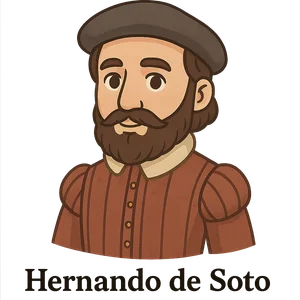
Hernando de Soto
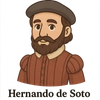
Hernando de Soto was a Spanish explorer and conquistador who led the first major European expedition deep…
Reads at Grades 6–8 Listens at Grades 4–8
Print & create
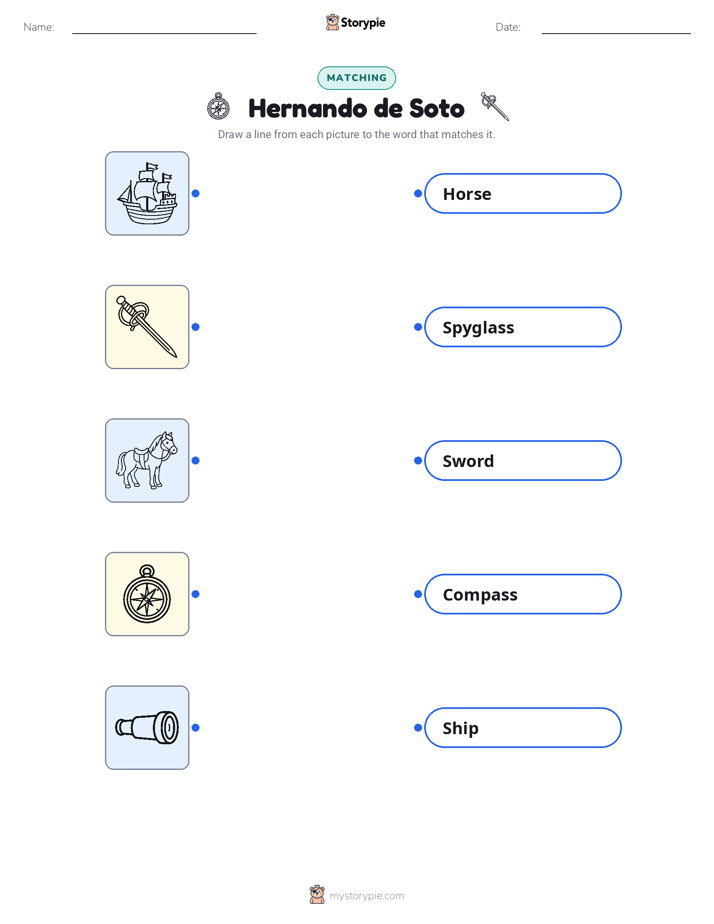
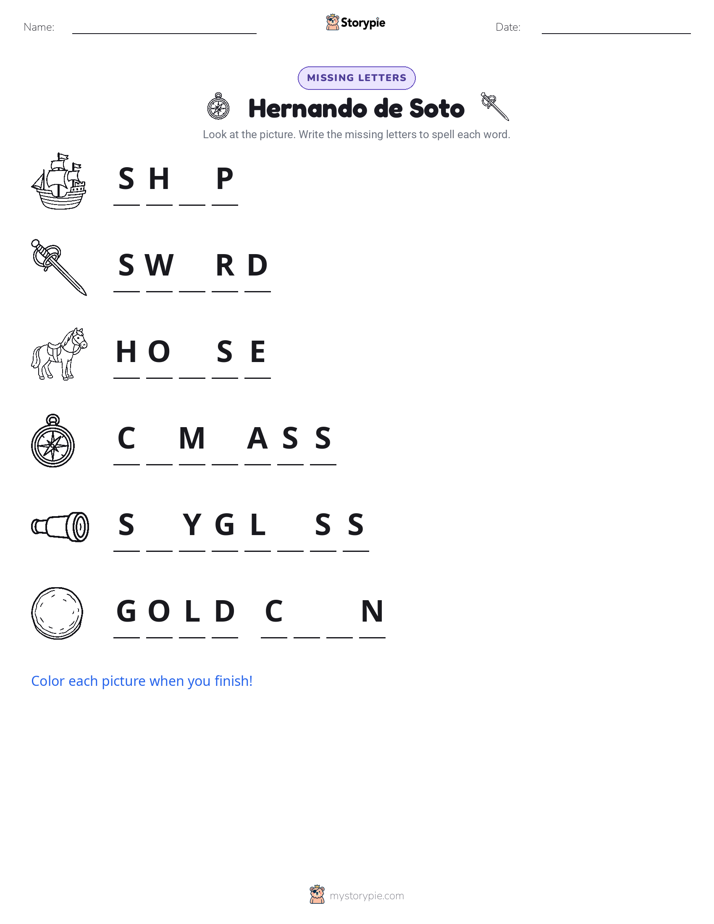
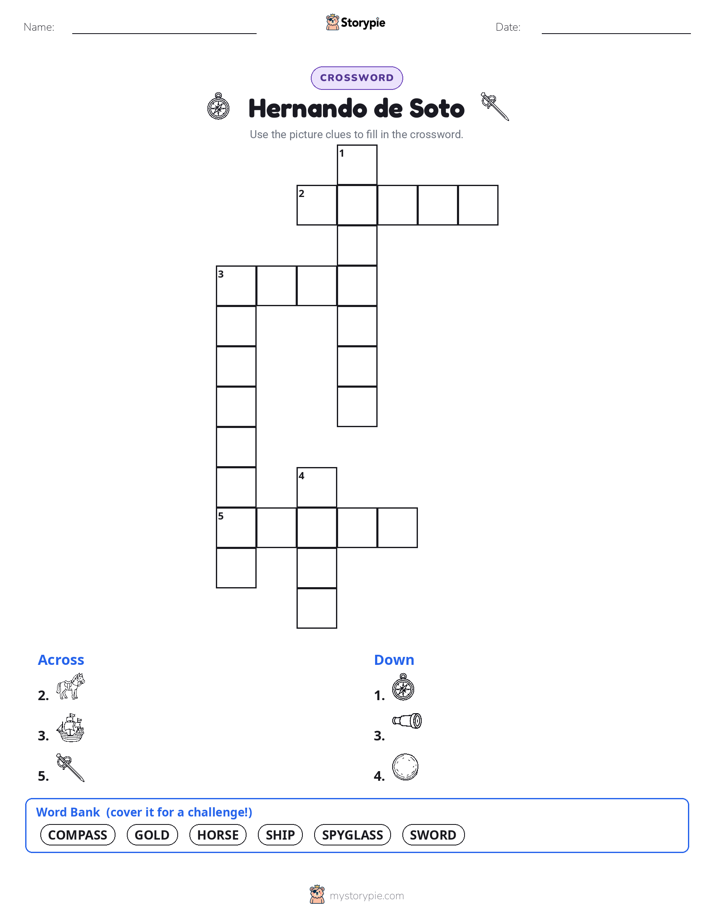
Answer keys·No prep·Free with an account
28 worksheets · answer keys · full story · quiz · Ages 10-12 · CEFR B2
Plus adds 102,000+ more stories in 27 languages, audio for every one, and printables for all of them.
Just want Hernando de Soto?
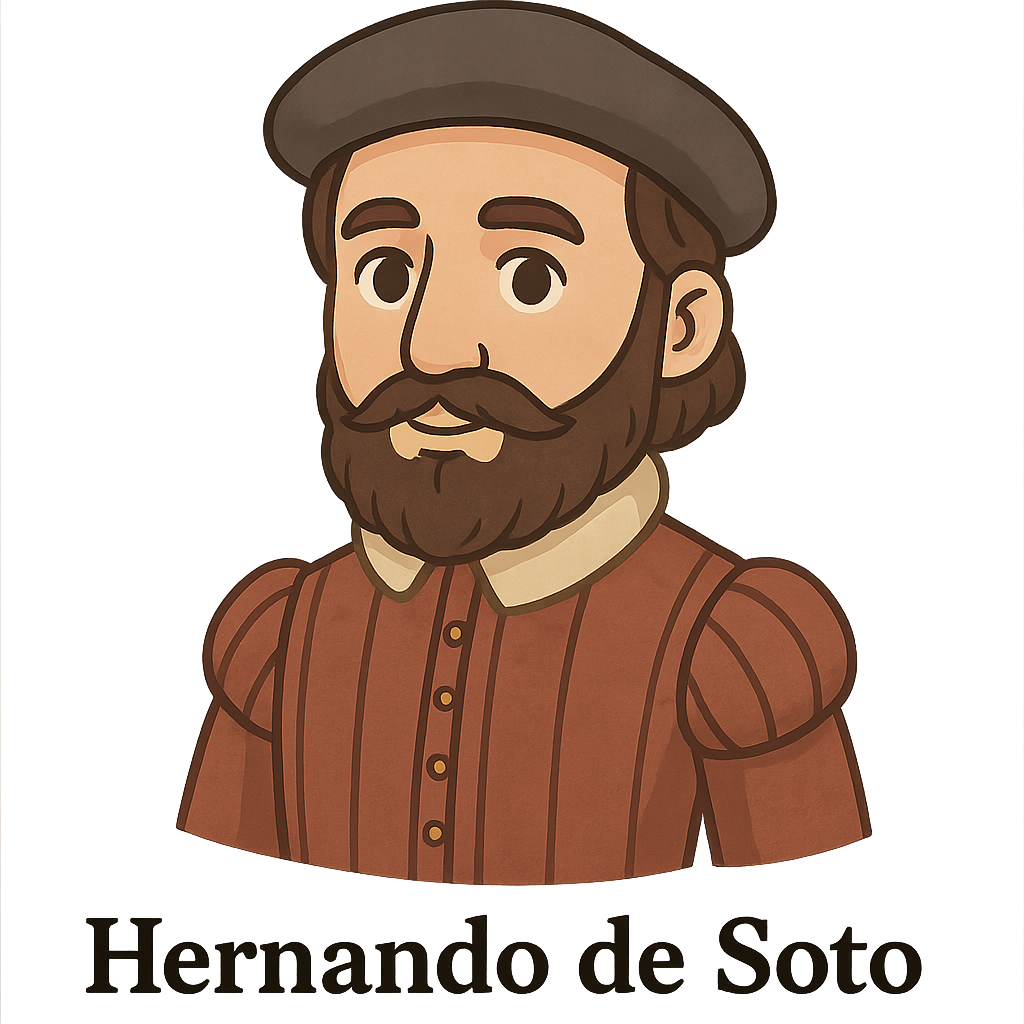
Hello, my name is Hernando de Soto, and I am known for being a Spanish explorer and conquistador. I was born around the year 1500 in a region of Spain called Extremadura. Even though my family was considered noble, we did not have much money. From a young age, I was surrounded by exciting stories of the New World, a land across the ocean that was said to be filled with riches and opportunity. These tales fueled my dreams of adventure. I was determined to find my own fortune and make a name for myself. In 1514, when I was just 14 years old, I seized the chance to sail to the Americas. My goal was clear: to become a famous explorer.
My first years in the Americas were spent exploring Central America, where I gained a reputation as a skilled horseman and a capable captain. My most famous early adventure began in 1532 when I joined an expedition led by Francisco Pizarro. Our destination was the powerful Inca Empire in South America. We marched deep into their territory, and I became one of the first Europeans to meet the Inca emperor, a man named Atahualpa. Our meeting eventually led to his capture. As a ransom for his freedom, his people offered a room filled with gold and another with silver. My share of this treasure made me an incredibly wealthy man. I returned to Spain in 1536 with fame and fortune, but my thirst for exploration was far from quenched.
The King of Spain, Charles V, heard of my successes in Peru and was very impressed. In 1537, he appointed me governor of Cuba and granted me permission to lead an expedition into a vast, uncharted territory known as La Florida, which is now the southeastern United States. Many believed this land held even greater treasures than Peru. I invested my own fortune to prepare the largest and best-equipped expedition the Americas had ever seen. In May of 1539, my fleet of ships arrived on the coast of what is now Florida. With over 600 soldiers, numerous horses, and plenty of supplies, we were ready to march into the wilderness to find treasure and claim a new empire for Spain.
Hernando de Soto: An Explorer's Journey
Hello, my name is Hernando de Soto, and I am known for being a Spanish explorer and conquistador. I was born around the year 1500 in a region of Spain called Extremadura. Even though my family was considered noble, we did not have much money. From a young age, I was surrounded by exciting stories of the New World, a land across the ocean that was said to be filled with riches and opportunity. These tales fueled my dreams of adventure. I was determined to find my own fortune and make a name for myself. In 1514, when I was just 14 years old, I seized the chance to sail to the Americas. My goal was clear: to become a famous explorer.
My first years in the Americas were spent exploring Central America, where I gained a reputation as a skilled horseman and a capable captain. My most famous early adventure began in 1532 when I joined an expedition led by Francisco Pizarro. Our destination was the powerful Inca Empire in South America. We marched deep into their territory, and I became one of the first Europeans to meet the Inca emperor, a man named Atahualpa. Our meeting eventually led to his capture. As a ransom for his freedom, his people offered a room filled with gold and another with silver. My share of this treasure made me an incredibly wealthy man. I returned to Spain in 1536 with fame and fortune, but my thirst for exploration was far from quenched.
The King of Spain, Charles V, heard of my successes in Peru and was very impressed. In 1537, he appointed me governor of Cuba and granted me permission to lead an expedition into a vast, uncharted territory known as La Florida, which is now the southeastern United States. Many believed this land held even greater treasures than Peru. I invested my own fortune to prepare the largest and best-equipped expedition the Americas had ever seen. In May of 1539, my fleet of ships arrived on the coast of what is now Florida. With over 600 soldiers, numerous horses, and plenty of supplies, we were ready to march into the wilderness to find treasure and claim a new empire for Spain.
For nearly four years, my expedition pushed through a challenging and unfamiliar landscape. We traveled across dense forests, vast swamps, and rugged mountains, passing through lands that would one day become the states of Florida, Georgia, South Carolina, North Carolina, Tennessee, Alabama, and Mississippi. All this time, we were searching for the great cities of gold we had dreamed of, but we never found them. Along our journey, we encountered many different groups of Native Americans. These meetings were often very difficult. We were in constant need of food and guides to continue our mission, but the native people were rightfully protecting their homes and resources. This tension led to many fierce battles. One of the most significant was in a town called Mabila in 1540, where a terrible fight resulted in many lives being lost on both sides. The journey proved to be far more brutal and demanding than I had ever imagined.
After years of marching, our numbers had dwindled, and our spirits were low. Then, in May of 1541, we came upon an awe-inspiring sight. Before us lay a river so wide and powerful that the local people called it the 'Great River.' Today, you know this as the Mississippi River. I am remembered in history as the first European to document seeing and crossing this mighty waterway. It was a major challenge, but we built large barges to ferry our remaining men, horses, and supplies to the other side. We continued our search in the lands that are now Arkansas and Louisiana, but the relentless marching and constant hardship had taken a severe toll on all of us.
I never discovered the golden cities I so desperately sought. In the spring of 1542, I became ill with a fever and could not recover. I lived to be about 42 years old. My men, fearing the reaction of the local native tribes if they learned of my death, decided to bury my body in the waters of the great Mississippi River to keep it a secret. Though my expedition failed to find the riches I was looking for, it did change history. I am remembered as the first European to explore deep into the heart of North America and to document the Mississippi River. However, it is also an important part of my story that my journey brought conflict and disease that was devastating to the Native American peoples whose lands I crossed.
Wow facts
About
Hernando de Soto was a Spanish explorer and conquistador who led the first major European expedition deep into the territory of the modern-day United States and was the first documented European to have crossed the Mississippi River.
Take a Quiz
Question 1 of 5
What was the primary goal of my expedition to La Florida that began in 1539?
Explore next


Want to do even more?
Go beyond exploring. Unlock tools that turn every story into real learning.

Storypie Plus for families
Full stories, quizzes, and printables. Nights and car rides, sorted.
- Unlimited audio stories
- Create Mode: your child stars in the story
- Offline downloads
- Printable worksheets & coloring pages

Why Storypie for Schools
Students engaged. Prep in seconds. Evenings back to you.
- Worksheets & Quizzes
- Classroom Management
- Formative Assessment
- Custom Curriculum & Lesson Plans
- 27 Languages

Why Storypie for Homeschool
Curriculum done. They'll ask for more. Hours back in your day.
- Worksheet Generator
- First-Person Audio Stories
- Built-in Comprehension Quizzes
- Custom Curriculum & Lesson Plans
- Print & Go Activities