English

Ibn Khaldun
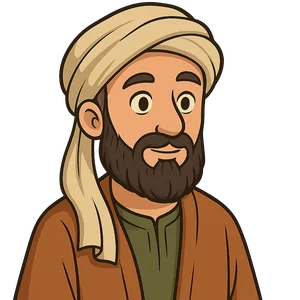
Ibn Khaldun was a North African Arab scholar, historian…
Reads at Grades 6–8 Listens at Grades 4–8
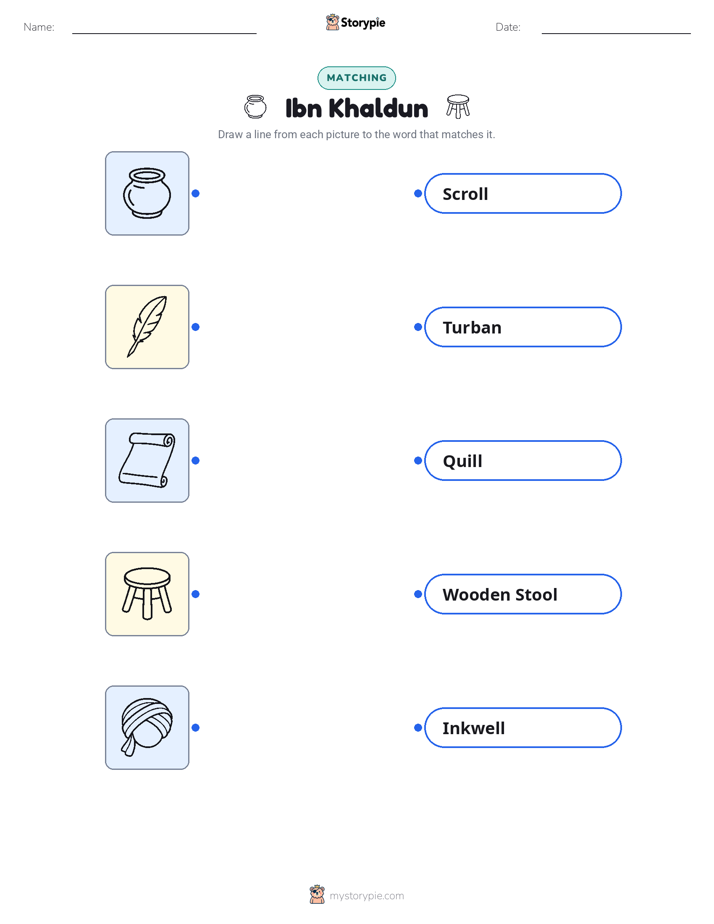
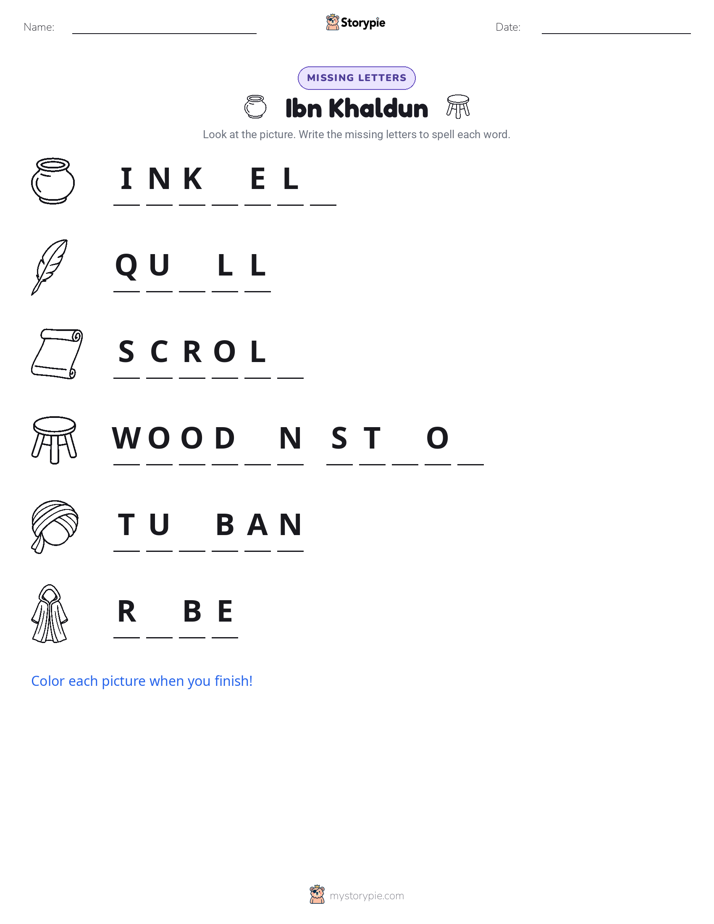
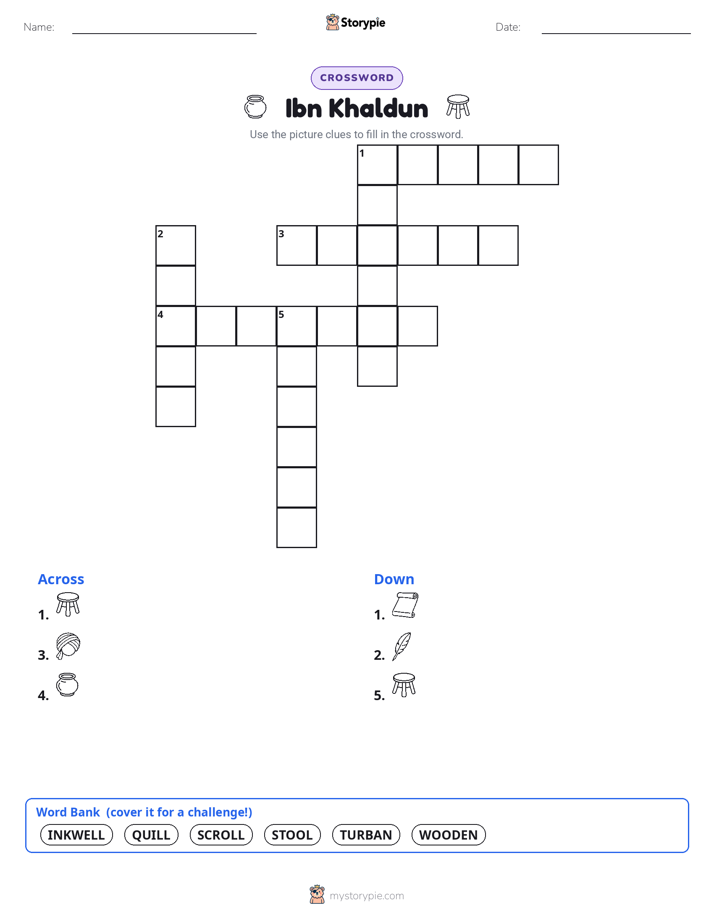
Print & create
Answer keys·No prep·Free with an account
28 worksheets · answer keys · full story · quiz · Ages 10-12 · CEFR B2
Plus adds 208,000+ more stories in 27 languages, audio for every one, and printables for all of them.
Just want Ibn Khaldun?
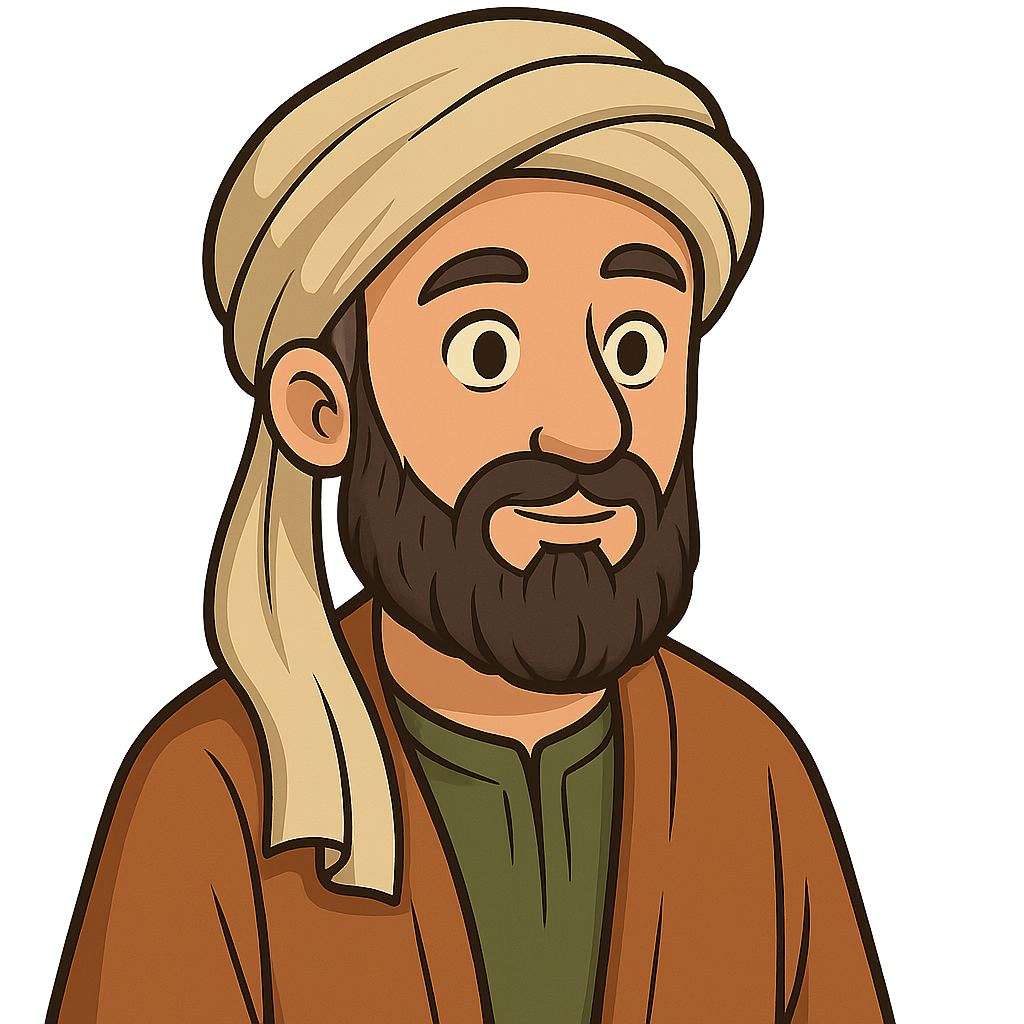
Hello! My name is Ibn Khaldun. I want to tell you the story of my life, which was filled with adventure, learning, and big ideas. I was born in the city of Tunis, in North Africa, on May 27th, 1332. My family had a long history of serving in government, and from a young age, I was expected to study hard. I loved it! I learned about religion, logic, mathematics, and philosophy. But when I was a teenager, a terrible plague, the Black Death, swept through our city in 1348. I lost my parents and many of my teachers. It was a sad and difficult time, but it made me think deeply about how societies change, especially during great challenges.
As a young man, I followed my family's path and entered the world of politics. The world I lived in was very turbulent, with rulers and kingdoms constantly changing. I worked as a secretary, an advisor, and a diplomat for different sultans in places like Tunis, Fez in Morocco, and Granada in Spain. I was good at my job, but it was also dangerous. I saw firsthand how governments could rise to power and then crumble. Around 1357, one ruler in Fez grew suspicious of me and had me thrown in prison for nearly two years! This time gave me even more to think about. I realized that just writing down what happened in history wasn't enough; I wanted to understand *why* it happened.
After years of exciting but stressful political life, I grew tired of the constant plotting and danger. I needed a peaceful place to gather my thoughts and write down all the ideas that had been swirling in my head. So, around the year 1375, I moved my family to a small, quiet town in Algeria called Qalat Ibn Salama. For four years, away from the chaos of the royal courts, I finally had the time to work. It was there that I began my most important project: a massive history of the world.
Ibn Khaldun: The Scientist of Society
Hello! My name is Ibn Khaldun. I want to tell you the story of my life, which was filled with adventure, learning, and big ideas. I was born in the city of Tunis, in North Africa, on May 27th, 1332. My family had a long history of serving in government, and from a young age, I was expected to study hard. I loved it! I learned about religion, logic, mathematics, and philosophy. But when I was a teenager, a terrible plague, the Black Death, swept through our city in 1348. I lost my parents and many of my teachers. It was a sad and difficult time, but it made me think deeply about how societies change, especially during great challenges.
As a young man, I followed my family's path and entered the world of politics. The world I lived in was very turbulent, with rulers and kingdoms constantly changing. I worked as a secretary, an advisor, and a diplomat for different sultans in places like Tunis, Fez in Morocco, and Granada in Spain. I was good at my job, but it was also dangerous. I saw firsthand how governments could rise to power and then crumble. Around 1357, one ruler in Fez grew suspicious of me and had me thrown in prison for nearly two years! This time gave me even more to think about. I realized that just writing down what happened in history wasn't enough; I wanted to understand why it happened.
After years of exciting but stressful political life, I grew tired of the constant plotting and danger. I needed a peaceful place to gather my thoughts and write down all the ideas that had been swirling in my head. So, around the year 1375, I moved my family to a small, quiet town in Algeria called Qalat Ibn Salama. For four years, away from the chaos of the royal courts, I finally had the time to work. It was there that I began my most important project: a massive history of the world.
Before I wrote the history itself, I wrote a long introduction to it. I called it the Muqaddimah. In this book, I explained my new theory about how human society works. I argued that history wasn't just a random collection of stories about kings and battles. Instead, it followed patterns, almost like a science. My biggest idea was something I called 'asabiyyah', which is like a powerful team spirit or group loyalty. I noticed that when a group of people had strong 'asabiyyah', they could work together to build cities, create dynasties, and achieve amazing things. But over time, as they grew comfortable and wealthy, this team spirit would fade, and their civilization would eventually decline, making way for a new group with stronger bonds. This was a brand-new way of looking at the past, and some people today call me the very first sociologist because of it.
Around 1382, I moved to Cairo, Egypt, which was one of the grandest cities in the world. I became a famous teacher and a chief judge. My life took another adventurous turn in 1401 when I traveled to Damascus. There, I met one of the most powerful and feared conquerors of the time, Timur, also known as Tamerlane. He had heard of my wisdom and wanted to talk to me. We spent several weeks discussing history, politics, and the lands I came from. It was a meeting of two very different worlds—the thinker and the warrior—and a moment I never forgot.
I spent the rest of my days in Cairo, teaching, writing, and serving as a judge. I lived to be 73 years old, and my life was full of incredible ups and downs. Today, I am remembered as a great thinker who changed the way we study the past. I wasn't just a historian who recorded events; I was a scientist of society who looked for the reasons behind them. My book, the Muqaddimah, is still read by students and scholars all over the world who want to understand how societies rise, fall, and change over time.
Wow facts
About
Ibn Khaldun was a North African Arab scholar, historian, and social scientist who is considered a forerunner of modern historiography, sociology, and economics.
Take a Quiz
Question 1 of 5
What major event in Ibn Khaldun's youth made him think deeply about how societies change?
Explore next





Want to do even more?
Go beyond exploring. Unlock tools that turn every story into real learning.

Storypie Plus for families
Full stories, quizzes, and printables. Nights and car rides, sorted.
- Unlimited audio stories
- Create Mode: your child stars in the story
- Offline downloads
- Printable worksheets & coloring pages

Why Storypie for Schools
Students engaged. Prep in seconds. Evenings back to you.
- Worksheets & Quizzes
- Classroom Management
- Formative Assessment
- Custom Curriculum & Lesson Plans
- 27 Languages

Why Storypie for Homeschool
Curriculum done. They'll ask for more. Hours back in your day.
- Worksheet Generator
- First-Person Audio Stories
- Built-in Comprehension Quizzes
- Custom Curriculum & Lesson Plans
- Print & Go Activities