English

Ida B. Wells
Ida B.
Reads at Grades 6–8 Listens at Grades 4–8
Print & create
Answer keys·No prep·Free with an account
28 worksheets · answer keys · full story · quiz · Ages 10-12 · CEFR B2
Plus adds 290,000+ more stories in 27 languages, audio for every one, and printables for all of them.
Just want Ida B. Wells?
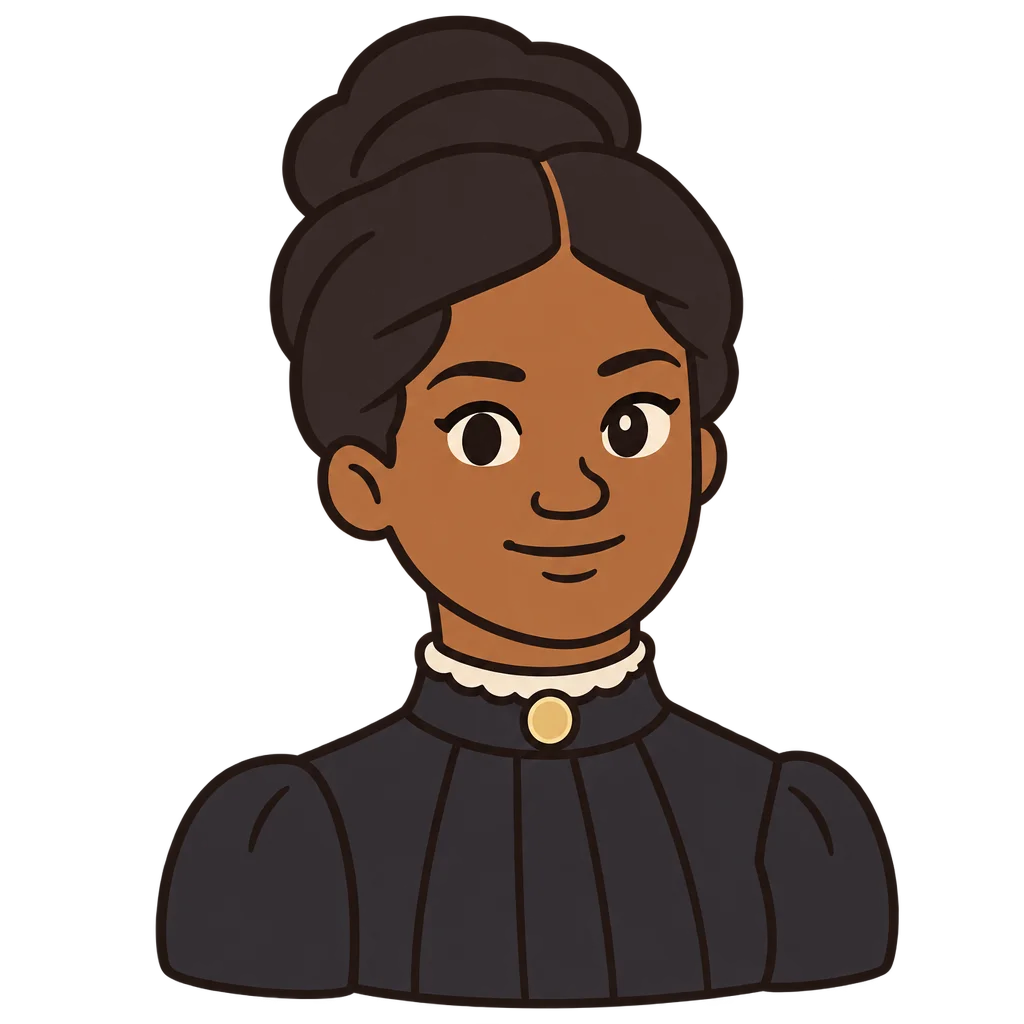
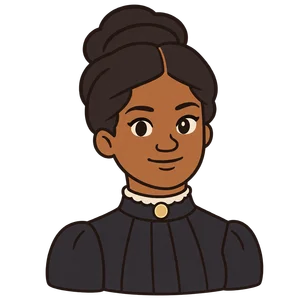
My name is Ida B. Wells, and I want to tell you the story of my life, a life spent fighting for truth and justice. I was born in Holly Springs, Mississippi, on July 16th, 1862, right in the middle of the American Civil War. The world I entered was one of deep conflict, and I was born into slavery. However, just a few months after my birth, President Abraham Lincoln issued the Emancipation Proclamation, and I, along with millions of others, was freed. My parents were my first teachers, and they taught me that education was a path to freedom and that we must always stand up for our rights. They worked hard to build a life for our family. But our world was shattered in 1878 when a terrible yellow fever epidemic swept through our town. It took the lives of both my parents and my youngest brother. I was only 16 years old, but I knew I had to keep our family together. I became a schoolteacher to support my five other siblings, taking on the role of a parent when I was barely more than a child myself.
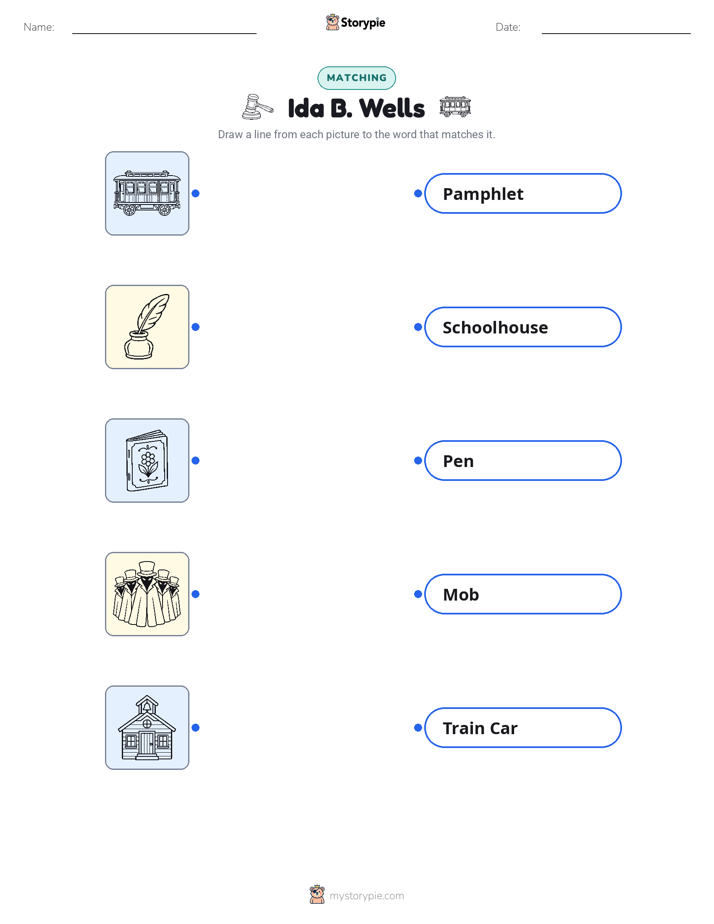
My path changed from teaching to activism because of an injustice I could not ignore. On a day in 1884, I was traveling by train in Tennessee. I had purchased a ticket for the first-class ladies' car, but the conductor ordered me to move to the smoking car, which was designated for African Americans. I refused. I had a ticket, and I had a right to be there. For my refusal, I was forcibly removed from the train. This moment ignited a fire in me. I decided to fight back, not with my fists, but with the power of the law and the pen. I sued the railroad company and, to my great satisfaction, I won my case in the local court. However, my victory was short-lived. In 1887, the Tennessee Supreme Court overturned the decision. This deep injustice showed me that I needed a louder voice. I began writing articles about the racism and inequality I witnessed, using the pen name 'Iola.' My words found an audience, and by 1889, I had become an editor and part-owner of a newspaper in Memphis called the 'Memphis Free Speech and Headlight.' My newspaper became my weapon in the fight for justice.
Ida B. Wells
My name is Ida B. Wells, and I want to tell you the story of my life, a life spent fighting for truth and justice. I was born in Holly Springs, Mississippi, on July 16th, 1862, right in the middle of the American Civil War. The world I entered was one of deep conflict, and I was born into slavery. However, just a few months after my birth, President Abraham Lincoln issued the Emancipation Proclamation, and I, along with millions of others, was freed. My parents were my first teachers, and they taught me that education was a path to freedom and that we must always stand up for our rights. They worked hard to build a life for our family. But our world was shattered in 1878 when a terrible yellow fever epidemic swept through our town. It took the lives of both my parents and my youngest brother. I was only 16 years old, but I knew I had to keep our family together. I became a schoolteacher to support my five other siblings, taking on the role of a parent when I was barely more than a child myself.
My path changed from teaching to activism because of an injustice I could not ignore. On a day in 1884, I was traveling by train in Tennessee. I had purchased a ticket for the first-class ladies' car, but the conductor ordered me to move to the smoking car, which was designated for African Americans. I refused. I had a ticket, and I had a right to be there. For my refusal, I was forcibly removed from the train. This moment ignited a fire in me. I decided to fight back, not with my fists, but with the power of the law and the pen. I sued the railroad company and, to my great satisfaction, I won my case in the local court. However, my victory was short-lived. In 1887, the Tennessee Supreme Court overturned the decision. This deep injustice showed me that I needed a louder voice. I began writing articles about the racism and inequality I witnessed, using the pen name 'Iola.' My words found an audience, and by 1889, I had become an editor and part-owner of a newspaper in Memphis called the 'Memphis Free Speech and Headlight.' My newspaper became my weapon in the fight for justice.
My life's most important work, my crusade, began with a terrible tragedy. In 1892, three of my friends in Memphis, including a successful grocer named Thomas Moss, were brutally murdered by a white mob. This act of violence is known as lynching, a horrific form of mob rule used to terrorize Black communities and maintain white supremacy. This was not an isolated incident, but it was deeply personal, and it changed the course of my life. I realized that someone had to expose the truth behind these killings. I decided to become an investigative journalist. I traveled throughout the South, often putting my own life in danger, to gather facts about lynchings. I interviewed witnesses, collected data, and documented hundreds of cases. I wanted to prove to the world that these murders were not about punishing crimes, as was often claimed, but were instead driven by racial hatred and economic jealousy. I published my findings in pamphlets that shocked many readers. The first was 'Southern Horrors: Lynch Law in All Its Phases' in 1892, followed by 'The Red Record' in 1895. My work exposed the ugly truth, but it came at a great cost. While I was away, an angry mob destroyed my newspaper office in Memphis. I was warned not to return home, and I never did.
Forced to leave the South, I took my fight to the national and international stage. I believed that if people in other parts of the world knew what was happening in America, they would help demand change. I traveled to Great Britain in 1893 and again in 1894, giving speeches and telling audiences about the horrors of lynching. Back in the United States, I continued to challenge injustice wherever I saw it. In 1893, the city of Chicago hosted the World's Columbian Exposition, a massive fair meant to celebrate progress. However, African Americans were almost completely excluded from it. I co-authored a pamphlet titled 'The Reason Why the Colored American Is Not in the World's Columbian Exposition' to protest this exclusion. I also fought for the right of women to vote, but I challenged the white leaders of the suffrage movement to include Black women in their fight. In 1913, I founded the Alpha Suffrage Club in Chicago, the first of its kind for Black women. That same year, during a large suffrage parade in Washington, D.C., I refused to march in the segregated section at the back. I waited until the parade began and then stepped into the line with the white delegates from my state, making a powerful statement for equality. I also helped found major organizations, including the National Association of Colored Women in 1896 and the National Association for the Advancement of Colored People (NAACP) in 1909.
Looking back on my life, I see a long, hard-fought battle for justice. In 1895, I married Ferdinand L. Barnett, a lawyer and editor who shared my passion for equality. Together, we raised our four children while continuing our work as activists. I lived to be 68 years old, and my life was a testament to the power of truth. I hope I am remembered for using journalism—a free press and the power of facts—as a weapon against hatred and violence. My investigations and advocacy helped lay the groundwork for the Civil Rights Movement that would come decades later. It fills me with pride to know that my story continues to inspire people today to speak out against injustice. In 2020, I was honored with a special Pulitzer Prize for my courageous and pioneering reporting. It is a reminder that even when the path is difficult, one person with the courage to tell the truth can make a difference.
Wow facts
About
Ida B. Wells was a pioneering African American investigative journalist, educator, and early civil rights leader. She led an anti-lynching crusade in the United States in the 1890s and was a co-founder of the NAACP.
Take a Quiz
Question 1 of 5
What pivotal event in 1892 caused Ida B. Wells to begin her investigative journalism crusade against lynching?
Explore next





Want to do even more?
Go beyond exploring. Unlock tools that turn every story into real learning.

Storypie Plus for families
Full stories, quizzes, and printables. Nights and car rides, sorted.
- Unlimited audio stories
- Create Mode: your child stars in the story
- Offline downloads
- Printable worksheets & coloring pages

Why Storypie for Schools
Students engaged. Prep in seconds. Evenings back to you.
- Worksheets & Quizzes
- Classroom Management
- Formative Assessment
- Custom Curriculum & Lesson Plans
- 27 Languages

Why Storypie for Homeschool
Curriculum done. They'll ask for more. Hours back in your day.
- Worksheet Generator
- First-Person Audio Stories
- Built-in Comprehension Quizzes
- Custom Curriculum & Lesson Plans
- Print & Go Activities