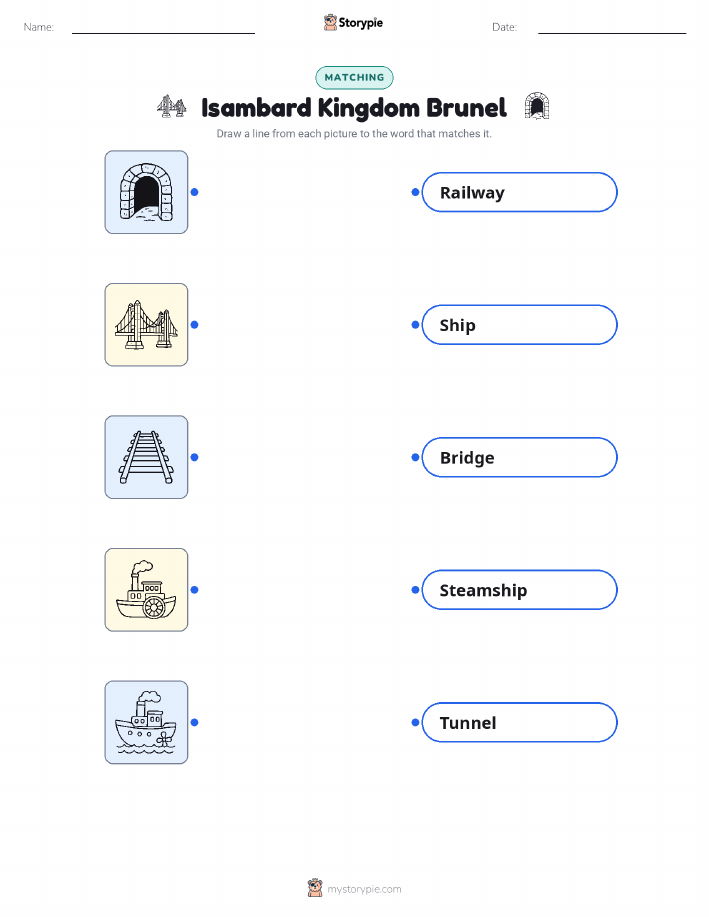
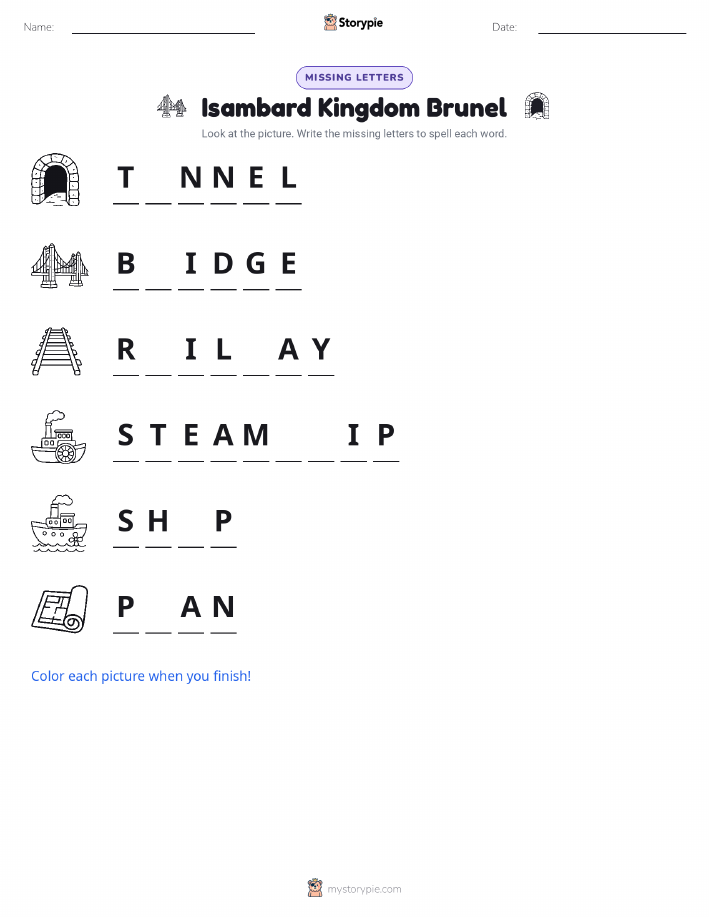
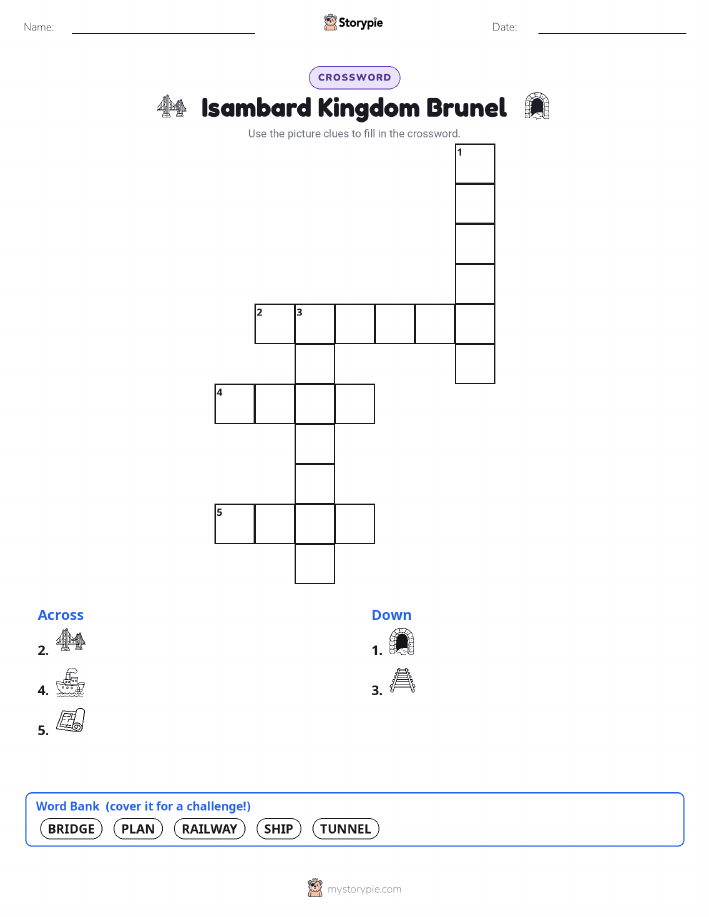
English


Isambard Kingdom Brunel
Isambard Kingdom Brunel was a pioneering British civil and mechanical engineer during the Industrial…
Reads at Grades 6–8 Listens at Grades 4–8
Print & create
Answer keys·No prep·Free with an account
28 worksheets · answer keys · full story · quiz · Ages 10-12 · CEFR B2
Plus adds 280,000+ more stories in 27 languages, audio for every one, and printables for all of them.
Just want Isambard Kingdom Brunel?
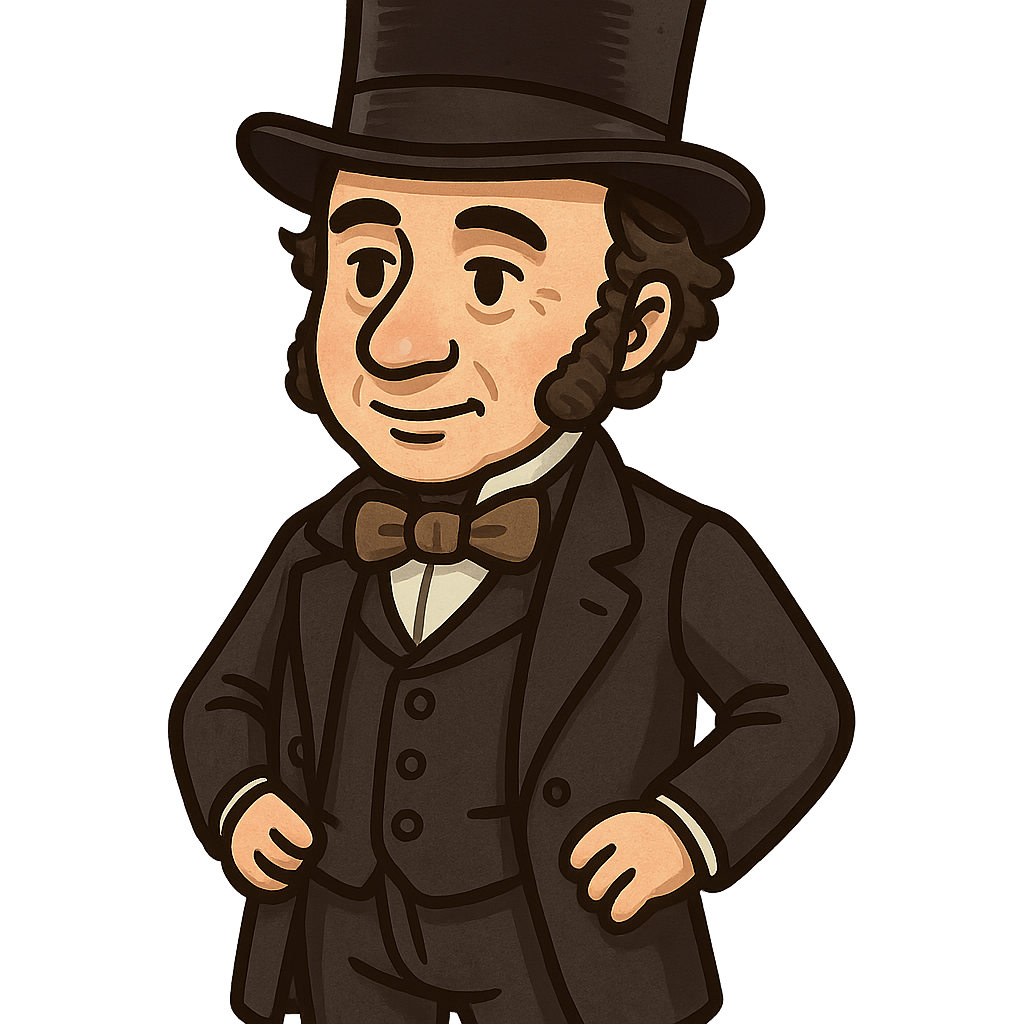
Hello, my name is Isambard Kingdom Brunel, and I am an engineer who helped shape the modern world. I was born on April 9th, 1806, in Portsmouth, a bustling port city in England. My father was the great Sir Marc Isambard Brunel, himself a famous engineer. Growing up, I was surrounded by his plans and projects, and I quickly developed a deep love for drawing, mathematics, and the art of building things. He was my greatest inspiration. To further my education, I studied in France, learning from some of the best engineering minds of the time. When I returned to England, I was ready for a challenge. In 1825, I got my first big job working as my father's assistant on his most daring project yet: the Thames Tunnel. It was the first tunnel ever built under a major river. The work was incredibly difficult and dangerous. In 1828, disaster struck when the river broke through, flooding the tunnel. I was nearly swept away in the torrent, and the experience left me badly injured. I had to spend many months recovering, but the incident never weakened my resolve to build and create.
After I recovered, I was eager to make my own mark on the world. My opportunity came in 1831 when I won a competition to design the Clifton Suspension Bridge. It was a bold and elegant design, intended to soar high above the Avon Gorge. Although it took many years to complete, it was a symbol of my ambition. Then, in 1833, I was given the role of a lifetime: chief engineer for the new Great Western Railway. My vision was not just to build a railway, but to build the best railway in the world. I wanted it to be faster, smoother, and more comfortable than any other. To do this, I designed a special 'broad gauge' track, which was wider than the standard tracks used at the time. Building the railway was a monumental task that required us to carve a path through hills and across valleys. One of our greatest challenges was digging the Box Tunnel, which stretched for nearly two miles through solid rock and was finally completed in 1841. My work also included designing the stations, and in 1854, the grand Paddington Station I designed opened in London, becoming a magnificent gateway for travelers.
Isambard Kingdom Brunel: The Man Who Built the Future
Hello, my name is Isambard Kingdom Brunel, and I am an engineer who helped shape the modern world. I was born on April 9th, 1806, in Portsmouth, a bustling port city in England. My father was the great Sir Marc Isambard Brunel, himself a famous engineer. Growing up, I was surrounded by his plans and projects, and I quickly developed a deep love for drawing, mathematics, and the art of building things. He was my greatest inspiration. To further my education, I studied in France, learning from some of the best engineering minds of the time. When I returned to England, I was ready for a challenge. In 1825, I got my first big job working as my father's assistant on his most daring project yet: the Thames Tunnel. It was the first tunnel ever built under a major river. The work was incredibly difficult and dangerous. In 1828, disaster struck when the river broke through, flooding the tunnel. I was nearly swept away in the torrent, and the experience left me badly injured. I had to spend many months recovering, but the incident never weakened my resolve to build and create.
After I recovered, I was eager to make my own mark on the world. My opportunity came in 1831 when I won a competition to design the Clifton Suspension Bridge. It was a bold and elegant design, intended to soar high above the Avon Gorge. Although it took many years to complete, it was a symbol of my ambition. Then, in 1833, I was given the role of a lifetime: chief engineer for the new Great Western Railway. My vision was not just to build a railway, but to build the best railway in the world. I wanted it to be faster, smoother, and more comfortable than any other. To do this, I designed a special 'broad gauge' track, which was wider than the standard tracks used at the time. Building the railway was a monumental task that required us to carve a path through hills and across valleys. One of our greatest challenges was digging the Box Tunnel, which stretched for nearly two miles through solid rock and was finally completed in 1841. My work also included designing the stations, and in 1854, the grand Paddington Station I designed opened in London, becoming a magnificent gateway for travelers.
I believed the journey shouldn't stop where the railway tracks ended. My next big idea was to extend the Great Western Railway's service across the Atlantic Ocean with a fleet of powerful steamships. My first ship, the SS Great Western, was launched in 1837. At the time, many people doubted that a ship could carry enough coal to power itself across the entire ocean, but my calculations proved them wrong. The ship's successful voyage proved that long-distance sea travel by steam power was not only possible but practical. Following this success, I designed an even more revolutionary ship, the SS Great Britain, which was launched in 1843. This vessel was truly special because it was the first large ship to be built almost entirely of iron, and it was the first to use a screw propeller instead of large paddle wheels, making it stronger and more efficient. My ambition grew with each success, leading me to my final and most challenging project: the SS Great Eastern. Launched in 1858, it was designed to be the largest ship in the world, a true giant of the sea capable of sailing all the way to Australia and back without needing to stop for fuel.
My mind was always at work, and I took on many different kinds of engineering challenges beyond railways and ships. For example, during the Crimean War in 1855, I turned my attention to improving conditions for injured soldiers. I designed innovative prefabricated hospitals that could be built in England, shipped in pieces, and quickly assembled on the battlefield. They were designed to be easy to clean, which helped improve sanitation and save lives. Throughout my career, I gained a reputation as a tireless worker. I was rarely seen without my notebook and pencil, constantly sketching ideas and refining my designs. I was known for my attention to detail, personally overseeing every stage of a project to ensure it met my exacting standards. This dedication required immense personal sacrifice, including long hours and constant pressure, but it was the only way I knew how to turn my extraordinary visions into reality.
The enormous stress of building and launching the SS Great Eastern took a toll on my health, and I suffered a stroke just before its maiden voyage in 1859. I lived to be 53 years old. Though my life was not as long as some, I filled it with creations that changed the world. My railways, bridges, tunnels, and ships helped to connect Britain and the world in ways no one had thought possible before. I am remembered as one of the great figures of the Industrial Revolution, a period of incredible change and innovation. I hope my story inspires you to believe that with bold ideas, careful planning, and a lot of hard work, you too can build the future.
Wow facts
About
Isambard Kingdom Brunel was a pioneering British civil and mechanical engineer during the Industrial Revolution, renowned for designing groundbreaking tunnels, bridges, railways, and steamships.
Take a Quiz
Question 1 of 5
What does the word 'prefabricated' mean in the sentence, 'I designed innovative prefabricated hospitals'?
Explore next





Want to do even more?
Go beyond exploring. Unlock tools that turn every story into real learning.

Storypie Plus for families
Full stories, quizzes, and printables. Nights and car rides, sorted.
- Unlimited audio stories
- Create Mode: your child stars in the story
- Offline downloads
- Printable worksheets & coloring pages

Why Storypie for Schools
Students engaged. Prep in seconds. Evenings back to you.
- Worksheets & Quizzes
- Classroom Management
- Formative Assessment
- Custom Curriculum & Lesson Plans
- 27 Languages

Why Storypie for Homeschool
Curriculum done. They'll ask for more. Hours back in your day.
- Worksheet Generator
- First-Person Audio Stories
- Built-in Comprehension Quizzes
- Custom Curriculum & Lesson Plans
- Print & Go Activities