English


Isambard Kingdom Brunel
Isambard Kingdom Brunel was a pioneering British civil and mechanical engineer during the Industrial…
Reads at Grades 3–5 Listens at Grades 1–5
Print & create
Answer keys·No prep·Free with an account
28 worksheets · answer keys · full story · quiz · Ages 8-10 · CEFR B1
Plus adds 280,000+ more stories in 27 languages, audio for every one, and printables for all of them.
Just want Isambard Kingdom Brunel?
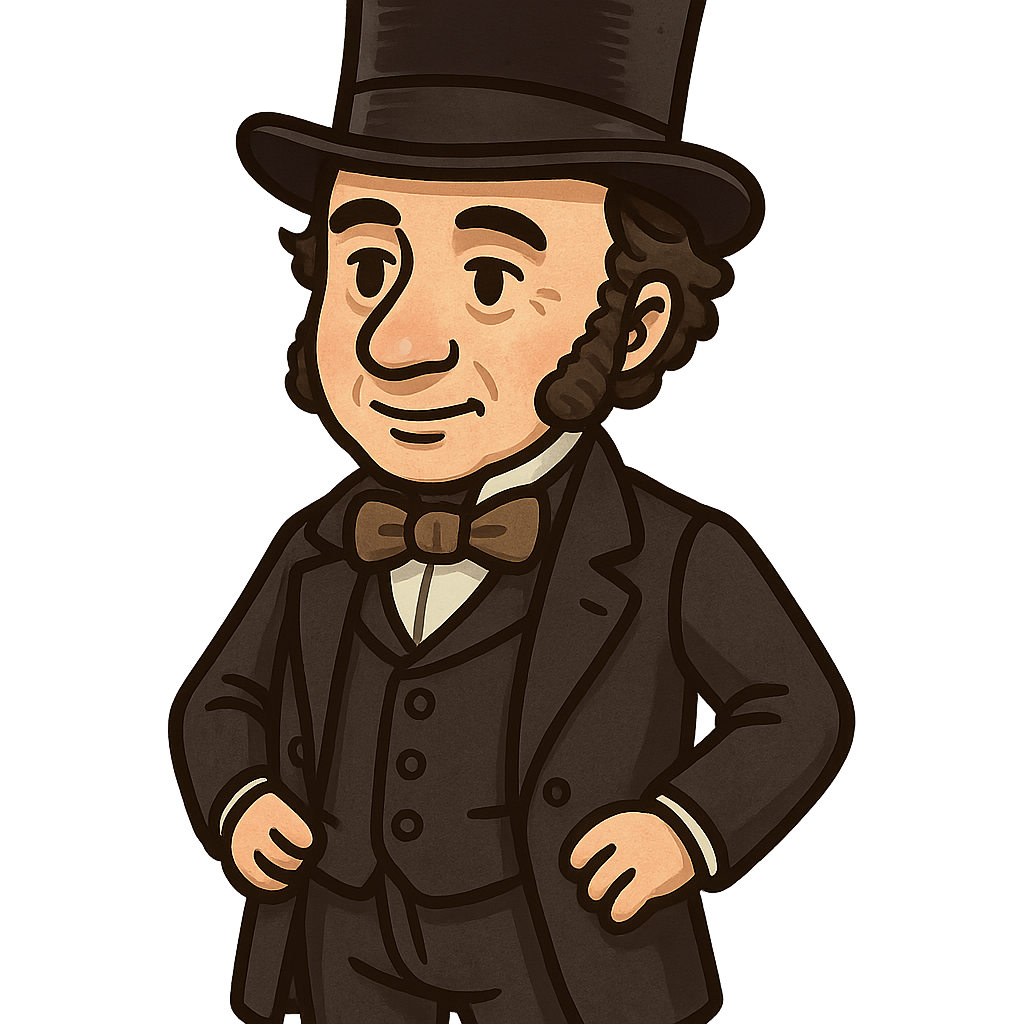
Hello! My name is Isambard Kingdom Brunel, and I was an engineer who loved to solve problems and build very big things. I was born on April 9th, 1806, in Portsmouth, a busy port town in England. My father, Sir Marc Isambard Brunel, was also a famous engineer, so you could say that building was in my blood! I spent my childhood watching him draw incredible plans for bridges and machines. He taught me everything he knew and sent me to school in France to study mathematics and engineering. By the time I returned, I was ready to help him with his most amazing project yet.
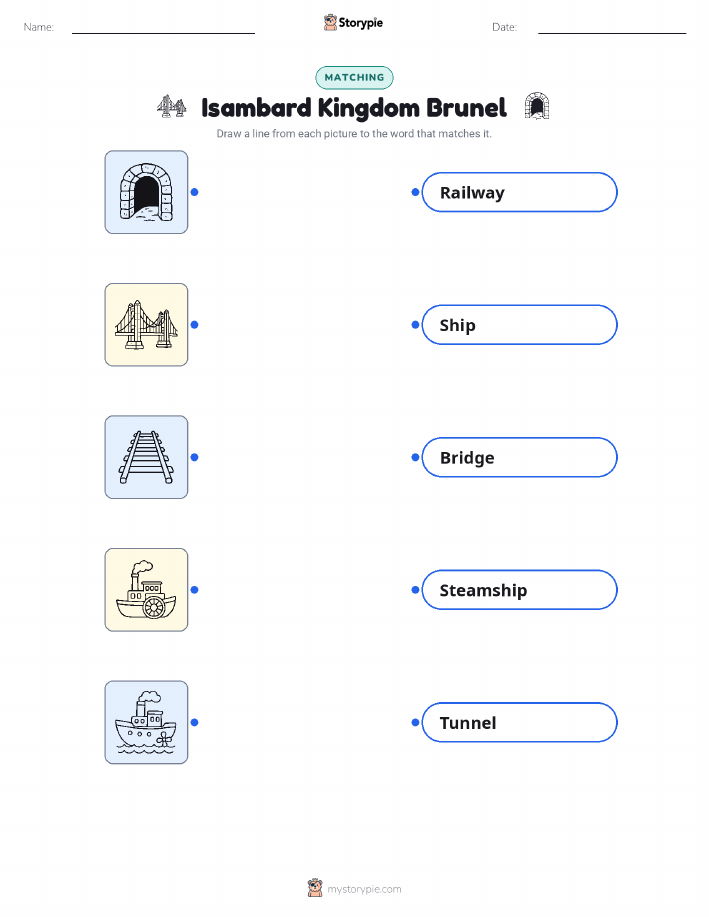
My very first big job began in 1825, when I started helping my father build the Thames Tunnel in London. This wasn't just any tunnel; it was the first one ever built underneath a big, flowing river! It was a very challenging project. When I was just 20 years old, my father trusted me to be the head engineer on site. The work was difficult and dangerous. In 1828, a disaster happened when the river water broke through the tunnel wall and flooded everything. I was badly hurt in the accident, but I was lucky to escape. That scary experience didn't make me want to quit. Instead, it made me even more determined to build things that were strong and could overcome any challenge.
After I recovered from my injuries, my mind was buzzing with new ideas. In 1831, I entered a contest to design a new bridge in a city called Bristol. I won! My design was for the Clifton Suspension Bridge, a beautiful, high bridge that would stretch across a deep gorge. While that project was being planned, I took on an even bigger job. In 1833, I became the chief engineer for the Great Western Railway, which was a brand-new train line connecting the cities of London and Bristol. I wanted it to be the best railway in the entire world, giving passengers the fastest and smoothest ride they had ever experienced. To do this, I designed a special 'broad gauge' track that was wider than other tracks, which made the trains more stable at high speeds. Building the railway was a huge task that involved constructing bridges, tall viaducts, and even carving the two-mile-long Box Tunnel straight through a giant hill!
Isambard Kingdom Brunel: The Man Who Built the World
Hello! My name is Isambard Kingdom Brunel, and I was an engineer who loved to solve problems and build very big things. I was born on April 9th, 1806, in Portsmouth, a busy port town in England. My father, Sir Marc Isambard Brunel, was also a famous engineer, so you could say that building was in my blood! I spent my childhood watching him draw incredible plans for bridges and machines. He taught me everything he knew and sent me to school in France to study mathematics and engineering. By the time I returned, I was ready to help him with his most amazing project yet.
My very first big job began in 1825, when I started helping my father build the Thames Tunnel in London. This wasn't just any tunnel; it was the first one ever built underneath a big, flowing river! It was a very challenging project. When I was just 20 years old, my father trusted me to be the head engineer on site. The work was difficult and dangerous. In 1828, a disaster happened when the river water broke through the tunnel wall and flooded everything. I was badly hurt in the accident, but I was lucky to escape. That scary experience didn't make me want to quit. Instead, it made me even more determined to build things that were strong and could overcome any challenge.
After I recovered from my injuries, my mind was buzzing with new ideas. In 1831, I entered a contest to design a new bridge in a city called Bristol. I won! My design was for the Clifton Suspension Bridge, a beautiful, high bridge that would stretch across a deep gorge. While that project was being planned, I took on an even bigger job. In 1833, I became the chief engineer for the Great Western Railway, which was a brand-new train line connecting the cities of London and Bristol. I wanted it to be the best railway in the entire world, giving passengers the fastest and smoothest ride they had ever experienced. To do this, I designed a special 'broad gauge' track that was wider than other tracks, which made the trains more stable at high speeds. Building the railway was a huge task that involved constructing bridges, tall viaducts, and even carving the two-mile-long Box Tunnel straight through a giant hill!
I always liked to think bigger, so I thought, why should the journey stop at the coast of Bristol? Why not build a way to keep going across the ocean? That's when I started designing steamships. My first ship was called the SS Great Western, which we launched in 1838. It proved that ships powered by steam engines could make the long journey all the way across the Atlantic Ocean. My next ship, the SS Great Britain, launched in 1843, was even more revolutionary. It was the first large ship ever made of iron, and it was the first to use a screw propeller instead of old-fashioned paddle wheels to move through the water. But my final ship was my biggest dream of all. Named the SS Great Eastern and launched in 1858, it was the largest ship the world had ever seen. It was like a floating city! Building it was very difficult and stressful, but I was incredibly proud of what we accomplished.
All of that hard work and constant thinking took a toll on my health. I lived to be 53 years old and passed away in 1859, just after my giant ship, the SS Great Eastern, was finally ready for its first voyage. Even though I didn't get to see it sail, I knew my work would live on. Today, people still travel on the railways I designed. The beautiful Clifton Suspension Bridge was finished after I was gone and stands as a tribute to my vision. I am remembered as someone who was never afraid to dream big and use science to connect the world in ways no one had ever imagined.
Wow facts
About
Isambard Kingdom Brunel was a pioneering British civil and mechanical engineer during the Industrial Revolution, renowned for designing groundbreaking tunnels, bridges, railways, and steamships.
Take a Quiz
Question 1 of 5
Why did Isambard Kingdom Brunel design a special 'broad gauge' track for his railway?
Explore next





Want to do even more?
Go beyond exploring. Unlock tools that turn every story into real learning.

Storypie Plus for families
Full stories, quizzes, and printables. Nights and car rides, sorted.
- Unlimited audio stories
- Create Mode: your child stars in the story
- Offline downloads
- Printable worksheets & coloring pages

Why Storypie for Schools
Students engaged. Prep in seconds. Evenings back to you.
- Worksheets & Quizzes
- Classroom Management
- Formative Assessment
- Custom Curriculum & Lesson Plans
- 27 Languages

Why Storypie for Homeschool
Curriculum done. They'll ask for more. Hours back in your day.
- Worksheet Generator
- First-Person Audio Stories
- Built-in Comprehension Quizzes
- Custom Curriculum & Lesson Plans
- Print & Go Activities