English

James Watt
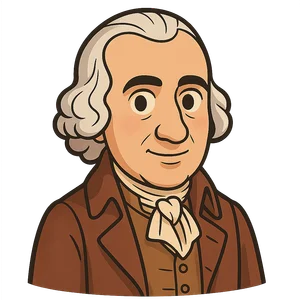
James Watt was a Scottish inventor and mechanical engineer whose improvements to the steam engine in the 18th…
Reads at Grades 3–5 Listens at Grades 1–5
Print & create
Answer keys·No prep·Free with an account
28 worksheets · answer keys · full story · quiz · Ages 8-10 · CEFR B1
Plus adds 164,000+ more stories in 27 languages, audio for every one, and printables for all of them.
Just want James Watt?
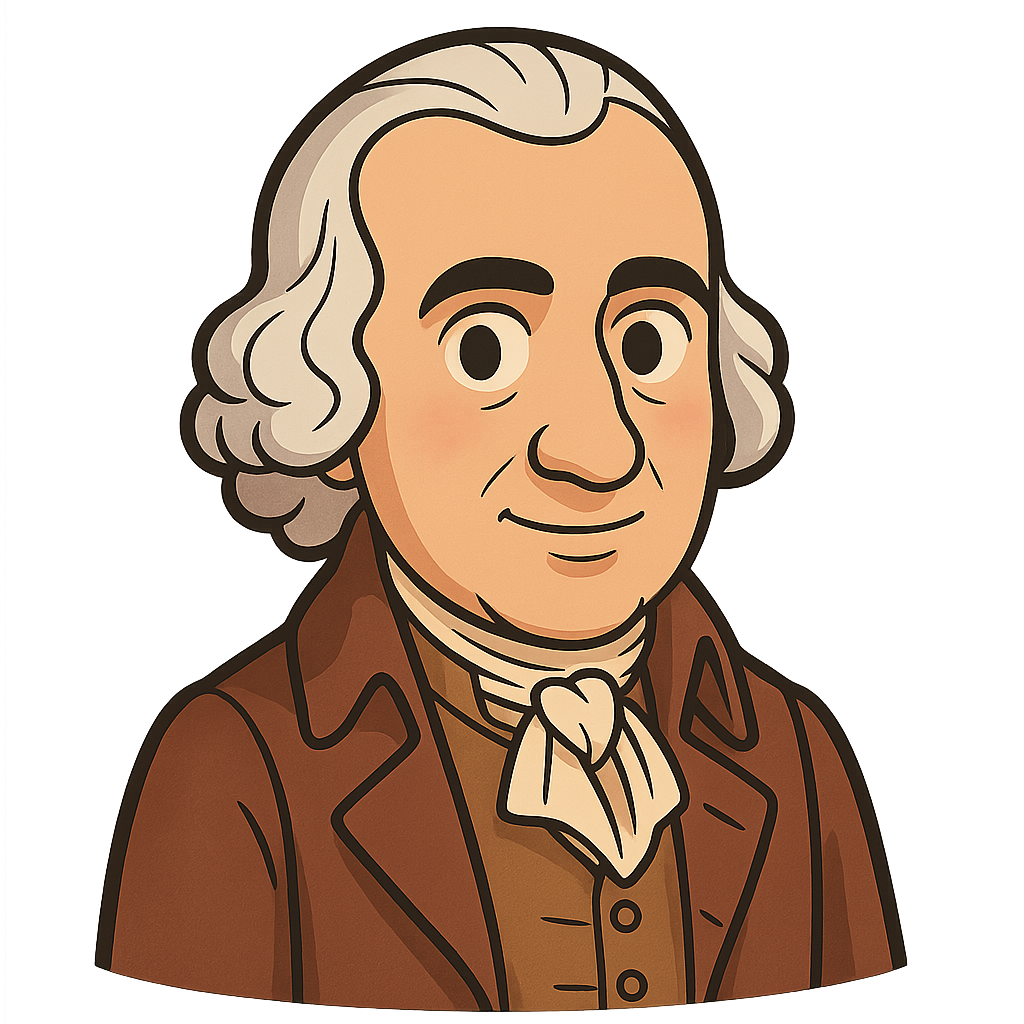
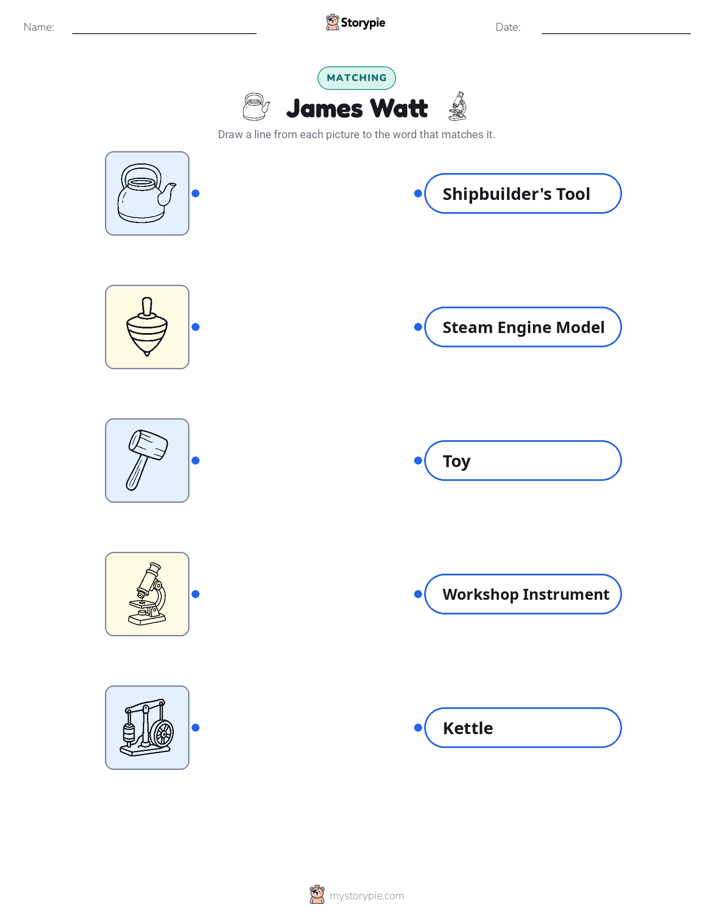
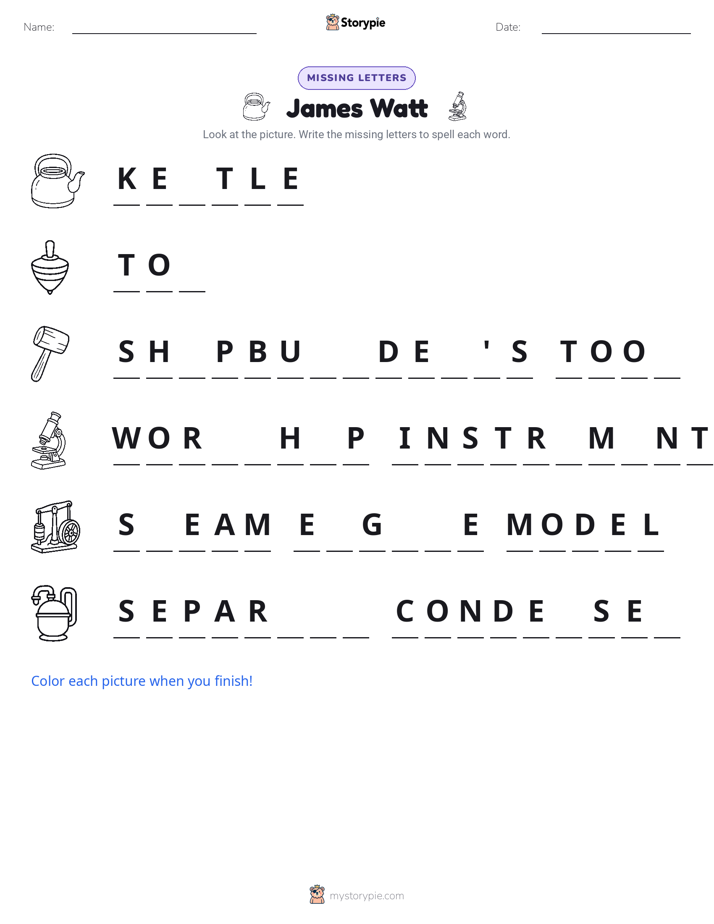
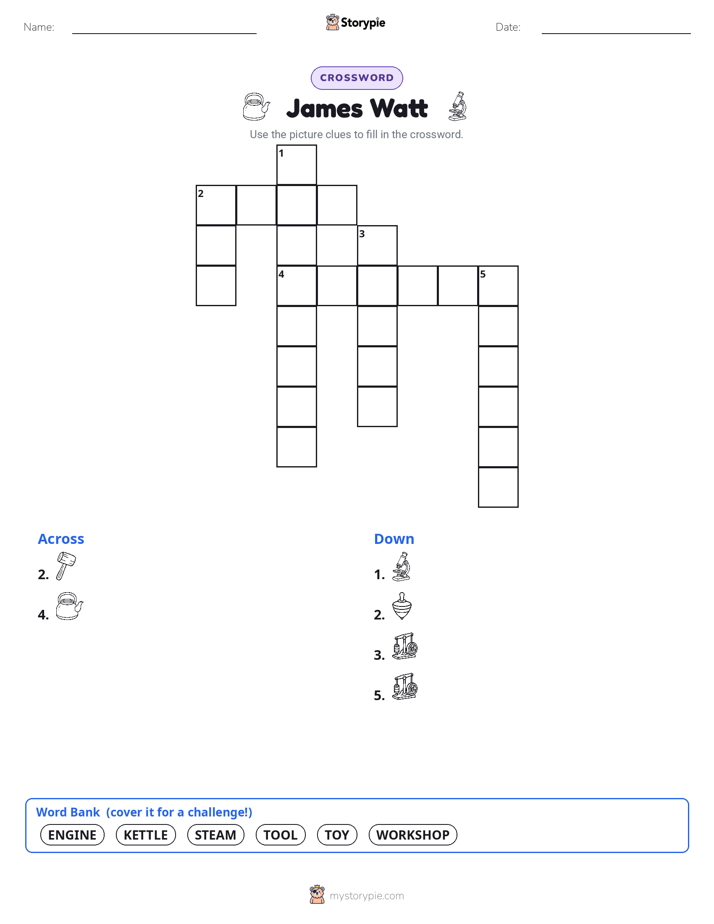
Hello! My name is James Watt, and I want to tell you my story. I was born on January 19th, 1736, in a town called Greenock in Scotland. As a boy, I wasn't always well enough to go to school, so my mother taught me at home. My father's workshop was my favorite place in the world! He built ships and made instruments, and I loved watching him work. I was fascinated by how things were put together and was always taking my toys apart to see their inner workings. I especially loved watching steam rise from a boiling kettle and thinking about the power hidden inside that puff of white cloud.
When I turned 18, around the year 1754, I traveled to Glasgow and then to London to become a mathematical-instrument maker. I learned to make and repair precise tools like compasses and scales. In 1757, I was given a wonderful opportunity to open my own workshop at the University of Glasgow. The professors there became my friends and brought me all sorts of interesting machines to fix. One day in 1764, they gave me a special challenge: to repair a model of a Newcomen steam engine. These engines were used to pump water out of mines, but they were very slow and wasted a lot of energy. As I tinkered with it, I knew there had to be a better way to make it work.
I thought about that clunky Newcomen engine for a long time. Its biggest problem was that the main part, the cylinder, was constantly being heated and cooled. This wasted a huge amount of steam and coal. Then, in 1765, while I was out for a walk, I had a brilliant idea! What if I created a separate, smaller chamber just for cooling the steam? I called it a separate condenser. This way, the main cylinder could stay hot all the time, saving an incredible amount of fuel. This idea was a breakthrough! It took a lot of hard work, but I built a new, much more efficient engine. I received a patent for my invention in 1769 to make sure the idea was protected as mine.
James Watt
Hello! My name is James Watt, and I want to tell you my story. I was born on January 19th, 1736, in a town called Greenock in Scotland. As a boy, I wasn't always well enough to go to school, so my mother taught me at home. My father's workshop was my favorite place in the world! He built ships and made instruments, and I loved watching him work. I was fascinated by how things were put together and was always taking my toys apart to see their inner workings. I especially loved watching steam rise from a boiling kettle and thinking about the power hidden inside that puff of white cloud.
When I turned 18, around the year 1754, I traveled to Glasgow and then to London to become a mathematical-instrument maker. I learned to make and repair precise tools like compasses and scales. In 1757, I was given a wonderful opportunity to open my own workshop at the University of Glasgow. The professors there became my friends and brought me all sorts of interesting machines to fix. One day in 1764, they gave me a special challenge: to repair a model of a Newcomen steam engine. These engines were used to pump water out of mines, but they were very slow and wasted a lot of energy. As I tinkered with it, I knew there had to be a better way to make it work.
I thought about that clunky Newcomen engine for a long time. Its biggest problem was that the main part, the cylinder, was constantly being heated and cooled. This wasted a huge amount of steam and coal. Then, in 1765, while I was out for a walk, I had a brilliant idea! What if I created a separate, smaller chamber just for cooling the steam? I called it a separate condenser. This way, the main cylinder could stay hot all the time, saving an incredible amount of fuel. This idea was a breakthrough! It took a lot of hard work, but I built a new, much more efficient engine. I received a patent for my invention in 1769 to make sure the idea was protected as mine.
Building my new engines was a big and expensive job. In 1775, I partnered with a clever businessman named Matthew Boulton. Our company, Boulton & Watt, started building these amazing machines for customers. At first, they were mostly used for pumping water out of mines, just like the old engines. But I kept making improvements. In 1781, I figured out how to make my engine turn a wheel in a circle. This was a huge step! It meant my steam engine could power all kinds of machines in factories, helping to spin cotton and grind flour faster than ever before. To help people understand how powerful my engines were, I even came up with a new measurement called 'horsepower'.
I spent the rest of my life as an inventor, always curious and always learning. I lived to be 83 years old. My inventions helped power something called the Industrial Revolution, changing the world forever. My steam engines were put in factories, trains, and ships. Today, my name is still used to measure power. The next time you see a number followed by a 'W' on a lightbulb, you're looking at a 'watt'—a little reminder of the curious boy from Scotland who saw the power in a puff of steam.
Wow facts
About
James Watt was a Scottish inventor and mechanical engineer whose improvements to the steam engine in the 18th century were fundamental to the Industrial Revolution.
Take a Quiz
Question 1 of 5
What was the biggest problem with the Newcomen steam engine that I fixed?
Explore next




Want to do even more?
Go beyond exploring. Unlock tools that turn every story into real learning.

Storypie Plus for families
Full stories, quizzes, and printables. Nights and car rides, sorted.
- Unlimited audio stories
- Create Mode: your child stars in the story
- Offline downloads
- Printable worksheets & coloring pages

Why Storypie for Schools
Students engaged. Prep in seconds. Evenings back to you.
- Worksheets & Quizzes
- Classroom Management
- Formative Assessment
- Custom Curriculum & Lesson Plans
- 27 Languages

Why Storypie for Homeschool
Curriculum done. They'll ask for more. Hours back in your day.
- Worksheet Generator
- First-Person Audio Stories
- Built-in Comprehension Quizzes
- Custom Curriculum & Lesson Plans
- Print & Go Activities