English

Steamboat
A boat propelled by a steam engine that revolutionized water travel and trade in the 19th century by allowing…
Reads at Grades 3–5 Listens at Grades 1–5
Print & create
Answer keys·No prep·Free with an account
28 worksheets · answer keys · full story · quiz · Ages 8-10 · CEFR B1
Plus adds 102,000+ more stories in 27 languages, audio for every one, and printables for all of them.
Just want Steamboat?
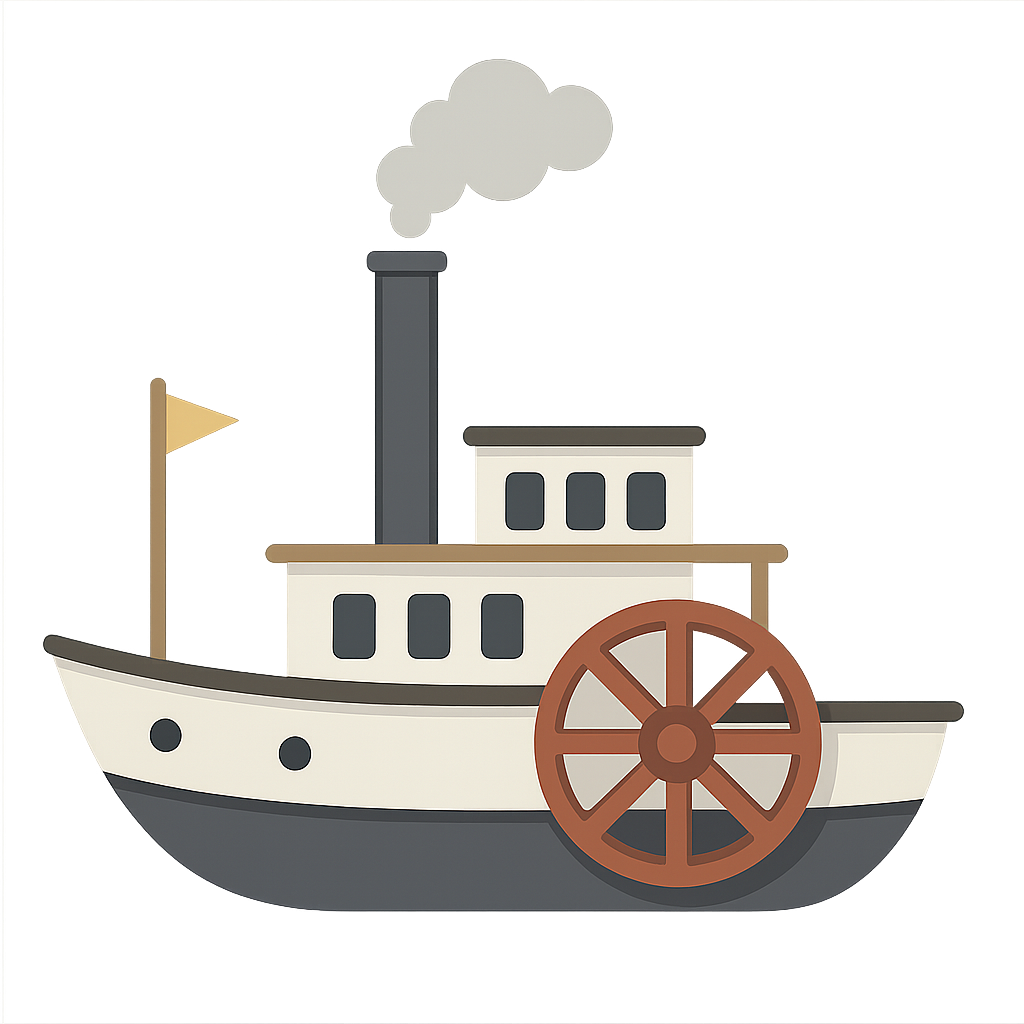
Before I came along, the world moved at the speed of wind and muscle. Imagine trying to travel up a mighty river. You would have to row with all your might against the strong current, or use big sails and hope the wind blew in just the right direction. It was slow, difficult, and sometimes impossible. But then, a brilliant idea began to bubble and hiss in the minds of clever inventors. Around 1769, a man named James Watt perfected a powerful steam engine. People saw its strength and wondered, what if that power could be put on a boat? The thought was revolutionary. One of the first to try was a determined man named John Fitch. In 1787, he built one of my earliest ancestors. It was a clunky, strange-looking thing, but it worked. It chugged along the Delaware River, proving to a few amazed onlookers that a boat could indeed move with the power of steam. That little boat was a promise of who I could become.
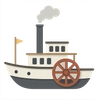
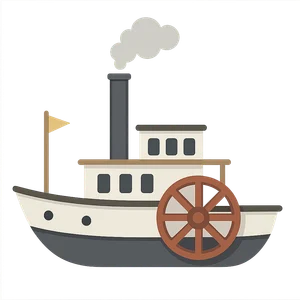
My most famous chapter began with a man who saw that promise clearly. His name was Robert Fulton. While many people laughed at his dream, calling his project 'Fulton's Folly', he never gave up. He knew I could change the world. In a busy New York shipyard, he brought me to life. I was long and narrow, with a tall smokestack and two large paddlewheels on my sides. He called me the North River Steamboat, though you probably know me by my later name, the Clermont. The day I would prove myself to everyone came on August 17th, 1807. A nervous crowd gathered at the dock in New York City. They whispered and pointed, expecting me to fail. But then, my engine roared to life. Thick, black smoke puffed from my stack, my paddlewheels began to churn the water into a frothy mess, and I started to move. The journey was from New York City all the way to Albany, a trip that usually took sailing ships four days. I made the trip in just 32 hours. I can still remember the faces of people on the riverbanks. They stared with wide eyes, their mouths open in shock as I steamed past them, moving steadily against the current with no sails to help me. The hiss of my steam and the rhythmic slap of my paddles was the sound of a new era beginning.
The Steamboat: My Journey Up the River
Before I came along, the world moved at the speed of wind and muscle. Imagine trying to travel up a mighty river. You would have to row with all your might against the strong current, or use big sails and hope the wind blew in just the right direction. It was slow, difficult, and sometimes impossible. But then, a brilliant idea began to bubble and hiss in the minds of clever inventors. Around 1769, a man named James Watt perfected a powerful steam engine. People saw its strength and wondered, what if that power could be put on a boat? The thought was revolutionary. One of the first to try was a determined man named John Fitch. In 1787, he built one of my earliest ancestors. It was a clunky, strange-looking thing, but it worked. It chugged along the Delaware River, proving to a few amazed onlookers that a boat could indeed move with the power of steam. That little boat was a promise of who I could become.
My most famous chapter began with a man who saw that promise clearly. His name was Robert Fulton. While many people laughed at his dream, calling his project 'Fulton's Folly', he never gave up. He knew I could change the world. In a busy New York shipyard, he brought me to life. I was long and narrow, with a tall smokestack and two large paddlewheels on my sides. He called me the North River Steamboat, though you probably know me by my later name, the Clermont. The day I would prove myself to everyone came on August 17th, 1807. A nervous crowd gathered at the dock in New York City. They whispered and pointed, expecting me to fail. But then, my engine roared to life. Thick, black smoke puffed from my stack, my paddlewheels began to churn the water into a frothy mess, and I started to move. The journey was from New York City all the way to Albany, a trip that usually took sailing ships four days. I made the trip in just 32 hours. I can still remember the faces of people on the riverbanks. They stared with wide eyes, their mouths open in shock as I steamed past them, moving steadily against the current with no sails to help me. The hiss of my steam and the rhythmic slap of my paddles was the sound of a new era beginning.
That one successful trip changed everything. Suddenly, river travel wasn't left to chance anymore. I was predictable. I could leave at a set time and arrive at a set time, whether the wind was blowing or not. My greatest trick was traveling upstream. Before me, this was a long and exhausting task. I made it simple. This opened up the great rivers of America like never before. Throughout the 1800s, my brothers and sisters began to navigate the vast Mississippi and Ohio Rivers. We were the engines of a growing nation. We carried families heading west to build new homes and start new farms. We transported mountains of cotton from southern plantations, tons of food from the heartland, and letters that connected people across great distances. Small riverside trading posts blossomed into busy cities like St. Louis and New Orleans, all because we could reliably bring them the people and goods they needed to grow. I was the lifeline of the country, connecting people and places in a way no one had ever imagined possible.
Of course, time marches on, and new inventions came along. The powerful locomotives of the railroad thundered across the land, and eventually, cars and trucks zipped down highways. They were faster, and my time as the king of transportation came to an end. But my job was done. I had proved the incredible power of steam and shown the world how technology could shrink distances and bring people together. My legacy lives on. The massive cargo ships and elegant cruise liners that cross the oceans today are my descendants, still carrying goods and people around the globe. And if you're lucky, you can sometimes find one of my old relatives, a historic paddle-wheeler, still puffing along a river. You can ride on it and feel the gentle rumble of the engine, just like those amazed people did so long ago. I am a reminder that one big idea, like a single splash, can create waves that change the world forever.
Wow facts
About
A boat propelled by a steam engine that revolutionized water travel and trade in the 19th century by allowing vessels to travel efficiently against river currents.
Take a Quiz
Question 1 of 5
Who was my famous creator who believed in me even when others called my project 'Fulton's Folly'?
Explore next





Want to do even more?
Go beyond exploring. Unlock tools that turn every story into real learning.

Storypie Plus for families
Full stories, quizzes, and printables. Nights and car rides, sorted.
- Unlimited audio stories
- Create Mode: your child stars in the story
- Offline downloads
- Printable worksheets & coloring pages

Why Storypie for Schools
Students engaged. Prep in seconds. Evenings back to you.
- Worksheets & Quizzes
- Classroom Management
- Formative Assessment
- Custom Curriculum & Lesson Plans
- 27 Languages

Why Storypie for Homeschool
Curriculum done. They'll ask for more. Hours back in your day.
- Worksheet Generator
- First-Person Audio Stories
- Built-in Comprehension Quizzes
- Custom Curriculum & Lesson Plans
- Print & Go Activities