English

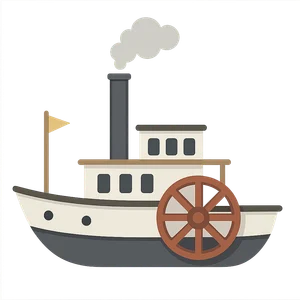
Steamboat
A boat propelled by a steam engine that revolutionized water travel and trade in the 19th century by allowing…
Reads at Grades 6–8 Listens at Grades 4–8
Print & create
Answer keys·No prep·Free with an account
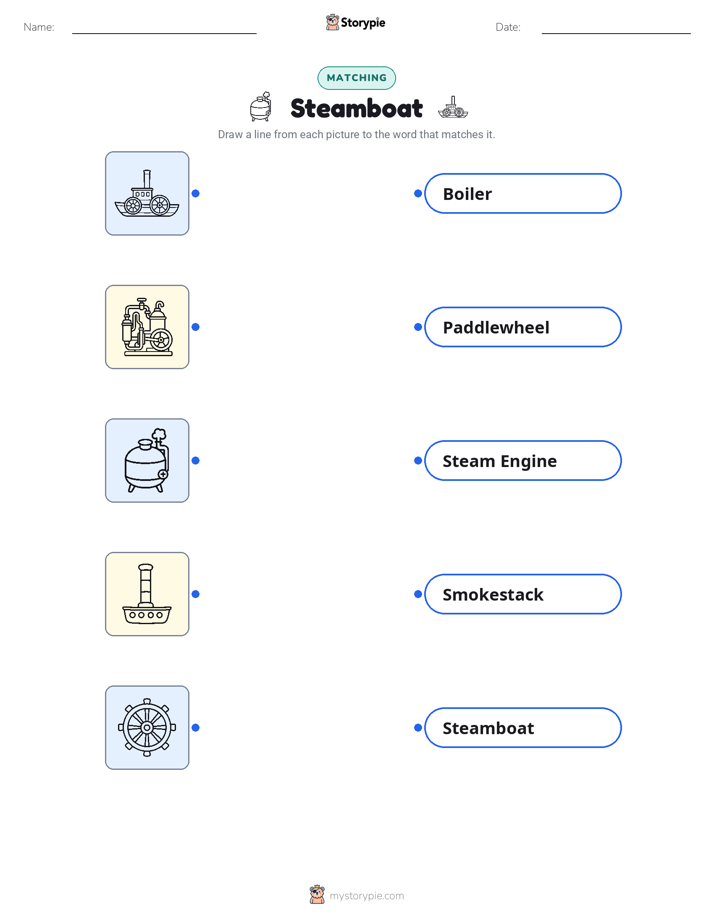
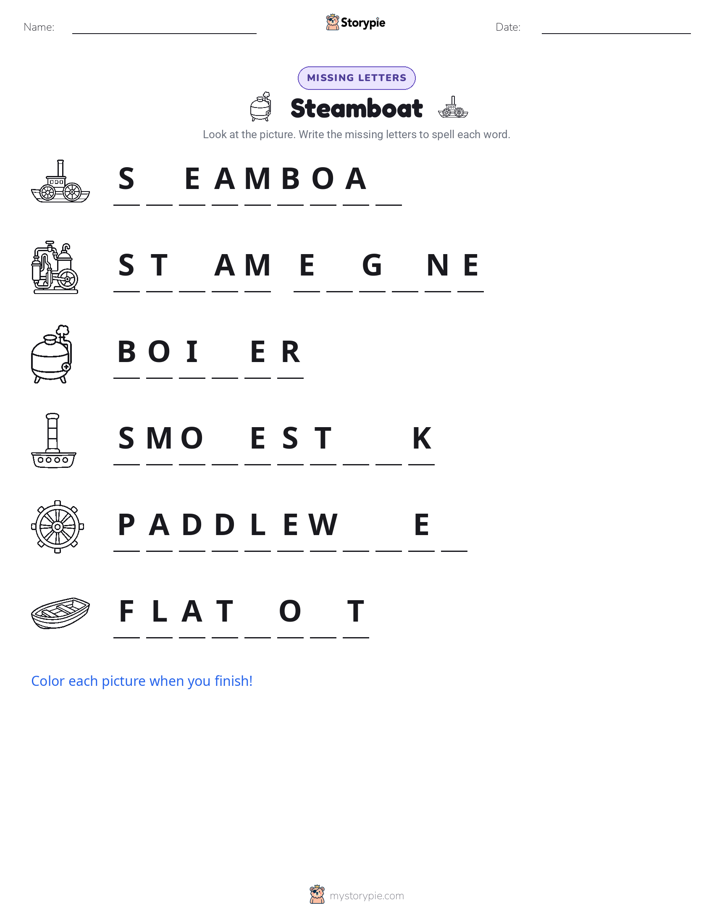
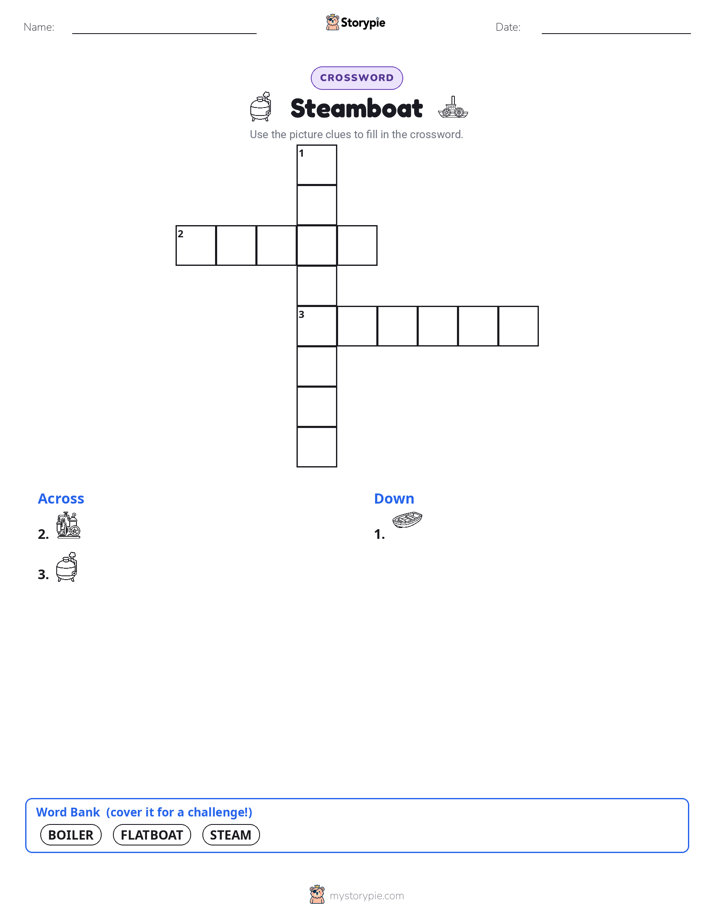
28 worksheets · answer keys · full story · quiz · Ages 10-12 · CEFR B2
Plus adds 102,000+ more stories in 27 languages, audio for every one, and printables for all of them.
Just want Steamboat?
Before I was born of fire and water, the world’s great rivers flowed with a quiet, patient strength. I am the steamboat, and I remember a time when the currents were kings. People traveled on flatboats and keelboats, simple wooden vessels that drifted lazily downstream, carried by the water’s gentle push. It was an easy journey one way. But to return, to go upstream, was a battle. Men would spend weeks, even months, pushing their boats against the mighty flow with long poles, their muscles straining with every inch gained. Sailboats were no better. They were slaves to the wind, often sitting motionless for days, waiting for a breeze that might never come. People looked at the powerful rivers and felt a deep frustration. They knew there had to be a way to harness a greater power, a way to move with purpose and strength, not just against the water, but with a will of their own. Deep inside workshops, where boilers hissed and engines were being tested, that new power was waiting to be unleashed upon the water. A new kind of river creature was about to be born.
My creation was not the work of a single moment, but the dream of many determined minds. At my core, I have a powerful, beating heart: the steam engine. This incredible machine, which turns heat into motion, was perfected by a brilliant Scottish inventor named James Watt in 1769. His improvements made the engine more efficient and powerful than ever before, and it was this heart that inventors dreamed of placing inside a boat. One of the first to truly try was a persistent man named John Fitch. He was a visionary who saw my potential long before others. In 1787, he built one of my earliest forms, a strange-looking craft with a series of paddles on the sides. He launched me on the Delaware River in front of delegates from the Constitutional Convention. As my engine chugged to life, I moved across the water, proving that steam power could indeed conquer the river. Though Fitch’s boats never achieved the lasting commercial success he hoped for, his vision was a critical first step. He showed the world what was possible. His determination proved that a great idea, even if it stumbles at first, is worth pursuing. I honor his memory, for his dream was the spark that lit the fire in my belly.
A River's Heartbeat
Before I was born of fire and water, the world’s great rivers flowed with a quiet, patient strength. I am the steamboat, and I remember a time when the currents were kings. People traveled on flatboats and keelboats, simple wooden vessels that drifted lazily downstream, carried by the water’s gentle push. It was an easy journey one way. But to return, to go upstream, was a battle. Men would spend weeks, even months, pushing their boats against the mighty flow with long poles, their muscles straining with every inch gained. Sailboats were no better. They were slaves to the wind, often sitting motionless for days, waiting for a breeze that might never come. People looked at the powerful rivers and felt a deep frustration. They knew there had to be a way to harness a greater power, a way to move with purpose and strength, not just against the water, but with a will of their own. Deep inside workshops, where boilers hissed and engines were being tested, that new power was waiting to be unleashed upon the water. A new kind of river creature was about to be born.
My creation was not the work of a single moment, but the dream of many determined minds. At my core, I have a powerful, beating heart: the steam engine. This incredible machine, which turns heat into motion, was perfected by a brilliant Scottish inventor named James Watt in 1769. His improvements made the engine more efficient and powerful than ever before, and it was this heart that inventors dreamed of placing inside a boat. One of the first to truly try was a persistent man named John Fitch. He was a visionary who saw my potential long before others. In 1787, he built one of my earliest forms, a strange-looking craft with a series of paddles on the sides. He launched me on the Delaware River in front of delegates from the Constitutional Convention. As my engine chugged to life, I moved across the water, proving that steam power could indeed conquer the river. Though Fitch’s boats never achieved the lasting commercial success he hoped for, his vision was a critical first step. He showed the world what was possible. His determination proved that a great idea, even if it stumbles at first, is worth pursuing. I honor his memory, for his dream was the spark that lit the fire in my belly.
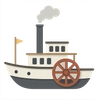
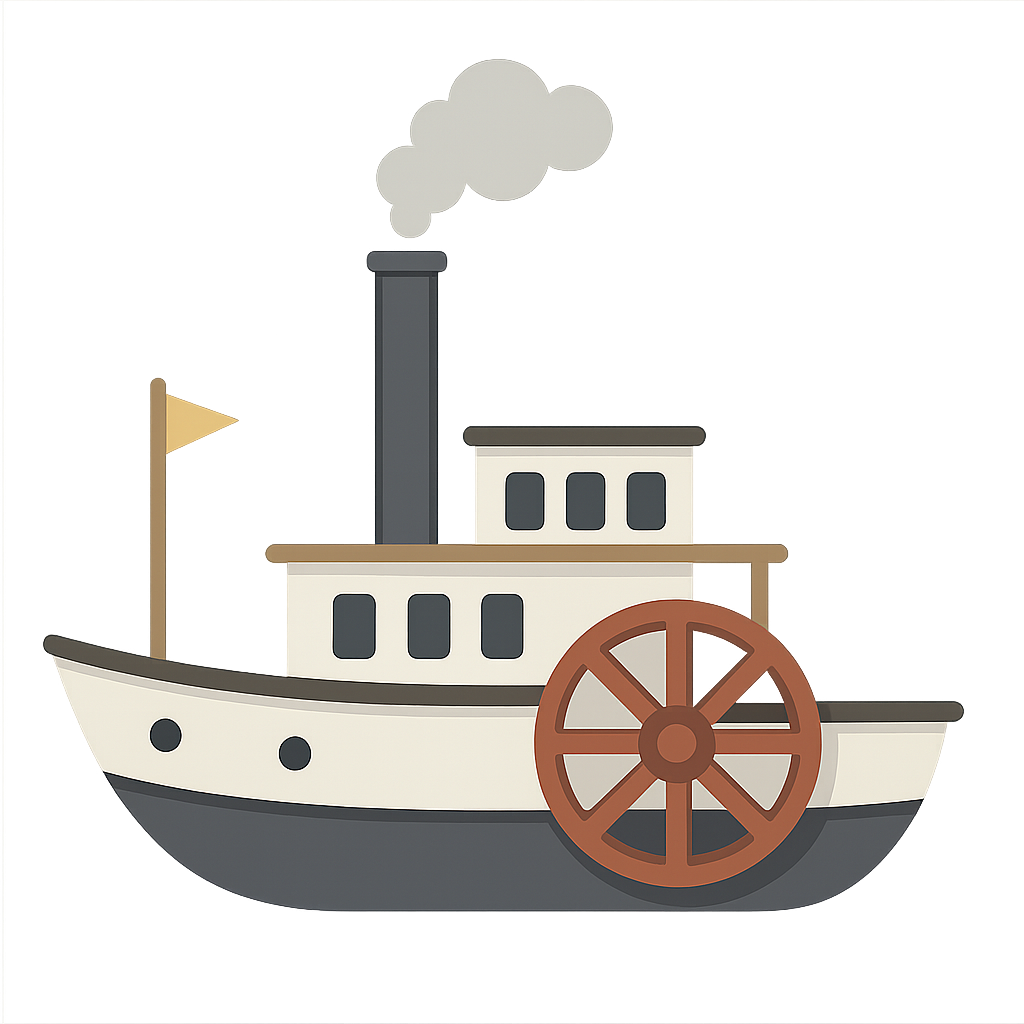
My most famous chapter began with two men: Robert Fulton, an artist and engineer with incredible vision, and his partner, Robert R. Livingston, an influential statesman who believed in that vision. They brought me to life on the banks of the East River in New York. As I took shape, a long, narrow vessel with a tall smokestack and two large paddlewheels on my sides, crowds gathered to watch. They weren't cheering, though. They whispered and pointed, calling me “Fulton’s Folly,” certain that this strange, expensive contraption would fail. But my moment to prove them wrong arrived on August 17th, 1807. A crowd gathered at the dock, expecting a disaster. Then, my engine roared to life. Thick black smoke billowed from my stack, and with a rhythmic splash-splash-splash, my paddlewheels began to churn the water. I moved. Slowly at first, then with a steady, confident speed, I steamed away from the dock and headed up the Hudson River. The journey to Albany, nearly 150 miles away, took me just 32 hours. Sailors on other boats stared in pure astonishment as I chugged past them, moving powerfully and consistently against the current that had always ruled their lives. I wasn't a folly. I was a revolution, and the sound of my engine was the new heartbeat of the river.
That journey up the Hudson was only the beginning of my story. My success showed everyone that reliable, powered river travel was not just a dream, but a reality. Soon, my siblings began to appear, first by the dozens, and then by the thousands. We churned the waters of the great American arteries: the Mississippi, the Ohio, and the Missouri rivers. We became the workhorses of a growing nation. We carried bales of cotton from southern plantations, barrels of sugar from Louisiana, and sacks of grain from the vast heartland to markets faster and more reliably than ever imagined. We also carried people. Pioneers, families, and explorers traveled in my cabins, heading west to build new homes and new lives. I helped make the vast continent feel smaller, more connected, and full of possibility. My steam-powered heart was more than just a machine; it was a symbol of progress and human ingenuity. The same curiosity, determination, and willingness to try something new that brought me to life are still powering the inventions that shape your world today, proving that one bold idea can truly change the current of history.
Wow facts
About
A boat propelled by a steam engine that revolutionized water travel and trade in the 19th century by allowing vessels to travel efficiently against river currents.
Take a Quiz
Question 1 of 5
What was the primary problem that early inventors like John Fitch and Robert Fulton were trying to solve by creating the steamboat?
Explore next





Want to do even more?
Go beyond exploring. Unlock tools that turn every story into real learning.

Storypie Plus for families
Full stories, quizzes, and printables. Nights and car rides, sorted.
- Unlimited audio stories
- Create Mode: your child stars in the story
- Offline downloads
- Printable worksheets & coloring pages

Why Storypie for Schools
Students engaged. Prep in seconds. Evenings back to you.
- Worksheets & Quizzes
- Classroom Management
- Formative Assessment
- Custom Curriculum & Lesson Plans
- 27 Languages

Why Storypie for Homeschool
Curriculum done. They'll ask for more. Hours back in your day.
- Worksheet Generator
- First-Person Audio Stories
- Built-in Comprehension Quizzes
- Custom Curriculum & Lesson Plans
- Print & Go Activities