English

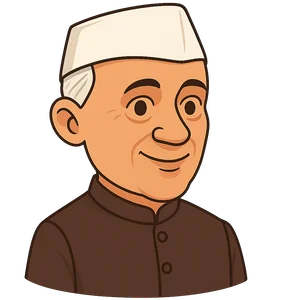
Jawaharlal Nehru
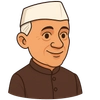
Jawaharlal Nehru was an Indian anti-colonial nationalist…
Reads at Grades 6–8 Listens at Grades 4–8
Print & create
Answer keys·No prep·Free with an account
28 worksheets · answer keys · full story · quiz · Ages 10-12 · CEFR B2
Plus adds 280,000+ more stories in 27 languages, audio for every one, and printables for all of them.
Just want Jawaharlal Nehru?
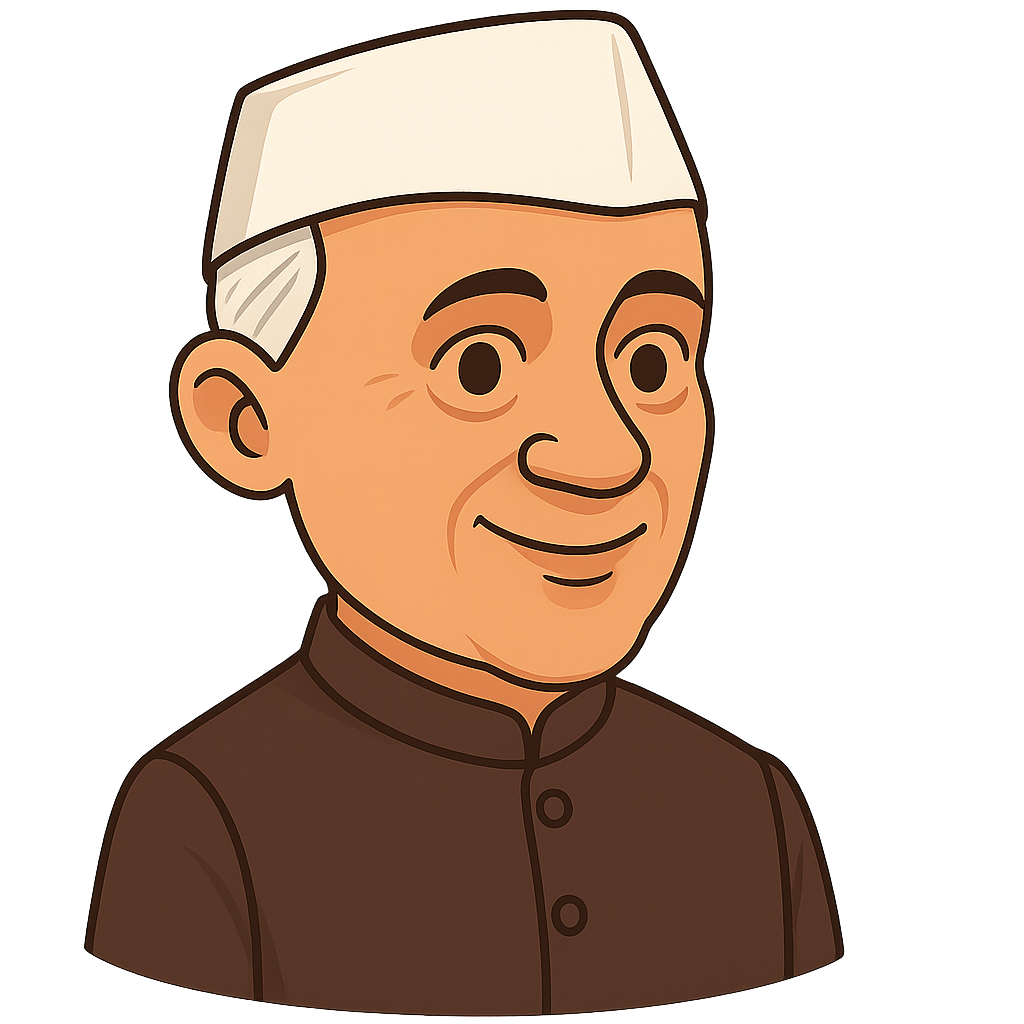
Hello. My name is Jawaharlal Nehru, but I am perhaps better known by the affectionate name many children in India gave me: 'Chacha Nehru,' which means Uncle Nehru. My story begins on November 14th, 1889, in the city of Allahabad, India. I grew up in a large and comfortable home, but it was also a place full of important conversations. My father, Motilal Nehru, was a well-known and respected lawyer, and our family was deeply involved in the political life of our country. At that time, India was under British rule, and this fact shaped every part of my life, including my education. I was first taught by tutors at home, but my father wanted me to have an English education. So, in 1905, when I was just a teenager, I sailed to England to attend a famous school called Harrow. Afterward, I went to Trinity College at Cambridge University, where I studied science and law. I returned to India in 1912, ready to begin my career as a lawyer, but I soon realized that my heart was not in the courtroom. I felt a much greater calling to serve my country and its people in their struggle for freedom.
Living in India under British rule meant that my people were not in charge of their own destiny. I saw the unfairness of this system and felt a powerful urge to change it. A turning point in my life came around the year 1916, when I met a man who would change the course of history: Mahatma Gandhi. His ideas of non-violent resistance, which he called Satyagraha, were truly inspiring. He taught us that we could fight for our rights with truth and peace, not with violence. After meeting him, I decided to leave my comfortable life behind and dedicate myself completely to India's independence movement. I joined the Indian National Congress, a political party working towards this goal, and became deeply involved in its activities. This path was far from easy. For speaking out and organizing protests, the British authorities arrested me many times. Over the years, I spent a total of nearly nine years of my life in prison. But I did not let this time go to waste. I used those long, quiet hours to read thousands of books and to write. It was during one of my prison terms that I wrote 'The Discovery of India,' a book where I explored my country's incredible history and culture to keep my spirit strong and connected to the land I was fighting for.
Jawaharlal Nehru: Architect of Modern India
Hello. My name is Jawaharlal Nehru, but I am perhaps better known by the affectionate name many children in India gave me: 'Chacha Nehru,' which means Uncle Nehru. My story begins on November 14th, 1889, in the city of Allahabad, India. I grew up in a large and comfortable home, but it was also a place full of important conversations. My father, Motilal Nehru, was a well-known and respected lawyer, and our family was deeply involved in the political life of our country. At that time, India was under British rule, and this fact shaped every part of my life, including my education. I was first taught by tutors at home, but my father wanted me to have an English education. So, in 1905, when I was just a teenager, I sailed to England to attend a famous school called Harrow. Afterward, I went to Trinity College at Cambridge University, where I studied science and law. I returned to India in 1912, ready to begin my career as a lawyer, but I soon realized that my heart was not in the courtroom. I felt a much greater calling to serve my country and its people in their struggle for freedom.
Living in India under British rule meant that my people were not in charge of their own destiny. I saw the unfairness of this system and felt a powerful urge to change it. A turning point in my life came around the year 1916, when I met a man who would change the course of history: Mahatma Gandhi. His ideas of non-violent resistance, which he called Satyagraha, were truly inspiring. He taught us that we could fight for our rights with truth and peace, not with violence. After meeting him, I decided to leave my comfortable life behind and dedicate myself completely to India's independence movement. I joined the Indian National Congress, a political party working towards this goal, and became deeply involved in its activities. This path was far from easy. For speaking out and organizing protests, the British authorities arrested me many times. Over the years, I spent a total of nearly nine years of my life in prison. But I did not let this time go to waste. I used those long, quiet hours to read thousands of books and to write. It was during one of my prison terms that I wrote 'The Discovery of India,' a book where I explored my country's incredible history and culture to keep my spirit strong and connected to the land I was fighting for.
After decades of struggle by millions of Indians, the moment we had all worked and sacrificed for finally arrived. I will never forget the night of August 15th, 1947. As India's first Prime Minister, I stood before the Constituent Assembly in New Delhi to announce our freedom to the world. The air was filled with an incredible sense of excitement, relief, and hope. In my speech that night, I spoke words that have been remembered ever since: 'At the stroke of the midnight hour, when the world sleeps, India will awake to life and freedom.' That moment was our 'tryst with destiny'—a meeting with the future we had long promised ourselves. While we celebrated, we also understood the immense responsibility that now rested on our shoulders. Freedom was not the end of our journey; it was the beginning. We had to build a brand new nation from the ground up. Our first tasks were to write a constitution that would guarantee rights for all our citizens and to create a government that would serve the people and lead our country toward a brighter future.
For the next seventeen years, I had the honor of serving as India's Prime Minister. My biggest dream was to build a modern, strong, and united nation. I believed that science and technology were the keys to progress, so my government focused on starting new industries, building large dams to provide water and electricity, and establishing world-class institutes for higher learning and scientific research. I wanted to ensure that India's young people had the best opportunities to learn and innovate. On the world stage, I also had a clear vision for India. I introduced a foreign policy called the Non-Aligned Movement. This meant that India would not officially side with the major world powers during the Cold War. Instead, we would remain independent and be a friend to all nations, working for peace and cooperation. My ultimate goal was to create a democratic and secular country, a place where people of all religions, cultures, and backgrounds could live together in harmony and work together to help our nation grow.
I served my country as Prime Minister until my work was done in 1964. I lived to be 74 years old. Today, I am remembered as one of the principal architects of modern India, helping to lay the foundations for the democratic and scientific nation it is today. I am also remembered for my great love for children. It fills me with joy to know that my birthday, November 14th, is celebrated every year as Children's Day all across India, a tribute to the nation's future, which I always believed lay in its young people. I hope my story inspires you to learn as much as you can, to dream big for yourself and your community, and to always work with courage to make the world a more just and better place for everyone.
Wow facts
About
Jawaharlal Nehru was an Indian anti-colonial nationalist, a central figure in the Indian independence movement, and the first Prime Minister of India, serving from 1947 until his death in 1964.
Take a Quiz
Question 1 of 5
In your own words, summarize Jawaharlal Nehru's journey from being a lawyer to becoming India's first Prime Minister.
Explore next


Want to do even more?
Go beyond exploring. Unlock tools that turn every story into real learning.

Storypie Plus for families
Full stories, quizzes, and printables. Nights and car rides, sorted.
- Unlimited audio stories
- Create Mode: your child stars in the story
- Offline downloads
- Printable worksheets & coloring pages

Why Storypie for Schools
Students engaged. Prep in seconds. Evenings back to you.
- Worksheets & Quizzes
- Classroom Management
- Formative Assessment
- Custom Curriculum & Lesson Plans
- 27 Languages

Why Storypie for Homeschool
Curriculum done. They'll ask for more. Hours back in your day.
- Worksheet Generator
- First-Person Audio Stories
- Built-in Comprehension Quizzes
- Custom Curriculum & Lesson Plans
- Print & Go Activities