English

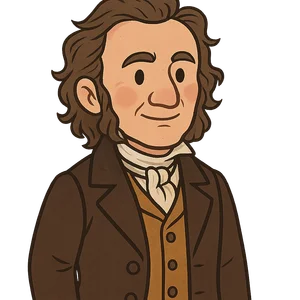
John James Audubon
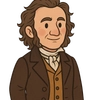
John James Audubon was a French-American ornithologist, naturalist…
Reads at Grades 3–5 Listens at Grades 1–5
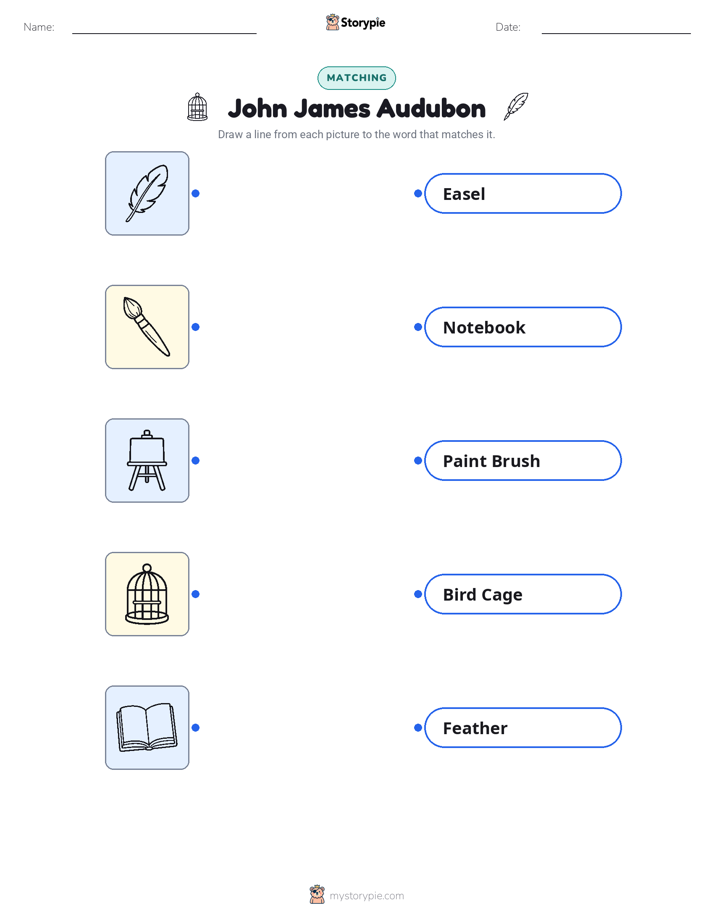
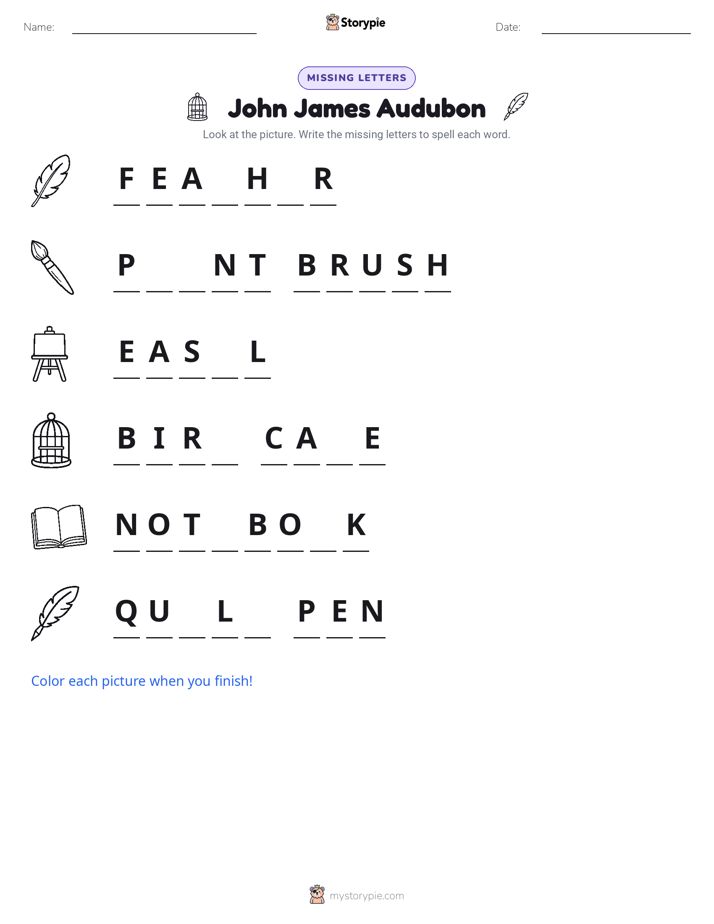
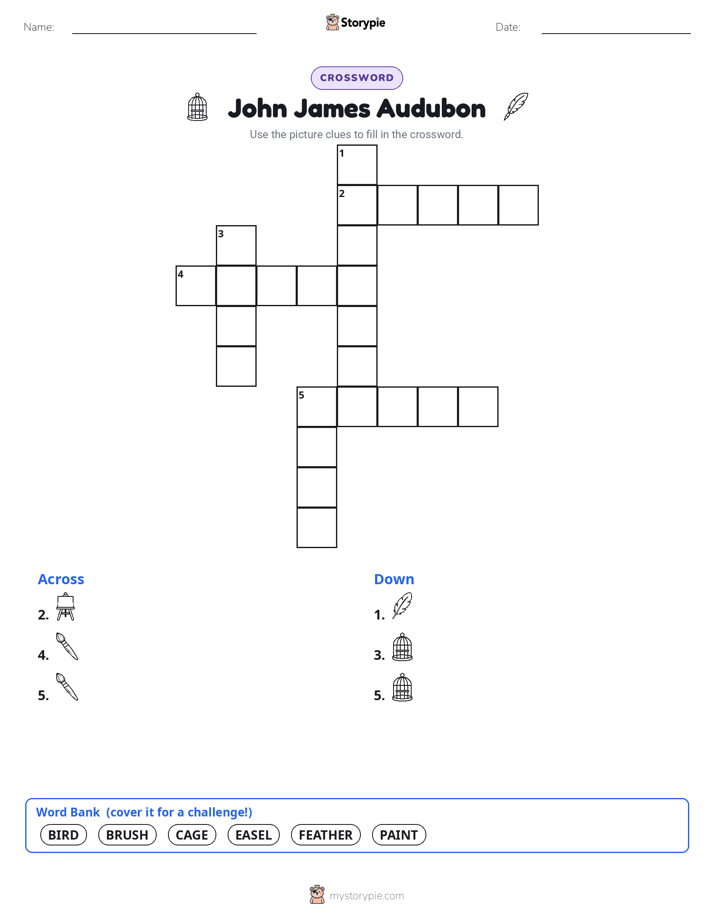
Print & create
Answer keys·No prep·Free with an account
28 worksheets · answer keys · full story · quiz · Ages 8-10 · CEFR B1
Plus adds 244,000+ more stories in 27 languages, audio for every one, and printables for all of them.
Just want John James Audubon?
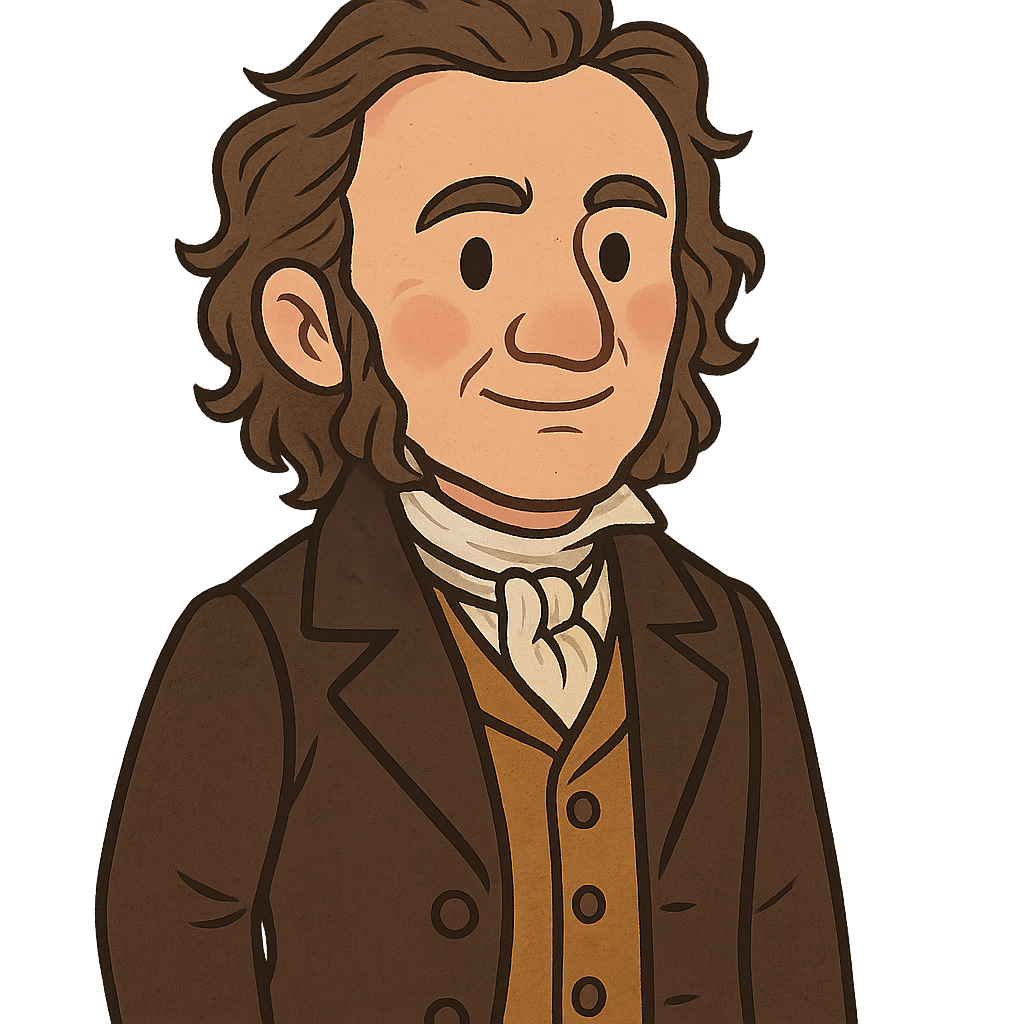
Hello, my name is John James Audubon. I am an artist and a naturalist who spent his life studying and painting birds. My story begins on April 26th, 1785, when I was born on a beautiful island that is now called Haiti. When I was a young boy, I moved to France, and it was there that my great love for nature began. I would spend hours in the fields and forests, watching birds fly, sing, and build their nests. I didn’t just want to watch them; I wanted to capture their beauty forever, so I began to draw them. My father, Jean Audubon, saw my passion and encouraged me to practice my art. I found that drawing birds was much harder than it looked. I wanted my drawings to look just like the real birds, full of life and color. My father always told me to keep trying, and his support meant the world to me. In 1803, when I was a young man, he sent me to America to live on a farm he owned in Pennsylvania called Mill Grove. This new home was a paradise for me, filled with forests, streams, and more kinds of birds than I had ever dreamed of. It was a whole new world waiting for me to explore.
At Mill Grove, my days were filled with adventure. I would wake up before the sun and walk for miles through the woods, observing every bird I could find. I was so curious about their lives. In 1804, I had an interesting idea. I wanted to know if the same birds returned to the same nests each spring. To find out, I carefully tied a small, silver string to the leg of a small bird called an Eastern Phoebe. The next year, I was filled with joy when I saw the very same bird return with the string still on its leg. This little experiment was one of the very first examples of bird banding in all of North America. It wasn't just birds I found at Mill Grove. I also met a wonderful woman named Lucy Bakewell, who lived on a nearby farm. She understood my love for nature and art, and we were married in 1808. Life wasn't always a simple walk in the woods, however. I tried to run a few businesses to support my family, but my heart was never in it. My attempts at being a businessman failed because my true passion, the thing that made me feel most alive, was exploring the wilderness and painting the incredible creatures I found there. Lucy always believed in me and encouraged me to follow my dream, even when times were hard.
John James Audubon: Painting America's Birds
Hello, my name is John James Audubon. I am an artist and a naturalist who spent his life studying and painting birds. My story begins on April 26th, 1785, when I was born on a beautiful island that is now called Haiti. When I was a young boy, I moved to France, and it was there that my great love for nature began. I would spend hours in the fields and forests, watching birds fly, sing, and build their nests. I didn’t just want to watch them; I wanted to capture their beauty forever, so I began to draw them. My father, Jean Audubon, saw my passion and encouraged me to practice my art. I found that drawing birds was much harder than it looked. I wanted my drawings to look just like the real birds, full of life and color. My father always told me to keep trying, and his support meant the world to me. In 1803, when I was a young man, he sent me to America to live on a farm he owned in Pennsylvania called Mill Grove. This new home was a paradise for me, filled with forests, streams, and more kinds of birds than I had ever dreamed of. It was a whole new world waiting for me to explore.
At Mill Grove, my days were filled with adventure. I would wake up before the sun and walk for miles through the woods, observing every bird I could find. I was so curious about their lives. In 1804, I had an interesting idea. I wanted to know if the same birds returned to the same nests each spring. To find out, I carefully tied a small, silver string to the leg of a small bird called an Eastern Phoebe. The next year, I was filled with joy when I saw the very same bird return with the string still on its leg. This little experiment was one of the very first examples of bird banding in all of North America. It wasn't just birds I found at Mill Grove. I also met a wonderful woman named Lucy Bakewell, who lived on a nearby farm. She understood my love for nature and art, and we were married in 1808. Life wasn't always a simple walk in the woods, however. I tried to run a few businesses to support my family, but my heart was never in it. My attempts at being a businessman failed because my true passion, the thing that made me feel most alive, was exploring the wilderness and painting the incredible creatures I found there. Lucy always believed in me and encouraged me to follow my dream, even when times were hard.
By the year 1820, a huge, wild dream had taken hold of my heart. I decided I would do something no one had ever done before: I would travel all across North America and paint every single species of bird, drawing each one at its actual, life-size. It was an enormous goal, and I knew it would be a long and difficult journey. I packed my art supplies and set off, traveling down the great Mississippi River on a flatboat and exploring the deep, humid forests of Florida. I wanted my paintings to be different from the stiff, boring drawings I saw in books. To make my birds look like they were still alive, I developed my own special method. After finding a bird, I would use thin wires to pose it in a natural, active position—as if it were about to fly, catch a fish, or feed its young. I painted them in their natural homes, surrounded by the plants and trees where they lived. This made my artwork feel dynamic and real. But when I finished some of my paintings, I faced a new challenge. No publisher in America was willing to print such a large and expensive collection of art. They thought my dream was too big. I was disappointed but not defeated. In 1826, with Lucy's support, I sailed to England, hoping to find people there who would appreciate my work and help me share it with the world.
My journey to Europe was a great success. In England and France, people were amazed by my vibrant, life-sized paintings of American birds. They had never seen anything like them before. Finally, I found people who were willing to help me publish my life's work. My masterpiece was called 'The Birds of America,' and it was printed in separate parts between the years 1827 and 1838. The book was gigantic. Because of its massive size, it was known as a 'double elephant folio'—so large you almost needed two people to turn a page. When it was complete, it contained 435 beautiful, hand-colored pictures of birds. To go along with the art, I also wrote a companion book called the 'Ornithological Biography.' In it, I wrote down all my observations and told exciting stories about my adventures tracking down each bird.
In my later years, I returned to America and continued my work. I created a smaller, more affordable version of 'The Birds of America' so that more people could see and enjoy my paintings. I lived a full and adventurous life to be 65 years old. Today, my paintings are famous not only for their incredible beauty but also for their scientific detail, helping people understand and identify birds. They continue to inspire so many people to love and protect the natural world. In fact, one of the most important groups that works to protect birds and their homes, the National Audubon Society, was named in my honor, carrying on the work I cared so much about.
Wow facts
About
John James Audubon was a French-American ornithologist, naturalist, and painter renowned for his extensive studies and detailed illustrations of North American birds, published in his famous book, 'The Birds of America'.
Take a Quiz
Question 1 of 5
In the story, I said Mill Grove was a 'paradise' for me. What does the word 'paradise' mean here?
Explore next


Want to do even more?
Go beyond exploring. Unlock tools that turn every story into real learning.

Storypie Plus for families
Full stories, quizzes, and printables. Nights and car rides, sorted.
- Unlimited audio stories
- Create Mode: your child stars in the story
- Offline downloads
- Printable worksheets & coloring pages

Why Storypie for Schools
Students engaged. Prep in seconds. Evenings back to you.
- Worksheets & Quizzes
- Classroom Management
- Formative Assessment
- Custom Curriculum & Lesson Plans
- 27 Languages

Why Storypie for Homeschool
Curriculum done. They'll ask for more. Hours back in your day.
- Worksheet Generator
- First-Person Audio Stories
- Built-in Comprehension Quizzes
- Custom Curriculum & Lesson Plans
- Print & Go Activities