English

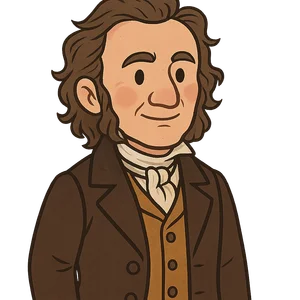
John James Audubon
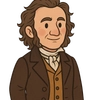
John James Audubon was a French-American ornithologist, naturalist…
Reads at Grades 6–8 Listens at Grades 4–8
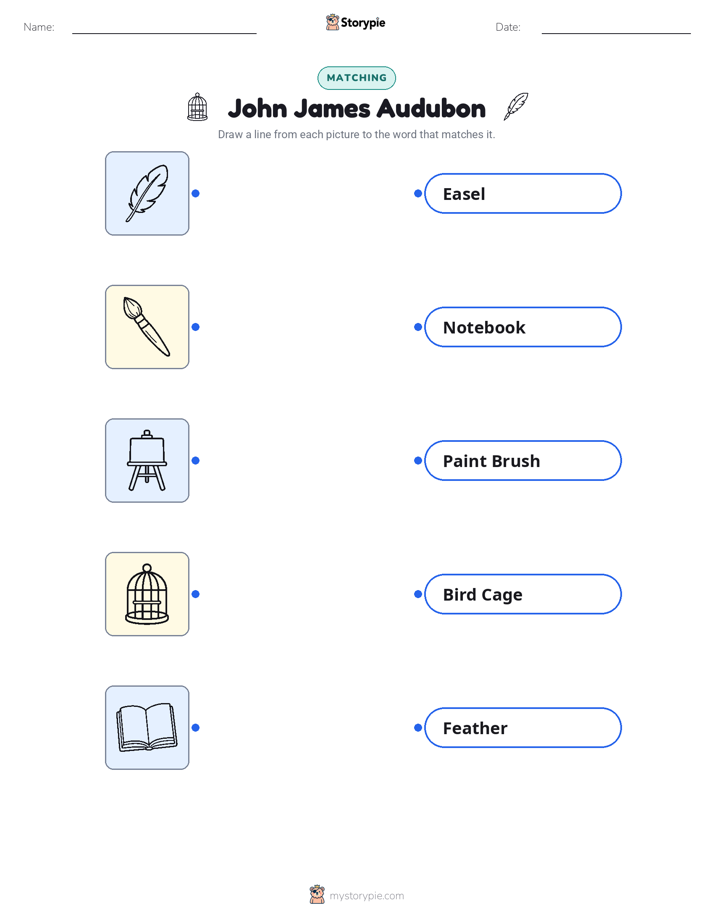
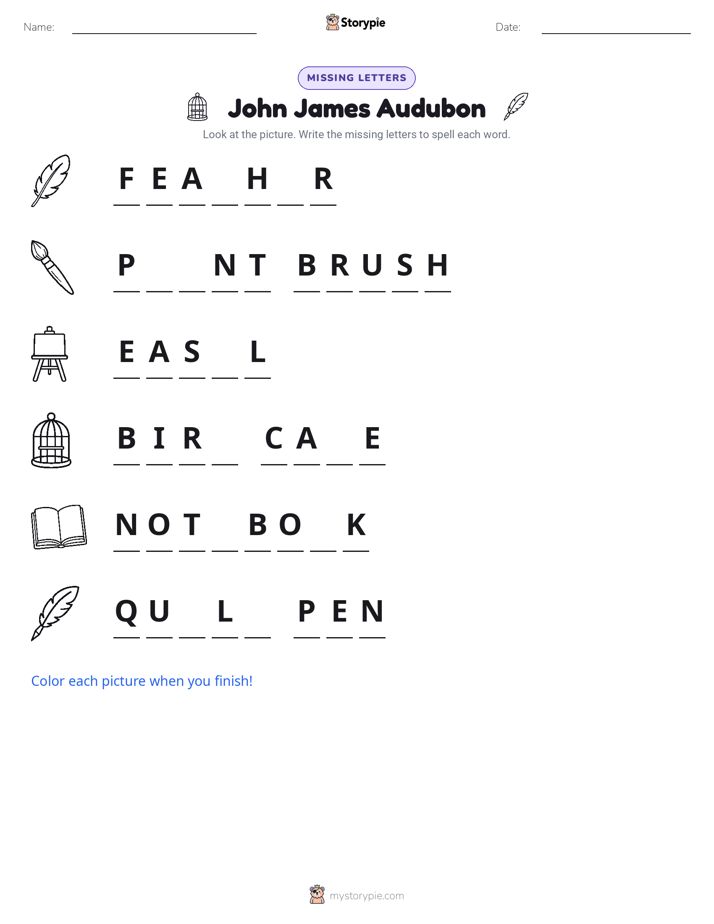
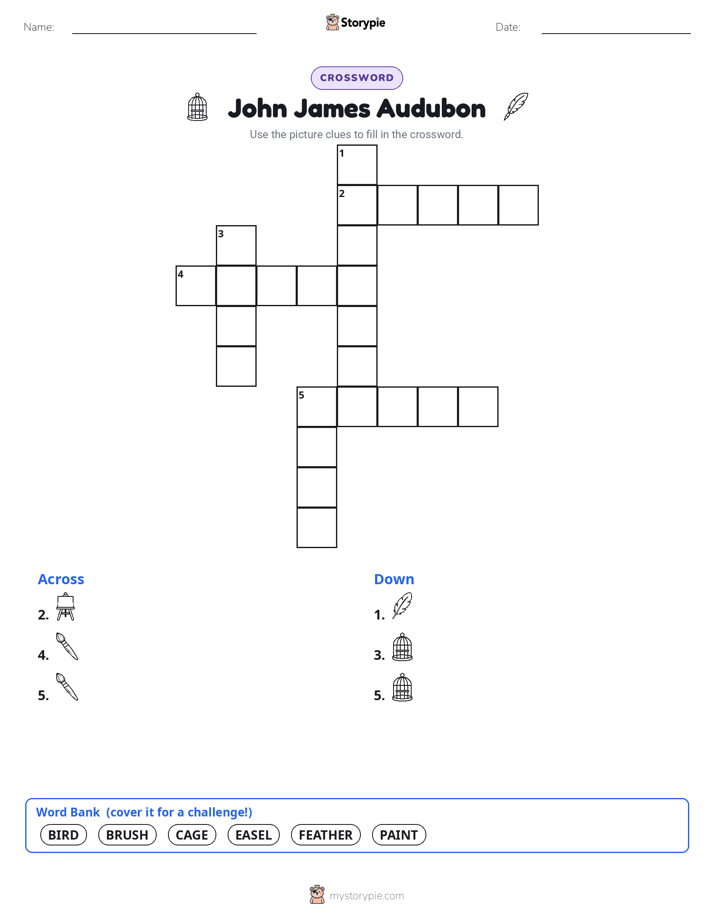
Print & create
Answer keys·No prep·Free with an account
28 worksheets · answer keys · full story · quiz · Ages 10-12 · CEFR B2
Plus adds 244,000+ more stories in 27 languages, audio for every one, and printables for all of them.
Just want John James Audubon?
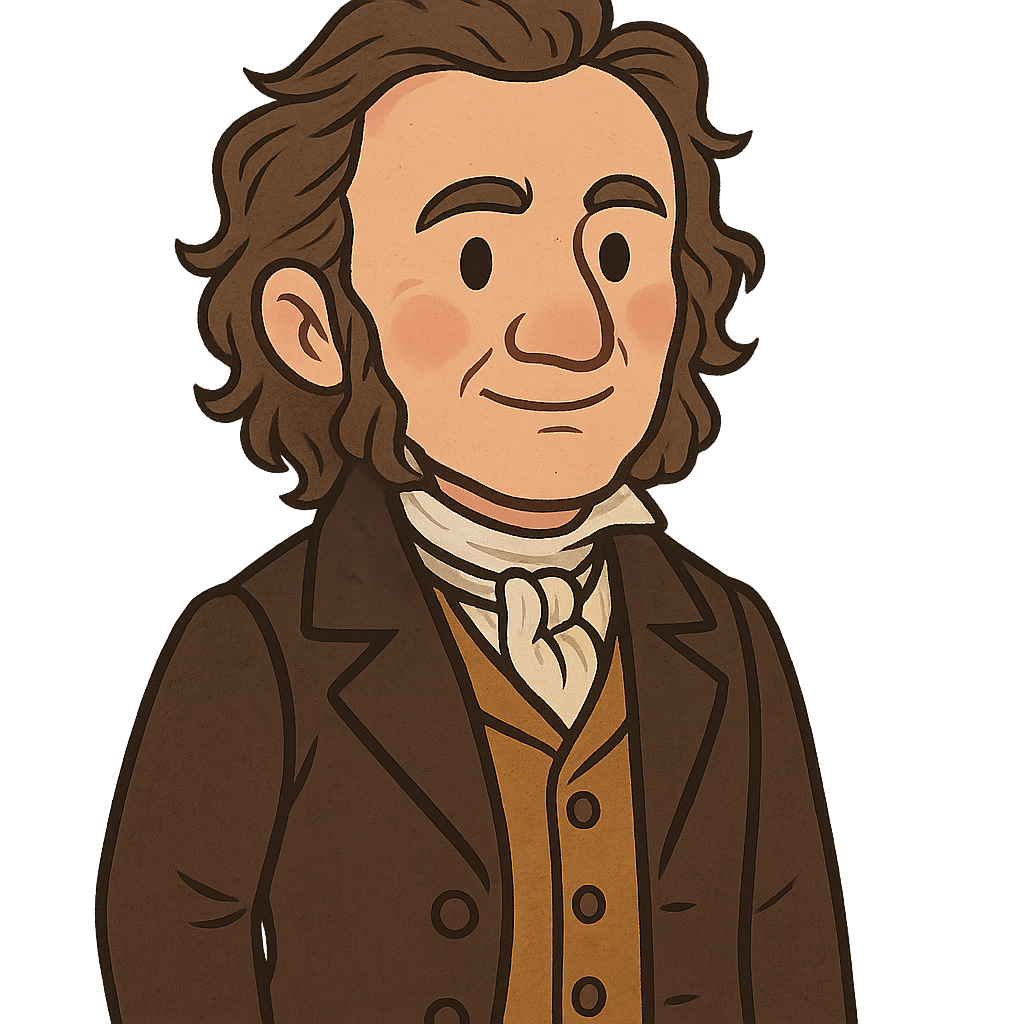
Hello, my name is John James Audubon. I am known for spending my life observing and painting the birds of North America. My story begins far from there, on the island of Saint-Domingue, where I was born on April 26th, 1785. Soon after, I moved to France to be raised by my father and his wife. From a young age, the wild woods felt more like home to me than any classroom. While other boys were focused on their lessons, I would be outside, watching the birds flutter and soar. I was completely fascinated by their colors, their songs, and their movements. My father saw this passion in me and encouraged my love for nature. I tried to capture their beauty on paper, but my first drawings were not very good. The birds I drew looked flat and lifeless, not like the vibrant creatures I saw in the forest. But I did not give up. I knew I had to find a way to show the world the birds as I saw them.
To avoid being forced into the army, my father sent me to America in 1803. I was 18 years old when I arrived at Mill Grove, his farm in Pennsylvania. The American wilderness was unlike anything I had ever seen in France. It was vast, wild, and teeming with birds I had only dreamed of. I spent my days exploring, completely captivated by the endless variety of species. It was at Mill Grove that I conducted an important experiment. I wanted to know if birds returned to the same nesting spot each year. I carefully tied a light string around the leg of a small bird called an Eastern Phoebe. The following spring, I was thrilled to see the same bird, with my string still on its leg, return to its nest. This was the first known instance of bird banding in North America, a method scientists still use today. My time at Mill Grove brought another great joy into my life. I met a wonderful woman named Lucy Bakewell, who lived on a neighboring farm. She understood my passion for nature, and we were married in 1808. She would become my greatest supporter throughout all the challenges that lay ahead.
John James Audubon: Painting America's Birds
Hello, my name is John James Audubon. I am known for spending my life observing and painting the birds of North America. My story begins far from there, on the island of Saint-Domingue, where I was born on April 26th, 1785. Soon after, I moved to France to be raised by my father and his wife. From a young age, the wild woods felt more like home to me than any classroom. While other boys were focused on their lessons, I would be outside, watching the birds flutter and soar. I was completely fascinated by their colors, their songs, and their movements. My father saw this passion in me and encouraged my love for nature. I tried to capture their beauty on paper, but my first drawings were not very good. The birds I drew looked flat and lifeless, not like the vibrant creatures I saw in the forest. But I did not give up. I knew I had to find a way to show the world the birds as I saw them.
To avoid being forced into the army, my father sent me to America in 1803. I was 18 years old when I arrived at Mill Grove, his farm in Pennsylvania. The American wilderness was unlike anything I had ever seen in France. It was vast, wild, and teeming with birds I had only dreamed of. I spent my days exploring, completely captivated by the endless variety of species. It was at Mill Grove that I conducted an important experiment. I wanted to know if birds returned to the same nesting spot each year. I carefully tied a light string around the leg of a small bird called an Eastern Phoebe. The following spring, I was thrilled to see the same bird, with my string still on its leg, return to its nest. This was the first known instance of bird banding in North America, a method scientists still use today. My time at Mill Grove brought another great joy into my life. I met a wonderful woman named Lucy Bakewell, who lived on a neighboring farm. She understood my passion for nature, and we were married in 1808. She would become my greatest supporter throughout all the challenges that lay ahead.
My wife Lucy and I moved to Kentucky to start a life together. I tried my hand at being a businessman, opening a general store and then a mill, but my heart was never in it. I found it difficult to focus on ledgers and inventory when I could hear the call of the birds in the forest just outside. My mind was always wandering to the wild places, sketching the birds I saw and dreaming of my art. Because my passion was elsewhere, my businesses did not succeed. In 1819, I faced a very difficult time when my business failed completely, and I had to declare bankruptcy. We lost everything. It was the lowest point of my life, and I had to find a way to support my family. It was during this time of hardship that a wild idea began to form. In 1820, I made a bold and seemingly impossible decision. Instead of trying to be a businessman, a role I was not suited for, I would dedicate my life to my true passion. I decided I would travel across the continent and paint every single bird in North America, then publish them all in a magnificent book for the world to see.
My quest to document every bird in North America was an enormous undertaking. For years, I traveled through the untamed wilderness, from the swamps of Florida to the forests of the north. My method was unique. To capture the true essence of the birds, I hunted them to use as models. I then used wires to pose them in dynamic, lifelike positions, as if they were in the middle of flying, hunting, or feeding. I was determined to draw every bird life-sized, from the smallest hummingbird to the largest eagle, which meant I needed very large paper. After creating a large collection of these paintings, I tried to find a publisher in America, but no one was willing to take on such an expensive and ambitious project. They thought it was impossible. Undeterred, I took a great risk and sailed to England in 1826, hoping to find support there. To my relief, the British were fascinated by my vibrant depictions of American wildlife. I found a brilliant engraver named Robert Havell Jr., who understood my vision. Together, we began the monumental task of turning my paintings into prints for my book, which I called 'The Birds of America.' The prints were made on the largest paper available, called 'double elephant folio.' The book was published in parts between 1827 and 1838, and it made my dream a reality.
Seeing 'The Birds of America' completed was one of the proudest moments of my life. My wild idea, born from a moment of failure, had become a celebrated masterpiece. But my work was not finished. I immediately began a new project with my sons, Victor and John, to create a similar book about the mammals of North America. I spent my final years with my family at our home in New York, surrounded by the nature I loved. I lived to be 65 years old and passed on in 1851. My paintings did more than just show what birds looked like; they captured their spirit and showed the world the breathtaking beauty of the American wilderness. Today, my work continues to inspire people. The National Audubon Society, one of the most important bird conservation organizations in the world, was named in my honor. It carries on the work of protecting the birds that I dedicated my life to celebrating.
Wow facts
About
John James Audubon was a French-American ornithologist, naturalist, and painter renowned for his extensive studies and detailed illustrations of North American birds, published in his famous book, 'The Birds of America'.
Take a Quiz
Question 1 of 5
In the story, I said, "My quest to document every bird in North America was an enormous undertaking." What does the word "undertaking" mean in this sentence?
Explore next


Want to do even more?
Go beyond exploring. Unlock tools that turn every story into real learning.

Storypie Plus for families
Full stories, quizzes, and printables. Nights and car rides, sorted.
- Unlimited audio stories
- Create Mode: your child stars in the story
- Offline downloads
- Printable worksheets & coloring pages

Why Storypie for Schools
Students engaged. Prep in seconds. Evenings back to you.
- Worksheets & Quizzes
- Classroom Management
- Formative Assessment
- Custom Curriculum & Lesson Plans
- 27 Languages

Why Storypie for Homeschool
Curriculum done. They'll ask for more. Hours back in your day.
- Worksheet Generator
- First-Person Audio Stories
- Built-in Comprehension Quizzes
- Custom Curriculum & Lesson Plans
- Print & Go Activities