English

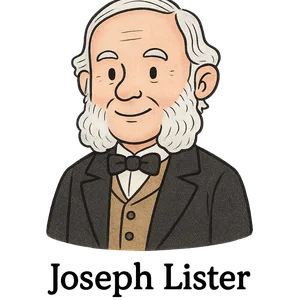
Joseph Lister
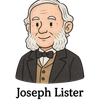
Joseph Lister was a British surgeon and a pioneer of antiseptic surgery.
Reads at Grades 6–8 Listens at Grades 4–8
Print & create
Answer keys·No prep·Free with an account
28 worksheets · answer keys · full story · quiz · Ages 10-12 · CEFR B2
Plus adds 208,000+ more stories in 27 languages, audio for every one, and printables for all of them.
Just want Joseph Lister?
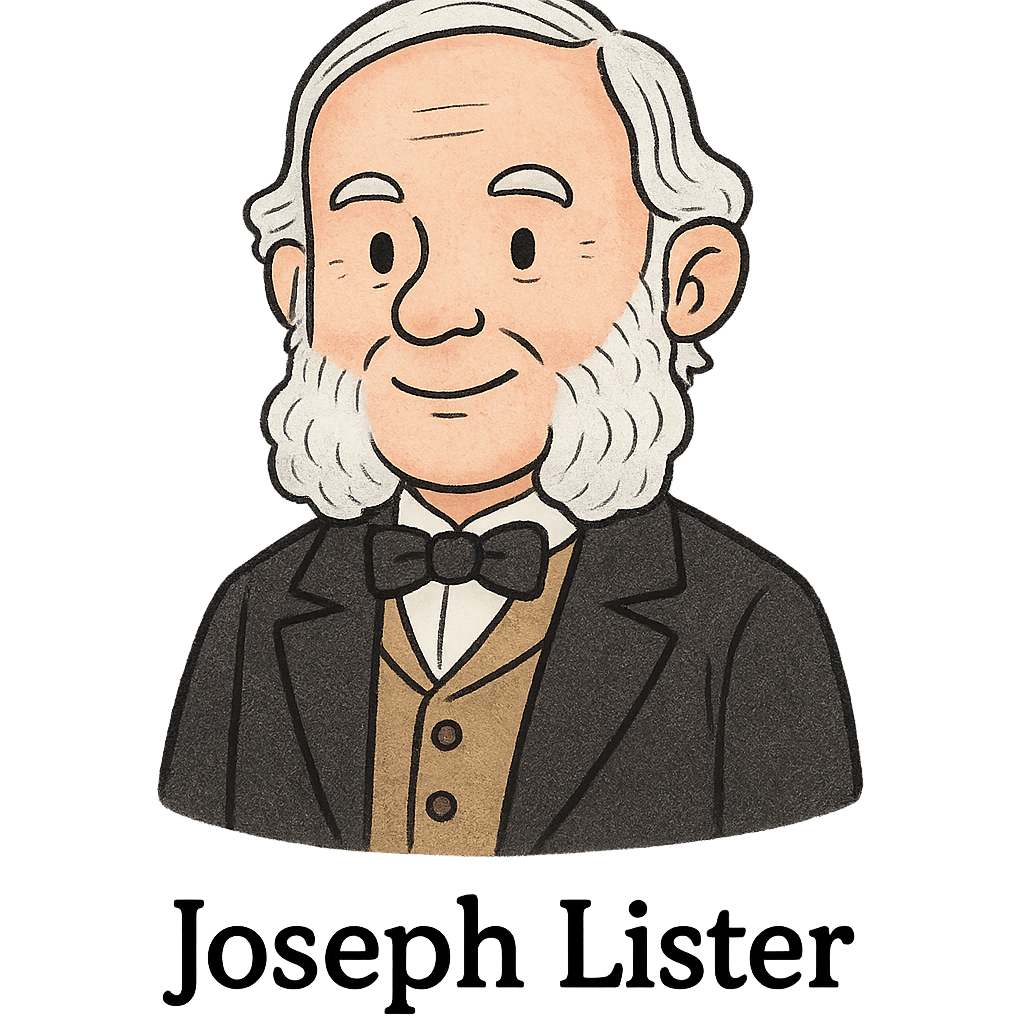
Hello, my name is Joseph Lister, and I want to tell you the story of how a little curiosity about the unseen world changed medicine forever. I was born on April 5th, 1827, in England. My father, Joseph Jackson Lister, was a scientist who made important improvements to the microscope. From a young age, he would let me peer through its lenses into a world teeming with life too small for the naked eye to see. I was completely fascinated by these tiny, invisible things. This early wonder wasn't just a hobby; it planted a seed in my mind. I realized that science could unlock secrets that could help people in very real ways. This passion drove me to study medicine at University College, London. I wanted to use a scientific approach to understand the human body and heal it. In 1852, I graduated with my medical degree, ready to begin my work as a doctor and surgeon, with the images of that tiny, hidden world still fresh in my mind.
After finishing my studies, I began my career as a surgeon, working in hospitals in Scotland. It was both a rewarding and a heartbreaking time. I could perform what seemed to be a perfect operation, skillfully repairing an injury or removing a problem, only to watch in despair as my patient grew sick in the days that followed. So many of them developed terrible infections in their wounds, a condition we grimly called 'hospital disease' or gangrene. It was a devastating problem in the 1850s and early 1860s. The common belief among doctors at the time was that these infections were caused by something called 'miasma,' which meant bad smells or polluted air circulating in the hospital wards. While the hospitals certainly had their share of unpleasant odors, I was not convinced that this was the complete explanation. It felt too simple, and it didn't explain why some patients got sick and others didn't. I felt there had to be another, more direct cause for the suffering I saw every day.
Joseph Lister: The Father of Modern Surgery
Hello, my name is Joseph Lister, and I want to tell you the story of how a little curiosity about the unseen world changed medicine forever. I was born on April 5th, 1827, in England. My father, Joseph Jackson Lister, was a scientist who made important improvements to the microscope. From a young age, he would let me peer through its lenses into a world teeming with life too small for the naked eye to see. I was completely fascinated by these tiny, invisible things. This early wonder wasn't just a hobby; it planted a seed in my mind. I realized that science could unlock secrets that could help people in very real ways. This passion drove me to study medicine at University College, London. I wanted to use a scientific approach to understand the human body and heal it. In 1852, I graduated with my medical degree, ready to begin my work as a doctor and surgeon, with the images of that tiny, hidden world still fresh in my mind.
After finishing my studies, I began my career as a surgeon, working in hospitals in Scotland. It was both a rewarding and a heartbreaking time. I could perform what seemed to be a perfect operation, skillfully repairing an injury or removing a problem, only to watch in despair as my patient grew sick in the days that followed. So many of them developed terrible infections in their wounds, a condition we grimly called 'hospital disease' or gangrene. It was a devastating problem in the 1850s and early 1860s. The common belief among doctors at the time was that these infections were caused by something called 'miasma,' which meant bad smells or polluted air circulating in the hospital wards. While the hospitals certainly had their share of unpleasant odors, I was not convinced that this was the complete explanation. It felt too simple, and it didn't explain why some patients got sick and others didn't. I felt there had to be another, more direct cause for the suffering I saw every day.
My search for an answer led me to constantly read the latest scientific research from across Europe. In the mid-1860s, I came across the groundbreaking work of a brilliant French scientist named Louis Pasteur. He wasn't a doctor, but a chemist, and he had been studying why things like wine and milk would spoil. Through careful experiments, Pasteur proved that the spoilage was caused by tiny, living organisms floating in the air, which he called 'germs.' He showed that by heating the liquids, he could kill these germs and prevent the milk or wine from going bad. As I read his findings, a thought struck me with the force of lightning. If these invisible germs could spoil wine, what if they were also floating in the air of my operating room? What if they were landing in my patients' open wounds and causing the deadly infections that we called 'hospital disease'? It was a radical idea that went against everything most doctors believed, but it made perfect sense to me. This was the clue I had been searching for.
Once I had my theory, I needed a way to test it. If invisible germs were the enemy, I needed a weapon to fight them. I began searching for a chemical that could kill germs without being too harmful to my patients. My research led me to carbolic acid, a strong-smelling substance that was being used at the time to clean sewers and disinfect waste. I reasoned that if it could eliminate the foul smells and decay in the sewers, perhaps it could do the same for germs in a wound. In 1865, the perfect opportunity to test my idea arrived. A young boy named James Greenlees was brought to the hospital with a severe leg fracture, where the bone had broken through the skin. This type of injury almost always led to a fatal infection. I was determined to give him a better chance. I carefully cleaned the wound, my surgical instruments, and even the bandages with a solution of carbolic acid. I watched over James anxiously, and to everyone's astonishment, his leg healed perfectly, with no sign of gangrene. It was a success. I published my findings on this new antiseptic method in 1867, but my ideas were so different that many doctors were skeptical and slow to believe me.
Despite the initial resistance, I continued to use and refine my antiseptic methods, and slowly, the results began to speak for themselves. The number of patients who survived surgery in my care increased dramatically. Over time, doctors from all over the world began to adopt my practices. Making surgery safe became my life's mission. In 1877, I was appointed as a professor at King's College in London, a position that allowed me to teach my methods to a new generation of surgeons. I was later honored for my contributions to medicine, which was a great satisfaction. I lived a long and full life, to the age of 84. Today, my ideas are the foundation of modern sterile surgery. Every time a surgeon scrubs their hands, puts on sterile gloves, or uses instruments that have been carefully cleaned, they are carrying on the work I began. My simple idea, inspired by a microscope and proven with carbolic acid, has saved countless lives, and that is why I am remembered as the 'Father of Modern Surgery'.
Wow facts
About
Joseph Lister was a British surgeon and a pioneer of antiseptic surgery. His work in the 19th century, based on Louis Pasteur's germ theory, dramatically reduced post-operative infections and transformed surgery into a much safer medical practice.
Take a Quiz
Question 1 of 5
What was the main problem I was trying to solve as a surgeon in the 1850s and early 1860s?
Explore next




Want to do even more?
Go beyond exploring. Unlock tools that turn every story into real learning.

Storypie Plus for families
Full stories, quizzes, and printables. Nights and car rides, sorted.
- Unlimited audio stories
- Create Mode: your child stars in the story
- Offline downloads
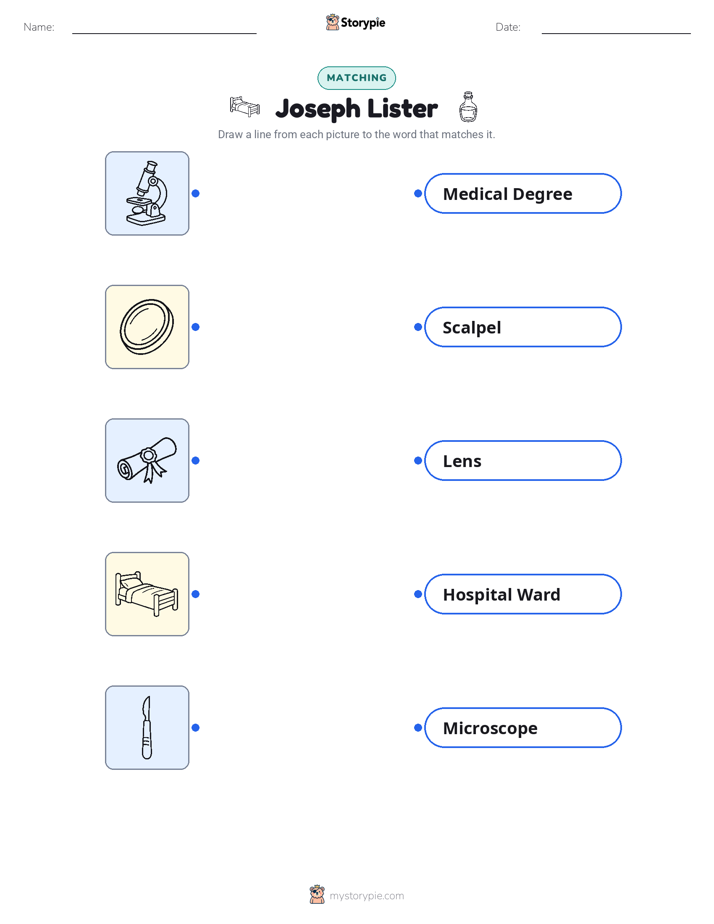
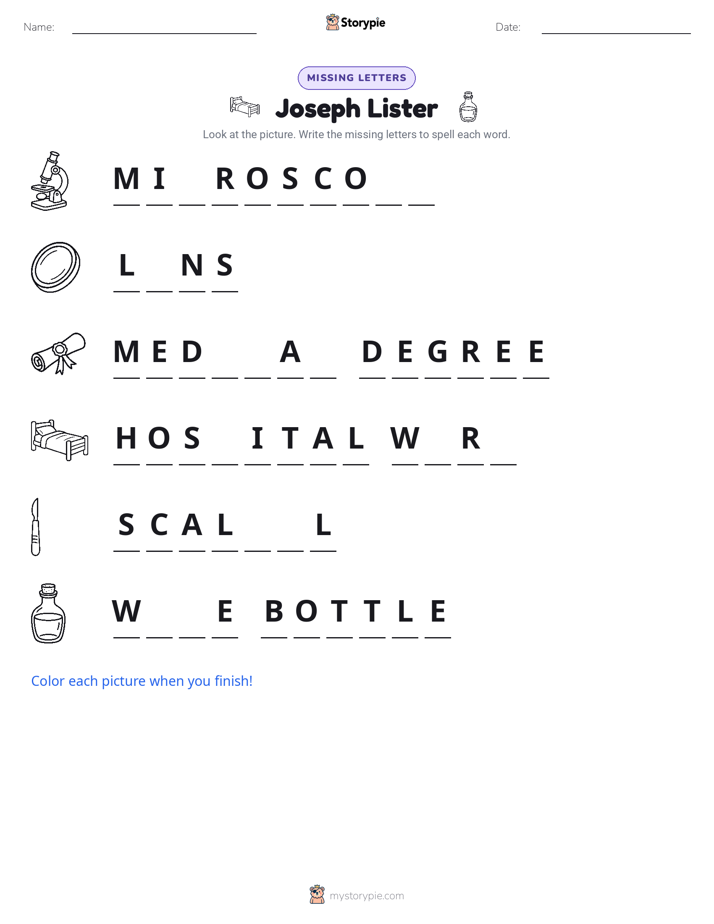
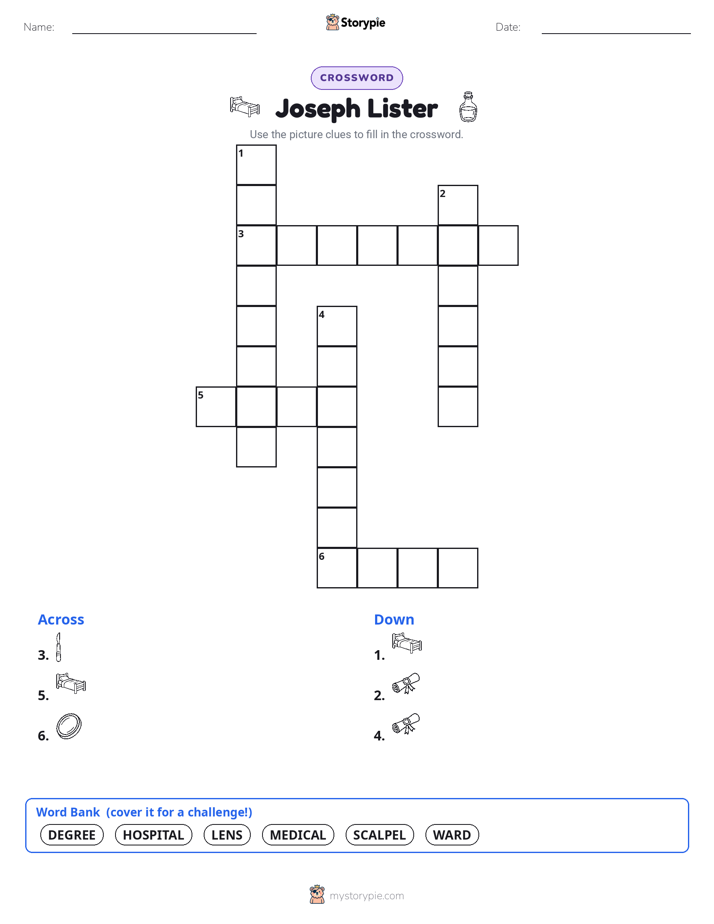
- Printable worksheets & coloring pages

Why Storypie for Schools
Students engaged. Prep in seconds. Evenings back to you.
- Worksheets & Quizzes
- Classroom Management
- Formative Assessment
- Custom Curriculum & Lesson Plans
- 27 Languages

Why Storypie for Homeschool
Curriculum done. They'll ask for more. Hours back in your day.
- Worksheet Generator
- First-Person Audio Stories
- Built-in Comprehension Quizzes
- Custom Curriculum & Lesson Plans
- Print & Go Activities