English

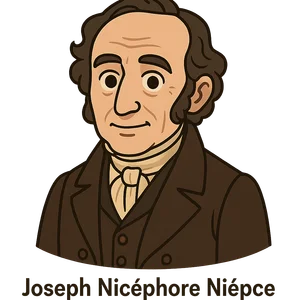
Joseph Nicéphore Niépce
Joseph Nicéphore Niépce was a French inventor who created heliography, the world's first photographic process…
Reads at Grades 3–5 Listens at Grades 1–5
Print & create
Answer keys·No prep·Free with an account
28 worksheets · answer keys · full story · quiz · Ages 8-10 · CEFR B1
Plus adds 244,000+ more stories in 27 languages, audio for every one, and printables for all of them.
Just want Joseph Nicéphore Niépce?
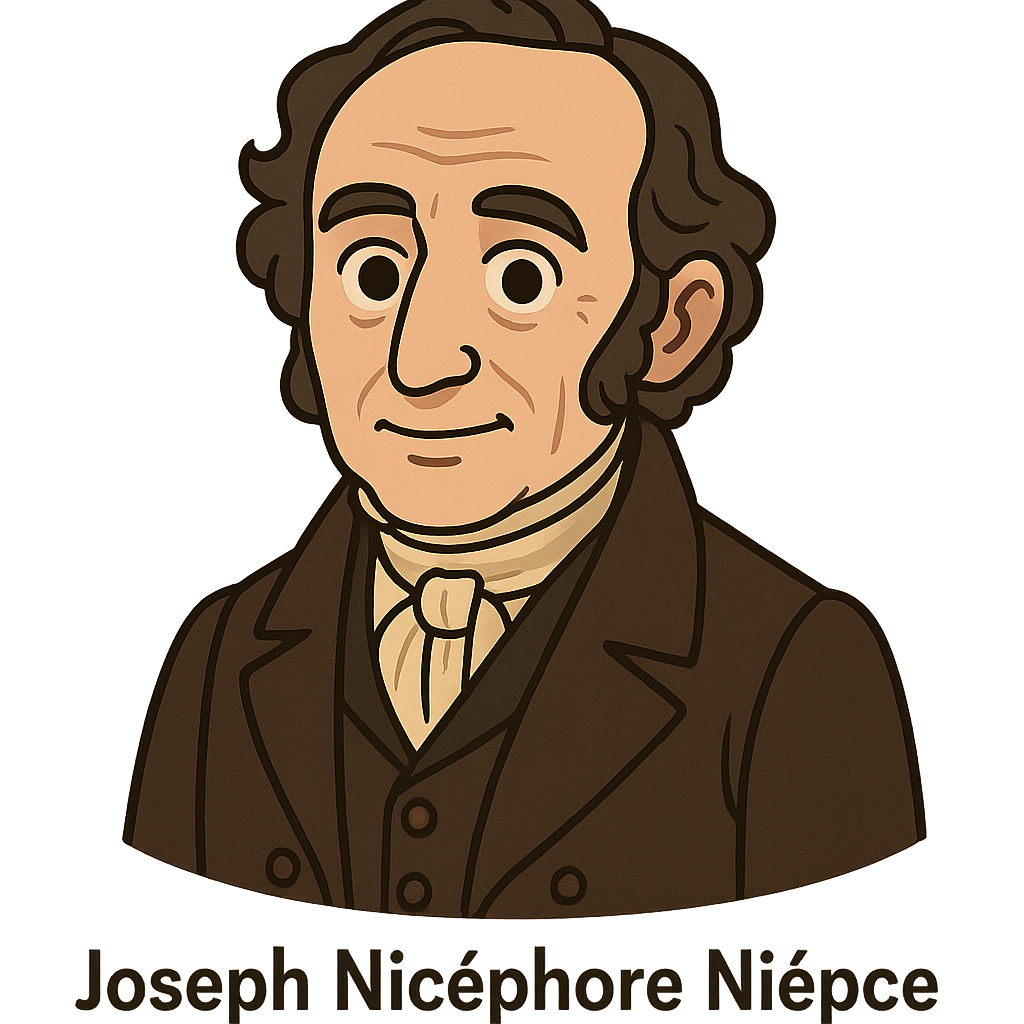
Hello! My name is Joseph Nicéphore Niépce, but you can call me Nicéphore. I was born on March 7th, 1765, in a town called Chalon-sur-Saône in France. Even as a boy, I was fascinated by how things worked and was always full of big ideas. My brother, Claude, and I were best friends and a great team. We spent our days tinkering with new ideas and dreaming up amazing inventions together. We believed that with curiosity and hard work, we could create things that no one had ever seen before.
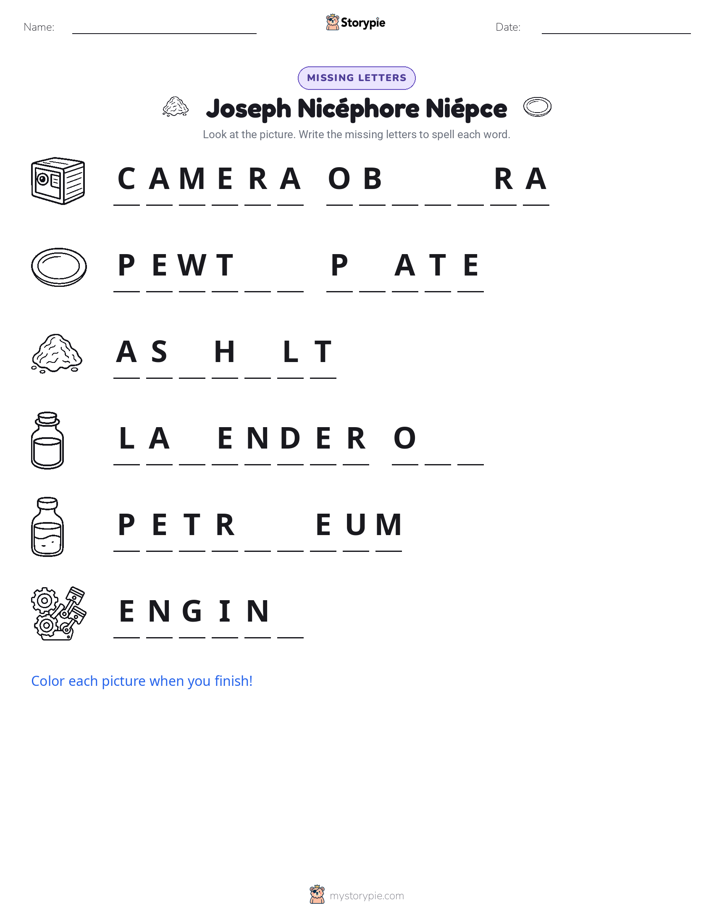
My brother and I spent years working on our first big invention. In 1807, we finally created something we called the Pyréolophore. It was one of the world's very first internal combustion engines, which is a fancy way of saying it created power from tiny, controlled explosions of fine coal dust. We were so proud of it! To prove that our engine worked, we attached it to a boat. We watched with excitement as it chugged its way up the Saône river, moving against the current all by itself. It was an incredible success and showed me that with science and a lot of patience, amazing things were possible.
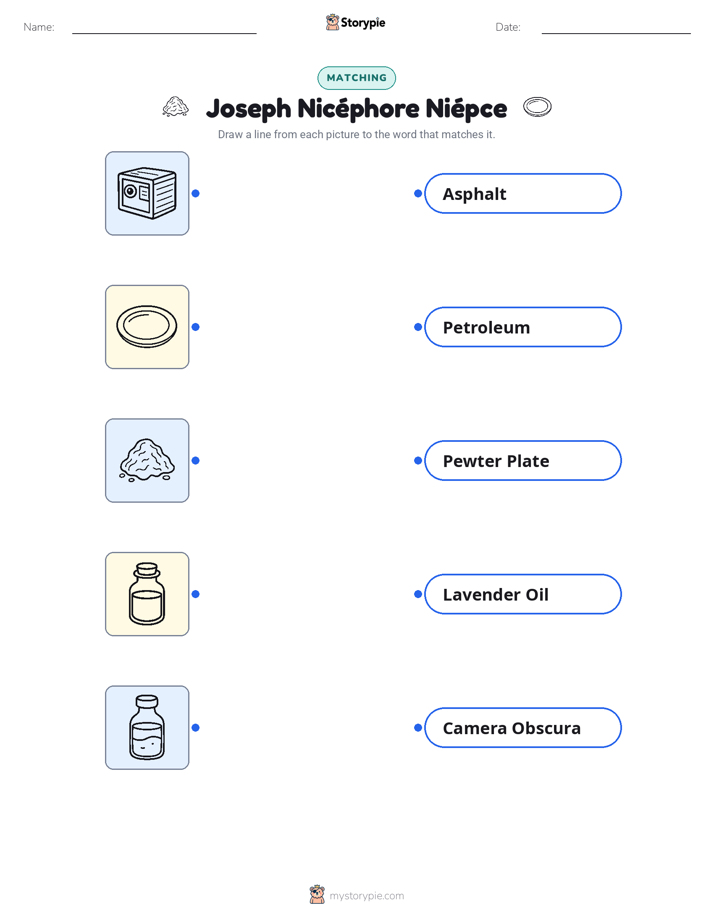
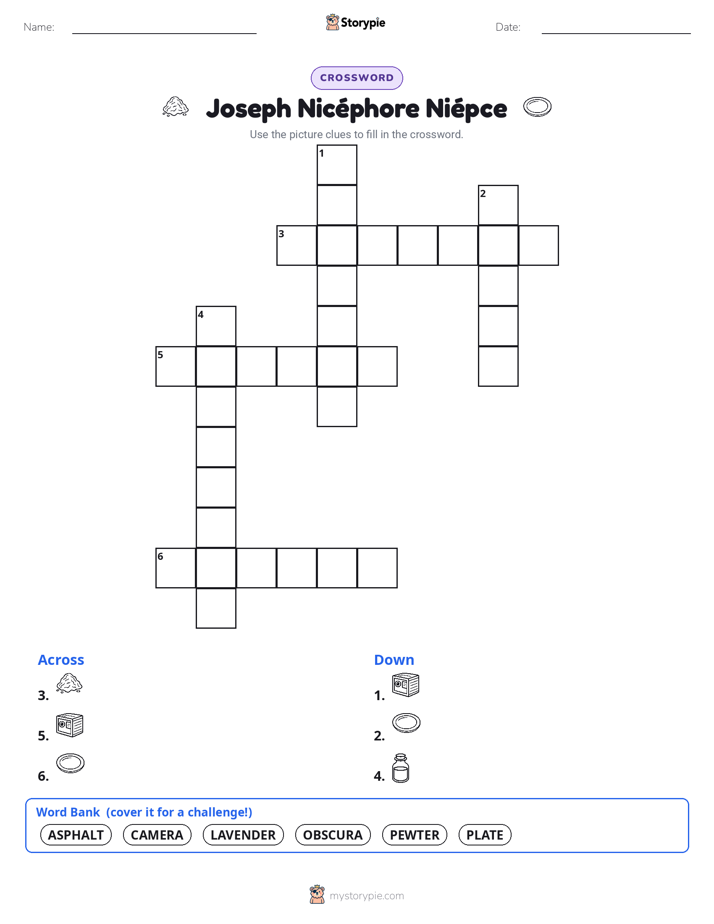
After our engine, I became obsessed with a new challenge. I loved the art of lithography, which is a way of printing pictures, but I had a problem—I was not a very good artist. I thought to myself, 'What if I could get nature to draw its own pictures?' I used a dark box called a camera obscura, which could project an image of the outside world onto a surface inside. The really tricky part was figuring out how to make that projected image stay forever. After many experiments, I found that a special material called Bitumen of Judea, a type of asphalt, would harden when it was touched by sunlight. I coated a polished pewter plate with it, put it in my camera obscura, and pointed it out my workshop window. Around the year 1826, after leaving the plate exposed to light for at least eight hours, I created the world’s very first permanent photograph! I called my invention 'Heliography,' which means 'sun-drawing,' because it was the sun that did all the work.
Joseph Nicéphore Niépce
Hello! My name is Joseph Nicéphore Niépce, but you can call me Nicéphore. I was born on March 7th, 1765, in a town called Chalon-sur-Saône in France. Even as a boy, I was fascinated by how things worked and was always full of big ideas. My brother, Claude, and I were best friends and a great team. We spent our days tinkering with new ideas and dreaming up amazing inventions together. We believed that with curiosity and hard work, we could create things that no one had ever seen before.
My brother and I spent years working on our first big invention. In 1807, we finally created something we called the Pyréolophore. It was one of the world's very first internal combustion engines, which is a fancy way of saying it created power from tiny, controlled explosions of fine coal dust. We were so proud of it! To prove that our engine worked, we attached it to a boat. We watched with excitement as it chugged its way up the Saône river, moving against the current all by itself. It was an incredible success and showed me that with science and a lot of patience, amazing things were possible.
After our engine, I became obsessed with a new challenge. I loved the art of lithography, which is a way of printing pictures, but I had a problem—I was not a very good artist. I thought to myself, 'What if I could get nature to draw its own pictures?' I used a dark box called a camera obscura, which could project an image of the outside world onto a surface inside. The really tricky part was figuring out how to make that projected image stay forever. After many experiments, I found that a special material called Bitumen of Judea, a type of asphalt, would harden when it was touched by sunlight. I coated a polished pewter plate with it, put it in my camera obscura, and pointed it out my workshop window. Around the year 1826, after leaving the plate exposed to light for at least eight hours, I created the world’s very first permanent photograph! I called my invention 'Heliography,' which means 'sun-drawing,' because it was the sun that did all the work.
My heliography process worked, but it was very, very slow. Taking a single picture took hours, or sometimes even days! I knew it could be better and faster. In 1829, I met another inventor in Paris named Louis Daguerre who was also trying to capture images with light. We discovered we had the same dream. We decided to become partners and share our secrets to improve the process. We believed that if we worked together, we could find a way to make pictures appear in just minutes instead of hours.
I lived to be 68 years old and worked on our project until the very end. Although I didn't get to see our shared dream fully completed, my partner Louis Daguerre continued our work after I was gone. Today, everyone can take a picture in an instant with a phone or camera. Every time you snap a photo of your friends, your family, or a beautiful sunset, you are using a little piece of the magic that began with me, trying to capture the view from my window all those years ago.
Wow facts
About
Joseph Nicéphore Niépce was a French inventor who created heliography, the world's first photographic process, and took the earliest surviving photograph from nature in 1826 or 1827.
Take a Quiz
Question 1 of 5
What was the name of the engine Joseph and his brother Claude invented in 1807?
Explore next




Want to do even more?
Go beyond exploring. Unlock tools that turn every story into real learning.

Storypie Plus for families
Full stories, quizzes, and printables. Nights and car rides, sorted.
- Unlimited audio stories
- Create Mode: your child stars in the story
- Offline downloads
- Printable worksheets & coloring pages

Why Storypie for Schools
Students engaged. Prep in seconds. Evenings back to you.
- Worksheets & Quizzes
- Classroom Management
- Formative Assessment
- Custom Curriculum & Lesson Plans
- 27 Languages

Why Storypie for Homeschool
Curriculum done. They'll ask for more. Hours back in your day.
- Worksheet Generator
- First-Person Audio Stories
- Built-in Comprehension Quizzes
- Custom Curriculum & Lesson Plans
- Print & Go Activities