English

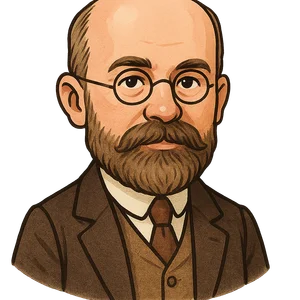
Karl Ferdinand Braun
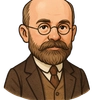
Karl Ferdinand Braun was a German physicist, inventor, and Nobel laureate in physics.
Reads at Grades 3–5 Listens at Grades 1–5
Print & create
Answer keys·No prep·Free with an account
28 worksheets · answer keys · full story · quiz · Ages 8-10 · CEFR B1
Plus adds 244,000+ more stories in 27 languages, audio for every one, and printables for all of them.
Just want Karl Ferdinand Braun?
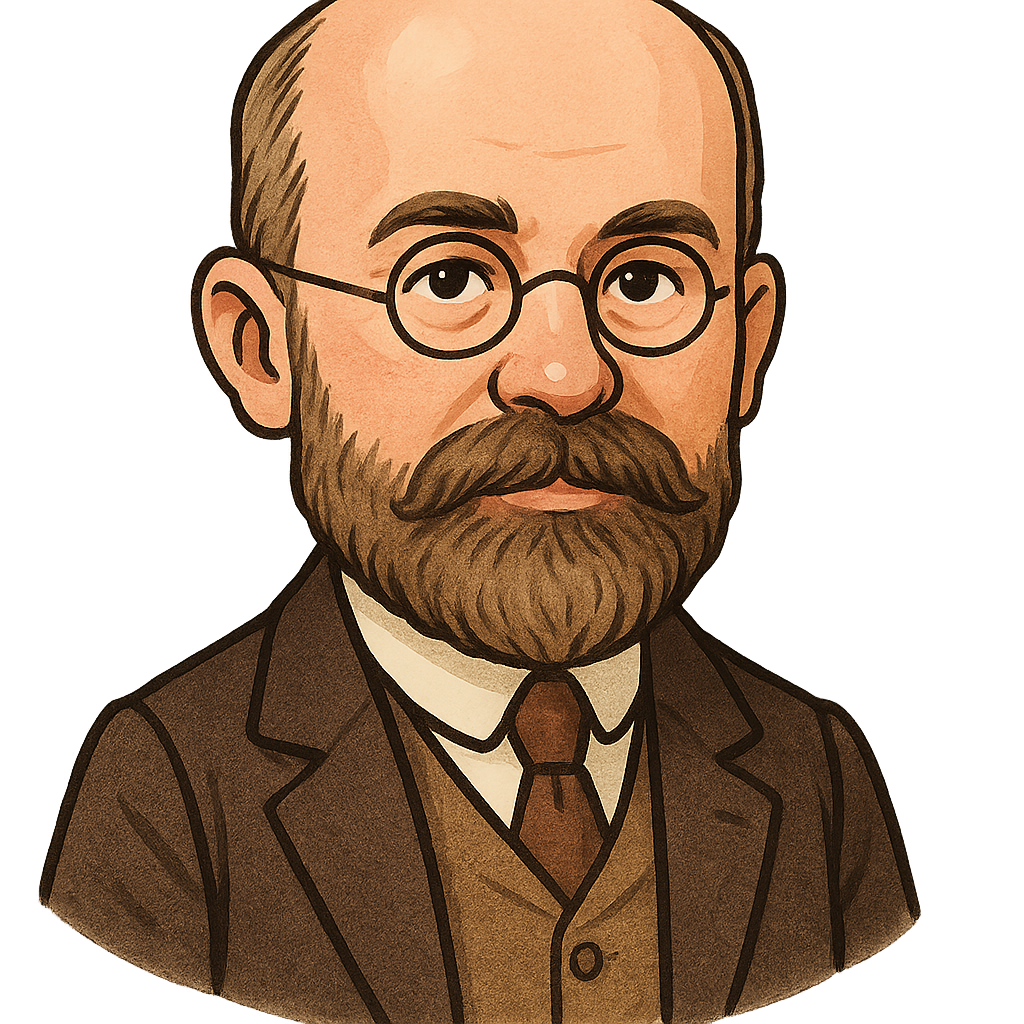
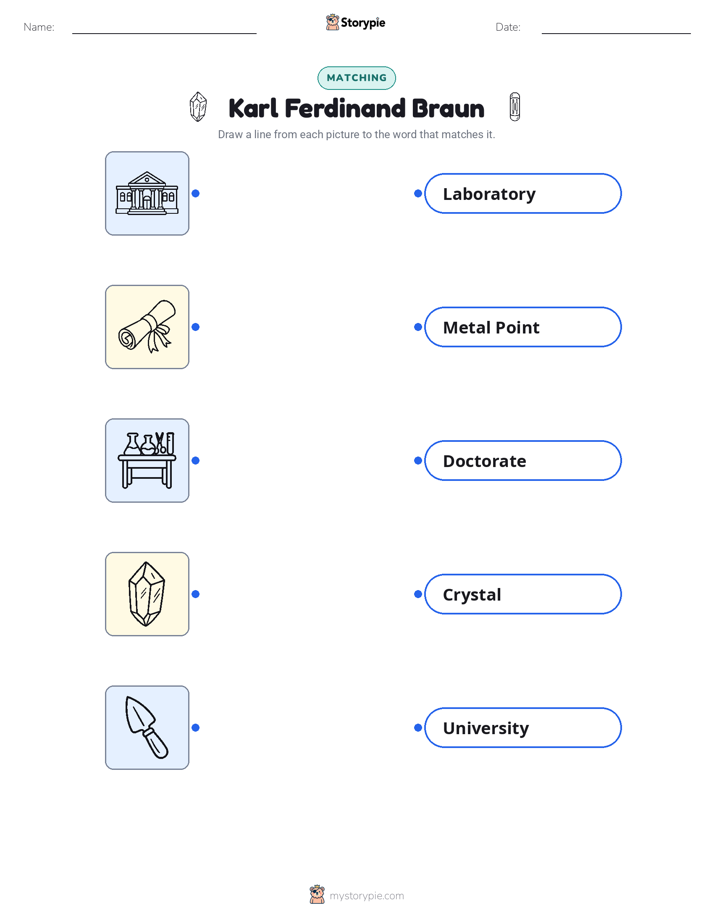
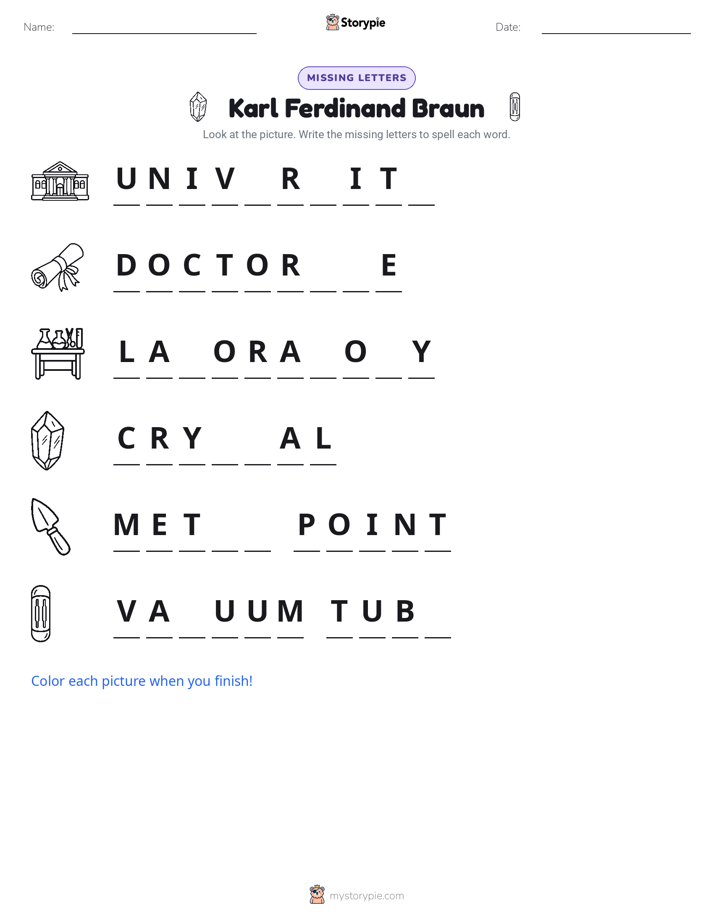
Hello! My name is Karl Ferdinand Braun, and I want to tell you my story. I was born on June 6th, 1850, in a town called Fulda, in what is now Germany. Even as a young boy, I was fascinated by the world around me, especially the invisible forces of nature like electricity and magnetism. I loved to experiment and figure out how things worked. This curiosity led me to study science. I went to the University of Marburg and then earned my special degree, a doctorate in physics, from the University of Berlin in 1872. I knew from a young age that I wanted to spend my life uncovering the secrets of science.
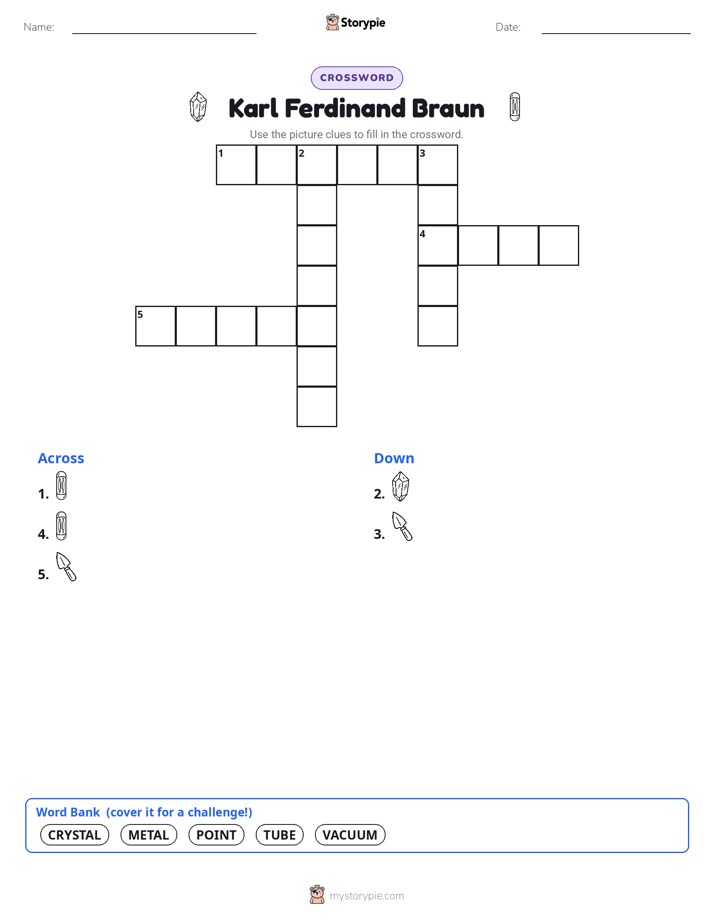
After finishing my studies, I became a professor and a headmaster, teaching science to others. But I never stopped doing my own experiments. In 1874, while working at the University of Würzburg, I made a very strange and wonderful discovery. I found that some types of crystals, like a mineral called galena, acted in a peculiar way. Electricity could flow through them easily in one direction, but not the other! This was the very first discovery of what we now call a semiconductor. At the time, we called it a "cat's whisker" detector because a tiny wire touched the crystal. This little discovery was a giant leap for the future of electronics.
My most famous invention came a bit later, in 1897. I wanted to find a way to see electricity in action. So, I built a special glass tube, which was a type of vacuum tube. Inside, I created a device that could shoot a narrow, invisible stream of tiny particles called electrons. When this beam of electrons hit a screen at the end of the tube that was coated with a special material, it would light up with a glowing dot! Then, I used magnets on the outside of the tube to bend and move the beam of electrons. By moving the dot of light very, very fast, I could draw shapes and patterns. This invention was called the cathode ray tube, or the 'Braun tube.' It was the first device of its kind and became the heart of the very first televisions and computer monitors.
Karl Ferdinand Braun: The Man Who Painted with Electrons
Hello! My name is Karl Ferdinand Braun, and I want to tell you my story. I was born on June 6th, 1850, in a town called Fulda, in what is now Germany. Even as a young boy, I was fascinated by the world around me, especially the invisible forces of nature like electricity and magnetism. I loved to experiment and figure out how things worked. This curiosity led me to study science. I went to the University of Marburg and then earned my special degree, a doctorate in physics, from the University of Berlin in 1872. I knew from a young age that I wanted to spend my life uncovering the secrets of science.
After finishing my studies, I became a professor and a headmaster, teaching science to others. But I never stopped doing my own experiments. In 1874, while working at the University of Würzburg, I made a very strange and wonderful discovery. I found that some types of crystals, like a mineral called galena, acted in a peculiar way. Electricity could flow through them easily in one direction, but not the other! This was the very first discovery of what we now call a semiconductor. At the time, we called it a "cat's whisker" detector because a tiny wire touched the crystal. This little discovery was a giant leap for the future of electronics.
My most famous invention came a bit later, in 1897. I wanted to find a way to see electricity in action. So, I built a special glass tube, which was a type of vacuum tube. Inside, I created a device that could shoot a narrow, invisible stream of tiny particles called electrons. When this beam of electrons hit a screen at the end of the tube that was coated with a special material, it would light up with a glowing dot! Then, I used magnets on the outside of the tube to bend and move the beam of electrons. By moving the dot of light very, very fast, I could draw shapes and patterns. This invention was called the cathode ray tube, or the 'Braun tube.' It was the first device of its kind and became the heart of the very first televisions and computer monitors.
Around the same time, another inventor named Guglielmo Marconi was working on sending messages without wires, which we now call radio. His invention was amazing, but the signals were often weak and couldn't travel very far. I knew I could help improve it. I figured out how to create a much more powerful and focused radio signal. I also developed a way to 'tune' the sender and the receiver so they were on the same frequency, just like you tune your radio to a specific station today. My improvements made it possible to send wireless messages across huge distances, like over the ocean, which was incredibly important for ships at sea.
For my work on wireless telegraphy, I was honored to share the Nobel Prize in Physics with Guglielmo Marconi in 1909. It was a wonderful moment to see our hard work recognized. A few years later, in 1914, I traveled to America for work, but a great war, World War I, broke out in Europe, and I was unable to return home to Germany. I lived to be 67 years old. Today, my work is all around you. Every time you watch a video on a screen or listen to the radio, you are experiencing the results of the scientific puzzles I loved to solve. My inventions helped connect the world in ways that were once thought to be impossible, and it all started with a curious boy who wanted to understand the world's invisible wonders.
Wow facts
About
Karl Ferdinand Braun was a German physicist, inventor, and Nobel laureate in physics. His invention of the cathode ray tube (CRT) laid the foundation for modern television and his contributions to radio technology were fundamental to the development of wireless communication.
Take a Quiz
Question 1 of 5
What did Karl Ferdinand Braun discover in 1874 while working with crystals?
Explore next



Want to do even more?
Go beyond exploring. Unlock tools that turn every story into real learning.

Storypie Plus for families
Full stories, quizzes, and printables. Nights and car rides, sorted.
- Unlimited audio stories
- Create Mode: your child stars in the story
- Offline downloads
- Printable worksheets & coloring pages

Why Storypie for Schools
Students engaged. Prep in seconds. Evenings back to you.
- Worksheets & Quizzes
- Classroom Management
- Formative Assessment
- Custom Curriculum & Lesson Plans
- 27 Languages

Why Storypie for Homeschool
Curriculum done. They'll ask for more. Hours back in your day.
- Worksheet Generator
- First-Person Audio Stories
- Built-in Comprehension Quizzes
- Custom Curriculum & Lesson Plans
- Print & Go Activities