English

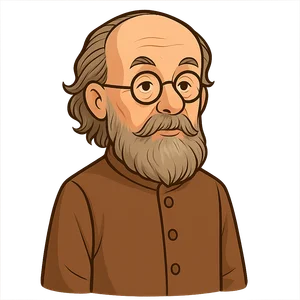
Konstantin Tsiolkovsky
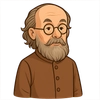
Konstantin Tsiolkovsky was a pioneering Russian and Soviet rocket scientist and a founder of modern…
Reads at Grades 6–8 Listens at Grades 4–8
Print & create
Answer keys·No prep·Free with an account
28 worksheets · answer keys · full story · quiz · Ages 10-12 · CEFR B2
Plus adds 164,000+ more stories in 27 languages, audio for every one, and printables for all of them.
Just want Konstantin Tsiolkovsky?
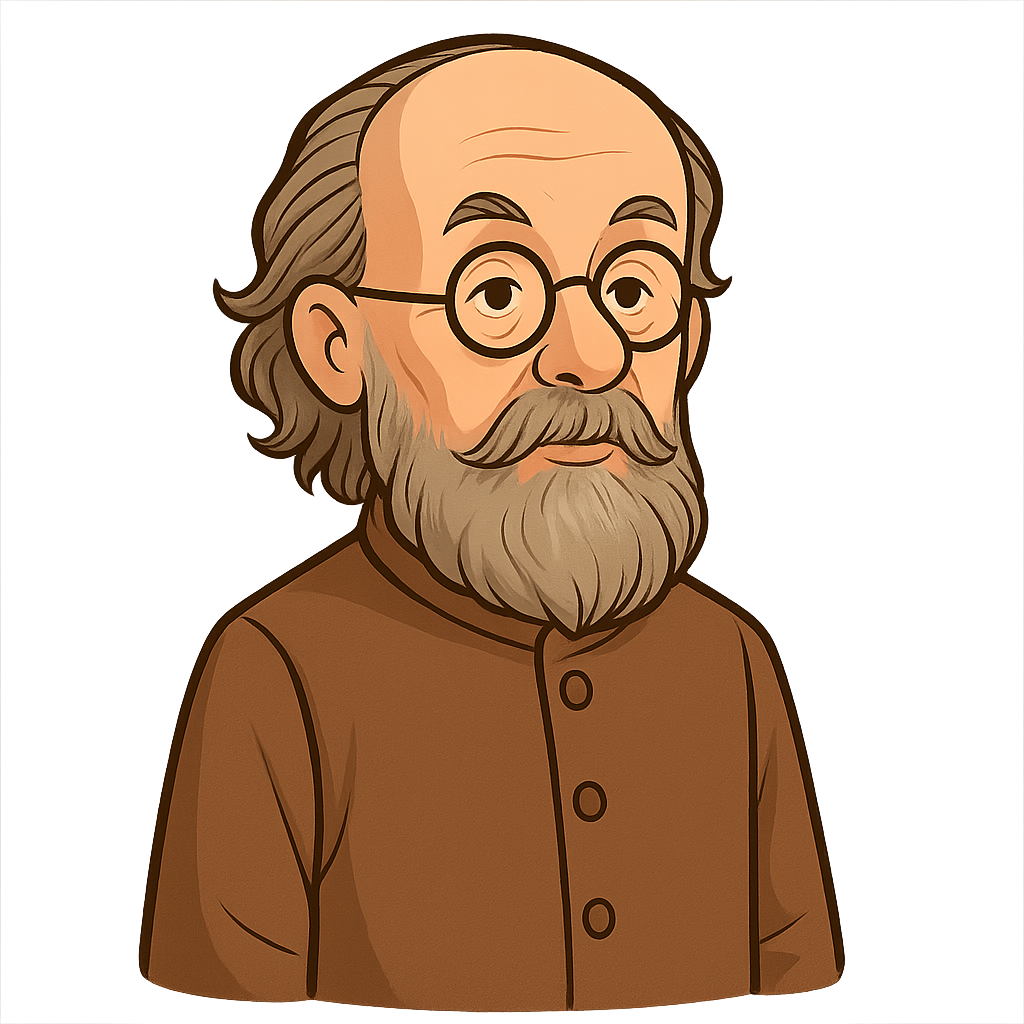
Hello, my name is Konstantin Tsiolkovsky, and I am known as the Father of Cosmonautics. My story begins on September 17th, 1857, in a small village in Russia. From my earliest days, I was filled with a deep curiosity about the world around me, especially the vast, starry sky. I spent hours watching the clouds drift and wondering what lay beyond them. My life took a difficult turn when I was around 10 years old. I became very ill with scarlet fever, and the sickness damaged my hearing, leaving me nearly deaf. This made it impossible for me to continue in a regular school with other children. Instead of feeling defeated, this quiet new world pushed me inward. I found comfort and excitement in books. I read everything I could find, teaching myself about science, mathematics, and the universe. My hearing loss isolated me from others, but it also gave me the focus to become a dedicated thinker and dreamer.
My mother, Maria, saw the passion I had for learning and always encouraged me to follow my curiosity. Her support was my greatest strength. In 1873, as a teenager, I traveled to Moscow with a powerful dream of attending a university. However, without a formal education, I couldn't enroll. But I did not give up. I found another kind of university for myself: the Chertkovskaya Public Library. For three years, that library became my classroom and its books became my teachers. I studied advanced mathematics, physics, and chemistry all on my own. I lived a very simple life, spending what little money I had on books and materials for experiments, often eating only bread and water. My hunger for knowledge was far greater than my hunger for food. After those intense years of self-education, I knew I needed to support myself, and in 1880, I became a schoolteacher, a job that allowed me to share my love of science while continuing my own research.
Konstantin Tsiolkovsky: Father of Cosmonautics
Hello, my name is Konstantin Tsiolkovsky, and I am known as the Father of Cosmonautics. My story begins on September 17th, 1857, in a small village in Russia. From my earliest days, I was filled with a deep curiosity about the world around me, especially the vast, starry sky. I spent hours watching the clouds drift and wondering what lay beyond them. My life took a difficult turn when I was around 10 years old. I became very ill with scarlet fever, and the sickness damaged my hearing, leaving me nearly deaf. This made it impossible for me to continue in a regular school with other children. Instead of feeling defeated, this quiet new world pushed me inward. I found comfort and excitement in books. I read everything I could find, teaching myself about science, mathematics, and the universe. My hearing loss isolated me from others, but it also gave me the focus to become a dedicated thinker and dreamer.
My mother, Maria, saw the passion I had for learning and always encouraged me to follow my curiosity. Her support was my greatest strength. In 1873, as a teenager, I traveled to Moscow with a powerful dream of attending a university. However, without a formal education, I couldn't enroll. But I did not give up. I found another kind of university for myself: the Chertkovskaya Public Library. For three years, that library became my classroom and its books became my teachers. I studied advanced mathematics, physics, and chemistry all on my own. I lived a very simple life, spending what little money I had on books and materials for experiments, often eating only bread and water. My hunger for knowledge was far greater than my hunger for food. After those intense years of self-education, I knew I needed to support myself, and in 1880, I became a schoolteacher, a job that allowed me to share my love of science while continuing my own research.
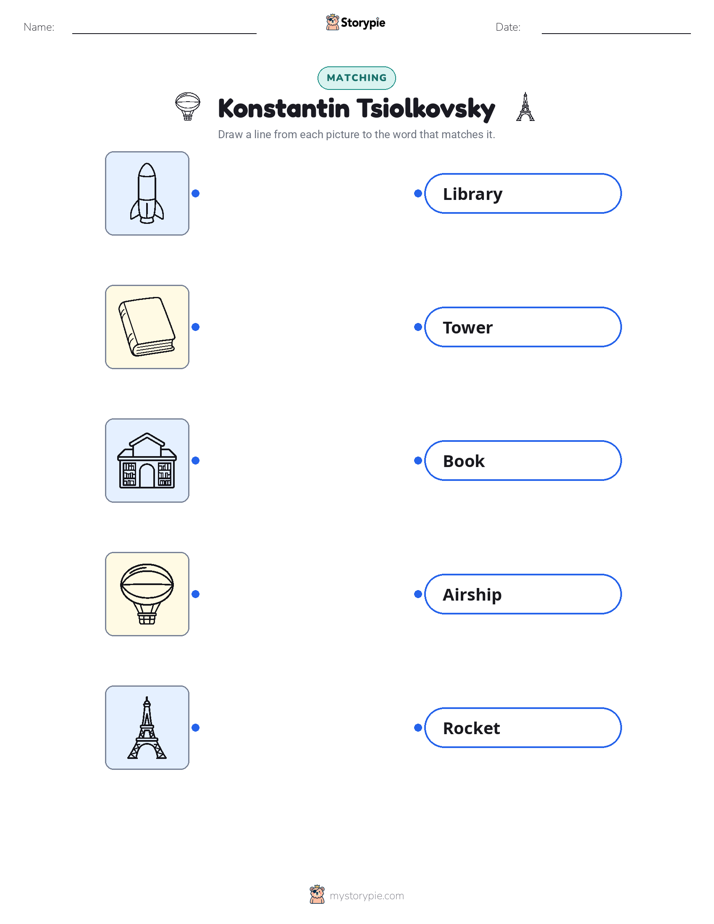
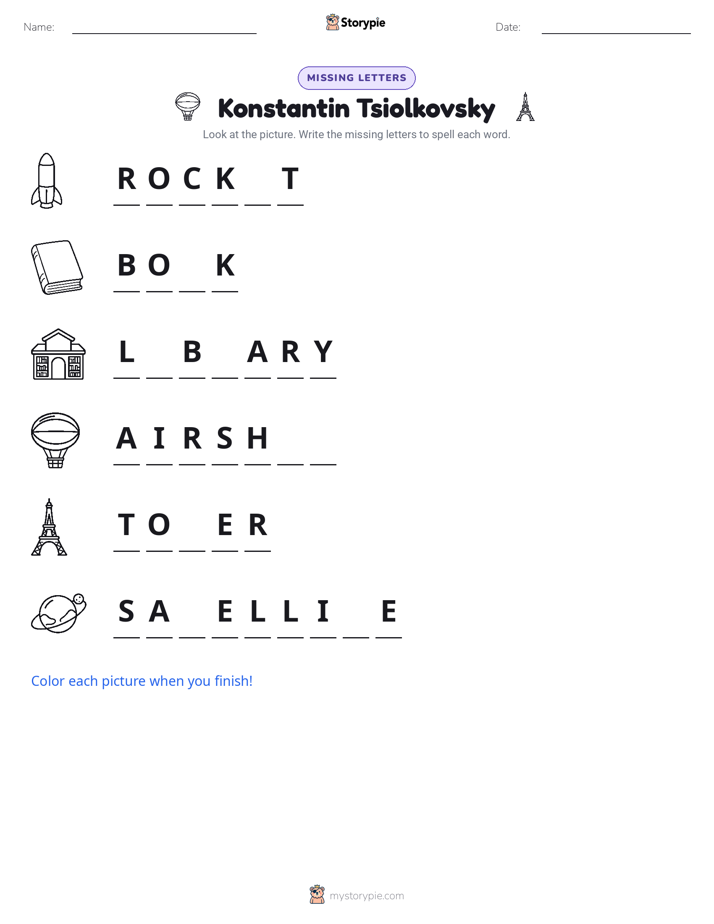
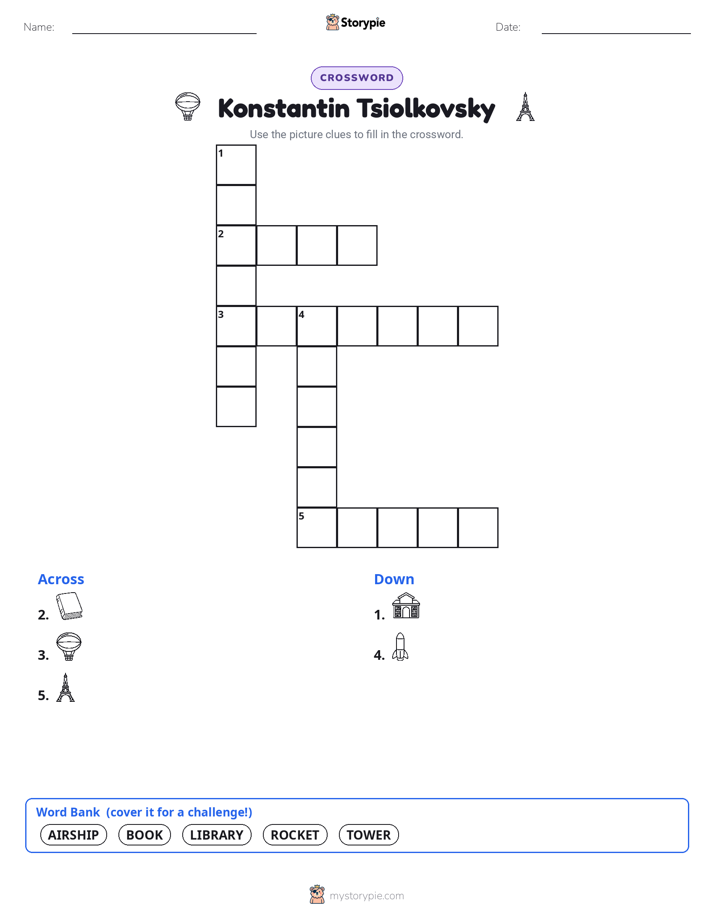
In 1892, I moved with my family to the small town of Kaluga, which would become my home and my personal laboratory for the rest of my life. It was here, in my quiet study, that my childhood dreams of traveling to the stars began to transform into serious scientific work. I spent countless hours calculating and designing machines that could fly. I developed plans for an all-metal, steerable airship, which was a very advanced idea for the time. My imagination was always working, connecting different ideas. In 1895, after reading about the construction of the magnificent Eiffel Tower in Paris, a truly incredible idea came to me. I imagined a similar tower, but one so tall that it would reach all the way into space. I called this concept a 'space elevator,' a way for people to ride up into orbit without a rocket. It was a bold and futuristic idea, one of many that I would develop.
My greatest focus, however, was on the problem of escaping Earth's powerful gravity. How could a machine break free from our planet and travel through the vacuum of space? I knew that conventional propellers or wings would not work where there was no air. The answer, I concluded, had to be rockets. In 1903, I published a scientific paper that contained my most important contribution to science, an equation that is now named after me: the Tsiolkovsky rocket equation. This formula was a key that unlocked the secrets of space travel. In simple terms, it proved mathematically how a rocket using liquid propellants—like liquid hydrogen and liquid oxygen—could generate enough thrust to reach orbit. I also theorized that to travel far into space, to the Moon or other planets, it would be necessary to use multi-stage rockets, where parts of the rocket would fall away as their fuel was used up, making the spacecraft lighter and more efficient.
Many of the ideas I worked on in Kaluga were far too advanced for the technology of my time, and I never saw my designs for rockets or space elevators built. For many years, my work was known only to a small circle of people. But great ideas have a way of enduring. My theories and equations were not forgotten. After my lifetime, they became the essential guidebook for the engineers and scientists who would actually build the first spacecraft. My rocket equation was the foundation they used to design the rockets that launched Sputnik, the world's first artificial satellite, and later, to send the first human, Yuri Gagarin, into the cosmos. I lived to be 78 years old, and my life came to an end on September 19th, 1935. Though I never left the Earth myself, I am remembered as the 'Father of Cosmonautics,' and I am proud that my dreams helped launch humanity into the stars.
Wow facts
About
Konstantin Tsiolkovsky was a pioneering Russian and Soviet rocket scientist and a founder of modern astronautics. Despite losing his hearing as a child, he became a self-taught genius who developed the fundamental principles of spaceflight, including the Tsiolkovsky rocket equation.
Take a Quiz
Question 1 of 5
What was the main problem of space travel that Konstantin's rocket equation solved?
Explore next




Want to do even more?
Go beyond exploring. Unlock tools that turn every story into real learning.

Storypie Plus for families
Full stories, quizzes, and printables. Nights and car rides, sorted.
- Unlimited audio stories
- Create Mode: your child stars in the story
- Offline downloads
- Printable worksheets & coloring pages

Why Storypie for Schools
Students engaged. Prep in seconds. Evenings back to you.
- Worksheets & Quizzes
- Classroom Management
- Formative Assessment
- Custom Curriculum & Lesson Plans
- 27 Languages

Why Storypie for Homeschool
Curriculum done. They'll ask for more. Hours back in your day.
- Worksheet Generator
- First-Person Audio Stories
- Built-in Comprehension Quizzes
- Custom Curriculum & Lesson Plans
- Print & Go Activities