English

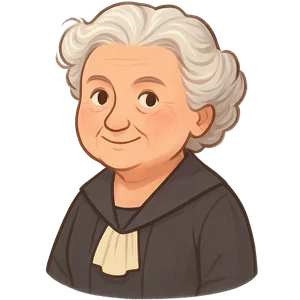
Maria Montessori
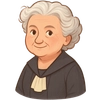
Maria Montessori was an Italian physician and educator best known for the philosophy of education that bears…
Reads at Grades 3–5 Listens at Grades 1–5
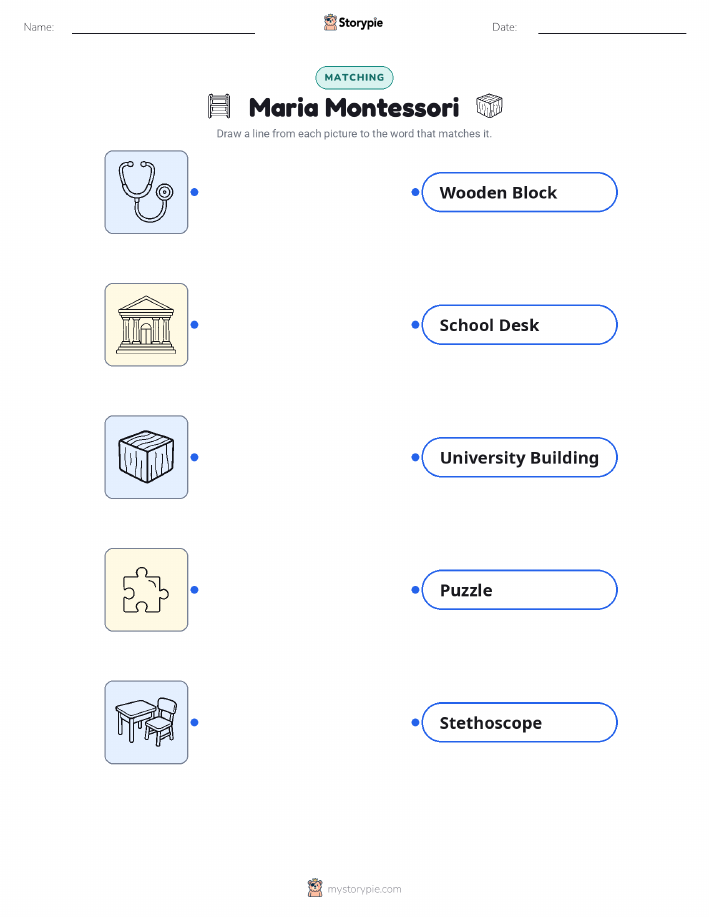
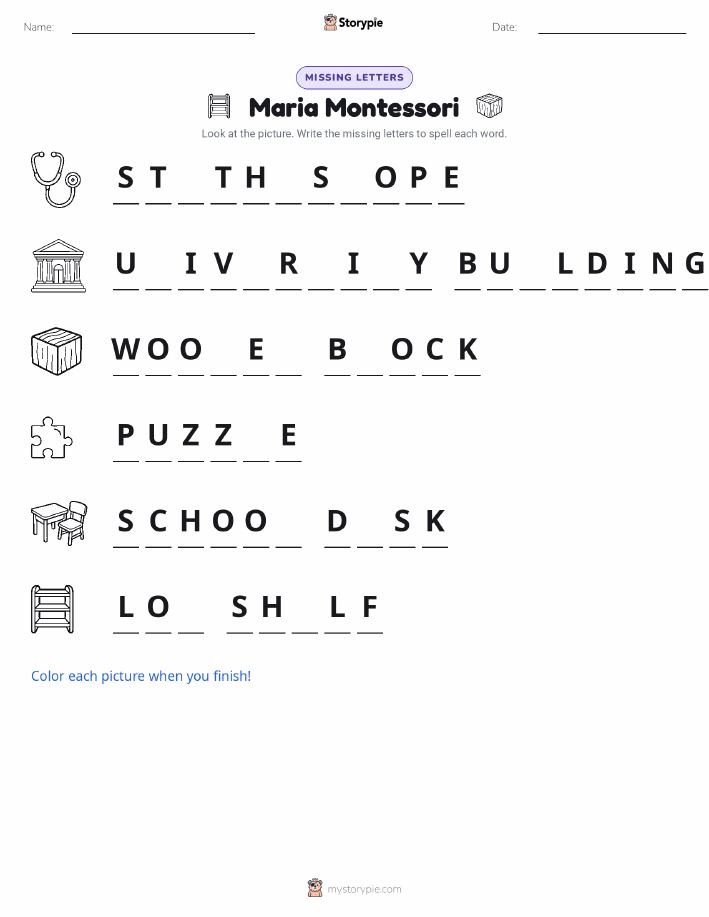
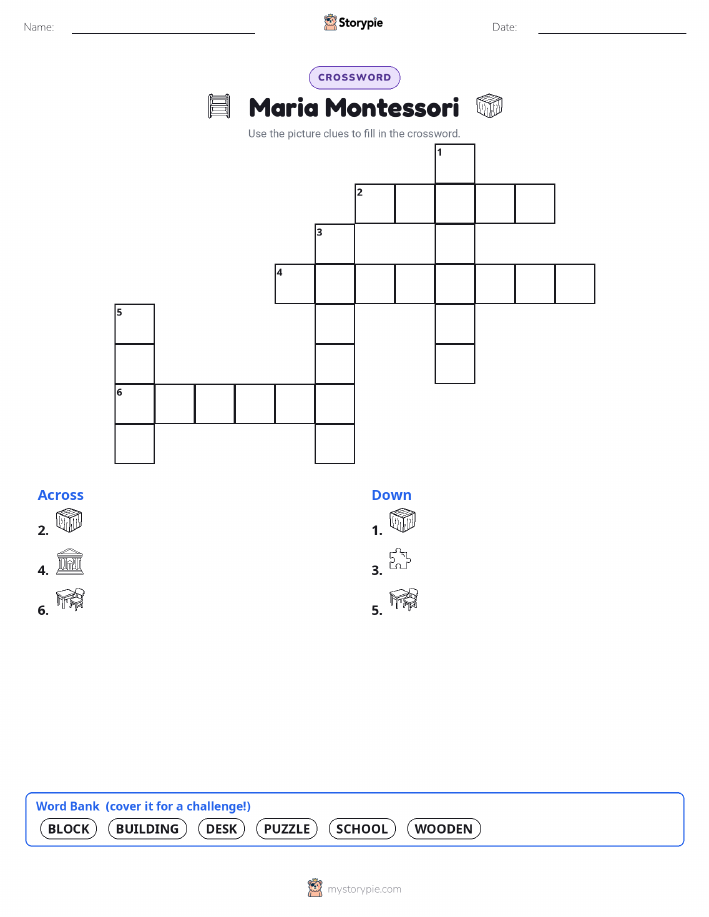
Print & create
Answer keys·No prep·Free with an account
28 worksheets · answer keys · full story · quiz · Ages 8-10 · CEFR B1
Plus adds 279,000+ more stories in 27 languages, audio for every one, and printables for all of them.
Just want Maria Montessori?
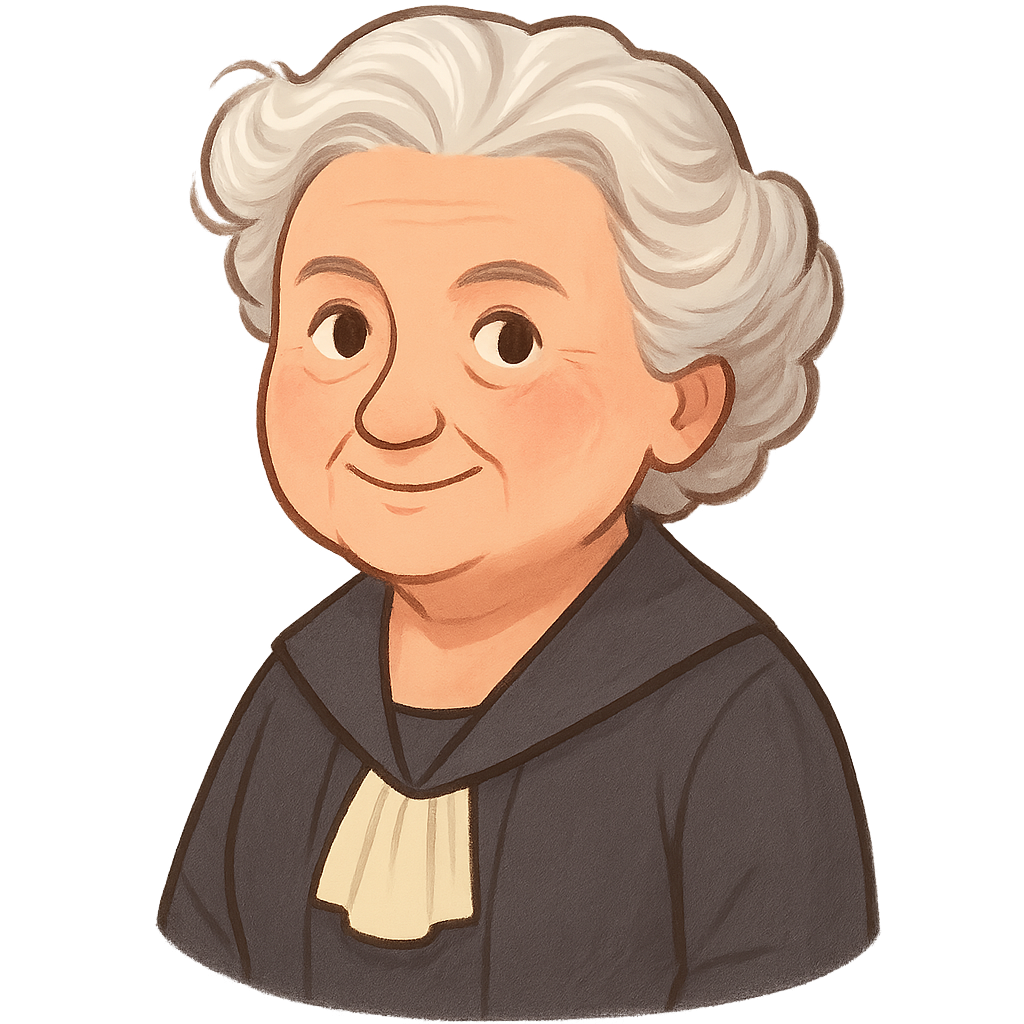
Hello, my name is Maria Montessori. I was born in Italy on August 31st, 1870. When I was a girl, people expected me to have simple dreams, like becoming a teacher or a mother. But my dreams were different. At first, I thought I wanted to be an engineer and build amazing things. Then, I found a new passion: I wanted to become a doctor and help heal people. In 1890, I decided to enroll at the University of Rome to study medicine. This was a very challenging path because, at that time, very few people believed that women should be doctors. Many doors were closed to me, but I was determined to prove I could do it. I worked hard and studied for many years. In 1896, I reached my goal and graduated. I was so proud to become one of the very first female doctors in all of Italy.
My first job after medical school was in a hospital, where I worked with children who had learning difficulties. Other doctors and teachers often felt these children couldn't learn much, but I saw something different in them. When I watched them, I saw bright minds that were just waiting for the right way to unlock their potential. I truly believed they weren't unable to learn; they just needed a different way to be taught. So, I began to observe them closely and create special tools just for them. I designed colorful puzzles, wooden blocks, and other materials that they could touch and hold. My goal was to help them use their hands and their senses to explore and understand the world around them. In 1907, my work with these children led to a wonderful opportunity. I was asked to open a school for young children in a poor neighborhood in Rome, where I could try out all of my new ideas.
Maria Montessori: The Children's Guide
Hello, my name is Maria Montessori. I was born in Italy on August 31st, 1870. When I was a girl, people expected me to have simple dreams, like becoming a teacher or a mother. But my dreams were different. At first, I thought I wanted to be an engineer and build amazing things. Then, I found a new passion: I wanted to become a doctor and help heal people. In 1890, I decided to enroll at the University of Rome to study medicine. This was a very challenging path because, at that time, very few people believed that women should be doctors. Many doors were closed to me, but I was determined to prove I could do it. I worked hard and studied for many years. In 1896, I reached my goal and graduated. I was so proud to become one of the very first female doctors in all of Italy.
My first job after medical school was in a hospital, where I worked with children who had learning difficulties. Other doctors and teachers often felt these children couldn't learn much, but I saw something different in them. When I watched them, I saw bright minds that were just waiting for the right way to unlock their potential. I truly believed they weren't unable to learn; they just needed a different way to be taught. So, I began to observe them closely and create special tools just for them. I designed colorful puzzles, wooden blocks, and other materials that they could touch and hold. My goal was to help them use their hands and their senses to explore and understand the world around them. In 1907, my work with these children led to a wonderful opportunity. I was asked to open a school for young children in a poor neighborhood in Rome, where I could try out all of my new ideas.
I called my very first school the 'Casa dei Bambini,' which means 'Children's House' in English. It wasn't like other schools at all. I wanted it to be a special place that was designed completely for children. Instead of big, heavy desks, I filled the room with small tables and chairs that the children could easily move around by themselves. I put all of my learning materials on low shelves, so the children could reach them whenever they felt curious. I didn't stand at the front of the room and tell them what to do. Instead, I watched them. And by watching, I made my most important discovery. I saw that when children were free to choose their own activities, they could concentrate for a very long time and learned with so much joy. This simple but powerful observation became the heart of my educational method: letting children be the guides of their own learning.
Word about the amazing things happening in my 'Children's House' began to spread very quickly. Soon, people from all over the world wanted to learn about my methods and see how my school worked. Starting in the 1910s and for many years after, I began to travel to share my ideas. I gave speeches and led special courses to train teachers from many different countries, showing them how to create their own 'Children's Houses.' To help my ideas reach even more people, I wrote books explaining my philosophy, including one called 'The Montessori Method.' My work took me to live in different places, including Spain and India, where I continued to develop my approach to education and help children everywhere.
I lived to be 81 years old and passed away in 1952 while living in the Netherlands. But my work did not end when my life did. Today, my ideas are alive in thousands of Montessori schools all across the globe. In these special classrooms, children still learn with curiosity and joy, using the kinds of materials I designed and following their own unique interests. I am remembered for believing in the amazing potential inside every single child and for creating a way of learning that helps them grow into independent, confident, and caring people.
Wow facts
About
Maria Montessori was an Italian physician and educator best known for the philosophy of education that bears her name, and her writing on scientific pedagogy.
Take a Quiz
Question 1 of 5
The story says Maria was 'determined' to become a doctor. What does the word 'determined' mean in this sentence?
Explore next

Want to do even more?
Go beyond exploring. Unlock tools that turn every story into real learning.

Storypie Plus for families
Full stories, quizzes, and printables. Nights and car rides, sorted.
- Unlimited audio stories
- Create Mode: your child stars in the story
- Offline downloads
- Printable worksheets & coloring pages

Why Storypie for Schools
Students engaged. Prep in seconds. Evenings back to you.
- Worksheets & Quizzes
- Classroom Management
- Formative Assessment
- Custom Curriculum & Lesson Plans
- 27 Languages

Why Storypie for Homeschool
Curriculum done. They'll ask for more. Hours back in your day.
- Worksheet Generator
- First-Person Audio Stories
- Built-in Comprehension Quizzes
- Custom Curriculum & Lesson Plans
- Print & Go Activities