English

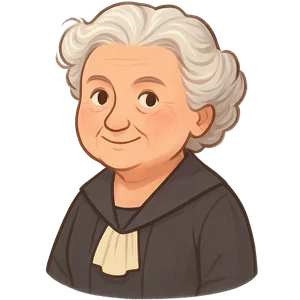
Maria Montessori
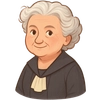
Maria Montessori was an Italian physician and educator best known for the philosophy of education that bears…
Reads at Grades 6–8 Listens at Grades 4–8
Print & create
Answer keys·No prep·Free with an account
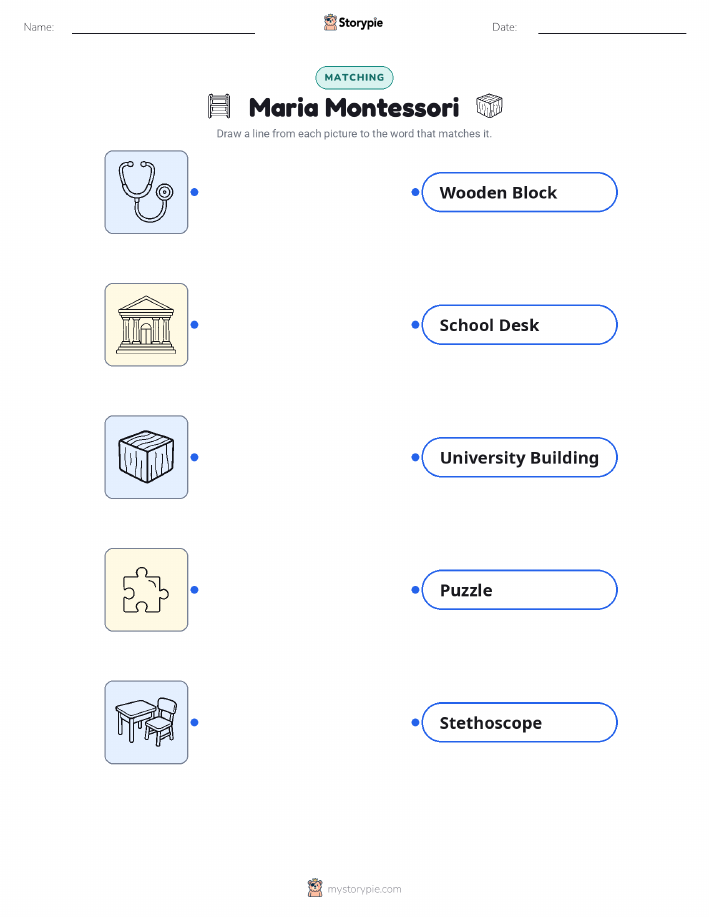
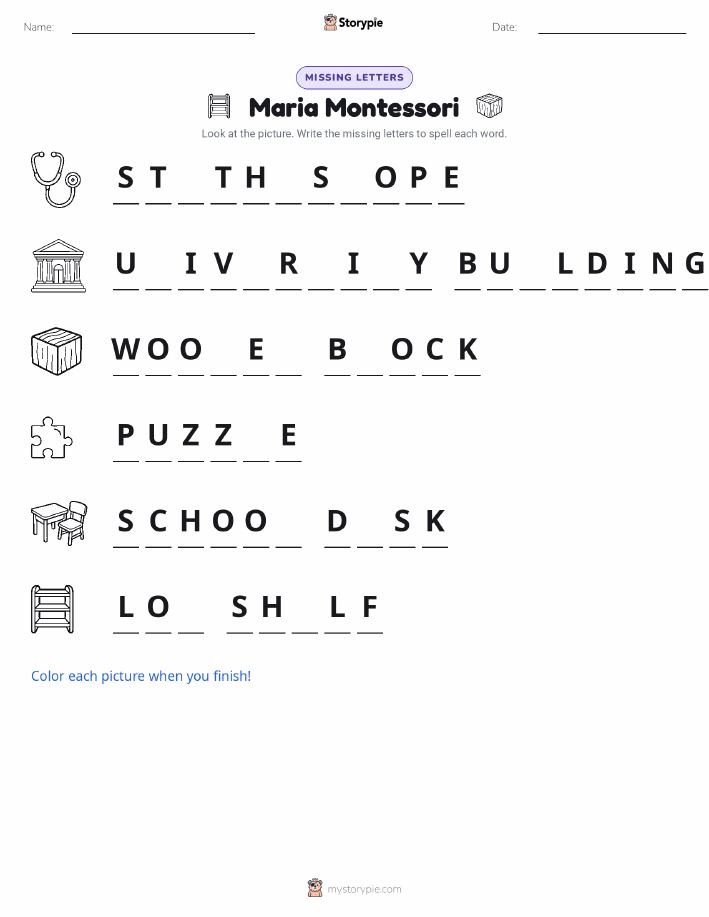
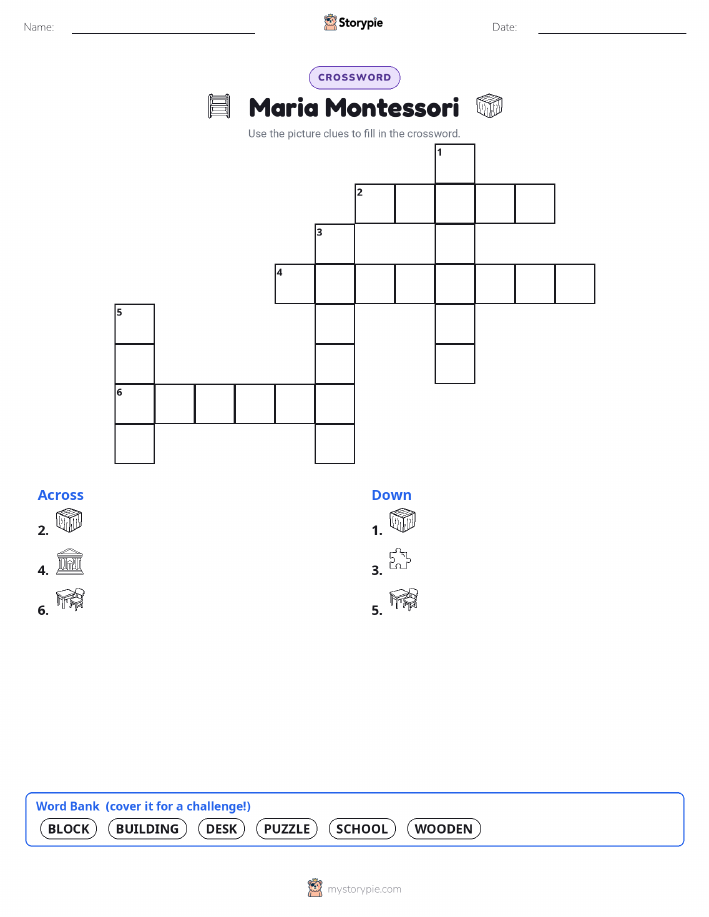
28 worksheets · answer keys · full story · quiz · Ages 10-12 · CEFR B2
Plus adds 280,000+ more stories in 27 languages, audio for every one, and printables for all of them.
Just want Maria Montessori?
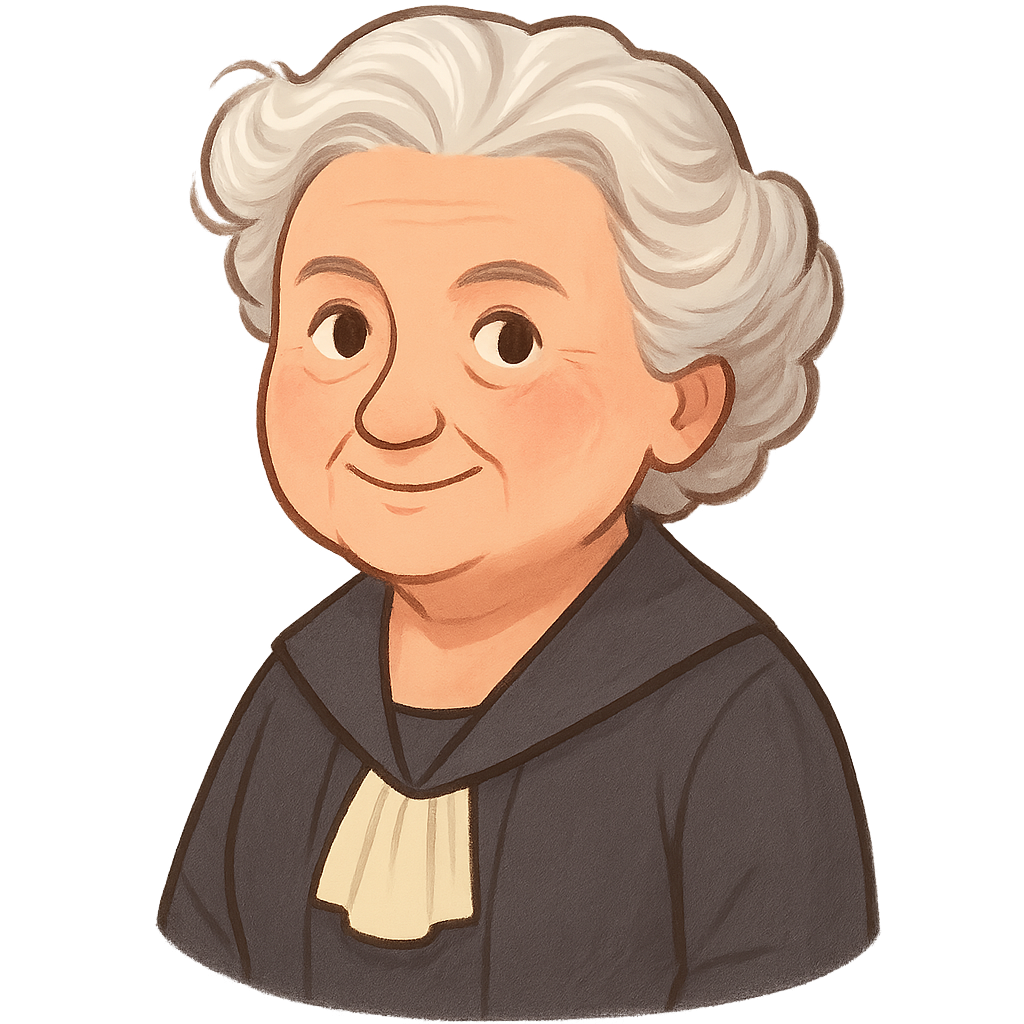
Hello, my name is Maria Montessori, and I want to share my story with you. I was born on August 31st, 1870, in a town called Chiaravalle, in Italy. When I was growing up, the world had very specific ideas about what girls could and could not do. Most people believed that a woman's place was in the home, not in a university or a laboratory. But from a young age, I was fascinated by numbers and how things worked. I loved mathematics and science, and I dreamed of becoming an engineer. That was a highly unusual ambition for a girl at that time. When I decided to pursue medicine instead, the path became even more difficult. People were shocked that a woman wanted to be a doctor. I faced many obstacles just to get into medical school, but I was determined to follow my passion. I studied hard and proved that I was just as capable as any of my male classmates. In 1896, I achieved my goal and graduated from the University of Rome. It was a momentous occasion, as I became one of the very first female physicians in all of Italy. I had proven that with perseverance, a woman could break through the barriers society had built.
My journey as a doctor took an unexpected turn that would define the rest of my life. I began my career working in a psychiatric clinic in Rome, where I was assigned to care for children with developmental and learning challenges. At that time, these children were often hidden away and labeled as 'uneducable.' Society had given up on them, believing they were simply incapable of learning. But as I spent time with them, I observed something remarkable. I saw that they weren't unable to learn; they were just trying to learn in an environment that didn't understand their needs. Their minds were like locked doors, and I realized that I needed to find the right key. I started to believe that the problem wasn't with the children, but with the methods being used to teach them. I began to design and create special learning materials. These weren't just toys; they were carefully crafted tools designed to engage a child's senses—their sight, touch, and hearing. I created wooden blocks, colored beads, and puzzles that allowed them to explore concepts like size, shape, and number through their own hands. The results were astounding. Children who had been dismissed as hopeless began to show incredible focus and concentration. They were not only learning, but they were enjoying it. This experience was my great discovery: a child's potential is not fixed, and with the right environment and the right tools, any child can blossom.
Maria Montessori: A Classroom for the World
Hello, my name is Maria Montessori, and I want to share my story with you. I was born on August 31st, 1870, in a town called Chiaravalle, in Italy. When I was growing up, the world had very specific ideas about what girls could and could not do. Most people believed that a woman's place was in the home, not in a university or a laboratory. But from a young age, I was fascinated by numbers and how things worked. I loved mathematics and science, and I dreamed of becoming an engineer. That was a highly unusual ambition for a girl at that time. When I decided to pursue medicine instead, the path became even more difficult. People were shocked that a woman wanted to be a doctor. I faced many obstacles just to get into medical school, but I was determined to follow my passion. I studied hard and proved that I was just as capable as any of my male classmates. In 1896, I achieved my goal and graduated from the University of Rome. It was a momentous occasion, as I became one of the very first female physicians in all of Italy. I had proven that with perseverance, a woman could break through the barriers society had built.
My journey as a doctor took an unexpected turn that would define the rest of my life. I began my career working in a psychiatric clinic in Rome, where I was assigned to care for children with developmental and learning challenges. At that time, these children were often hidden away and labeled as 'uneducable.' Society had given up on them, believing they were simply incapable of learning. But as I spent time with them, I observed something remarkable. I saw that they weren't unable to learn; they were just trying to learn in an environment that didn't understand their needs. Their minds were like locked doors, and I realized that I needed to find the right key. I started to believe that the problem wasn't with the children, but with the methods being used to teach them. I began to design and create special learning materials. These weren't just toys; they were carefully crafted tools designed to engage a child's senses—their sight, touch, and hearing. I created wooden blocks, colored beads, and puzzles that allowed them to explore concepts like size, shape, and number through their own hands. The results were astounding. Children who had been dismissed as hopeless began to show incredible focus and concentration. They were not only learning, but they were enjoying it. This experience was my great discovery: a child's potential is not fixed, and with the right environment and the right tools, any child can blossom.
My work at the clinic gave me a powerful idea, and I knew I had to test it further. I wanted to create a school based on my observations—a place designed entirely around the child. My opportunity came in a surprising way. I was invited to set up a childcare center for the children of working families in a poor, run-down neighborhood in Rome. On January 6th, 1907, I opened the doors to my very first school. I called it the 'Casa dei Bambini,' which means 'The Children's House' in Italian. Everything inside was different from a typical classroom of that era. I had furniture built to their size, so their feet could touch the floor and they could sit comfortably. The learning materials I had developed were placed on low, open shelves, so the children could choose for themselves what they wanted to work with. There were no assigned seats or rigid schedules. Instead, there was a sense of calm, purposeful freedom. I watched in amazement as these young children, who many had assumed were unruly, became deeply engaged in their activities. They chose a task, concentrated for long periods, and then carefully put the materials back for the next person. They taught themselves to read and write with a joy and passion I had never witnessed before. The Children's House was a success beyond my wildest dreams, and it proved that my method of education worked. It showed the world that when you respect children and trust in their natural desire to learn, they can achieve extraordinary things.
Word of what was happening in the Casa dei Bambini began to spread like wildfire. Educators, journalists, and parents from all over the world wanted to know more about this revolutionary new approach to education. Soon, my ideas were traveling far beyond the borders of Italy. I began to receive invitations to speak and train teachers in other countries, from the United States to India. To share my philosophy more widely, I wrote down my ideas and observations. My book, 'The Montessori Method,' was published in 1909 and was translated into many languages, allowing my message to reach people I could never meet in person. During this time of incredible growth, I was not alone. My son, Mario, became my closest collaborator and most dedicated partner. He traveled the world with me, helping me establish teacher training programs and spread our work. Together, we dedicated our lives to a global mission: to help adults see the true potential of children and to create educational environments that would nurture peace and independence for generations to come. Our work was no longer just about a single school in Rome; it had become a worldwide movement.
Looking back, my journey was filled with challenges. My ideas about encouraging children to think for themselves were not always popular, especially with powerful governments that preferred citizens who simply followed orders. Yet, I always believed that education was the most powerful tool for creating a peaceful world. For my work connecting education and peace, I was nominated for the Nobel Peace Prize three separate times. I lived a full life dedicated to children, living to be 81 years old. Today, my work continues in thousands of Montessori schools all over the globe. My greatest hope was that my ideas would help children grow into curious, confident, and peaceful adults, and seeing that happen is the most beautiful legacy I could ever imagine.
Wow facts
About
Maria Montessori was an Italian physician and educator best known for the philosophy of education that bears her name, and her writing on scientific pedagogy.
Take a Quiz
Question 1 of 5
In the story, I mention that some children were considered 'uneducable.' What does the prefix 'un-' tell you about the meaning of this word?
Explore next




Want to do even more?
Go beyond exploring. Unlock tools that turn every story into real learning.

Storypie Plus for families
Full stories, quizzes, and printables. Nights and car rides, sorted.
- Unlimited audio stories
- Create Mode: your child stars in the story
- Offline downloads
- Printable worksheets & coloring pages

Why Storypie for Schools
Students engaged. Prep in seconds. Evenings back to you.
- Worksheets & Quizzes
- Classroom Management
- Formative Assessment
- Custom Curriculum & Lesson Plans
- 27 Languages

Why Storypie for Homeschool
Curriculum done. They'll ask for more. Hours back in your day.
- Worksheet Generator
- First-Person Audio Stories
- Built-in Comprehension Quizzes
- Custom Curriculum & Lesson Plans
- Print & Go Activities