English

Marian Anderson
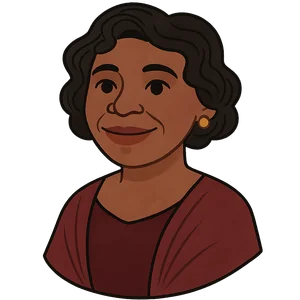
Marian Anderson was a celebrated African American contralto and a pivotal figure in the struggle for racial…
Reads at Grades 6–8 Listens at Grades 4–8
Print & create
Answer keys·No prep·Free with an account
28 worksheets · answer keys · full story · quiz · Ages 10-12 · CEFR B2
Plus adds 244,000+ more stories in 27 languages, audio for every one, and printables for all of them.
Just want Marian Anderson?
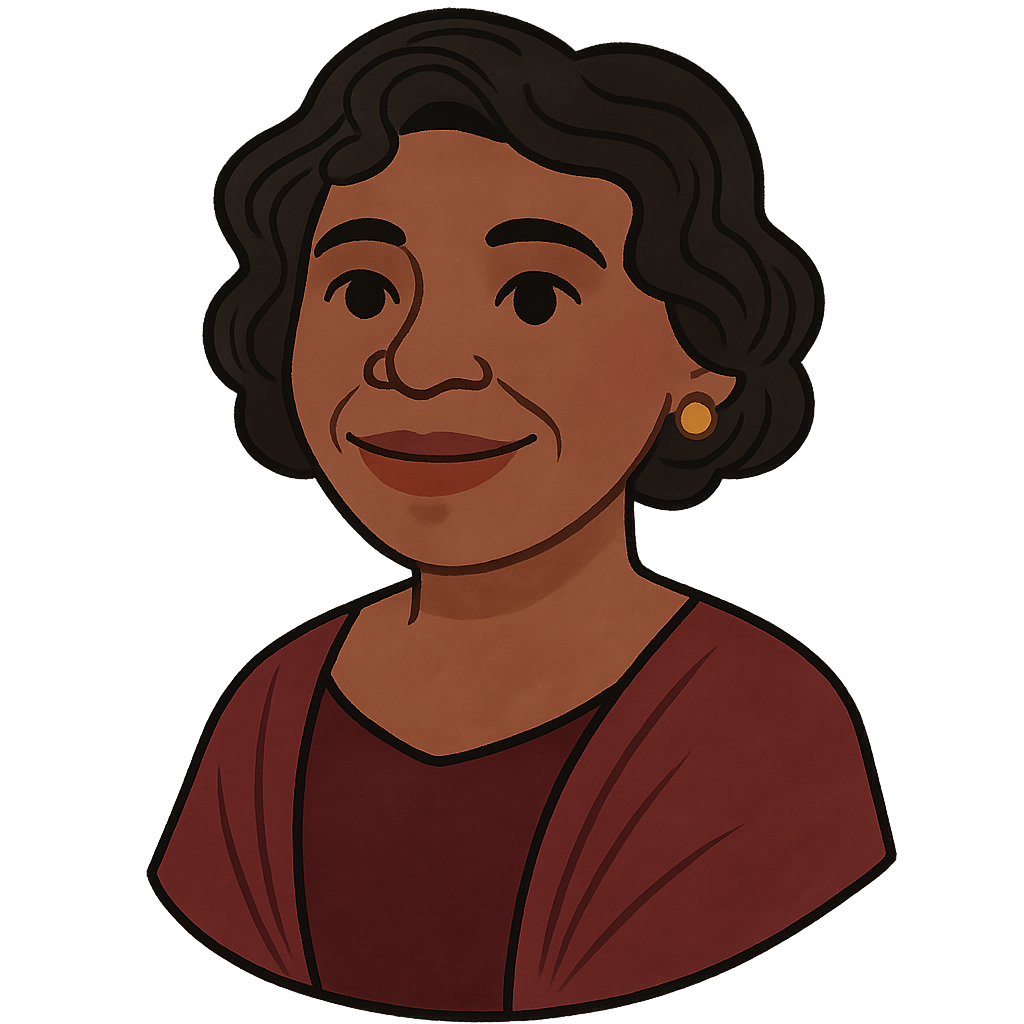
Hello. My name is Marian Anderson, and my story is about music, hope, and standing up for what is right. I was born on February 27th, 1897, in the city of Philadelphia, Pennsylvania. From my earliest days, my life was filled with song. I absolutely loved singing, and my first stage was the choir at the Union Baptist Church. My voice was a gift, and the people in my community saw it right away. My neighbors and fellow church members were so supportive that they collected money, which they called 'The Fund for Marian's Future,' so that I could have formal voice lessons with a proper teacher. They believed in me, and that gave me great strength. However, the world outside my loving community was not always so kind. In 1921, I tried to enroll in a music school in Philadelphia, but I was turned away at the admissions desk. The reason they gave was simple and painful: it was because of the color of my skin. That moment of prejudice hurt deeply, but it did not silence my voice or my dream.
Because of the racial discrimination I faced at home, I decided in the late 1920s to travel to Europe. I was seeking a place where I could study and perform freely, where my talent could be judged on its own merit without the shadow of prejudice. It was a journey that changed my life. In Europe, I found audiences who welcomed me with open arms. I had the thrill of performing in grand concert halls across the continent, from Scandinavia to Paris. I even had the honor of singing for royalty. It was during this time that I truly grew as an artist. Around 1935, I received what I consider one of the greatest compliments of my career. The famous conductor, Arturo Toscanini, heard me sing and told me, 'A voice like yours is heard once in a hundred years.' His words were a powerful affirmation of my hard work and perseverance. I had built a successful career and a strong reputation far from home.
Marian Anderson: A Voice for Hope
Hello. My name is Marian Anderson, and my story is about music, hope, and standing up for what is right. I was born on February 27th, 1897, in the city of Philadelphia, Pennsylvania. From my earliest days, my life was filled with song. I absolutely loved singing, and my first stage was the choir at the Union Baptist Church. My voice was a gift, and the people in my community saw it right away. My neighbors and fellow church members were so supportive that they collected money, which they called 'The Fund for Marian's Future,' so that I could have formal voice lessons with a proper teacher. They believed in me, and that gave me great strength. However, the world outside my loving community was not always so kind. In 1921, I tried to enroll in a music school in Philadelphia, but I was turned away at the admissions desk. The reason they gave was simple and painful: it was because of the color of my skin. That moment of prejudice hurt deeply, but it did not silence my voice or my dream.
Because of the racial discrimination I faced at home, I decided in the late 1920s to travel to Europe. I was seeking a place where I could study and perform freely, where my talent could be judged on its own merit without the shadow of prejudice. It was a journey that changed my life. In Europe, I found audiences who welcomed me with open arms. I had the thrill of performing in grand concert halls across the continent, from Scandinavia to Paris. I even had the honor of singing for royalty. It was during this time that I truly grew as an artist. Around 1935, I received what I consider one of the greatest compliments of my career. The famous conductor, Arturo Toscanini, heard me sing and told me, 'A voice like yours is heard once in a hundred years.' His words were a powerful affirmation of my hard work and perseverance. I had built a successful career and a strong reputation far from home.
I returned to the United States as an acclaimed singer, celebrated across Europe, but I soon found that I still faced the same prejudice here. The most significant challenge came in 1939. I was scheduled to perform a concert at Constitution Hall in Washington, D.C., which was the largest and most prestigious venue in the city. However, the organization that owned the hall, the Daughters of the American Revolution, or DAR, had a rule that prohibited Black performers from using their stage. They informed my manager that I would not be allowed to sing there. This decision caused a national outcry. Many Americans, both Black and white, were angered by the injustice. One of the most powerful voices to speak out in my support was the First Lady of the United States, Eleanor Roosevelt. In a quiet but firm act of protest against the DAR's policy, she resigned her membership from the organization. Her support, and that of countless others, turned my personal disappointment into a national conversation about equality.
With Constitution Hall closed to me, a new, even more powerful stage was found. On Easter Sunday, April 9th, 1939, I stood on the steps of the Lincoln Memorial to give my concert. It was an unforgettable sight. A vast, unsegregated crowd of more than 75,000 people stood before me, a diverse sea of faces stretching all the way to the Washington Monument. Millions more were listening to the performance on their radios at home. As I began to sing, I chose the song 'My Country, 'Tis of Thee,' and the words felt more meaningful than ever. There I was, an African American woman, singing about liberty in the shadow of the president who had signed the Emancipation Proclamation. That concert became more than just a musical performance. It was a peaceful, powerful statement for freedom, civil rights, and the idea that all people deserve to be treated with dignity. It was a moment where music helped America look at itself and imagine a more equal future.
That historic concert at the Lincoln Memorial helped to open doors that had long been shut. My career continued to grow, and I was able to break more barriers. One of the proudest moments of my life came on January 7th, 1955. On that day, I stepped onto the stage of the famous Metropolitan Opera in New York City, becoming the first African American to sing a principal role with the company. It was a dream I had held for a long time. My work also extended beyond the concert hall. In 1958, President Dwight D. Eisenhower appointed me as a delegate to the United Nations Human Rights Committee, allowing me to use my voice to advocate for justice on a global stage. A few years later, in 1963, I received one of my country's highest honors when President Lyndon B. Johnson awarded me the Presidential Medal of Freedom. Through these roles, I hoped to show that my life was about more than music; it was about fighting for the rights of all people.
I gave my final farewell concert tour, which ended in 1965, but I continued to live a life dedicated to the arts and to human rights. I lived to be 96 years old, and when I looked back, I felt a deep sense of gratitude. I always hoped that my voice served a purpose beyond just singing beautiful songs. I wanted it to be a tool that helped open doors for the talented people who came after me. It is my greatest wish that my story is remembered as a symbol of hope, dignity, and the powerful belief that music can bring us together and even change the world.
Wow facts
About
Marian Anderson was a celebrated African American contralto and a pivotal figure in the struggle for racial equality. She broke racial barriers in the classical music world, most famously with her 1939 concert at the Lincoln Memorial and her 1955 debut at the Metropolitan Opera.
Take a Quiz
Question 1 of 5
In your own words, describe the key events that led to Marian Anderson's concert at the Lincoln Memorial in 1939.
Explore next






Want to do even more?
Go beyond exploring. Unlock tools that turn every story into real learning.

Storypie Plus for families
Full stories, quizzes, and printables. Nights and car rides, sorted.
- Unlimited audio stories
- Create Mode: your child stars in the story
- Offline downloads
- Printable worksheets & coloring pages

Why Storypie for Schools
Students engaged. Prep in seconds. Evenings back to you.
- Worksheets & Quizzes
- Classroom Management
- Formative Assessment
- Custom Curriculum & Lesson Plans
- 27 Languages

Why Storypie for Homeschool
Curriculum done. They'll ask for more. Hours back in your day.
- Worksheet Generator
- First-Person Audio Stories
- Built-in Comprehension Quizzes
- Custom Curriculum & Lesson Plans
- Print & Go Activities