English


Murasaki Shikibu
Murasaki Shikibu was born into a lesser branch of the Fujiwara family, a noble lineage…
Reads at Grades 6–8 Listens at Grades 4–8
Print & create
Answer keys·No prep·Free with an account
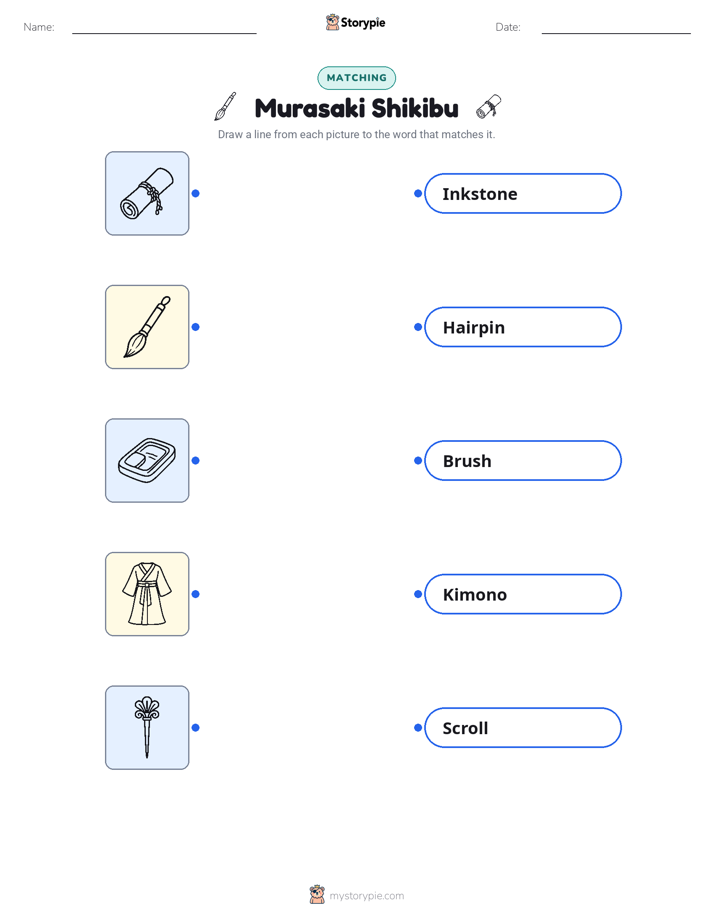
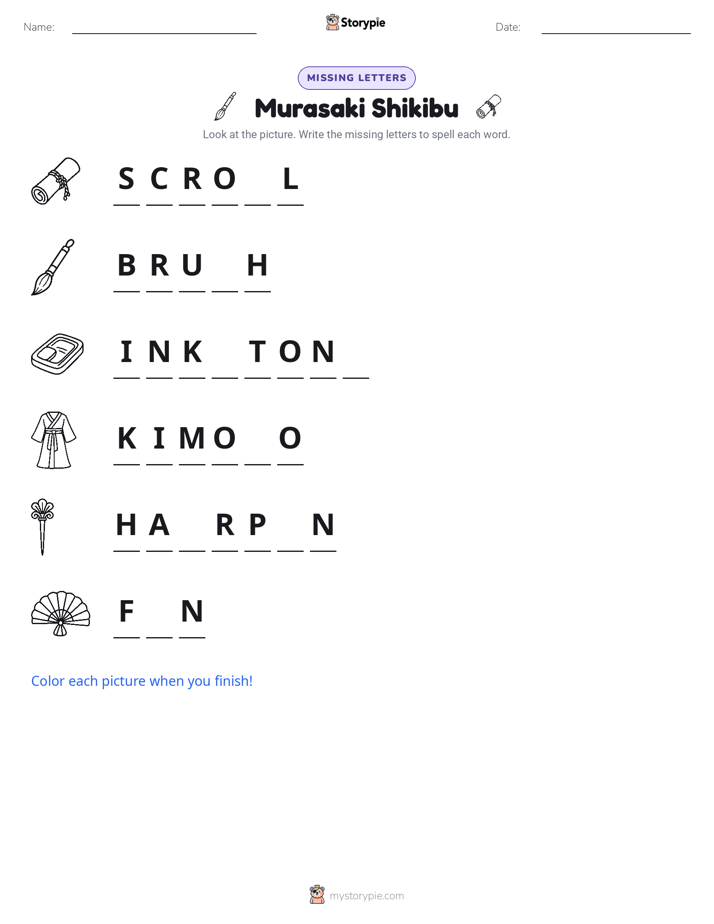
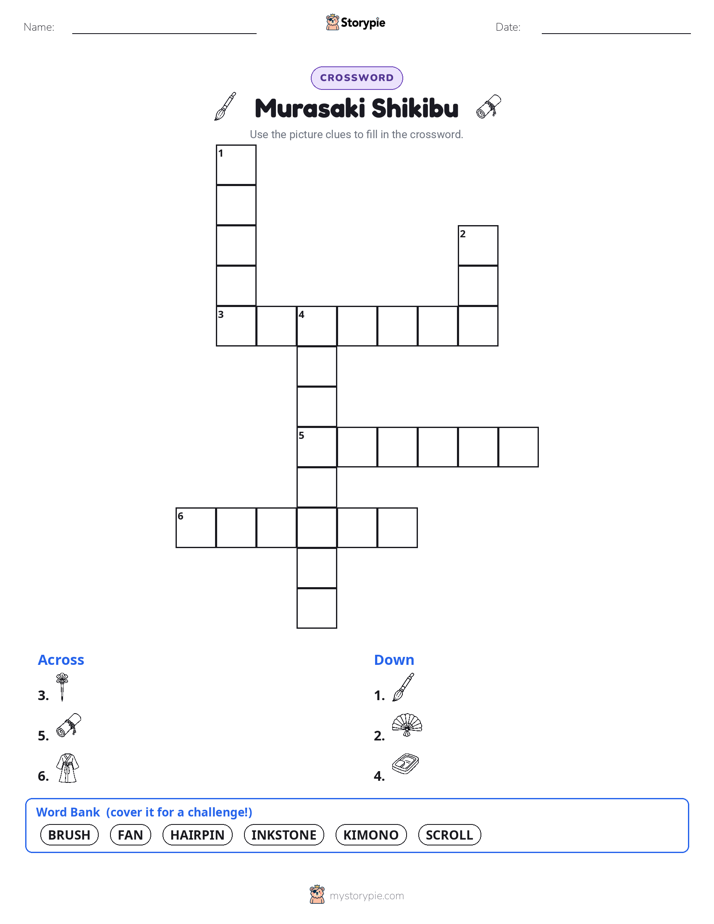
28 worksheets · answer keys · full story · quiz · Ages 10-12 · CEFR B2
Plus adds 164,000+ more stories in 27 languages, audio for every one, and printables for all of them.
Just want Murasaki Shikibu?
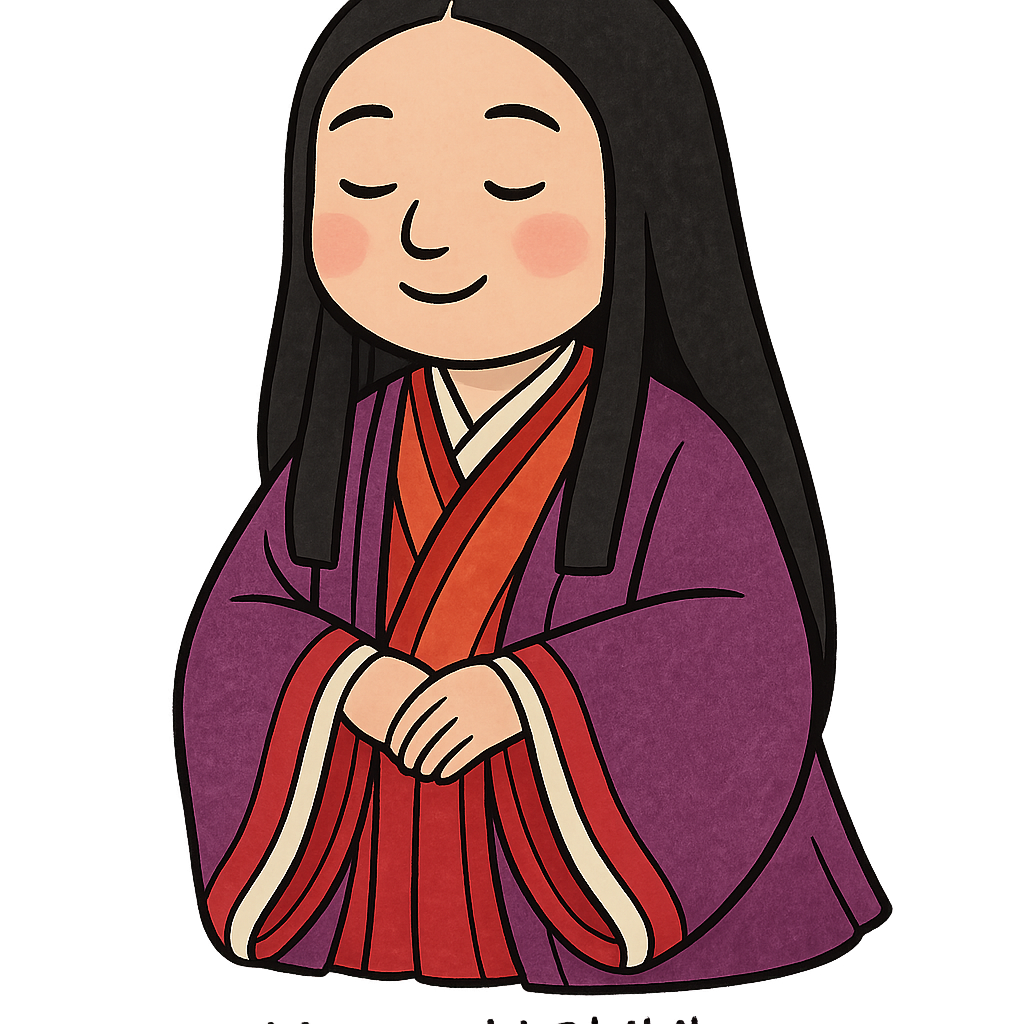
Hello, my name is Murasaki Shikibu, but that was not the name given to me at birth. In Japan, during the Heian period when I lived, it was considered impolite to record the personal names of noblewomen in public documents, so history has come to know me by this special title. I was born around the year 973 in Heian-kyō, a magnificent city that is now known as Kyoto. My father, Fujiwara no Tametoki, was a respected scholar and a government official who had a deep love for literature. Our home was always filled with scrolls containing classic stories and beautiful poetry. In that era, society believed that girls should not learn complex subjects like Chinese literature, which was the language of scholars and government. However, I was incredibly curious. I would sit just outside the room where my brother had his lessons, listening intently to every word. I absorbed the knowledge so quickly that my father once remarked with a sigh, 'If only you had been born a boy!' He wasn't being cruel; he simply recognized that my clever mind was limited by the strict rules placed on women, and he wished I could use my talents freely in the world.
As I entered adulthood, I was married around the year 998 to a man named Fujiwara no Nobutaka. Our life together was happy, and we had a wonderful daughter. My joy, however, was tragically brief. Around the year 1001, only a few years into our marriage, my husband passed away. I was left alone with our young daughter, my heart filled with a profound sadness. To navigate my grief, I turned to writing. I began to imagine a vibrant world set within the Imperial court, full of handsome princes and intelligent, complex ladies. I poured all of my observations about life—its moments of happiness and its deep sorrows—into a long, unfolding story. At that time, writing it was a private comfort. A few years later, around 1005, my life took another unexpected turn. Because my father was a well-known scholar, and word of my own intelligence and literary talent had spread, I received an extraordinary invitation to serve as a lady-in-waiting to the brilliant Empress Shōshi.
Murasaki Shikibu: The World's First Novelist
Hello, my name is Murasaki Shikibu, but that was not the name given to me at birth. In Japan, during the Heian period when I lived, it was considered impolite to record the personal names of noblewomen in public documents, so history has come to know me by this special title. I was born around the year 973 in Heian-kyō, a magnificent city that is now known as Kyoto. My father, Fujiwara no Tametoki, was a respected scholar and a government official who had a deep love for literature. Our home was always filled with scrolls containing classic stories and beautiful poetry. In that era, society believed that girls should not learn complex subjects like Chinese literature, which was the language of scholars and government. However, I was incredibly curious. I would sit just outside the room where my brother had his lessons, listening intently to every word. I absorbed the knowledge so quickly that my father once remarked with a sigh, 'If only you had been born a boy!' He wasn't being cruel; he simply recognized that my clever mind was limited by the strict rules placed on women, and he wished I could use my talents freely in the world.
As I entered adulthood, I was married around the year 998 to a man named Fujiwara no Nobutaka. Our life together was happy, and we had a wonderful daughter. My joy, however, was tragically brief. Around the year 1001, only a few years into our marriage, my husband passed away. I was left alone with our young daughter, my heart filled with a profound sadness. To navigate my grief, I turned to writing. I began to imagine a vibrant world set within the Imperial court, full of handsome princes and intelligent, complex ladies. I poured all of my observations about life—its moments of happiness and its deep sorrows—into a long, unfolding story. At that time, writing it was a private comfort. A few years later, around 1005, my life took another unexpected turn. Because my father was a well-known scholar, and word of my own intelligence and literary talent had spread, I received an extraordinary invitation to serve as a lady-in-waiting to the brilliant Empress Shōshi.
Life at the Imperial court was like entering an entirely different reality. It was a world of breathtaking beauty, from the shimmering silk robes worn by the courtiers to the intricately painted screens and serene, moonlit gardens. The men and women of the court dedicated their time to artistic pursuits like writing poetry, playing music, and engaging in witty, clever conversations. It was a center of high culture and art, but it also operated with strict social rules and quiet, unspoken rivalries. I was fortunate that Empress Shōshi was a kind and wise patron who greatly encouraged my passion for writing. During my quiet moments at court, I continued to work on the long story I had started. I called it The Tale of Genji. The novel follows the life, adventures, and romances of its charming protagonist, Prince Hikaru Genji. But it is much more than a simple adventure; it is a deep exploration of human emotions and the Japanese concept of 'mono no aware'—a gentle, bittersweet sadness for the transience of life, the idea that all beautiful things must eventually change and fade. The story became incredibly popular among the court ladies, who would eagerly await each new chapter I wrote. Alongside my novel, I also kept a diary, now known as The Diary of Lady Murasaki, where I recorded my own experiences and observations of life at court.
My service at court eventually drew to a close, and I lived out the remainder of my days, passing from the world sometime around the year 1014, although some scholars believe it may have been later. While my own life ended, my story did not. My book, The Tale of Genji, has been cherished and read by people for over one thousand years. It has been painstakingly copied by hand, printed in countless books, and translated into languages all across the globe. Today, it is celebrated by many as the world’s first novel. I find it amazing that the complex feelings of people who lived so long ago—their hopes, their heartbreaks, and their search for meaning—can still resonate with and be understood by readers like you today. It proves that stories are a powerful form of magic, connecting all of us across the great expanse of time.
Wow facts
About
Murasaki Shikibu was born into a lesser branch of the Fujiwara family, a noble lineage, and she was a lady-in-waiting and author of The Tale of Genji, widely considered the world's first novel, written in the early 11th century during the Heian period.
Take a Quiz
Question 1 of 5
In your own words, summarize the main challenges Murasaki Shikibu faced and how she overcame them.
Explore next





Want to do even more?
Go beyond exploring. Unlock tools that turn every story into real learning.

Storypie Plus for families
Full stories, quizzes, and printables. Nights and car rides, sorted.
- Unlimited audio stories
- Create Mode: your child stars in the story
- Offline downloads
- Printable worksheets & coloring pages

Why Storypie for Schools
Students engaged. Prep in seconds. Evenings back to you.
- Worksheets & Quizzes
- Classroom Management
- Formative Assessment
- Custom Curriculum & Lesson Plans
- 27 Languages

Why Storypie for Homeschool
Curriculum done. They'll ask for more. Hours back in your day.
- Worksheet Generator
- First-Person Audio Stories
- Built-in Comprehension Quizzes
- Custom Curriculum & Lesson Plans
- Print & Go Activities