English

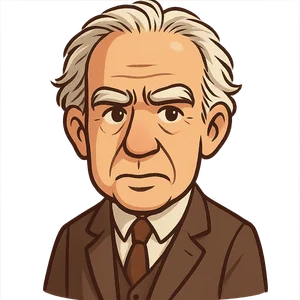
Niels Bohr
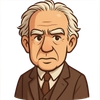
Niels Bohr was a Danish physicist who made foundational contributions to understanding atomic structure and…
Reads at Grades 6–8 Listens at Grades 4–8
Print & create
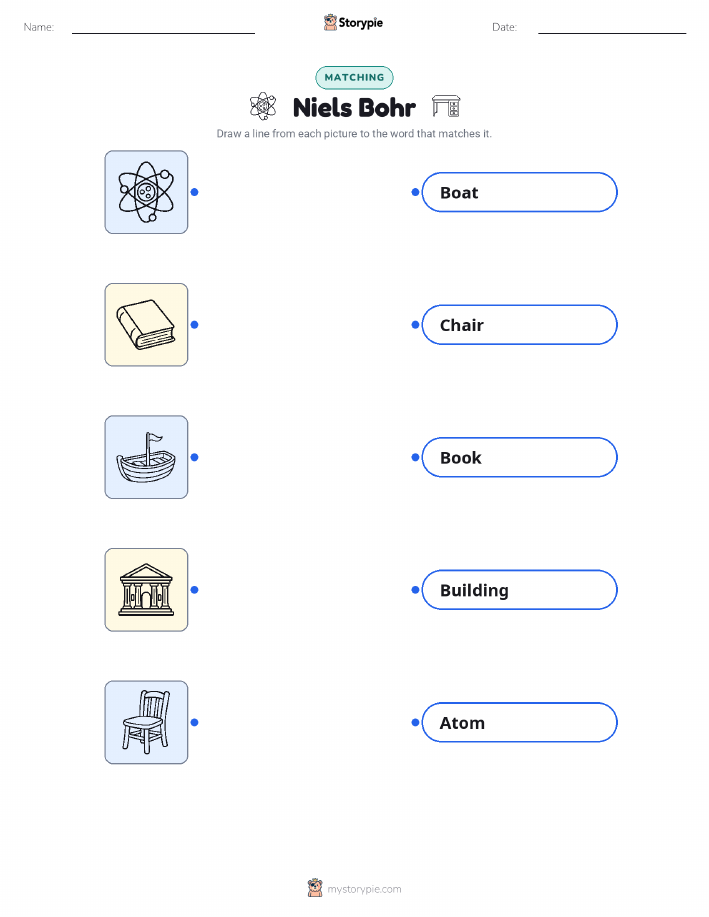
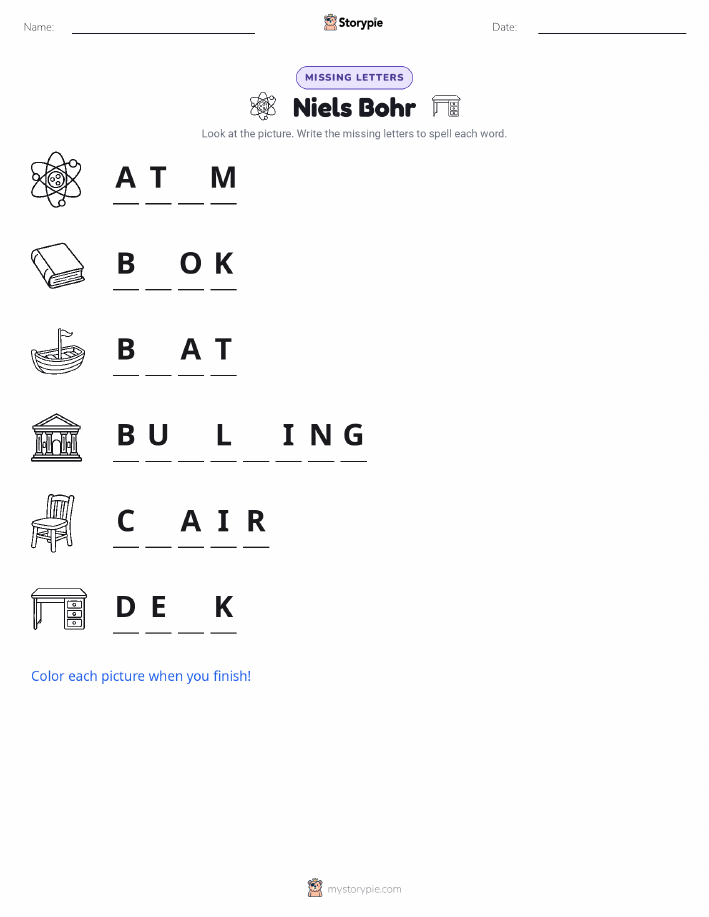
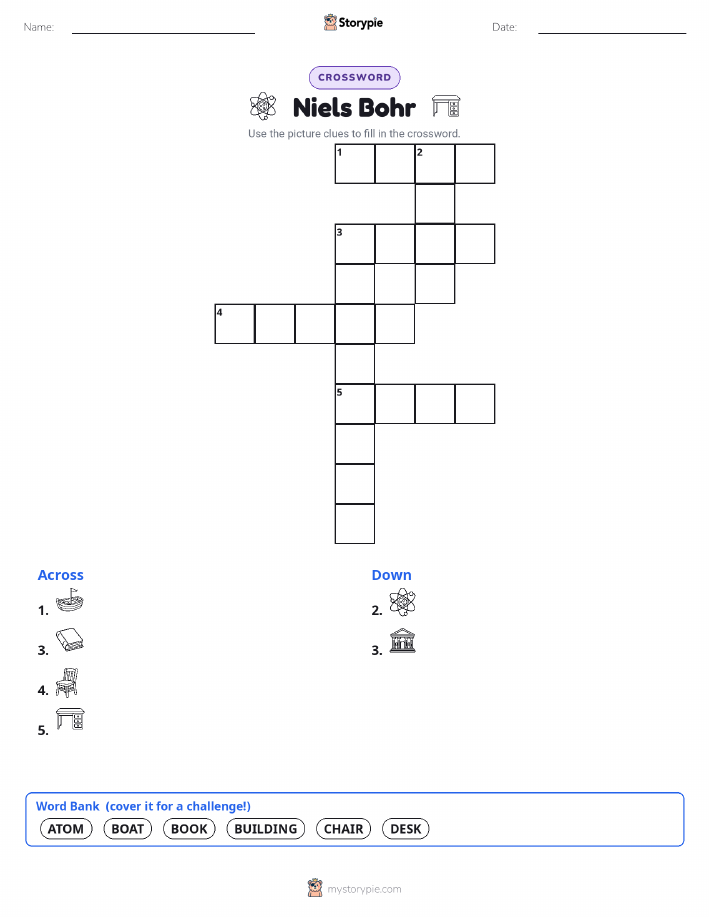
Answer keys·No prep·Free with an account
28 worksheets · answer keys · full story · quiz · Ages 10-12 · CEFR B2
Plus adds 280,000+ more stories in 27 languages, audio for every one, and printables for all of them.
Just want Niels Bohr?
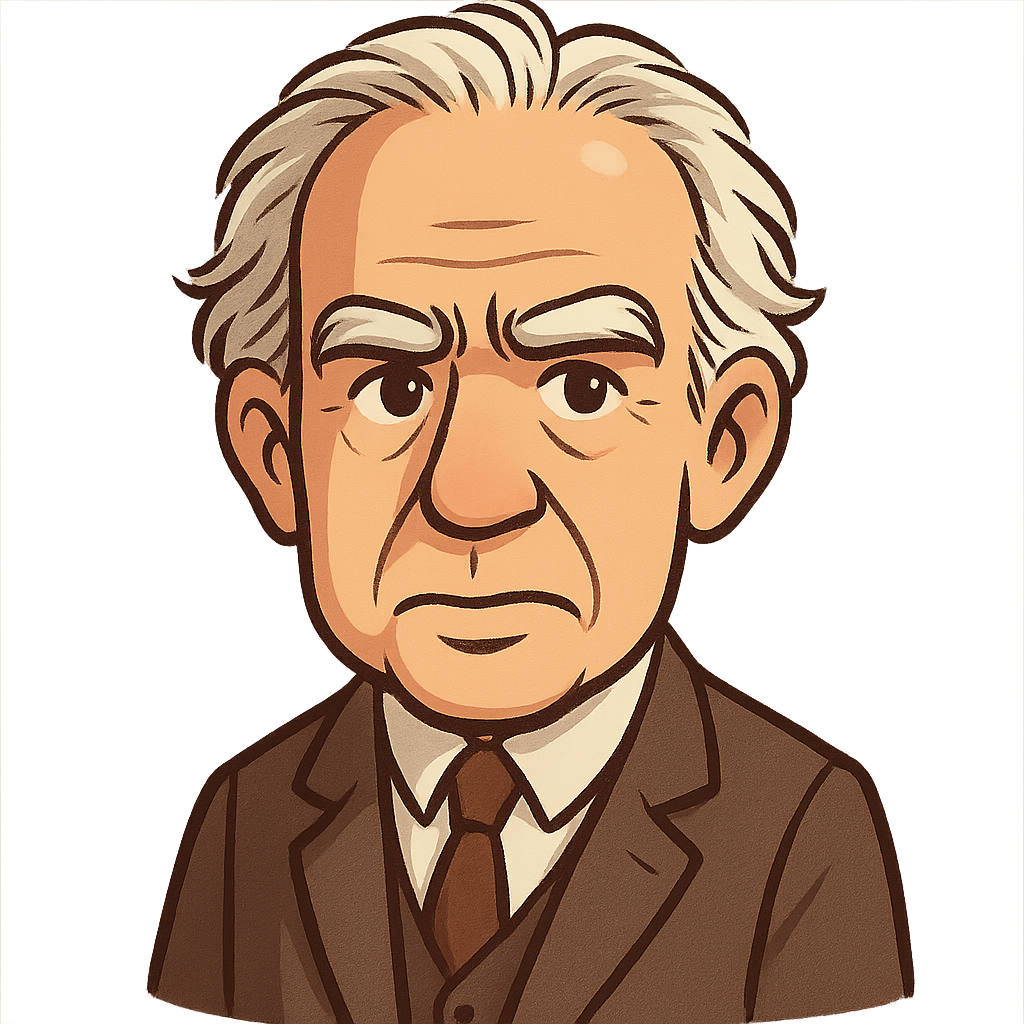
Hello, my name is Niels Bohr, and I am a scientist who helped change the way we understand the universe. My story begins in the beautiful city of Copenhagen, Denmark, where I was born on October 7th, 1885. I grew up in a home filled with curiosity and conversation. My father, Christian, was a university professor, and my mother, Ellen, and brother, Harald, all shared a deep love for learning. Our house was always buzzing with discussions about science, philosophy, and the world around us. This environment sparked my own curiosity. I wanted to know how everything worked, from the smallest particles to the largest stars. My family’s encouragement to ask big questions and seek answers set me on a path of discovery that would last my entire life.
My formal journey into science began in 1903, when I enrolled at the University of Copenhagen. After I earned my doctorate in 1911, I knew I needed to learn from the best minds in physics, so I traveled to England. There, I had the incredible opportunity to work with the great scientist Ernest Rutherford. He had recently proposed a new model of the atom, suggesting it had a tiny, dense center called a nucleus, with even tinier electrons orbiting it. It was a brilliant idea, but it presented a major puzzle that no one could solve: according to the laws of physics at the time, the orbiting electrons should have lost energy and crashed into the nucleus almost instantly. This meant atoms shouldn't be stable, yet the world around us clearly was. I thought about this problem constantly. Then, in 1913, I had my big idea. I proposed a new model, which became known as the Bohr model. I suggested that electrons could only travel in special, specific orbits, or energy levels, much like planets orbiting a sun in fixed paths. They couldn't just spiral inward. This was a radical concept, and it represented a huge leap in our understanding of the tiny, invisible world of the atom.
Niels Bohr: A Journey Inside the Atom
Hello, my name is Niels Bohr, and I am a scientist who helped change the way we understand the universe. My story begins in the beautiful city of Copenhagen, Denmark, where I was born on October 7th, 1885. I grew up in a home filled with curiosity and conversation. My father, Christian, was a university professor, and my mother, Ellen, and brother, Harald, all shared a deep love for learning. Our house was always buzzing with discussions about science, philosophy, and the world around us. This environment sparked my own curiosity. I wanted to know how everything worked, from the smallest particles to the largest stars. My family’s encouragement to ask big questions and seek answers set me on a path of discovery that would last my entire life.
My formal journey into science began in 1903, when I enrolled at the University of Copenhagen. After I earned my doctorate in 1911, I knew I needed to learn from the best minds in physics, so I traveled to England. There, I had the incredible opportunity to work with the great scientist Ernest Rutherford. He had recently proposed a new model of the atom, suggesting it had a tiny, dense center called a nucleus, with even tinier electrons orbiting it. It was a brilliant idea, but it presented a major puzzle that no one could solve: according to the laws of physics at the time, the orbiting electrons should have lost energy and crashed into the nucleus almost instantly. This meant atoms shouldn't be stable, yet the world around us clearly was. I thought about this problem constantly. Then, in 1913, I had my big idea. I proposed a new model, which became known as the Bohr model. I suggested that electrons could only travel in special, specific orbits, or energy levels, much like planets orbiting a sun in fixed paths. They couldn't just spiral inward. This was a radical concept, and it represented a huge leap in our understanding of the tiny, invisible world of the atom.
After my time in England, I returned to Denmark with a dream. I wanted to create a special place where scientists from all over the world could come together to share their ideas and challenge one another. In 1921, that dream became a reality when I founded the Institute of Theoretical Physics in Copenhagen. It quickly became a vibrant, buzzing hub of discovery. The brightest minds would gather there to debate, collaborate, and shape the strange new science of quantum mechanics. It was a thrilling time to be a physicist, and our institute was at the very center of it all. The following year, in 1922, I received one of the greatest honors a scientist can achieve: the Nobel Prize in Physics. It was an incredible moment, not just for me, but for all the scientists who were working together to unlock the secrets of the atom.
Our exciting work was interrupted by a dark period in history. In 1940, during World War II, Germany occupied my home country of Denmark. This put my family and me in grave danger. Because my mother, Ellen, had Jewish heritage, we were targeted by the German forces. The situation grew more and more tense. Finally, in 1943, we knew we had to escape. Under the cover of darkness, my family and I made a dangerous journey across the water to Sweden in a small fishing boat. From Sweden, I traveled to Britain and then to the United States. There, I was asked to contribute to scientific work related to the war effort. As I became involved, I grew increasingly concerned about the immense power we were learning to unlock from the atom. It became clear to me that such knowledge carried a great responsibility, and I believed that cooperation and openness between all nations was the only way to ensure a safe future for the world.
When the war finally ended in 1945, I returned to my home in Copenhagen. The devastating conflict had strengthened my conviction that science must be used to serve humanity, not to harm it. I dedicated much of the rest of my life to this cause, traveling the world to speak about the importance of the peaceful use of atomic energy. I argued for a world of open communication, where countries would share scientific knowledge to prevent suspicion and conflict. In 1957, I was deeply honored to receive the first-ever Atoms for Peace Award. This award recognized my efforts to ensure that the power of the atom would be used to build a better world, and it was one of the proudest moments of my life.
I lived a long and fascinating life filled with discovery, challenges, and purpose. I lived to be 77 years old, passing away on November 18th, 1962. My early work on the atom helped launch the quantum revolution, completely changing how we view the fundamental nature of reality. The institute I founded in Copenhagen remains a world-leading center for physics, where scientists continue to explore the universe's biggest questions. I hope my story inspires you to always stay curious, to ask bold questions, and to remember that knowledge gives us the power to build a better, more peaceful world for everyone.
Wow facts
About
Niels Bohr was a Danish physicist who made foundational contributions to understanding atomic structure and quantum theory, for which he received the Nobel Prize in Physics in 1922.
Take a Quiz
Question 1 of 5
What major problem did Niels Bohr face during World War II, and how was it resolved?
Explore next






Want to do even more?
Go beyond exploring. Unlock tools that turn every story into real learning.

Storypie Plus for families
Full stories, quizzes, and printables. Nights and car rides, sorted.
- Unlimited audio stories
- Create Mode: your child stars in the story
- Offline downloads
- Printable worksheets & coloring pages

Why Storypie for Schools
Students engaged. Prep in seconds. Evenings back to you.
- Worksheets & Quizzes
- Classroom Management
- Formative Assessment
- Custom Curriculum & Lesson Plans
- 27 Languages

Why Storypie for Homeschool
Curriculum done. They'll ask for more. Hours back in your day.
- Worksheet Generator
- First-Person Audio Stories
- Built-in Comprehension Quizzes
- Custom Curriculum & Lesson Plans
- Print & Go Activities