

 English

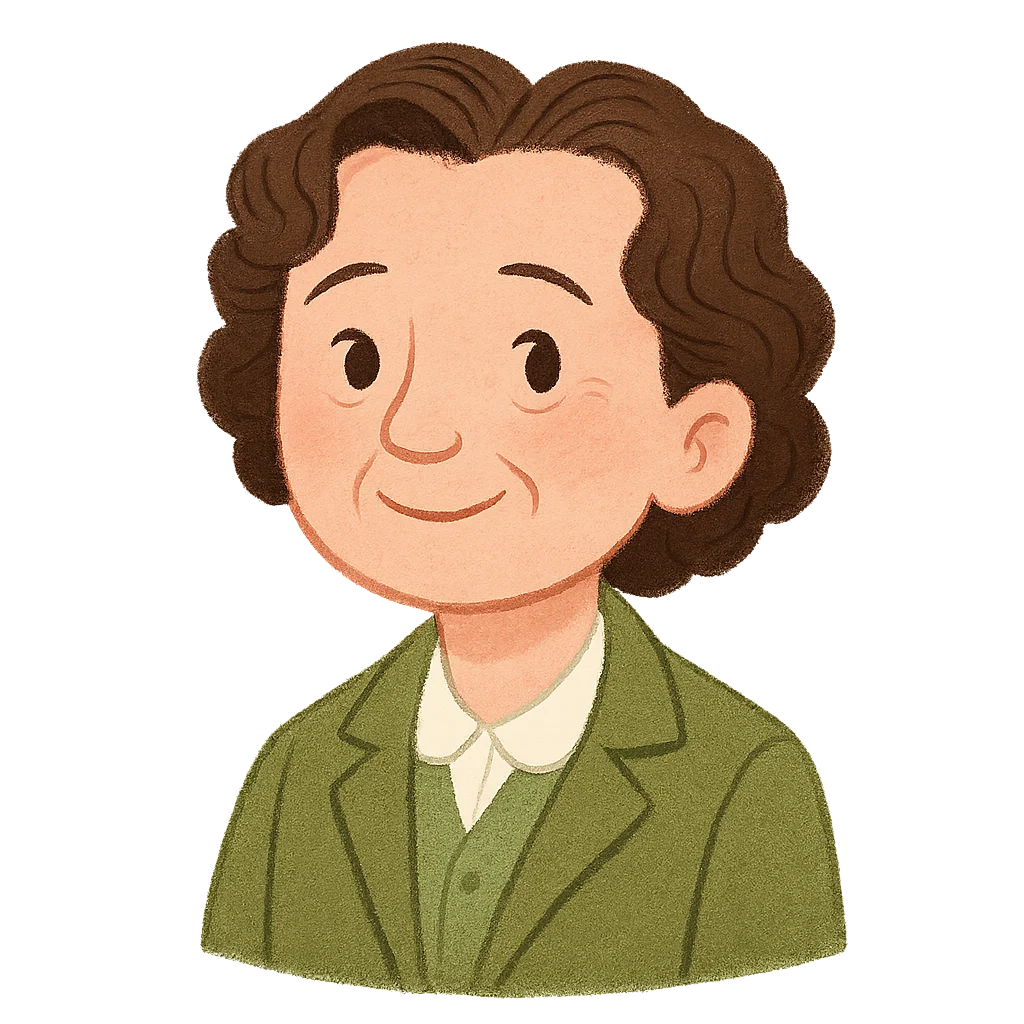
Rachel Carson: A Voice for Nature
Hello! My name is Rachel Carson. My story begins on a small farm in Springdale, Pennsylvania, where I was born on May 27th, 1907. More than anything, I loved exploring the woods and fields around my home. My mother was my first teacher, showing me the secret lives of birds in their nests and the tiny creatures that skittered under rocks. I spent hours lying in the grass, watching ants march by, and listening to the symphony of the forest. I also loved to write, and I would fill notebooks with stories about the animals and plants I met on my adventures.
When it was time for college, I thought I would be an English teacher because I loved writing so much. But then, a science class changed everything! I looked through a microscope and saw a whole new, tiny world buzzing with life. I knew right then that I had to study biology. My love for nature grew even bigger when I spent a summer studying at the Woods Hole Marine Biological Laboratory. For the first time, I saw the ocean, and I was completely mesmerized by its power and its mysteries. I decided to dedicate my life to understanding and writing about the sea.
After finishing my studies at Johns Hopkins University in 1932, I got a job with the U.S. Bureau of Fisheries. My job was to help people understand the ocean and its creatures. I wrote articles and even radio shows about everything from the journey of an eel to the life of a fish. This work inspired me to write my own books. My book, 'The Sea Around Us,' published on July 2nd, 1951, became a surprise bestseller! It felt wonderful to know that people all over the country were reading my words and falling in love with the ocean, just as I had.
As I grew older, I started to notice something worrying. The birdsongs outside my window seemed quieter. I received letters from people across the country who saw that birds, fish, and other animals were getting sick and disappearing. I began to investigate and discovered that powerful, poisonous chemicals, especially one called DDT, were being sprayed everywhere to kill insects. But these poisons weren't just killing insects; they were harming all of nature. I knew I had to warn people. It took me four years to research and write my most important book, 'Silent Spring,' which was published on September 27th, 1962. Many powerful companies were angry with me for telling this story, but I knew I had to speak the truth for the creatures who had no voice.
My book caused a huge stir! It made people think about how our actions affect the planet. It showed them that we all share one world and that we have a responsibility to protect it. The ideas in 'Silent Spring' helped start the modern environmental movement. Eventually, the government created the Environmental Protection Agency and even banned the dangerous chemical DDT. I passed away on April 14th, 1964, but I was so happy to know my work had started a change. My story shows that one person, with curiosity and a brave voice, can make a big difference. And you can, too.
Activities
Take a Quiz
Test what you learned with a fun quiz!
Get creative with colors!
Print a coloring book page of this topic.












 Free for Educators