English

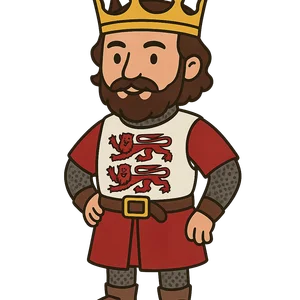
Richard I of England
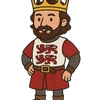
King of England from 1189 to 1199, known as Richard the Lionheart for his military leadership and bravery…
Reads at Grades 6–8 Listens at Grades 4–8
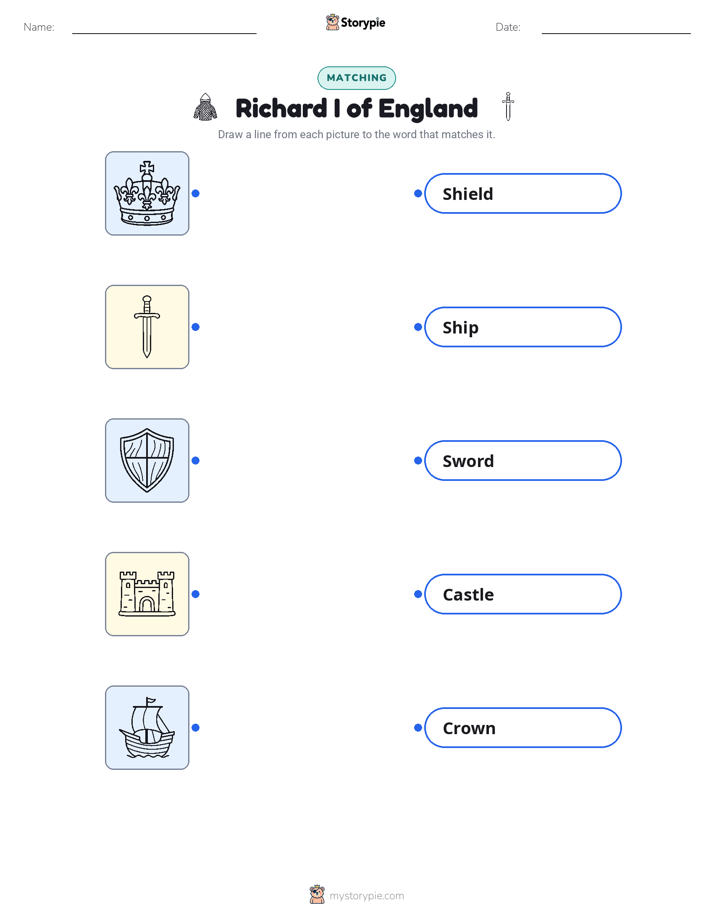
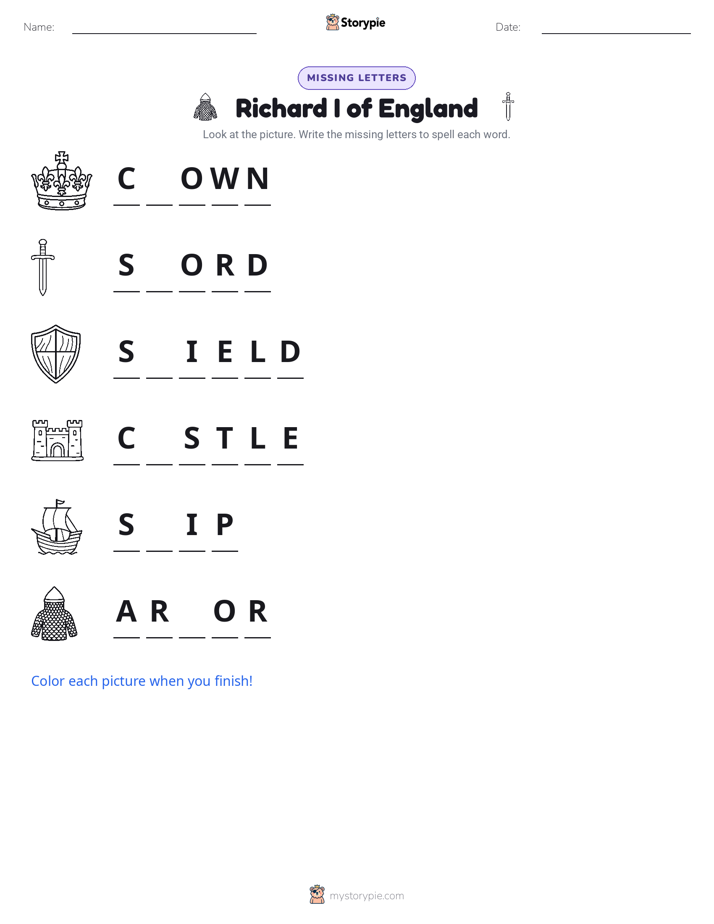
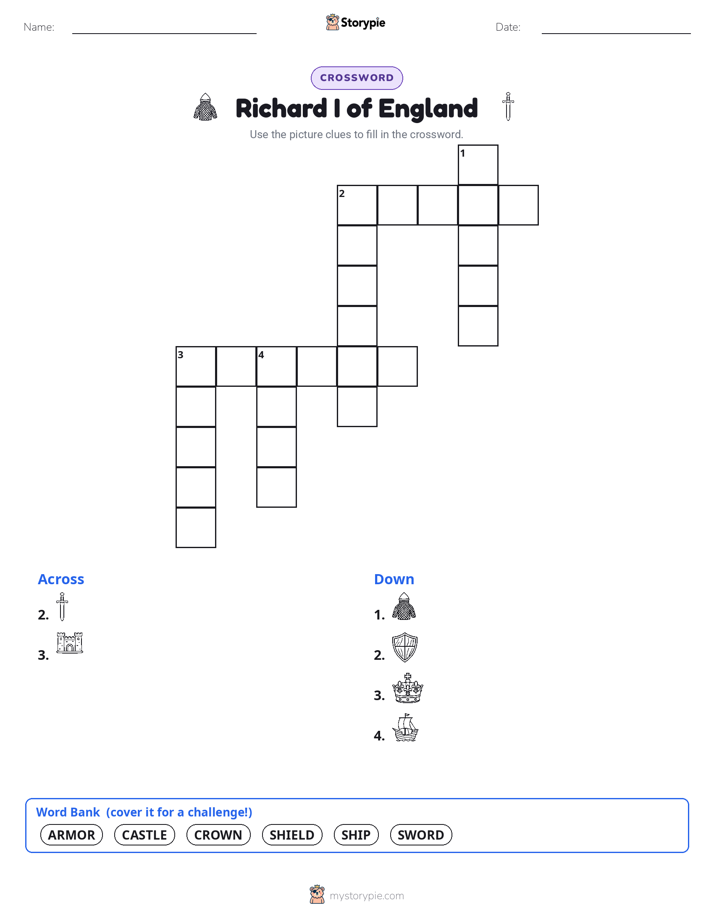
Print & create
Answer keys·No prep·Free with an account
28 worksheets · answer keys · full story · quiz · Ages 10-12 · CEFR B2
Plus adds 244,000+ more stories in 27 languages, audio for every one, and printables for all of them.
Just want Richard I of England?
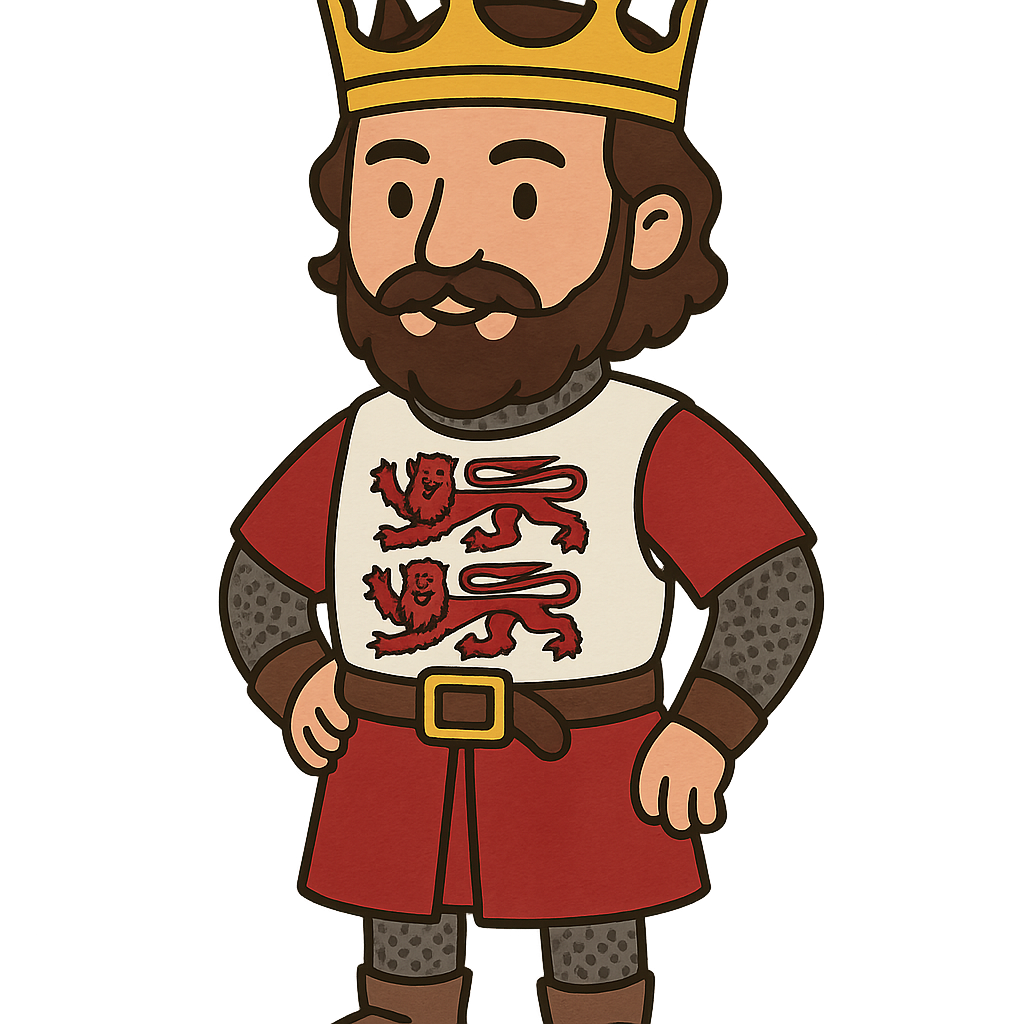
Hello. My name is Richard, and while I was once a king of England, history remembers me best by my nickname: Richard the Lionheart. I was born on September 8th, 1157, to two very powerful people, King Henry II of England and Eleanor of Aquitaine. You might think that being an English prince meant I grew up in a castle in England, but that wasn’t the case. I spent my childhood in my mother’s duchy of Aquitaine, which is in modern-day France. Because of this, I spoke French and a language called Occitan, not English. I developed a great love for the arts and enjoyed writing poetry and music. But I was also a prince destined for leadership, so my training was intense. I learned to be a knight and a commander, and it was my bravery and skill in battle that earned me the name I carry still: Cœur de Lion, or the Lionheart.
My path to the throne was not a simple one. My relationship with my father, King Henry II, and my brothers was often filled with conflict. We were a powerful family, and we frequently fought over who would control our vast lands. In 1173, I even joined a rebellion against my own father to try and gain more power for myself. As time went on, my older brothers passed away, which meant I was next in line to inherit everything. When my father died in 1189, I was finally crowned King of England in a grand ceremony on September 3rd. But I had no intention of staying in England for long. For years, I had held a deep desire to fulfill a sacred vow: to lead an army to the Holy Land on a great Crusade. Almost immediately after becoming king, I began to raise money, gather a massive army, and build a fleet of ships to sail to Jerusalem and fight for the Christian cause.
Richard the Lionheart
Hello. My name is Richard, and while I was once a king of England, history remembers me best by my nickname: Richard the Lionheart. I was born on September 8th, 1157, to two very powerful people, King Henry II of England and Eleanor of Aquitaine. You might think that being an English prince meant I grew up in a castle in England, but that wasn’t the case. I spent my childhood in my mother’s duchy of Aquitaine, which is in modern-day France. Because of this, I spoke French and a language called Occitan, not English. I developed a great love for the arts and enjoyed writing poetry and music. But I was also a prince destined for leadership, so my training was intense. I learned to be a knight and a commander, and it was my bravery and skill in battle that earned me the name I carry still: Cœur de Lion, or the Lionheart.
My path to the throne was not a simple one. My relationship with my father, King Henry II, and my brothers was often filled with conflict. We were a powerful family, and we frequently fought over who would control our vast lands. In 1173, I even joined a rebellion against my own father to try and gain more power for myself. As time went on, my older brothers passed away, which meant I was next in line to inherit everything. When my father died in 1189, I was finally crowned King of England in a grand ceremony on September 3rd. But I had no intention of staying in England for long. For years, I had held a deep desire to fulfill a sacred vow: to lead an army to the Holy Land on a great Crusade. Almost immediately after becoming king, I began to raise money, gather a massive army, and build a fleet of ships to sail to Jerusalem and fight for the Christian cause.
My journey on what became known as the Third Crusade was the greatest adventure of my life. The voyage to the Holy Land was long and challenging. Along the way, my fleet stopped in Sicily, and in 1191, I led my forces in the conquest of the island of Cyprus. When we finally arrived, the fighting was fierce. In July of 1191, after a long and difficult siege, my army and our allies successfully captured the vital port city of Acre. It was during this time that I faced my most famous opponent, the great Muslim leader, Sultan Saladin. He was a brilliant military strategist and an honorable man; though we were enemies on the battlefield, we held a deep respect for one another. My greatest victory came in September 1191 at the Battle of Arsuf, where my crusader army defeated Saladin’s forces. Despite our successes, we were never able to recapture the city of Jerusalem. In 1192, I negotiated a truce with Saladin. Our agreement didn't give Christians control of the city, but it did ensure that unarmed Christian pilgrims could travel there safely to visit its holy sites.
With the truce signed, my thoughts turned to home, but the journey back to England proved to be just as dangerous as the Crusade itself. In late 1192, my ship was wrecked in a storm, forcing me to travel overland across central Europe in disguise. My enemies were everywhere, and soon my luck ran out. I was recognized, captured, and taken prisoner by Duke Leopold of Austria. He then handed me over to an even more powerful rival, the Holy Roman Emperor, Henry VI. The emperor saw a great opportunity and demanded a king's ransom for my release—an unimaginable fortune of 150,000 silver marks. Back in England, my mother, the remarkable Eleanor of Aquitaine, worked tirelessly to raise the money by collecting taxes from the people. For more than a year I remained a king in chains, until finally, in February 1194, the ransom was paid and I was set free.
I returned to England in March 1194, but only for a short time. To make it clear to everyone that I was still the rightful ruler after my long imprisonment, I had myself crowned for a second time. However, England was never my main concern. During my ten years as king, I spent only a few months there. My true focus was always on my lands in France. While I had been away on Crusade and held captive, the king of France, Philip II, had taken the opportunity to seize some of my territories, including parts of Normandy. I spent the final years of my reign fighting to win them back. To defend my lands, I began building a magnificent fortress in 1196 called Château Gaillard. It was so strong and well-designed that I proudly called it my 'saucy castle.'
My life of warfare ultimately led to my end. In the spring of 1199, I was in France, laying siege to a small, rebellious castle called Châlus-Chabrol. During the attack, I was struck in the shoulder by a crossbow bolt from the castle walls. At first, the injury did not seem life-threatening, but the wound grew infected. On April 6th, 1199, my journey came to an end. I lived to be 41 years old. I am remembered today not for the laws I passed or the time I spent governing, but as a legendary warrior, a chivalrous knight, and the bold leader of the Third Crusade. My nickname, the Lionheart, has echoed through history for centuries, forever standing as a symbol of courage and strength.
Wow facts
About
King of England from 1189 to 1199, known as Richard the Lionheart for his military leadership and bravery, and a central Christian commander during the Third Crusade.
Explore next




Want to do even more?
Go beyond exploring. Unlock tools that turn every story into real learning.

Storypie Plus for families
Full stories, quizzes, and printables. Nights and car rides, sorted.
- Unlimited audio stories
- Create Mode: your child stars in the story
- Offline downloads
- Printable worksheets & coloring pages

Why Storypie for Schools
Students engaged. Prep in seconds. Evenings back to you.
- Worksheets & Quizzes
- Classroom Management
- Formative Assessment
- Custom Curriculum & Lesson Plans
- 27 Languages

Why Storypie for Homeschool
Curriculum done. They'll ask for more. Hours back in your day.
- Worksheet Generator
- First-Person Audio Stories
- Built-in Comprehension Quizzes
- Custom Curriculum & Lesson Plans
- Print & Go Activities