English

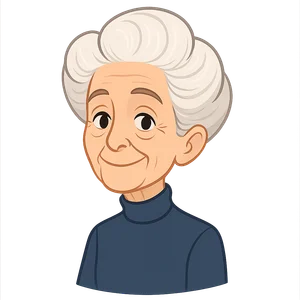
Rita Levi-Montalcini
Rita Levi-Montalcini was an Italian neurobiologist who was awarded the 1986 Nobel Prize in Physiology or…
Reads at Grades 6–8 Listens at Grades 4–8
Print & create
Answer keys·No prep·Free with an account
28 worksheets · answer keys · full story · quiz · Ages 10-12 · CEFR B2
Plus adds 279,000+ more stories in 27 languages, audio for every one, and printables for all of them.
Just want Rita Levi-Montalcini?
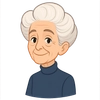
Hello! My name is Rita Levi-Montalcini. My story begins in a beautiful city called Turin, in Italy, where I was born with my twin sister, Paola, on April 22nd, 1909. Growing up, my father believed that women should focus on family, not careers. But I had a different dream; I was fascinated by the world and wanted to become a doctor. After a dear family friend became ill, I knew I had to follow my passion. In 1930, I convinced my father to let me attend the University of Turin to study medicine, a decision that would change my entire life.
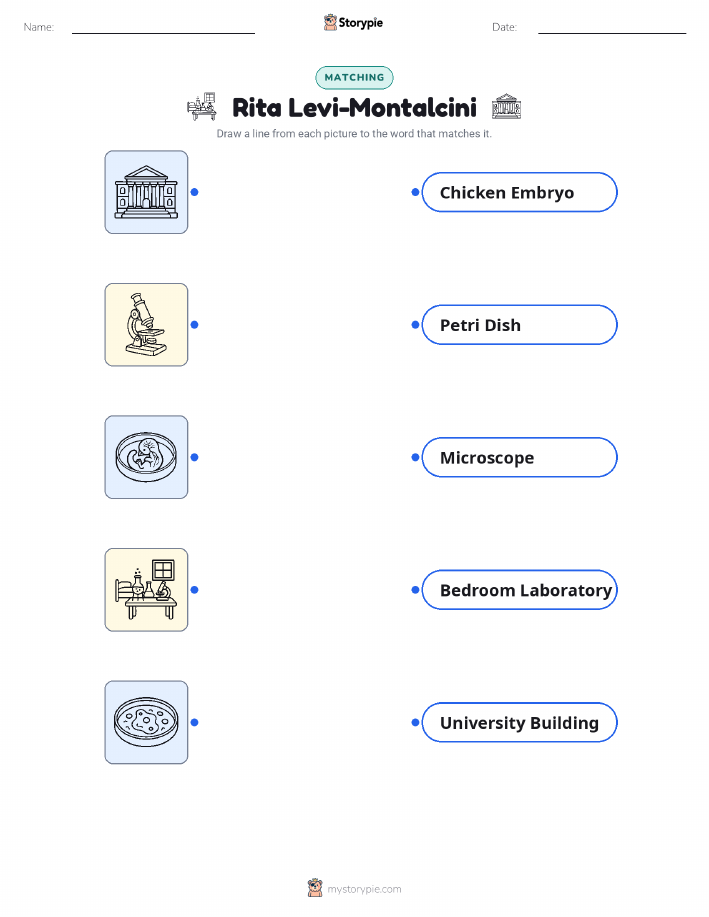
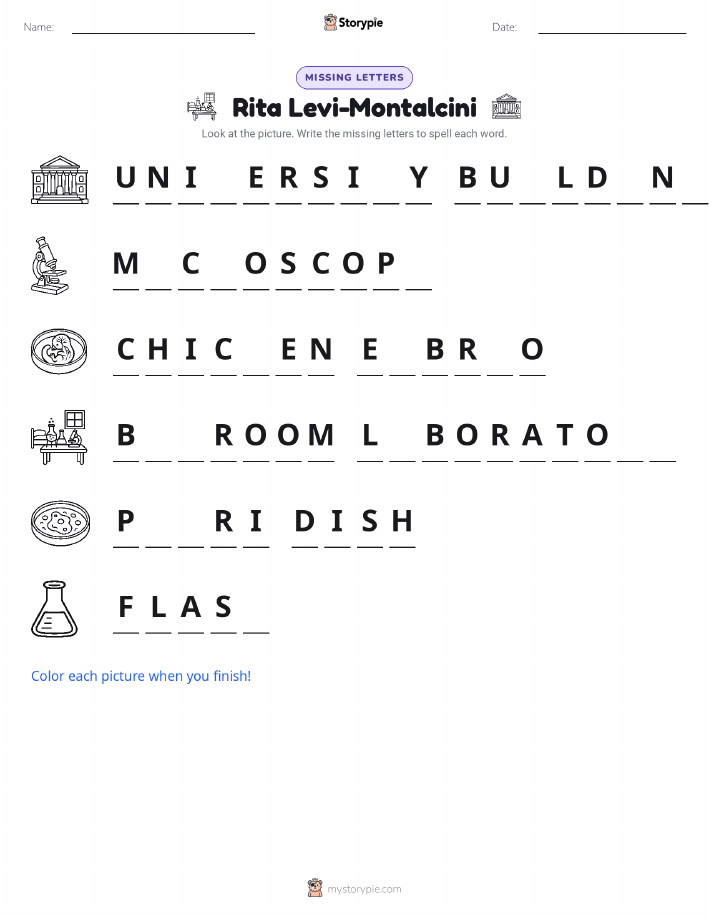
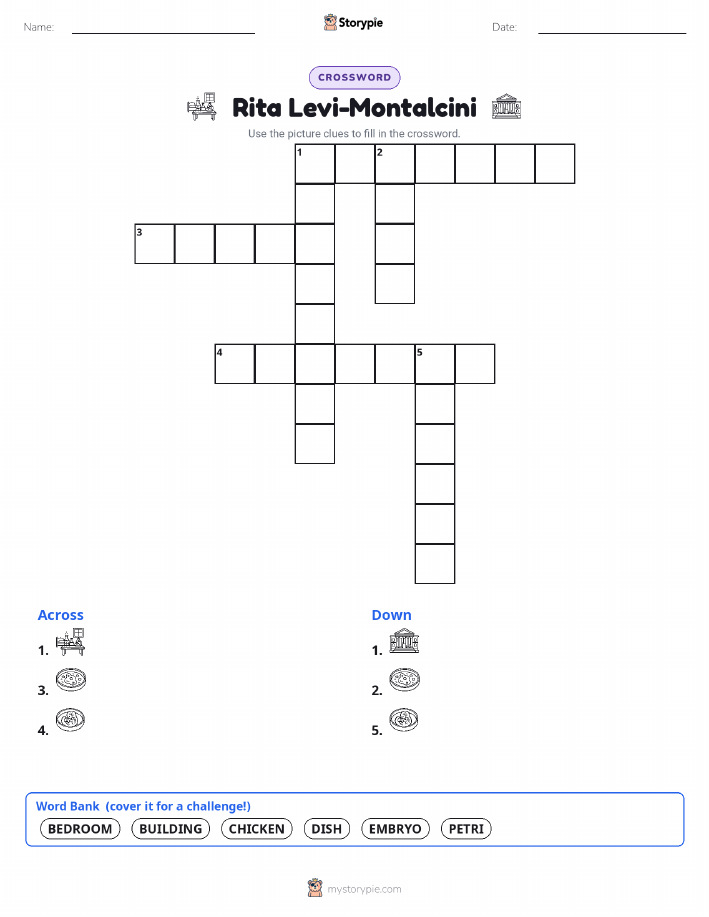
Just as my career was beginning, dark clouds gathered over Europe. In 1938, the government in Italy passed terrible laws that prevented Jewish people like me from working at universities or in professional jobs. I could no longer work in the lab, but I refused to give up on my research. During World War II, I built a small, secret laboratory right in my bedroom! Using simple tools, I studied the nerve fibers of chicken embryos. It was difficult and sometimes scary, but my curiosity was stronger than my fear. I knew that even in the darkest of times, the search for knowledge had to continue.
After the war ended, my work became known to other scientists. In 1947, I received an invitation from a professor named Viktor Hamburger to come to the United States and work at Washington University in St. Louis. I planned to stay for just a few months, but my research was so exciting that I ended up staying for thirty years! America was a new world for me, with large, well-equipped labs. It was here that I would make the most important discovery of my life.
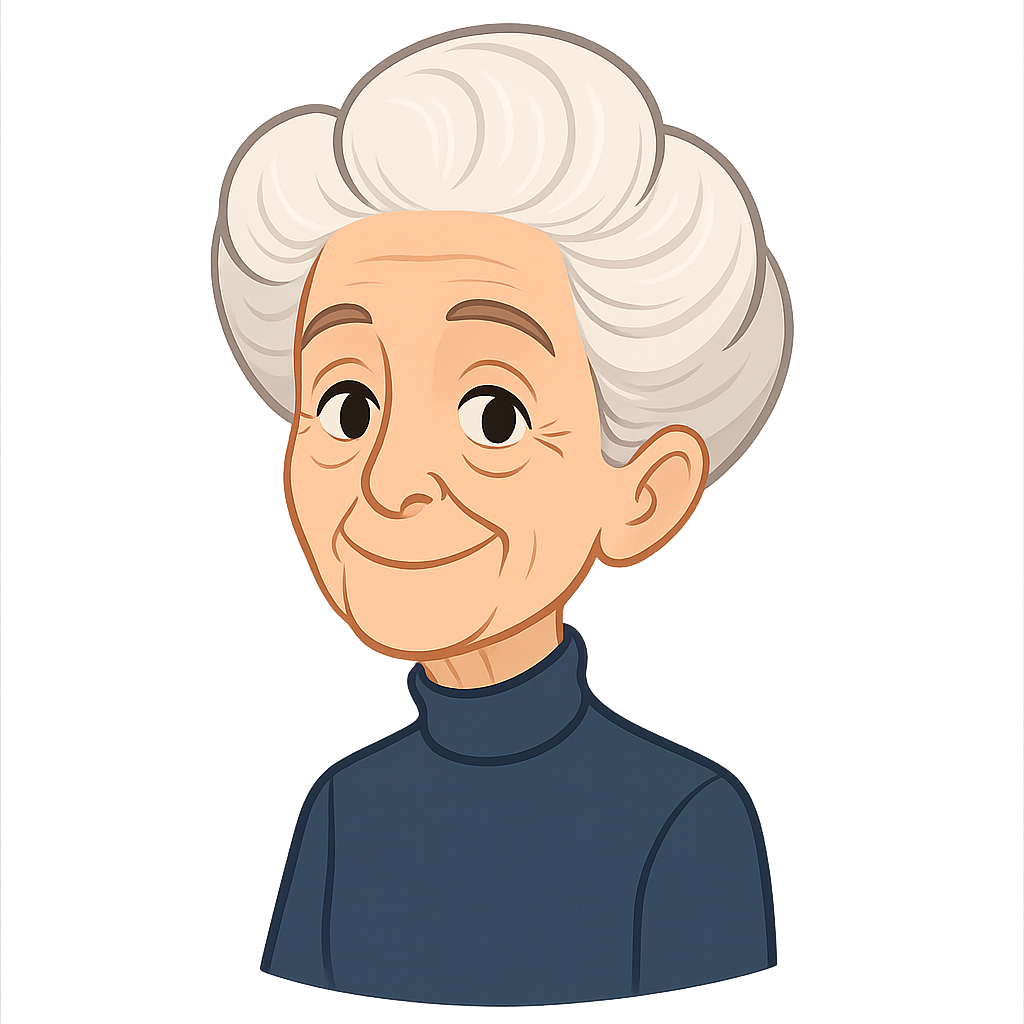
Rita Levi-Montalcini
Hello! My name is Rita Levi-Montalcini. My story begins in a beautiful city called Turin, in Italy, where I was born with my twin sister, Paola, on April 22nd, 1909. Growing up, my father believed that women should focus on family, not careers. But I had a different dream; I was fascinated by the world and wanted to become a doctor. After a dear family friend became ill, I knew I had to follow my passion. In 1930, I convinced my father to let me attend the University of Turin to study medicine, a decision that would change my entire life.
Just as my career was beginning, dark clouds gathered over Europe. In 1938, the government in Italy passed terrible laws that prevented Jewish people like me from working at universities or in professional jobs. I could no longer work in the lab, but I refused to give up on my research. During World War II, I built a small, secret laboratory right in my bedroom! Using simple tools, I studied the nerve fibers of chicken embryos. It was difficult and sometimes scary, but my curiosity was stronger than my fear. I knew that even in the darkest of times, the search for knowledge had to continue.
After the war ended, my work became known to other scientists. In 1947, I received an invitation from a professor named Viktor Hamburger to come to the United States and work at Washington University in St. Louis. I planned to stay for just a few months, but my research was so exciting that I ended up staying for thirty years! America was a new world for me, with large, well-equipped labs. It was here that I would make the most important discovery of my life.
At Washington University, I began working with a brilliant biochemist named Stanley Cohen. Together, we were trying to solve a puzzle: what tells nerve cells how to grow and connect with each other? Through many experiments in the early 1950s, we found the answer. We discovered a special protein that acts like a director, telling nerve cells when and where to grow. We called it Nerve Growth Factor, or NGF. This discovery was a huge breakthrough, helping us understand how our nervous system develops and how it might repair itself after an injury.
For many years, Stanley and I continued our work, and the world began to understand the importance of NGF. Then, on a day in 1986, I received a phone call that I will never forget. We had been awarded the Nobel Prize in Physiology or Medicine! It was an incredible honor. I returned to Italy and continued my work, establishing a research institute in Rome. In 2001, I was given another great honor when I was appointed a Senator for Life in the Italian Parliament, where I worked to support science and education for all.
I lived a very long and fulfilling life, and I got to be 103 years old. I always believed that the most important thing is to keep your mind curious and active. My discovery of Nerve Growth Factor continues to help scientists today as they study diseases and look for new ways to help people heal. I hope my story shows you that no obstacle is too great to overcome if you have passion and determination. Never stop asking questions, and never let anyone tell you that your dreams are out of reach.
Wow facts
About
Rita Levi-Montalcini was an Italian neurobiologist who was awarded the 1986 Nobel Prize in Physiology or Medicine jointly with her colleague Stanley Cohen for their discovery of Nerve Growth Factor (NGF).
Take a Quiz
Question 1 of 5
What major obstacle did I face in 1938, and how did I overcome it to continue my research?
Explore next


Want to do even more?
Go beyond exploring. Unlock tools that turn every story into real learning.

Storypie Plus for families
Full stories, quizzes, and printables. Nights and car rides, sorted.
- Unlimited audio stories
- Create Mode: your child stars in the story
- Offline downloads
- Printable worksheets & coloring pages

Why Storypie for Schools
Students engaged. Prep in seconds. Evenings back to you.
- Worksheets & Quizzes
- Classroom Management
- Formative Assessment
- Custom Curriculum & Lesson Plans
- 27 Languages

Why Storypie for Homeschool
Curriculum done. They'll ask for more. Hours back in your day.
- Worksheet Generator
- First-Person Audio Stories
- Built-in Comprehension Quizzes
- Custom Curriculum & Lesson Plans
- Print & Go Activities