English

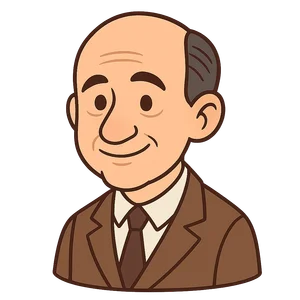
Enrico Fermi
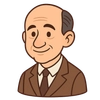
Enrico Fermi was an Italian-American physicist who created the world's first nuclear reactor…
Reads at Grades 3–5 Listens at Grades 1–5
Print & create
Answer keys·No prep·Free with an account
28 worksheets · answer keys · full story · quiz · Ages 8-10 · CEFR B1
Plus adds 279,000+ more stories in 27 languages, audio for every one, and printables for all of them.
Just want Enrico Fermi?
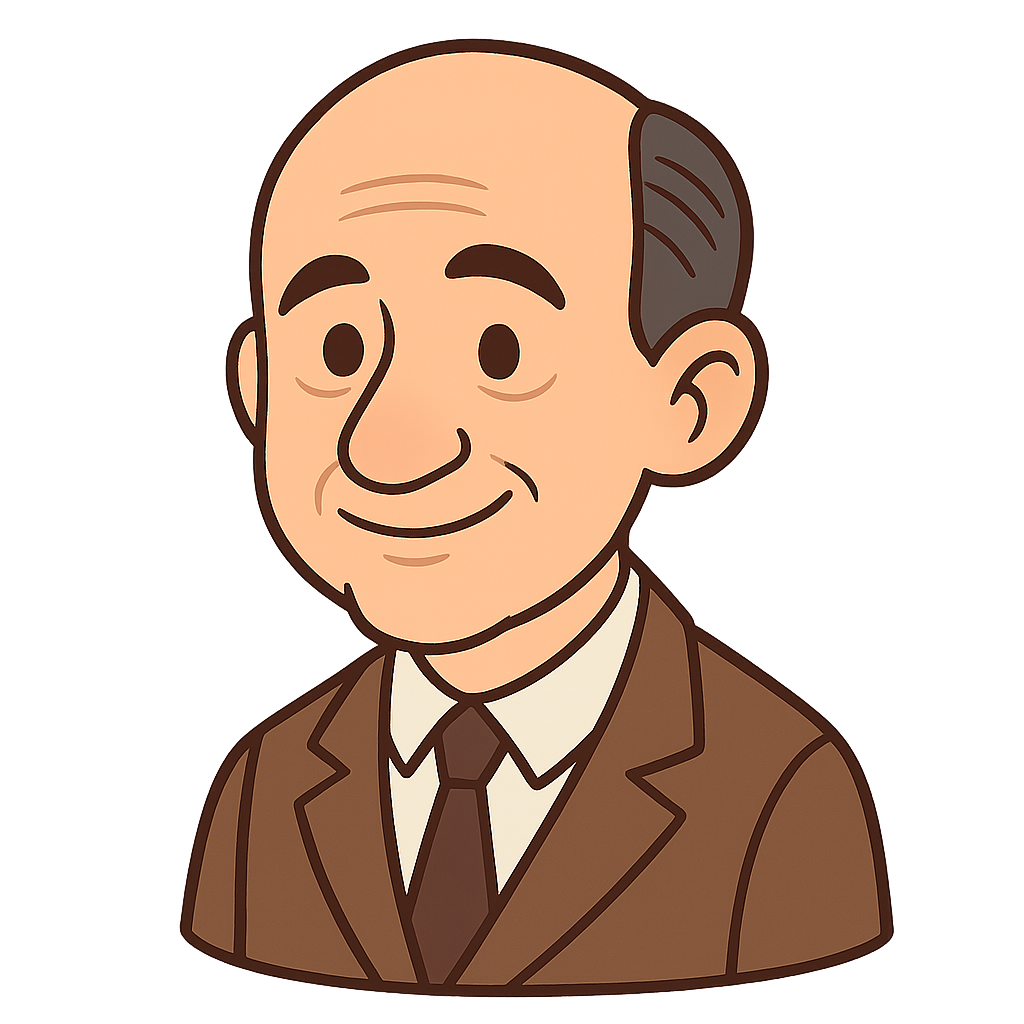
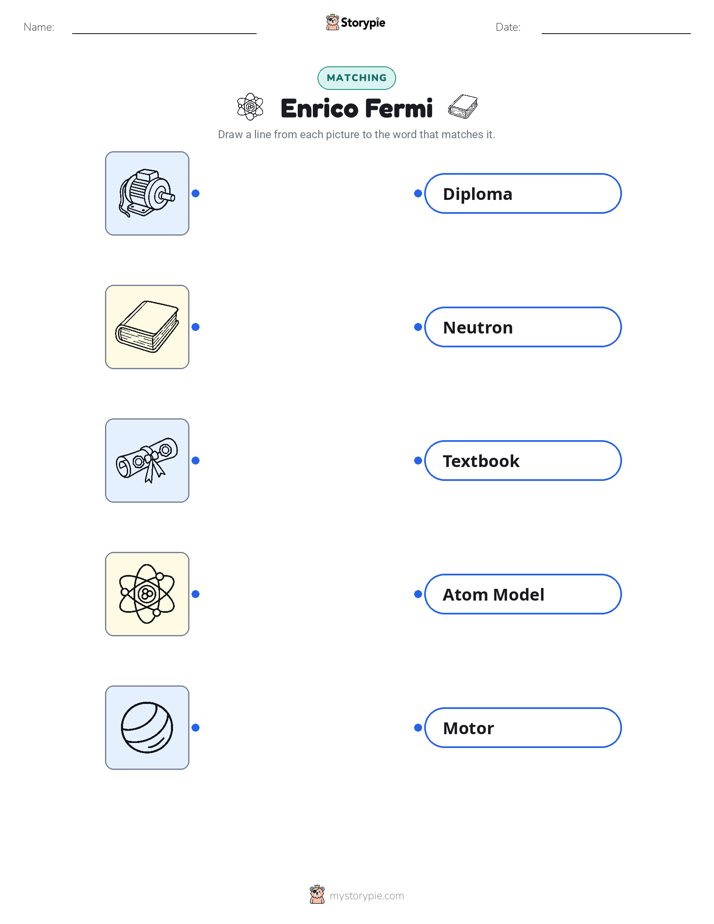
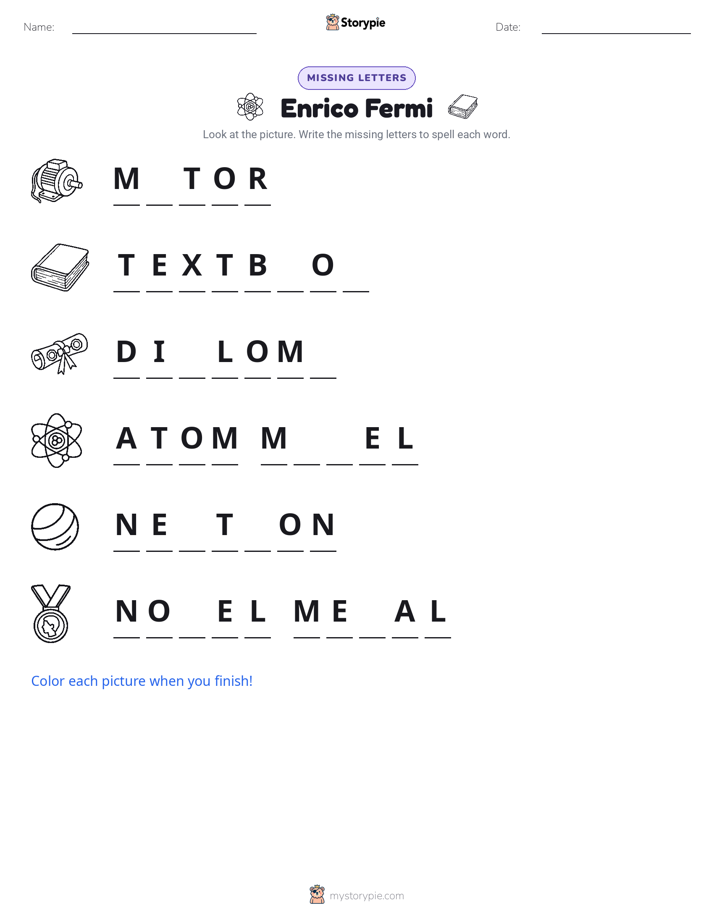
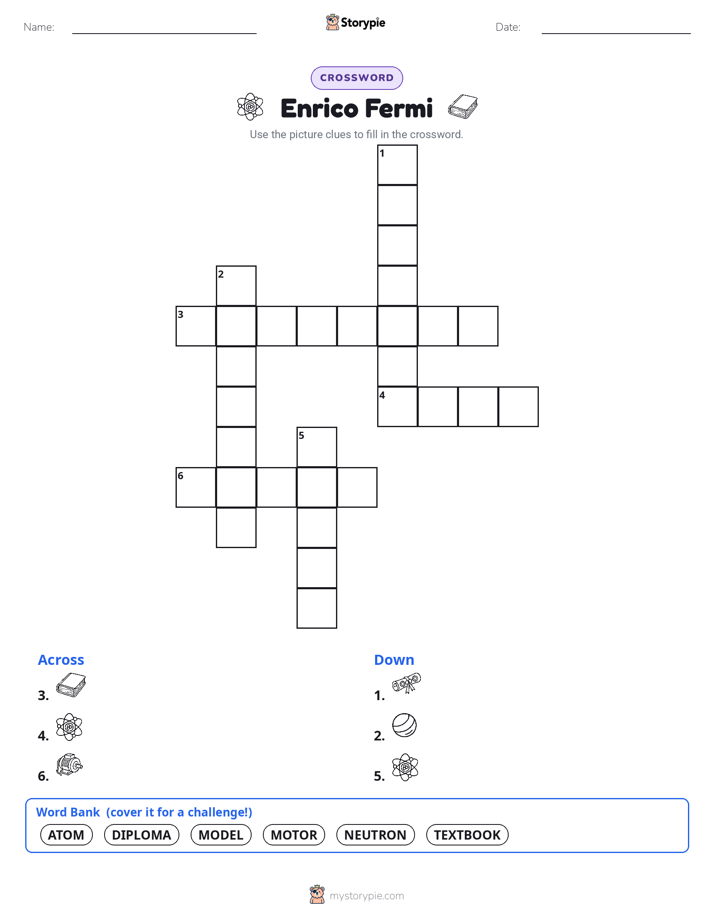
Hello, my name is Enrico Fermi. My story begins in the beautiful city of Rome, Italy, where I was born on September 29th, 1901. Even when I was very young, I was filled with a deep curiosity about how everything in the world worked. While other children played games, I found my greatest joy in math and physics. A very sad thing happened when I was a teenager; in 1915, my older brother, Giulio, passed away. To cope with my sadness, I buried myself in science books. They became my best friends. I didn't just read about science; I wanted to experience it myself. I spent hours building my own experiments in my room. I put together electric motors that whirred to life and gyroscopes that spun perfectly, all because I wanted to see if I could figure out the universe's secrets on my own.
My passion for science guided my path as I grew older. In 1918, I went to a special university in Pisa to study physics. I worked very hard, and by 1922, I had earned my doctorate degree. A few years later, in 1926, I became a professor at the University of Rome, which was a great honor. There, I gathered a group of brilliant young scientists who were just as curious as I was. People gave us a nickname: the 'Via Panisperna boys.' Together, we looked into the smallest parts of our world—the atom. In 1934, I made a discovery that would change everything. I found that if you could slow down the tiny particles inside an atom, called neutrons, you could make them interact with other atoms in amazing new ways. It felt like I had found a secret key that could unlock the power hidden deep inside the atom.
Enrico Fermi: Architect of the Nuclear Age
Hello, my name is Enrico Fermi. My story begins in the beautiful city of Rome, Italy, where I was born on September 29th, 1901. Even when I was very young, I was filled with a deep curiosity about how everything in the world worked. While other children played games, I found my greatest joy in math and physics. A very sad thing happened when I was a teenager; in 1915, my older brother, Giulio, passed away. To cope with my sadness, I buried myself in science books. They became my best friends. I didn't just read about science; I wanted to experience it myself. I spent hours building my own experiments in my room. I put together electric motors that whirred to life and gyroscopes that spun perfectly, all because I wanted to see if I could figure out the universe's secrets on my own.
My passion for science guided my path as I grew older. In 1918, I went to a special university in Pisa to study physics. I worked very hard, and by 1922, I had earned my doctorate degree. A few years later, in 1926, I became a professor at the University of Rome, which was a great honor. There, I gathered a group of brilliant young scientists who were just as curious as I was. People gave us a nickname: the 'Via Panisperna boys.' Together, we looked into the smallest parts of our world—the atom. In 1934, I made a discovery that would change everything. I found that if you could slow down the tiny particles inside an atom, called neutrons, you could make them interact with other atoms in amazing new ways. It felt like I had found a secret key that could unlock the power hidden deep inside the atom.
My work became known all around the world. In 1938, I received the highest honor a scientist can dream of: the Nobel Prize in Physics. It was an incredible moment for me, but it was also a difficult time for my family. Back in Italy, the government was creating new laws that were unfair to many people. My wife, Laura, was Jewish, and these new laws made it unsafe for her. So, when my family and I traveled to Sweden for the Nobel Prize ceremony, we made a very big decision. Instead of returning to our home in Italy, we sailed across the great Atlantic Ocean to start a new life in America.
When we arrived in America, I was eager to continue my research. I first worked at Columbia University and later moved to the University of Chicago. I had a bold idea that no one had ever successfully tried before. I wanted to create something called a chain reaction. You can imagine it like a long line of dominoes. When you push the first one, it falls and hits the next one, which hits the next, and so on. I believed I could do the same thing with atoms to release a huge amount of energy. On December 2nd, 1942, my team and I gathered under the stands of a football field at the University of Chicago. We had built a giant 'pile' of materials. We started the experiment very carefully, and then, it happened. It worked. We had created the world's first self-sustaining nuclear chain reaction. That day made history and opened the door to a new world of atomic energy.
After the war, I stayed at the University of Chicago, where I continued to teach students and explore the many mysteries of physics. I lived to be 53 years old. Because my work helped begin a new era of science and energy, people often remember me as the 'architect of the nuclear age.' To honor my discoveries, scientists even named an element on the periodic table 'Fermium' after me. My name also lives on in other parts of the science world, and I am happy that my lifelong curiosity helped us all understand our amazing universe a little bit better.
Wow facts
About
Enrico Fermi was an Italian-American physicist who created the world's first nuclear reactor, the Chicago Pile-1. A Nobel Prize laureate, he made significant contributions to quantum theory, nuclear and particle physics, and is often called the 'architect of the nuclear age.'
Take a Quiz
Question 1 of 5
Why did Enrico Fermi and his family move to America in 1938?
Explore next


Want to do even more?
Go beyond exploring. Unlock tools that turn every story into real learning.

Storypie Plus for families
Full stories, quizzes, and printables. Nights and car rides, sorted.
- Unlimited audio stories
- Create Mode: your child stars in the story
- Offline downloads
- Printable worksheets & coloring pages

Why Storypie for Schools
Students engaged. Prep in seconds. Evenings back to you.
- Worksheets & Quizzes
- Classroom Management
- Formative Assessment
- Custom Curriculum & Lesson Plans
- 27 Languages

Why Storypie for Homeschool
Curriculum done. They'll ask for more. Hours back in your day.
- Worksheet Generator
- First-Person Audio Stories
- Built-in Comprehension Quizzes
- Custom Curriculum & Lesson Plans
- Print & Go Activities