English

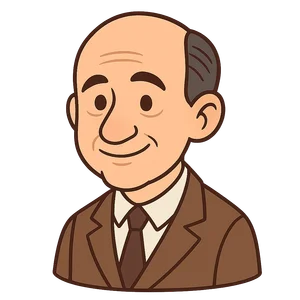
Enrico Fermi
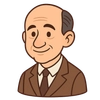
Enrico Fermi was an Italian-American physicist who created the world's first nuclear reactor…
Reads at Grades 6–8 Listens at Grades 4–8
Print & create
Answer keys·No prep·Free with an account
28 worksheets · answer keys · full story · quiz · Ages 10-12 · CEFR B2
Plus adds 280,000+ more stories in 27 languages, audio for every one, and printables for all of them.
Just want Enrico Fermi?
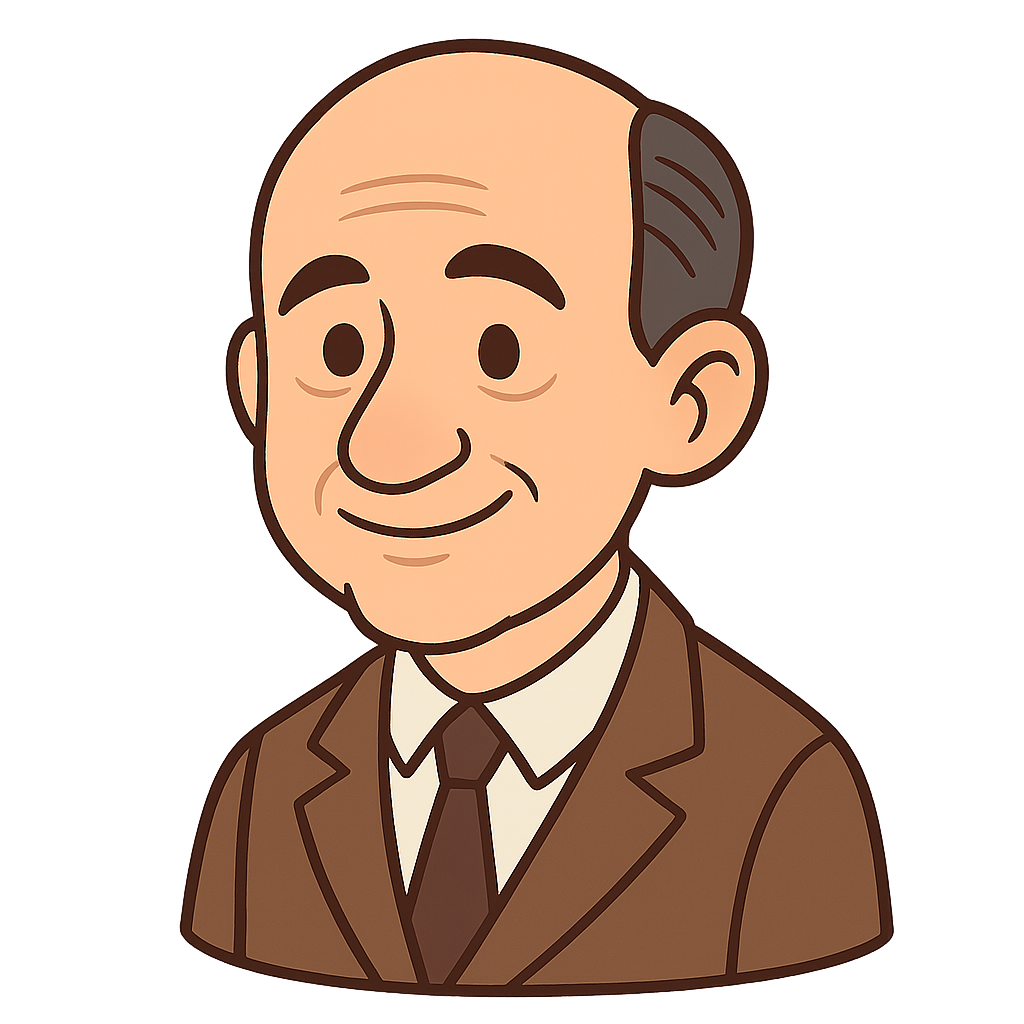
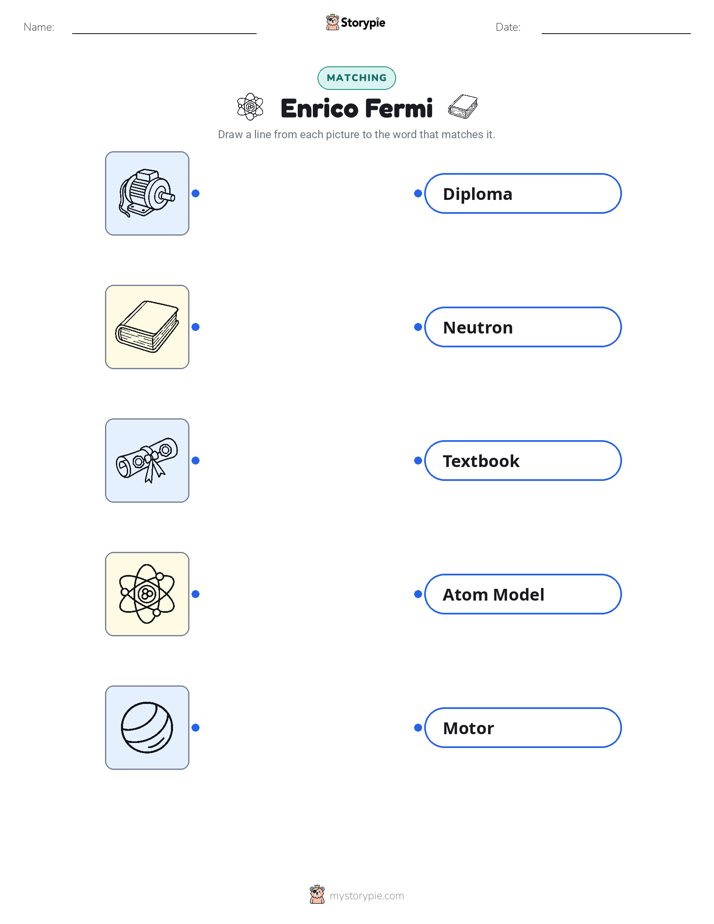
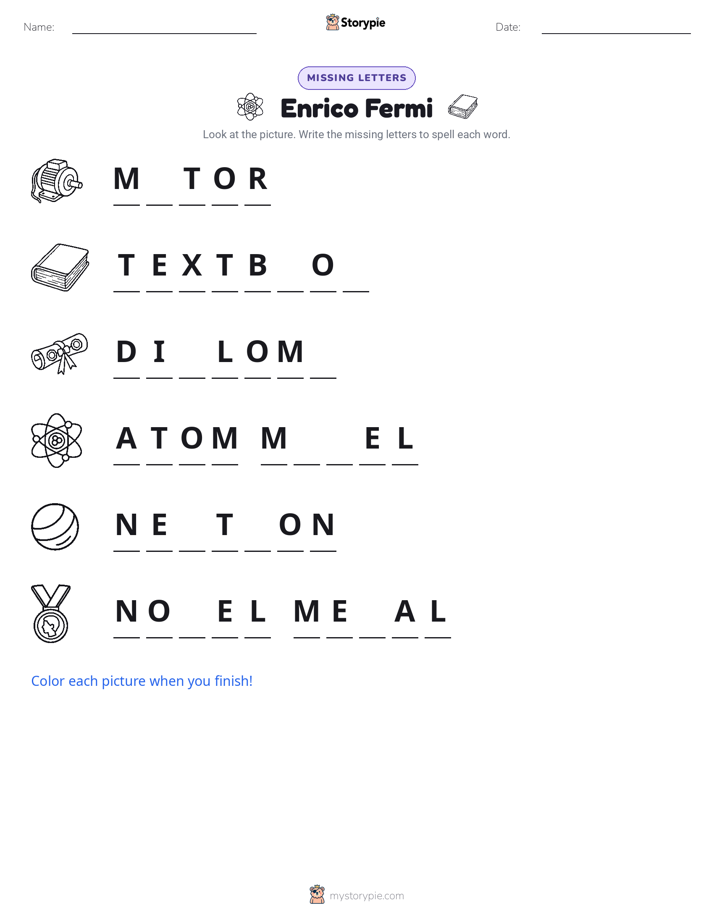
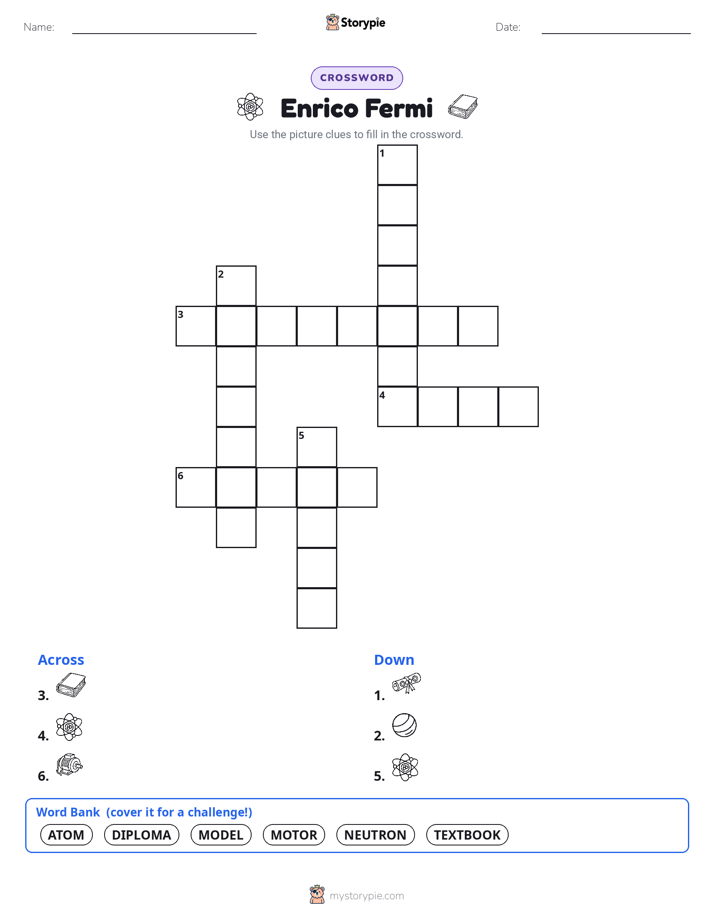
Hello! My name is Enrico Fermi, and I want to tell you my story. I was born in Rome, Italy, on September 29th, 1901. My father was an official for the railroad company, and my mother worked as a schoolteacher. I grew up with my older sister, Maria, and my older brother, Giulio, who was my closest friend. From a very young age, Giulio and I were fascinated by how the world worked. We spent our time building scientific toys together, including our own electric motors. Tragically, in 1915, when I was only 14 years old, my brother Giulio passed away during a minor surgery. I was completely heartbroken by this loss. To cope with my sadness, I focused all my energy on learning. I found a physics textbook written way back in 1840 and read the entire thing, teaching myself advanced concepts that were far beyond my years. That deep dive into science helped me through a difficult time and set me on the path I would follow for the rest of my life.
My intense passion for science guided me to the Scuola Normale Superiore, a prestigious university in Pisa, which I entered in 1918. I studied so hard and learned so quickly that I often knew more about modern physics than my own professors. I earned my doctorate degree in physics in 1922, ready to make my own contributions to science. In 1926, I was offered a position as a professor at the University of Rome, where I was excited to build a team of my own. I gathered a group of brilliant young scientists, and we became known as the 'Via Panisperna boys,' named after the street where our physics institute was located. Together, we explored the mysteries of the atom. In 1933, I developed an important theory that explained a process called beta decay, which describes how the nucleus of an atom can change. My work became so respected that other scientists began to call me the 'Pope of Physics,' because they joked that my understanding of the subject was infallible.
Enrico Fermi: Architect of the Nuclear Age
Hello! My name is Enrico Fermi, and I want to tell you my story. I was born in Rome, Italy, on September 29th, 1901. My father was an official for the railroad company, and my mother worked as a schoolteacher. I grew up with my older sister, Maria, and my older brother, Giulio, who was my closest friend. From a very young age, Giulio and I were fascinated by how the world worked. We spent our time building scientific toys together, including our own electric motors. Tragically, in 1915, when I was only 14 years old, my brother Giulio passed away during a minor surgery. I was completely heartbroken by this loss. To cope with my sadness, I focused all my energy on learning. I found a physics textbook written way back in 1840 and read the entire thing, teaching myself advanced concepts that were far beyond my years. That deep dive into science helped me through a difficult time and set me on the path I would follow for the rest of my life.
My intense passion for science guided me to the Scuola Normale Superiore, a prestigious university in Pisa, which I entered in 1918. I studied so hard and learned so quickly that I often knew more about modern physics than my own professors. I earned my doctorate degree in physics in 1922, ready to make my own contributions to science. In 1926, I was offered a position as a professor at the University of Rome, where I was excited to build a team of my own. I gathered a group of brilliant young scientists, and we became known as the 'Via Panisperna boys,' named after the street where our physics institute was located. Together, we explored the mysteries of the atom. In 1933, I developed an important theory that explained a process called beta decay, which describes how the nucleus of an atom can change. My work became so respected that other scientists began to call me the 'Pope of Physics,' because they joked that my understanding of the subject was infallible.
In 1934, my team and I in Rome made a groundbreaking discovery. We found that we could make atoms radioactive by bombarding them with tiny particles called neutrons. We also discovered something truly remarkable: if we slowed the neutrons down before they hit the atoms, they became much more effective. This discovery was revolutionary because it opened up a new way to interact with the very core of matter. For this important work, I was awarded the Nobel Prize in Physics in 1938. However, this period was also a dangerous one in Italy. The government, under the leadership of Benito Mussolini, had passed harsh laws that targeted Jewish citizens. My wife, Laura, was Jewish, and I knew we could not safely remain in our home country. In December of 1938, we traveled to Stockholm, Sweden, so I could accept the Nobel Prize. We used that trip as our chance to escape. Instead of returning to Italy, we boarded a ship and sailed to America, arriving in New York City on January 2nd, 1939, ready to start a new life in freedom.
Upon arriving in America, I accepted a position at Columbia University. It was not long after, in early 1939, that I learned scientists in Germany had managed to split a uranium atom. This process, known as nuclear fission, released an incredible amount of energy. I immediately understood the powerful implications of this discovery. It could lead to a self-sustaining chain reaction, which could be used to generate power or to build a weapon of unimaginable force. With World War II starting in Europe, there was a great fear that Germany might develop such a weapon first. To counter this threat, the United States government began a top-secret research program called the Manhattan Project, and I became one of its scientific leaders. My team and I moved to the University of Chicago. In a secret lab built in a squash court beneath the university's football stadium, we constructed the world's first nuclear reactor, which we named Chicago Pile-1. On December 2nd, 1942, we achieved the first controlled, self-sustaining nuclear chain reaction in history, a pivotal moment that ushered in the nuclear age.
After the war, I became a United States citizen in 1944 and continued my research and teaching as a professor at the University of Chicago. I always loved sharing my knowledge with students and exploring the fundamental questions of particle physics. I was one of the few physicists in the world who was considered an expert in both theoretical physics—the ideas and mathematics—and experimental physics—the hands-on work in the laboratory. The discoveries I made helped pave the way for the development of nuclear energy, which is now used to provide electricity to people all around the globe. I lived to be 53 years old, passing away in Chicago on November 28th, 1954. Today, I am remembered as the 'architect of the nuclear age.' My legacy lives on in many ways: the element with atomic number 100, fermium, is named in my honor, as is the famous particle physics laboratory, Fermilab. I hope my story inspires you to see that curiosity and dedication can help unlock the greatest secrets of our universe.
Wow facts
About
Enrico Fermi was an Italian-American physicist who created the world's first nuclear reactor, the Chicago Pile-1. A Nobel Prize laureate, he made significant contributions to quantum theory, nuclear and particle physics, and is often called the 'architect of the nuclear age.'
Take a Quiz
Question 1 of 5
What were the main reasons Enrico Fermi and his family decided to leave Italy in 1938?
Explore next


Want to do even more?
Go beyond exploring. Unlock tools that turn every story into real learning.

Storypie Plus for families
Full stories, quizzes, and printables. Nights and car rides, sorted.
- Unlimited audio stories
- Create Mode: your child stars in the story
- Offline downloads
- Printable worksheets & coloring pages

Why Storypie for Schools
Students engaged. Prep in seconds. Evenings back to you.
- Worksheets & Quizzes
- Classroom Management
- Formative Assessment
- Custom Curriculum & Lesson Plans
- 27 Languages

Why Storypie for Homeschool
Curriculum done. They'll ask for more. Hours back in your day.
- Worksheet Generator
- First-Person Audio Stories
- Built-in Comprehension Quizzes
- Custom Curriculum & Lesson Plans
- Print & Go Activities