English

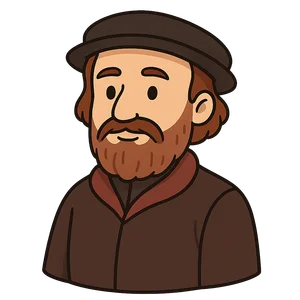
Robert Recorde
A 16th-century Welsh physician and mathematician who authored several important books on math in English…
Reads at Grades 6–8 Listens at Grades 4–8
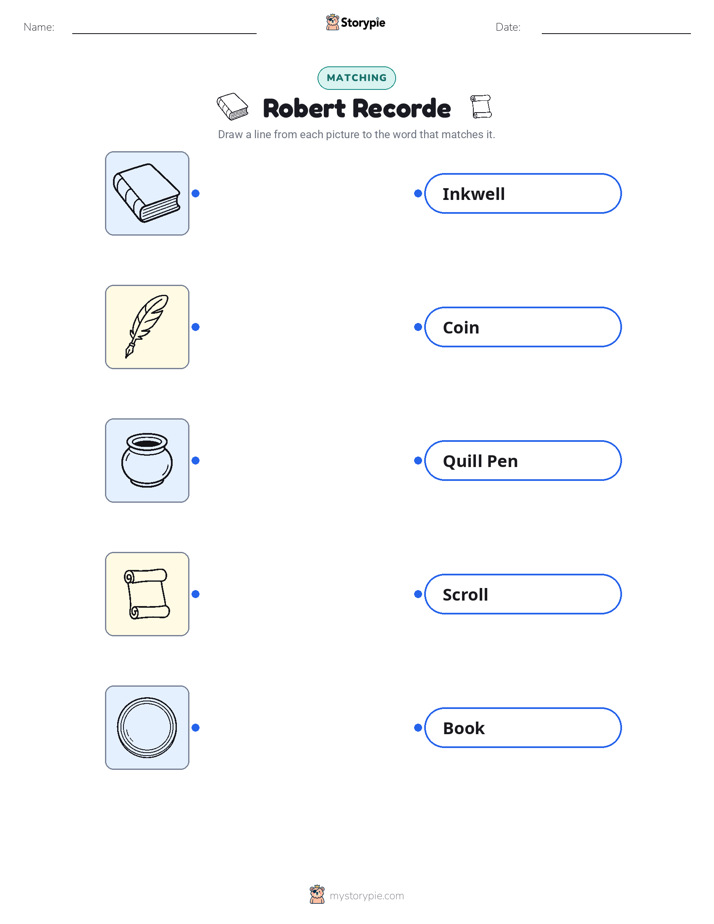
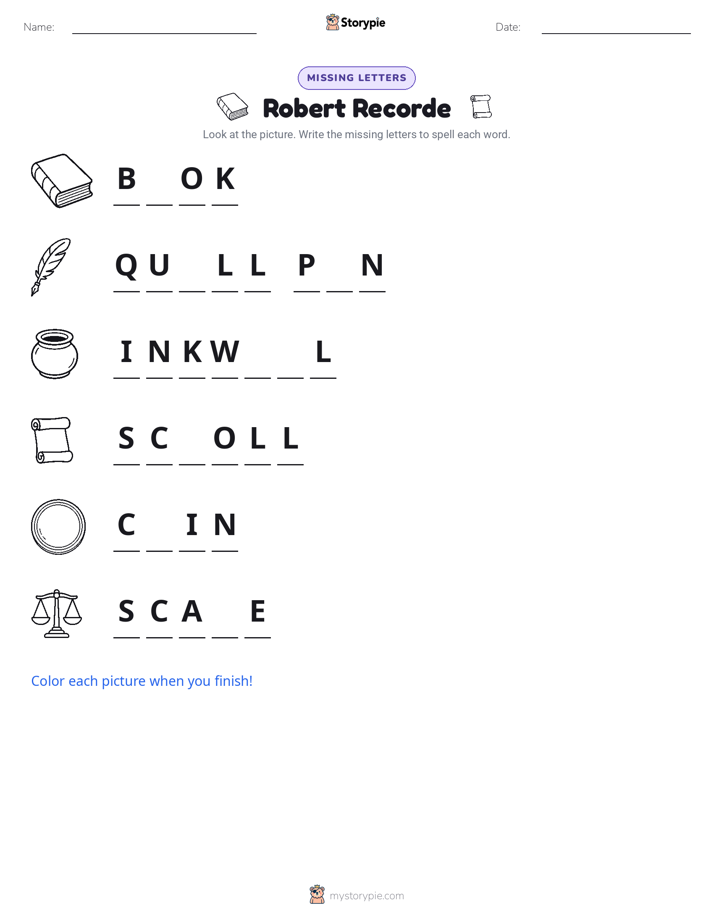
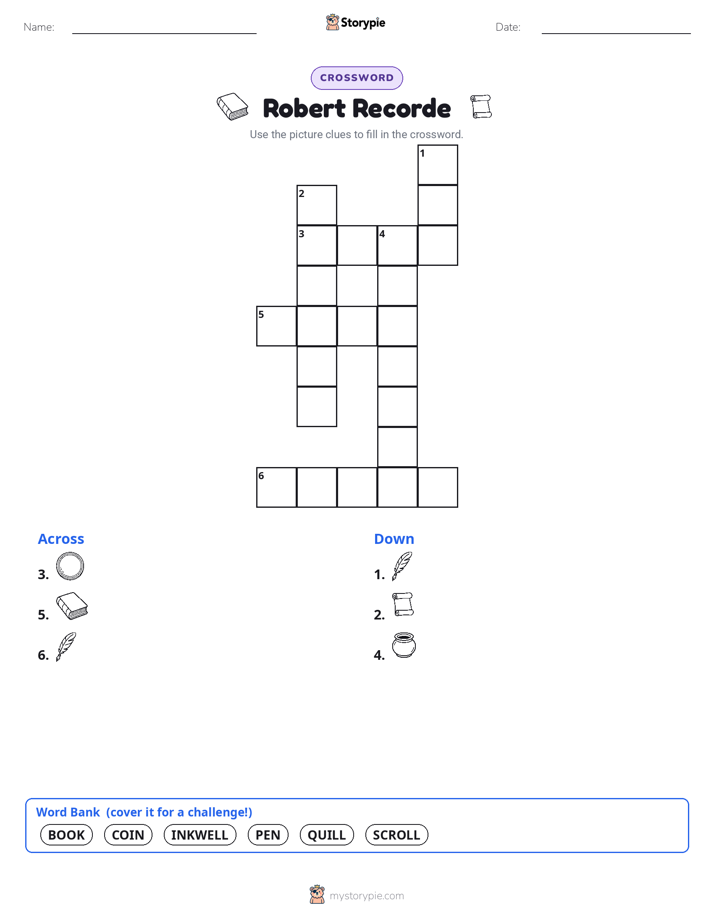
Print & create
Answer keys·No prep·Free with an account
28 worksheets · answer keys · full story · quiz · Ages 10-12 · CEFR B2
Plus adds 244,000+ more stories in 27 languages, audio for every one, and printables for all of them.
Just want Robert Recorde?
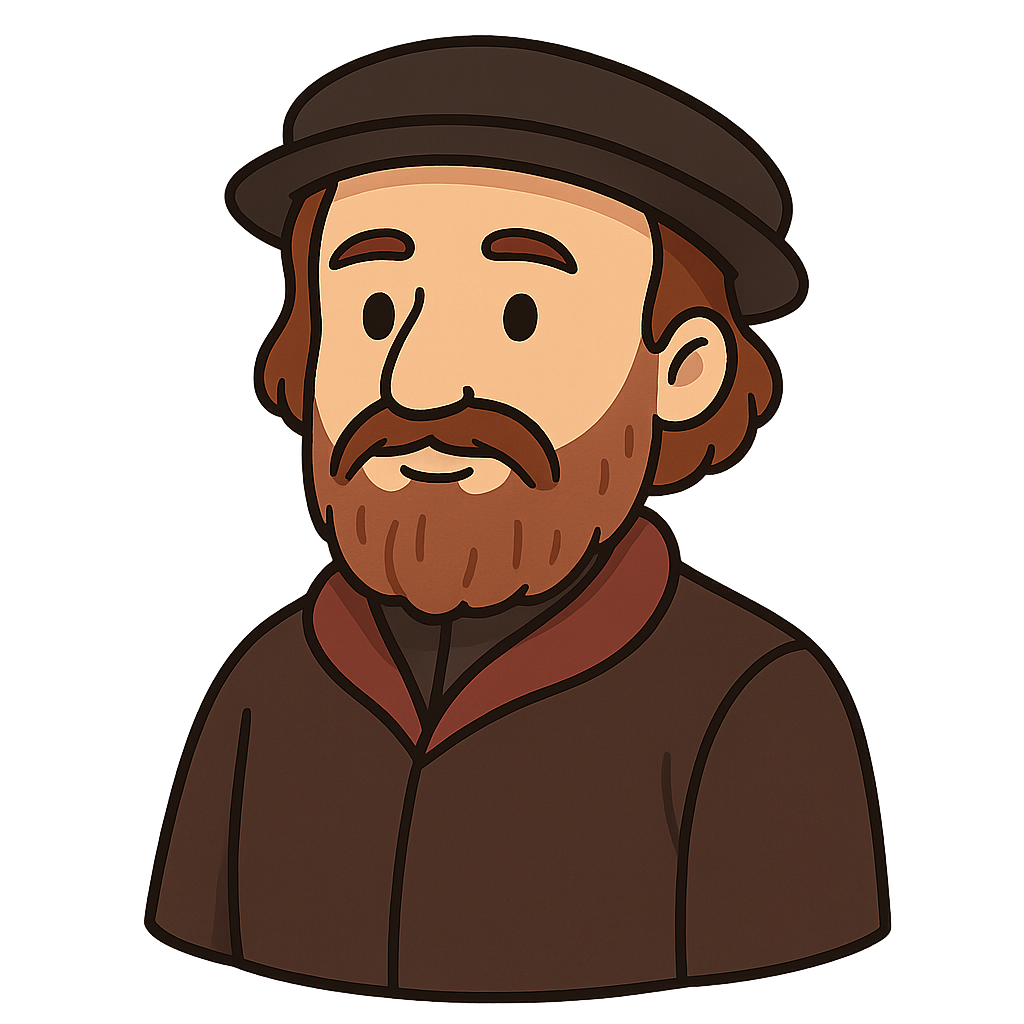
Hello! My name is Robert Recorde. I am known for introducing the equals sign to the world, but my story is also about a deep love for learning and sharing knowledge. I was born around the year 1512 in a lovely seaside town called Tenby, in Wales. From a young age, I was fascinated by the world around me, especially by numbers and the logical way they worked. While other children might have been playing outside, I found great joy in solving puzzles and reading books. I knew, even as a boy, that I wanted to dedicate my life to learning, and I dreamed of attending one of the great universities to pursue that passion.
My dream came true. I first attended the University of Oxford, a place buzzing with ideas and knowledge. I studied everything I could, and in 1531, I proudly earned my Master of Arts degree. But my thirst for learning was not quenched. I also developed a passion for medicine, which is the study of the human body and how to heal it. To follow this interest, I continued my studies at the University of Cambridge, where I earned my medical degree in 1545. To me, mathematics and medicine were closely linked. Both required careful observation, logical thinking, and a persistent desire to find the right answers to complex problems.
In my time, during the 16th century, a significant barrier stood in the way of widespread learning. Most scholarly books, the ones filled with the most important knowledge, were written in Latin. This was a language that only the highly educated, like university scholars and clergy, could read. I thought this was a great shame. I firmly believed that knowledge, particularly mathematics, should be accessible to everyone—to merchants managing their finances, sailors navigating the seas, carpenters building homes, and even curious children. I decided to break from tradition and write my books in English. My first major mathematics book, *The Ground of Artes*, was published in 1543. It taught arithmetic in a simple, practical way, and I am proud to say it became very popular, remaining in use for over a hundred years.
Robert Recorde
Hello! My name is Robert Recorde. I am known for introducing the equals sign to the world, but my story is also about a deep love for learning and sharing knowledge. I was born around the year 1512 in a lovely seaside town called Tenby, in Wales. From a young age, I was fascinated by the world around me, especially by numbers and the logical way they worked. While other children might have been playing outside, I found great joy in solving puzzles and reading books. I knew, even as a boy, that I wanted to dedicate my life to learning, and I dreamed of attending one of the great universities to pursue that passion.
My dream came true. I first attended the University of Oxford, a place buzzing with ideas and knowledge. I studied everything I could, and in 1531, I proudly earned my Master of Arts degree. But my thirst for learning was not quenched. I also developed a passion for medicine, which is the study of the human body and how to heal it. To follow this interest, I continued my studies at the University of Cambridge, where I earned my medical degree in 1545. To me, mathematics and medicine were closely linked. Both required careful observation, logical thinking, and a persistent desire to find the right answers to complex problems.
In my time, during the 16th century, a significant barrier stood in the way of widespread learning. Most scholarly books, the ones filled with the most important knowledge, were written in Latin. This was a language that only the highly educated, like university scholars and clergy, could read. I thought this was a great shame. I firmly believed that knowledge, particularly mathematics, should be accessible to everyone—to merchants managing their finances, sailors navigating the seas, carpenters building homes, and even curious children. I decided to break from tradition and write my books in English. My first major mathematics book, The Ground of Artes, was published in 1543. It taught arithmetic in a simple, practical way, and I am proud to say it became very popular, remaining in use for over a hundred years.
My combination of skills in mathematics and medicine did not go unnoticed by important people in England. I worked as a physician and was honored to serve King Edward VI. I also took on significant roles in the government that required a sharp and honest mind. For a time, I was the Comptroller of the Bristol Mint, where my job was to oversee the creation of coins and ensure they were made correctly and with the right amount of precious metal. Later, I was sent to Ireland to serve as the Surveyor of Mines and Monies. These jobs demanded great precision, accuracy, and honesty—all skills that I had carefully developed through my lifelong study of mathematics.
I never stopped writing. In 1557, I published an important book on algebra titled The Whetstone of Witte. While working on this book, I found myself growing tired of repeatedly writing out the words 'is equal to.' It was a long phrase and took up valuable space on the page. I thought to myself, there must be a better, more efficient way to represent this idea. I wanted a symbol that was simple, clear, and logical. I finally decided on two parallel lines of the same length. As I explained in my book, I chose this symbol '...because no two things can be more equal.' With that, the equals sign (=) was born. I was the very first person to use this symbol in a printed book, introducing it to the world of mathematics.
Despite my contributions as a writer and a public servant, my later years were filled with difficulty. I entered into a serious disagreement with a powerful nobleman named William Herbert, the Earl of Pembroke. I believed he was mismanaging his official duties and accused him of wrongdoing. He did not take this lightly and sued me for libel, which is the act of making false statements that harm a person's reputation. I lost the court case and was ordered to pay an enormous fine. It was a sum of money I simply could not afford. Because I was unable to pay this debt, I was arrested in 1557 and sent to the King's Bench Prison in London.
I spent my final days in that prison, a sad end for a life dedicated to knowledge and public service. I passed away there in 1558. I lived to be about 46 years old. Though my life ended under difficult circumstances, I am proud of the legacy I left behind. My books helped bring the world of mathematics to everyday English-speaking people, making it easier for them to learn and use numbers in their lives. And that simple little sign I created in a moment of frustration? The equals sign is now used by billions of people around the globe every single day. It serves as a reminder that even a small, simple idea can grow to change the world in a powerful way.
Wow facts
About
A 16th-century Welsh physician and mathematician who authored several important books on math in English, including "The Grounde of Artes" (1543) and "The Pathway to Knowledge" (1551), and invented the equals sign (=).
Take a Quiz
Question 1 of 5
What was Robert Recorde's main motivation for writing his mathematics books in English?
Explore next






Want to do even more?
Go beyond exploring. Unlock tools that turn every story into real learning.

Storypie Plus for families
Full stories, quizzes, and printables. Nights and car rides, sorted.
- Unlimited audio stories
- Create Mode: your child stars in the story
- Offline downloads
- Printable worksheets & coloring pages

Why Storypie for Schools
Students engaged. Prep in seconds. Evenings back to you.
- Worksheets & Quizzes
- Classroom Management
- Formative Assessment
- Custom Curriculum & Lesson Plans
- 27 Languages

Why Storypie for Homeschool
Curriculum done. They'll ask for more. Hours back in your day.
- Worksheet Generator
- First-Person Audio Stories
- Built-in Comprehension Quizzes
- Custom Curriculum & Lesson Plans
- Print & Go Activities