Sacagawea
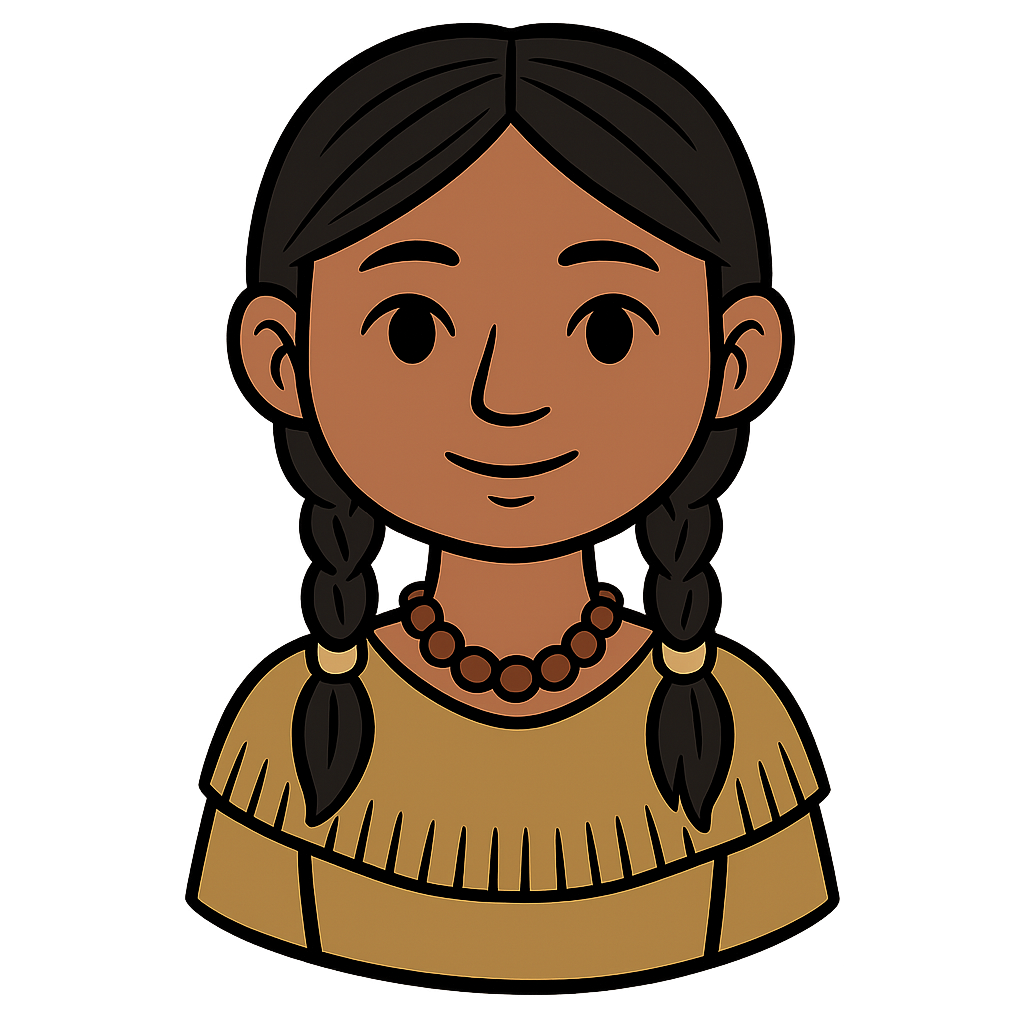
My name is Sacagawea, and my story is one of mountains, rivers, and a journey that stretched across a continent. I was born into the Lemhi Shoshone tribe, high in the Rocky Mountains of what is now Idaho. My childhood was filled with the sounds of wind in the pine trees and the wisdom of my people. I learned which plants could be eaten, which could be used for medicine, and how to read the signs of the seasons. The mountains were my home, and I knew their secrets. But my life changed forever when I was about twelve years old, around the year 1800. A raiding party from the Hidatsa tribe swept through our camp. I was captured and taken far from my family, across the plains to their villages along the Missouri River. I was afraid and lonely, but I held onto the lessons of my people, remembering to be strong and watchful, even when my heart ached for the mountains I had lost.
Life in the Hidatsa village was very different. I learned new customs and a new language. It was there I was married to a French-Canadian fur trader named Toussaint Charbonneau. Then one day, during the cold winter of 1804, a group of strangers arrived. They were American explorers, part of the Corps of Discovery, led by two captains named Meriwether Lewis and William Clark. They built a fort near our village and spoke of a great journey they were taking to the distant Pacific Ocean. They needed to cross the very mountains where I was born, but they did not know the way or the language of the people who lived there. They needed someone who could speak Shoshone. Because I could, my husband and I were hired to join them. Just as the ice on the river began to break, a new life joined our party. On February 11th, 1805, I gave birth to my son, Jean Baptiste. When the expedition set off that spring, my baby was bundled safely on my back in a cradleboard, ready for the great adventure ahead.
Our journey west was filled with both danger and wonder. We traveled in long boats called pirogues, pushing against the strong current of the Missouri River. One windy afternoon, a sudden gust of wind struck our boat, and it tipped dangerously to one side. Men shouted in panic as important things began to wash overboard. While others worried about the boat sinking, I quickly reached into the churning water, grabbing Captain Lewis’s journals, maps, and precious medicines before they were lost forever. Captain Lewis said my calm thinking saved them. The greatest challenge came when we reached the Rocky Mountains. They were even taller and more rugged than I remembered. The men were exhausted and hungry, and our journey seemed impossible without horses. But then, a miracle happened. We met a group of Shoshone, my own people. And their chief was my very own brother, Cameahwait, whom I had not seen since the day I was taken. We cried and held each other. Seeing me with the explorers helped my brother trust them, and he traded them the horses they needed to cross the mountains. After many more hard weeks, we finally made it. In November of 1805, I stood on a sandy shore and looked out at the Pacific Ocean. It was bigger than any river or lake I had ever seen, stretching all the way to the sky. My heart was full.
The journey home was long, but our spirits were high. We returned to the Mandan villages in the summer of 1806, having traveled thousands of miles. It was time for my family to say goodbye to the Corps of Discovery. Captain Clark had grown very fond of my son, who he nicknamed 'Pomp,' which meant 'Little Chief.' He even offered to raise him as his own. Looking back, I see that my journey was more than just crossing a wide land. By traveling with my baby, I showed other tribes that the explorers came in peace, not as a war party. My knowledge of the land helped the men find food when they were starving. I was a bridge between two different worlds. My story shows that no matter how far you are from home, or how small you may feel, you have a strength inside you that can guide others and change the course of history.
Reading Comprehension Questions
Click to see answer