English

Samuel de Champlain
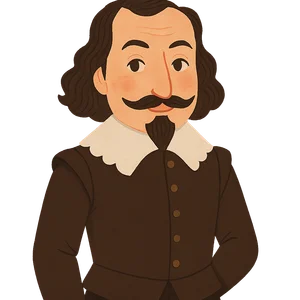
French explorer, navigator, cartographer, and diplomat who founded Quebec City in 1608.
Reads at Grades 6–8 Listens at Grades 4–8
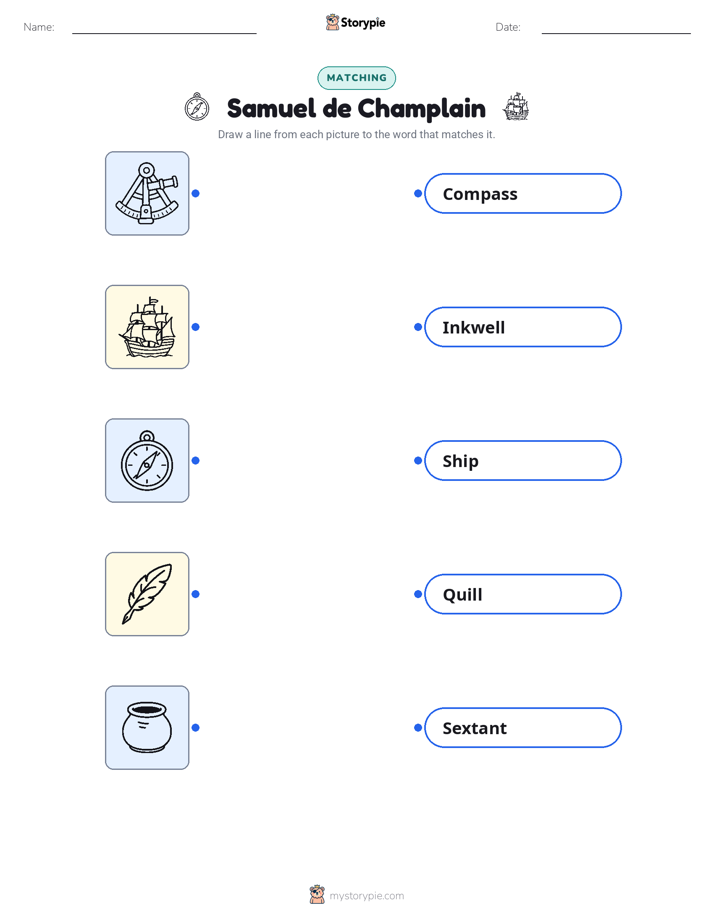
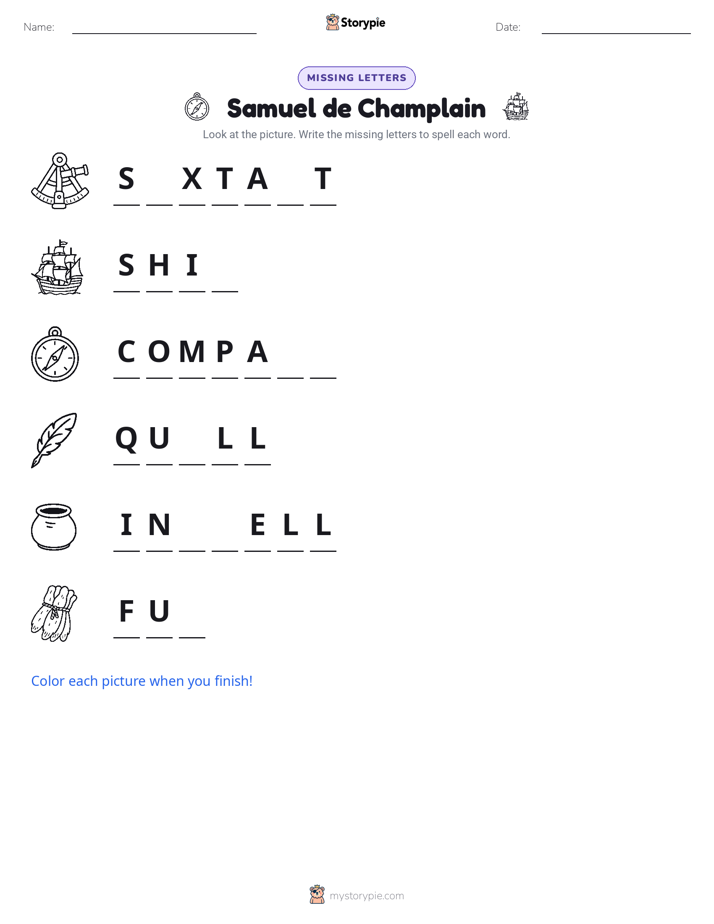
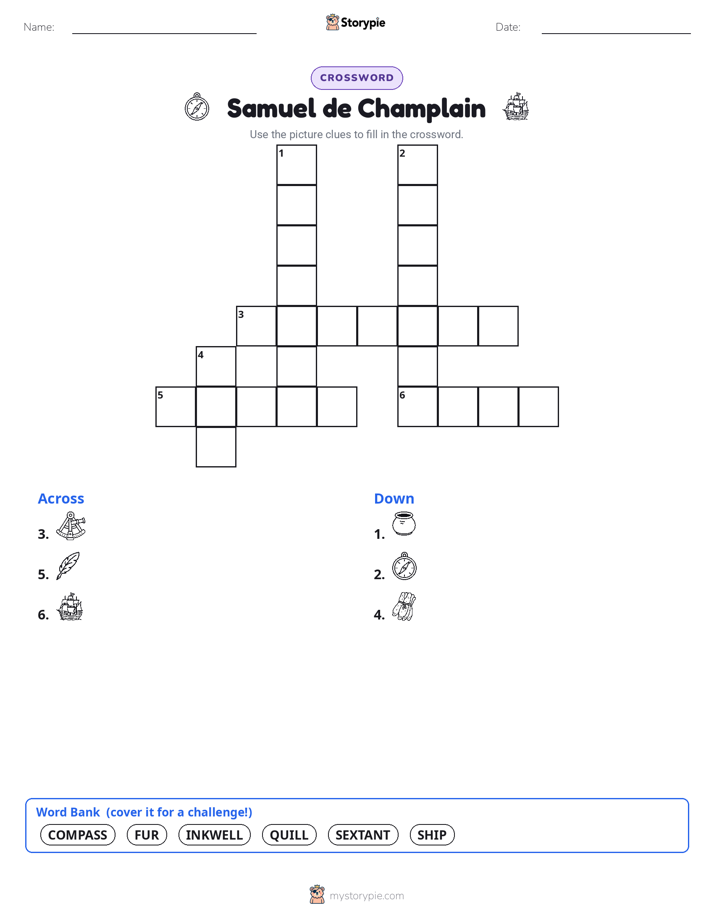
Print & create
Answer keys·No prep·Free with an account
28 worksheets · answer keys · full story · quiz · Ages 10-12 · CEFR B2
Plus adds 102,000+ more stories in 27 languages, audio for every one, and printables for all of them.
Just want Samuel de Champlain?
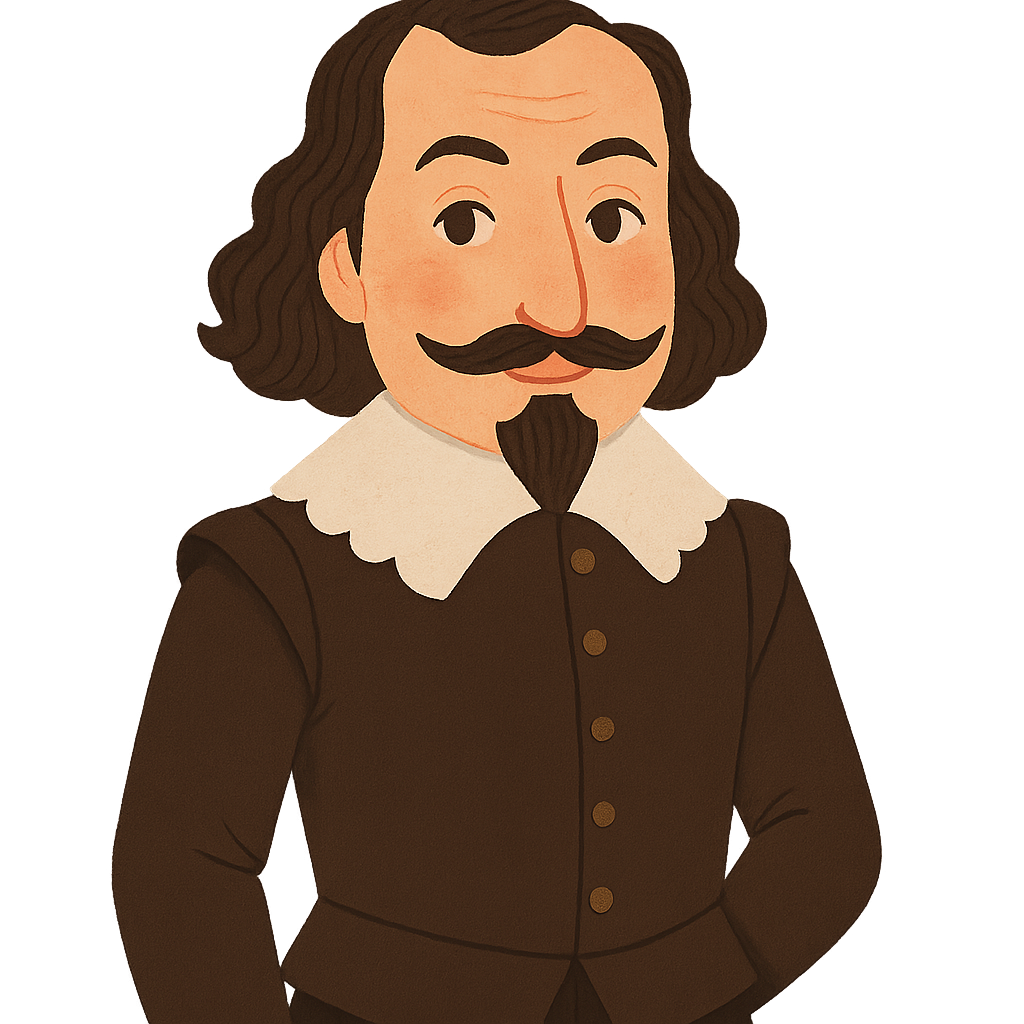
Hello! My name is Samuel de Champlain, and I want to tell you the story of my life's great adventure. I was born in a bustling port town called Brouage, France, around the year 1574. Because my father was a ship captain, the salty air and the calls of sailors were the sounds of my childhood. From a young age, I learned how to navigate by the stars, draw maps, and handle a ship, skills that would shape my entire life. My first real taste of exploration came between 1599 and 1601, when I traveled with my uncle to the Spanish colonies in the West Indies. Seeing these new lands and cultures filled my heart with a powerful desire to chart unknown territories for my own country, France.
In 1603, my dream of leading my own expedition came true when I sailed to North America as a geographer on a fur-trading mission. We journeyed up the magnificent St. Lawrence River, a waterway so wide it felt like an inland sea. The forests seemed endless, and the land was full of life. It was during this voyage that I first met the Indigenous peoples, who possessed an incredible knowledge of the land. The next year, in 1604, I returned with an expedition leader named Pierre Dugua, Sieur de Mons. We attempted to build a settlement on Saint Croix Island, but the winter was brutally cold and difficult, teaching us a hard lesson about survival. Learning from our struggle, we moved our small colony in 1605 to a more sheltered spot we named Port-Royal, which became one of the very first European settlements in what would become Canada.
Samuel de Champlain: Father of New France
Hello! My name is Samuel de Champlain, and I want to tell you the story of my life's great adventure. I was born in a bustling port town called Brouage, France, around the year 1574. Because my father was a ship captain, the salty air and the calls of sailors were the sounds of my childhood. From a young age, I learned how to navigate by the stars, draw maps, and handle a ship, skills that would shape my entire life. My first real taste of exploration came between 1599 and 1601, when I traveled with my uncle to the Spanish colonies in the West Indies. Seeing these new lands and cultures filled my heart with a powerful desire to chart unknown territories for my own country, France.
In 1603, my dream of leading my own expedition came true when I sailed to North America as a geographer on a fur-trading mission. We journeyed up the magnificent St. Lawrence River, a waterway so wide it felt like an inland sea. The forests seemed endless, and the land was full of life. It was during this voyage that I first met the Indigenous peoples, who possessed an incredible knowledge of the land. The next year, in 1604, I returned with an expedition leader named Pierre Dugua, Sieur de Mons. We attempted to build a settlement on Saint Croix Island, but the winter was brutally cold and difficult, teaching us a hard lesson about survival. Learning from our struggle, we moved our small colony in 1605 to a more sheltered spot we named Port-Royal, which became one of the very first European settlements in what would become Canada.
While Port-Royal was a good start, I was determined to build a permanent, thriving center for France in this New World. I believed the St. Lawrence River was the key to the continent's riches, particularly the valuable fur trade. In 1608, I selected a special spot where the river narrowed, naturally protected by a tall, rocky cliff. It was the perfect strategic location for both a fortress and a trading post. On July 3rd, 1608, my men and I began to construct our new home. We called it 'Kebec,' an Algonquin word meaning 'where the river narrows.' This small post, which we called the 'Habitation,' was the humble beginning of what would grow to become the great Quebec City.
I understood that a settlement could not survive in isolation. To succeed, we needed to be friends with our neighbors. I spent years building strong alliances with the Algonquin, the Innu, and the Wendat nations. They taught me invaluable lessons about the land, helped our colony survive its difficult early years, and became our most important partners in the fur trade. To prove my friendship and commitment, in 1609 I joined my allies in a battle against their rivals, the Haudenosaunee. This battle took place on the shore of a beautiful lake that was later named after me—Lake Champlain. These alliances also made it possible for me to explore deeper into the continent than most Europeans had ever gone. In 1615, I traveled all the way to the great freshwater seas known today as the Great Lakes, reaching the shores of Lake Huron. Along every journey, I drew detailed maps to help guide those who would come after me.
My work evolved from exploration to governance, as my focus shifted to building a future for the colony we called New France. As the leader, it was my job to make sure our settlement was safe, organized, and growing. This role was not without its challenges. In 1629, a major setback occurred when English privateers captured Quebec, and I was taken to England as a prisoner. My heart ached for the home I had worked so hard to build across the ocean. Fortunately, a peace treaty was eventually signed, and in 1633, I was able to return to my beloved Quebec. I dedicated the rest of my days to rebuilding the settlement and encouraging more French families to make the brave journey to start a new life in North America.
I spent my final years in Quebec City, the place I had founded and loved so dearly. My life's journey came to an end there on December 25th, 1635. Though my own travels were over, the story of New France was just beginning. Today, many people remember me as the 'Father of New France.' The city I established is still a vibrant, beautiful place, and the maps I drew opened up a continent for others to explore. I hope my story inspires you to explore, to build relationships, and to have the courage to follow your dreams, no matter how far they may take you.
Wow facts
About
French explorer, navigator, cartographer, and diplomat who founded Quebec City in 1608. He is known as the 'Father of New France' for his role in establishing and administering French colonies in North America.
Take a Quiz
Question 1 of 5
What major setback did Samuel de Champlain face in 1629, and how was it resolved?
Explore next



Want to do even more?
Go beyond exploring. Unlock tools that turn every story into real learning.

Storypie Plus for families
Full stories, quizzes, and printables. Nights and car rides, sorted.
- Unlimited audio stories
- Create Mode: your child stars in the story
- Offline downloads
- Printable worksheets & coloring pages

Why Storypie for Schools
Students engaged. Prep in seconds. Evenings back to you.
- Worksheets & Quizzes
- Classroom Management
- Formative Assessment
- Custom Curriculum & Lesson Plans
- 27 Languages

Why Storypie for Homeschool
Curriculum done. They'll ask for more. Hours back in your day.
- Worksheet Generator
- First-Person Audio Stories
- Built-in Comprehension Quizzes
- Custom Curriculum & Lesson Plans
- Print & Go Activities