English

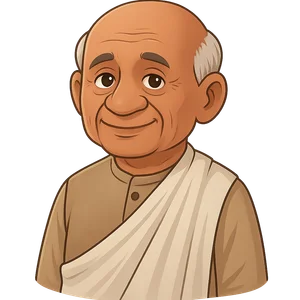
Sardar Vallabhbhai Patel
An Indian statesman and a founding father of the Republic of India who played a leading role in the country's…
Reads at Grades 6–8 Listens at Grades 4–8
Print & create
Answer keys·No prep·Free with an account
28 worksheets · answer keys · full story · quiz · Ages 10-12 · CEFR B2
Plus adds 279,000+ more stories in 27 languages, audio for every one, and printables for all of them.
Just want Sardar Vallabhbhai Patel?
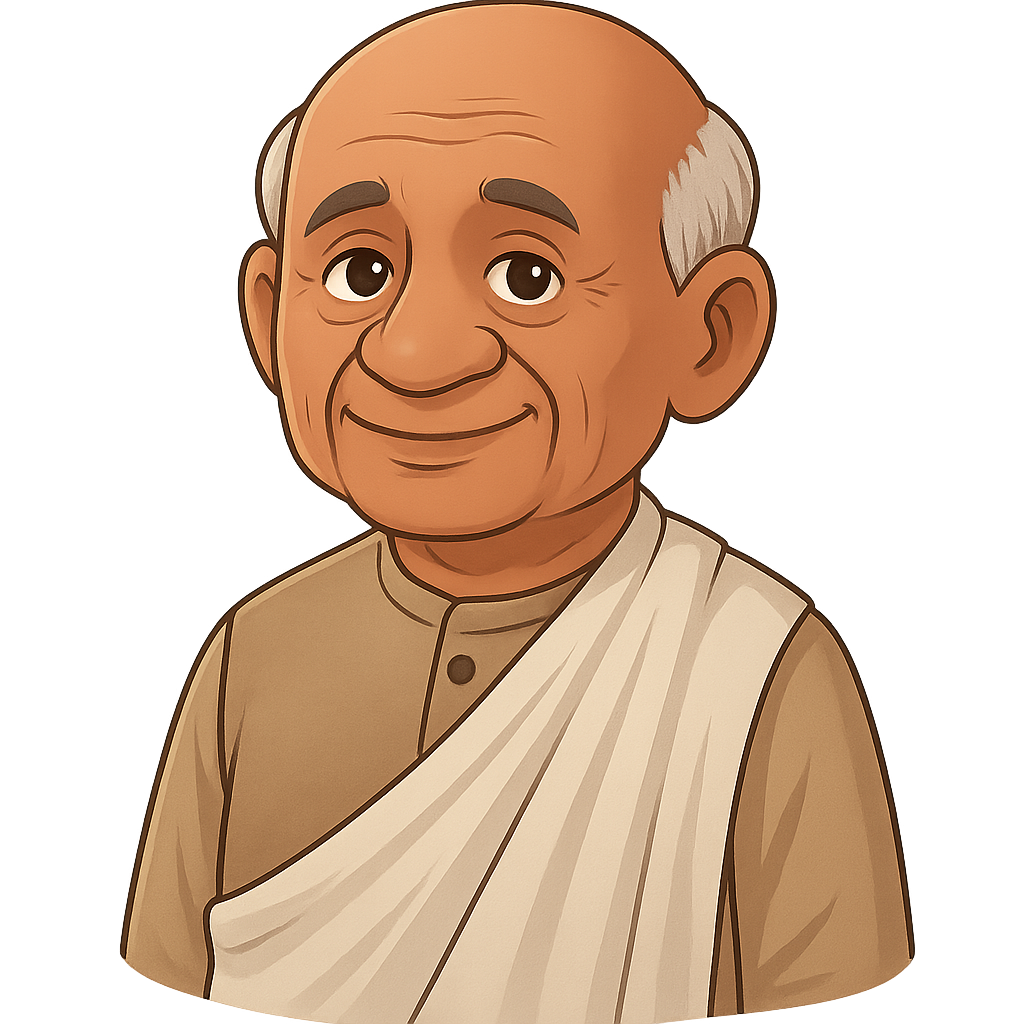
Hello! My name is Vallabhbhai Patel, but many people know me as Sardar, a name that means 'Chief.' I was born on October 31st, 1875, in a small town called Nadiad in Gujarat, India. Growing up in the cultural and historical setting of late 19th-century India, I was known for being very determined. The world around me was changing, but I had a clear goal. I knew I wanted to become a lawyer, and I held a big dream of studying law all the way in England. This was a significant challenge, as my family didn't have much money. So, I created a plan for myself: I would work hard, save every penny, and make that dream come true on my own.
I dedicated years to working as a lawyer in India, carefully saving up the money I earned for my trip to London. The journey was not easy, but my focus never wavered. Finally, in the year 1910, when I was 35 years old, I had saved enough to sail to London and enroll at a famous law school called the Middle Temple. The academic environment was demanding, but I applied the same determination I had always possessed. I studied so diligently that I finished the entire three-year course in just two and a half years. Not only did I finish early, but I also graduated first in my class. I returned to India in 1913 and established myself as a very successful lawyer in the city of Ahmedabad, where I became known for my sharp legal mind and my stylish English suits.
For a while, my life was consumed by my legal career, and I wasn't very interested in the political movements of the time. That all changed around 1917 when I met a man who would change my life and the course of India’s history: Mahatma Gandhi. I was deeply inspired by his ideas of fighting for our nation's freedom using truth and non-violence, a philosophy he called 'Satyagraha.' His vision gave me a new purpose. I decided to leave my successful law practice to join him in the struggle for independence. In 1918, I put these new principles into action when I led the Kheda Satyagraha, helping farmers protest unfair taxes imposed by the British. A decade later, in 1928, I led another significant protest in a place called Bardoli. The people there, especially the women, were so impressed by my leadership that they gave me the name 'Sardar,' and it stuck with me for the rest of my life.
Sardar Vallabhbhai Patel: The Iron Man of India
Hello! My name is Vallabhbhai Patel, but many people know me as Sardar, a name that means 'Chief.' I was born on October 31st, 1875, in a small town called Nadiad in Gujarat, India. Growing up in the cultural and historical setting of late 19th-century India, I was known for being very determined. The world around me was changing, but I had a clear goal. I knew I wanted to become a lawyer, and I held a big dream of studying law all the way in England. This was a significant challenge, as my family didn't have much money. So, I created a plan for myself: I would work hard, save every penny, and make that dream come true on my own.
I dedicated years to working as a lawyer in India, carefully saving up the money I earned for my trip to London. The journey was not easy, but my focus never wavered. Finally, in the year 1910, when I was 35 years old, I had saved enough to sail to London and enroll at a famous law school called the Middle Temple. The academic environment was demanding, but I applied the same determination I had always possessed. I studied so diligently that I finished the entire three-year course in just two and a half years. Not only did I finish early, but I also graduated first in my class. I returned to India in 1913 and established myself as a very successful lawyer in the city of Ahmedabad, where I became known for my sharp legal mind and my stylish English suits.
For a while, my life was consumed by my legal career, and I wasn't very interested in the political movements of the time. That all changed around 1917 when I met a man who would change my life and the course of India’s history: Mahatma Gandhi. I was deeply inspired by his ideas of fighting for our nation's freedom using truth and non-violence, a philosophy he called 'Satyagraha.' His vision gave me a new purpose. I decided to leave my successful law practice to join him in the struggle for independence. In 1918, I put these new principles into action when I led the Kheda Satyagraha, helping farmers protest unfair taxes imposed by the British. A decade later, in 1928, I led another significant protest in a place called Bardoli. The people there, especially the women, were so impressed by my leadership that they gave me the name 'Sardar,' and it stuck with me for the rest of my life.
After many long years of struggle, India finally achieved its independence on August 15th, 1947. It was a moment of immense joy, but it also presented a monumental challenge. The country was politically fragmented. It was divided into British India and more than 565 'princely states,' each with its own ruler and government. As India's first Deputy Prime Minister and Home Minister in the new government, it became my responsibility to unite all of them into one single nation. It felt like putting together a giant, complicated puzzle, with each piece needing to fit perfectly. I traveled across the country, engaging in countless discussions. I used persuasion, diplomacy, and, when necessary, made firm decisions to convince the rulers to join the new nation of India. It was because of this difficult but essential work that people began calling me the 'Iron Man of India,' a name that reflected my unwavering resolve.
I dedicated my entire life to seeing my country become both free and united. I lived a full life, working for the people of India until my final days. I lived to be 75 years old and passed away on December 15th, 1950. My greatest legacy is the unified map of India that you see today. I am remembered as the man who brought hundreds of individual states together to form one strong, cohesive country. In 2018, the people of India built the world's tallest statue, the Statue of Unity, in my home state of Gujarat. This incredible monument was created to honor my work of making India one, ensuring that the story of our nation's unification is never forgotten.
Wow facts
About
An Indian statesman and a founding father of the Republic of India who played a leading role in the country's struggle for independence and guided its integration into a united, independent nation.
Take a Quiz
Question 1 of 5
What was Sardar Patel's main role after India's independence in 1947?
Explore next



Want to do even more?
Go beyond exploring. Unlock tools that turn every story into real learning.

Storypie Plus for families
Full stories, quizzes, and printables. Nights and car rides, sorted.
- Unlimited audio stories
- Create Mode: your child stars in the story
- Offline downloads
- Printable worksheets & coloring pages

Why Storypie for Schools
Students engaged. Prep in seconds. Evenings back to you.
- Worksheets & Quizzes
- Classroom Management
- Formative Assessment
- Custom Curriculum & Lesson Plans
- 27 Languages

Why Storypie for Homeschool
Curriculum done. They'll ask for more. Hours back in your day.
- Worksheet Generator
- First-Person Audio Stories
- Built-in Comprehension Quizzes
- Custom Curriculum & Lesson Plans
- Print & Go Activities