English

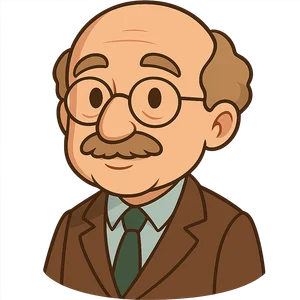
Severo Ochoa
Severo Ochoa was a Spanish-American biochemist and molecular biologist who won the 1959 Nobel Prize in…
Reads at Grades 3–5 Listens at Grades 1–5
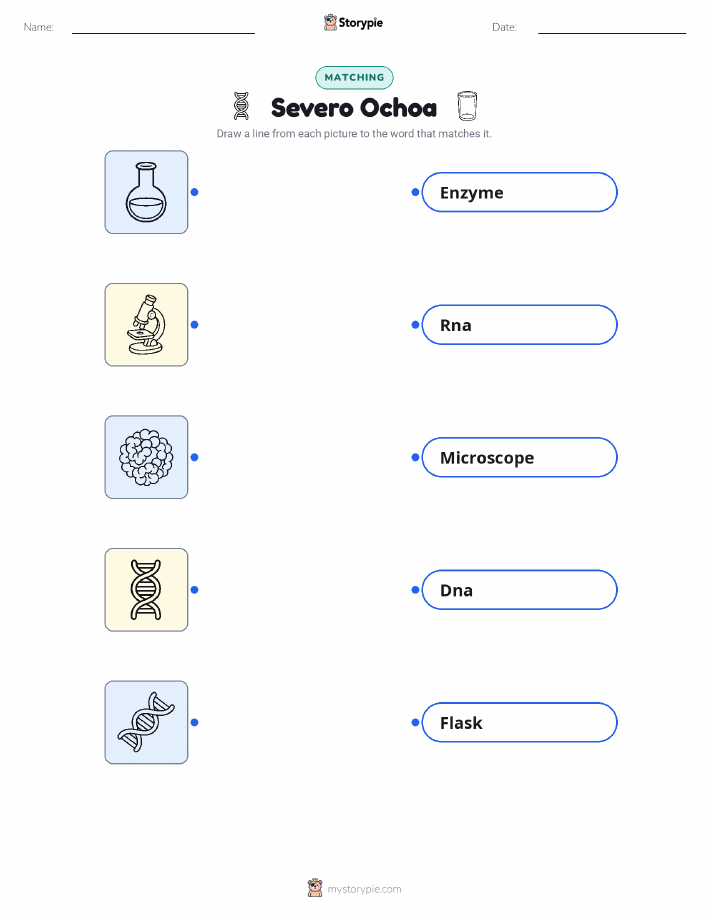
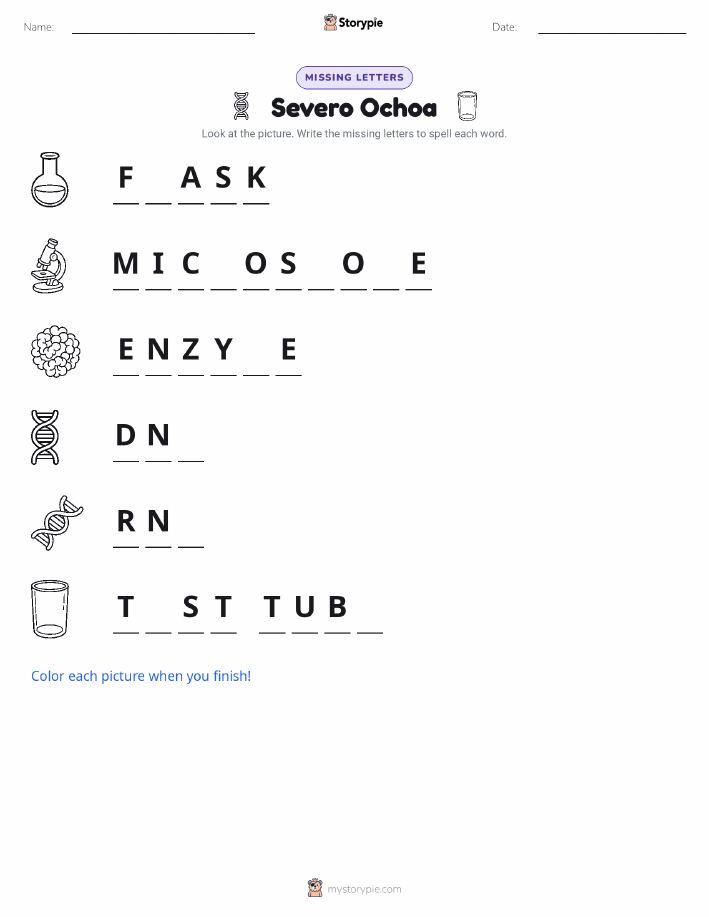
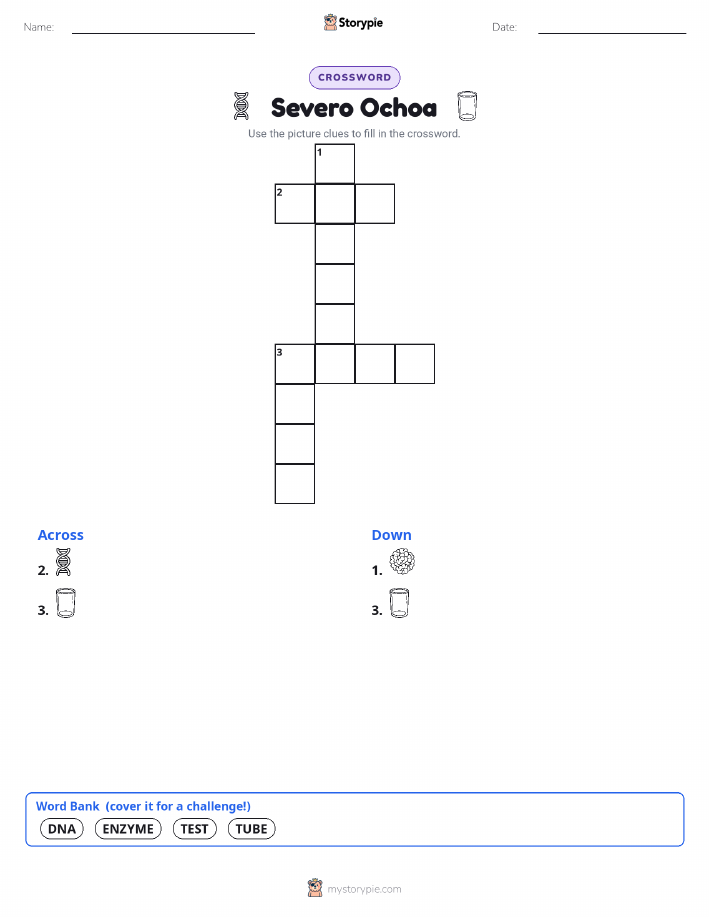
Print & create
Answer keys·No prep·Free with an account
28 worksheets · answer keys · full story · quiz · Ages 8-10 · CEFR B1
Plus adds 280,000+ more stories in 27 languages, audio for every one, and printables for all of them.
Just want Severo Ochoa?
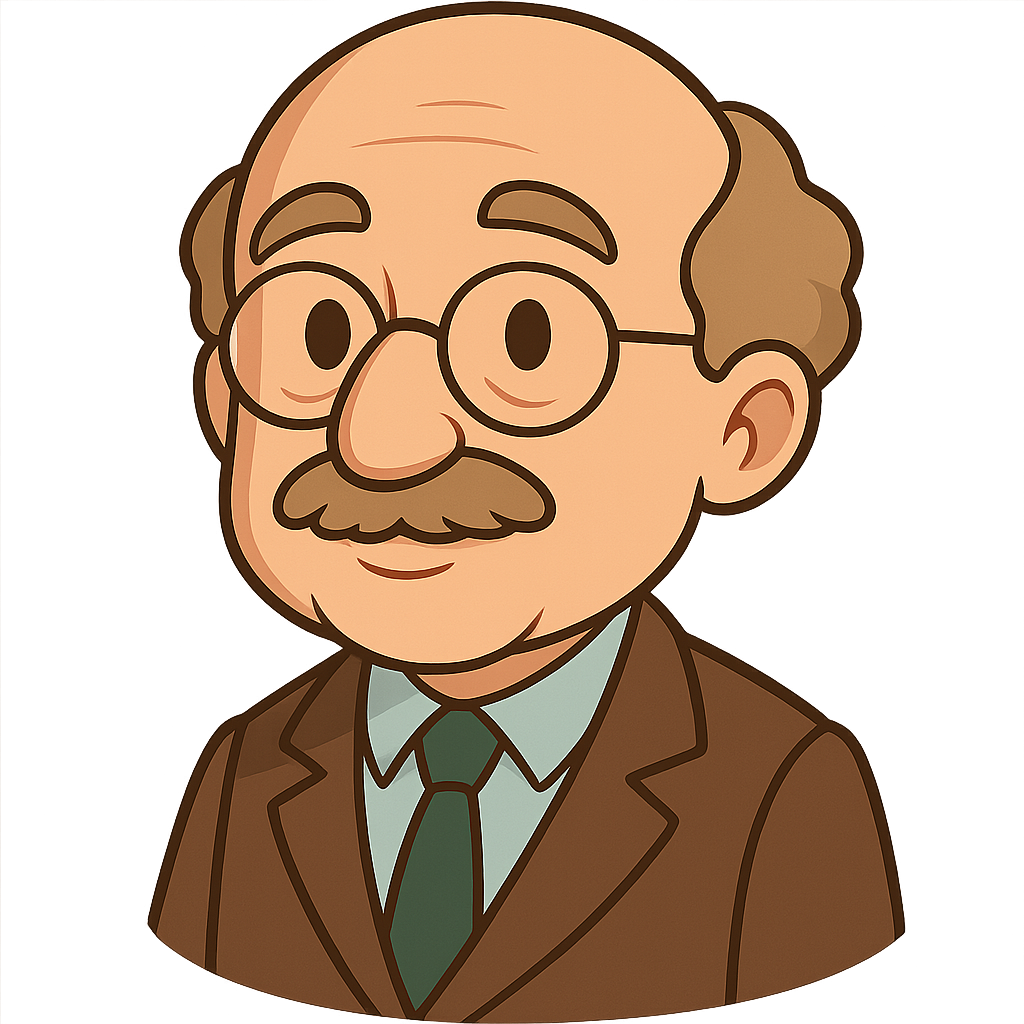
Hello! My name is Severo Ochoa. My story begins in a small town called Luarca, in Spain, where I was born on September 24th, 1905. As a boy, I was always fascinated by the natural world around me. I was especially inspired by a famous Spanish scientist named Santiago Ramón y Cajal, who studied the brain. Reading about his amazing discoveries made me dream of becoming a scientist, too. I wanted to spend my life uncovering the secrets of how living things work.
I followed my dream and went to medical school at the University of Madrid, graduating in 1929. But I soon realized that my heart was in research. I didn't just want to help people who were already sick; I wanted to understand how our bodies worked at the tiniest level to prevent sickness from happening. To learn from the best scientists in the world, I traveled to work in laboratories in Germany and England. My journey wasn't always easy. A conflict called the Spanish Civil War began in 1936, which made it difficult to continue my work at home. Because of this, my wife Carmen and I moved to the United States in 1940. It became our new home for many years.
In America, I got a job at the New York University School of Medicine. There, I felt like a detective trying to solve one of life's biggest puzzles: how do our cells know what to do? I studied a very important molecule called RNA. You can think of RNA as a messenger that carries instructions from our DNA, which is like the cell's blueprint, to all the other parts of the cell. In 1955, my team and I made an incredible discovery. We found a special enzyme that could build strands of RNA in a test tube. For the very first time, we could create this important messenger molecule outside of a living cell. This was a huge step forward in understanding genetics, the science of how traits are passed down.
Severo Ochoa: Unlocking the Secrets of Life
Hello! My name is Severo Ochoa. My story begins in a small town called Luarca, in Spain, where I was born on September 24th, 1905. As a boy, I was always fascinated by the natural world around me. I was especially inspired by a famous Spanish scientist named Santiago Ramón y Cajal, who studied the brain. Reading about his amazing discoveries made me dream of becoming a scientist, too. I wanted to spend my life uncovering the secrets of how living things work.
I followed my dream and went to medical school at the University of Madrid, graduating in 1929. But I soon realized that my heart was in research. I didn't just want to help people who were already sick; I wanted to understand how our bodies worked at the tiniest level to prevent sickness from happening. To learn from the best scientists in the world, I traveled to work in laboratories in Germany and England. My journey wasn't always easy. A conflict called the Spanish Civil War began in 1936, which made it difficult to continue my work at home. Because of this, my wife Carmen and I moved to the United States in 1940. It became our new home for many years.
In America, I got a job at the New York University School of Medicine. There, I felt like a detective trying to solve one of life's biggest puzzles: how do our cells know what to do? I studied a very important molecule called RNA. You can think of RNA as a messenger that carries instructions from our DNA, which is like the cell's blueprint, to all the other parts of the cell. In 1955, my team and I made an incredible discovery. We found a special enzyme that could build strands of RNA in a test tube. For the very first time, we could create this important messenger molecule outside of a living cell. This was a huge step forward in understanding genetics, the science of how traits are passed down.
Discoveries in science are often a team effort, and my story is no different. A former student of mine, Arthur Kornberg, was also doing amazing work. He made a similar breakthrough but with DNA instead of RNA. Our work fit together perfectly to explain how life's instructions are copied and read. Because our discoveries were so important for understanding life itself, we were both awarded the Nobel Prize in Physiology or Medicine in 1959. Standing there to receive the award was one of the proudest moments of my life. It proved that curiosity and years of hard work could lead to amazing things that help all of humanity.
After many wonderful years in the United States, I returned to Spain in 1985. I wanted to help encourage a new generation of scientists in my home country. I lived a full and exciting life of discovery and passed away in Madrid in 1993. I lived to be 88 years old. Today, my work on RNA is a cornerstone of modern biology and medicine. It helps scientists understand diseases and develop new treatments that save lives. I hope my story inspires you to stay curious and never stop asking questions about the world around you.
Wow facts
About
Severo Ochoa was a Spanish-American biochemist and molecular biologist who won the 1959 Nobel Prize in Physiology or Medicine for his discovery of the ways living things make RNA and DNA, including the enzyme polynucleotide phosphorylase, which can make RNA in a lab.
Take a Quiz
Question 1 of 5
Why did Severo Ochoa and his wife move to the United States in 1940?
Explore next



Want to do even more?
Go beyond exploring. Unlock tools that turn every story into real learning.

Storypie Plus for families
Full stories, quizzes, and printables. Nights and car rides, sorted.
- Unlimited audio stories
- Create Mode: your child stars in the story
- Offline downloads
- Printable worksheets & coloring pages

Why Storypie for Schools
Students engaged. Prep in seconds. Evenings back to you.
- Worksheets & Quizzes
- Classroom Management
- Formative Assessment
- Custom Curriculum & Lesson Plans
- 27 Languages

Why Storypie for Homeschool
Curriculum done. They'll ask for more. Hours back in your day.
- Worksheet Generator
- First-Person Audio Stories
- Built-in Comprehension Quizzes
- Custom Curriculum & Lesson Plans
- Print & Go Activities