English

Severo Ochoa
Severo Ochoa was a Spanish-American biochemist and molecular biologist who won the 1959 Nobel Prize in…
Reads at Grades 6–8 Listens at Grades 4–8
Print & create
Answer keys·No prep·Free with an account
28 worksheets · answer keys · full story · quiz · Ages 10-12 · CEFR B2
Plus adds 280,000+ more stories in 27 languages, audio for every one, and printables for all of them.
Just want Severo Ochoa?
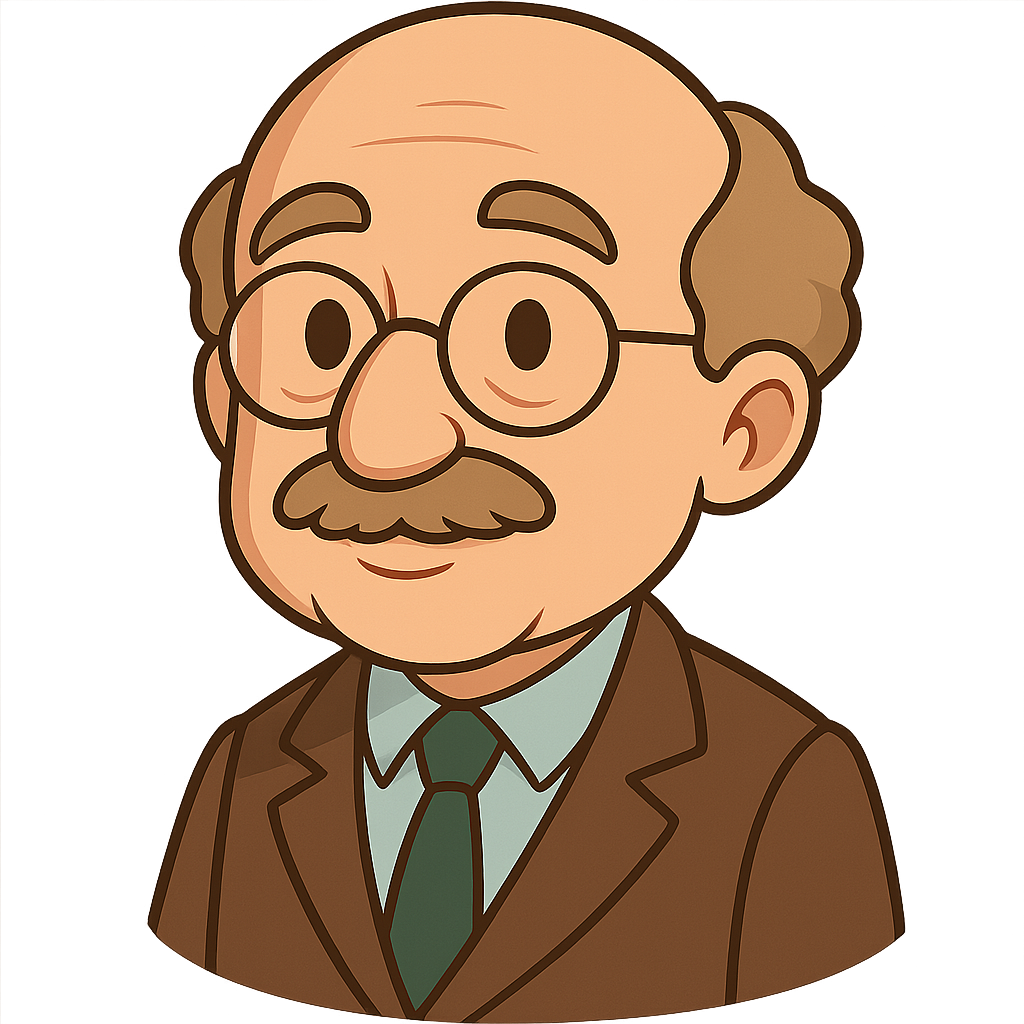
Hello, I am Severo Ochoa. I want to tell you the story of my life, a journey driven by curiosity that took me from a small town in Spain to the forefront of scientific discovery. I was born on September 24th, 1905, in Luarca, a beautiful town on the coast of Spain. Growing up, I was fascinated by the world around me. My greatest inspiration was a famous Spanish scientist named Santiago Ramón y Cajal, who had won a Nobel Prize for his work on the human brain. His achievements made me dream of studying medicine, not just to heal people, but to understand the incredible and complex mysteries hidden inside the human body. I knew from a young age that I wanted to dedicate my life to science.
My journey for knowledge truly began at university. I worked hard and earned my medical degree from the University of Madrid in 1929. However, I felt a strong pull to learn more from the best scientific minds in the world. This led me to travel to Germany and England, where I worked in advanced laboratories with top scientists. During this period, my research focused on enzymes, which are like tiny, tireless helpers inside our cells that make everything happen. It was also during these travels that I met my wonderful wife, Carmen García Cobián, who would be my supportive partner for the rest of my life. Unfortunately, this was a time of great turmoil in Europe. The Spanish Civil War began, followed by the looming threat of World War II. These political troubles made it impossible to find a stable and safe place to continue my research, so Carmen and I had to keep moving, always searching for a peaceful home for our life and my work.
Severo Ochoa: Unlocking the Secrets of Life
Hello, I am Severo Ochoa. I want to tell you the story of my life, a journey driven by curiosity that took me from a small town in Spain to the forefront of scientific discovery. I was born on September 24th, 1905, in Luarca, a beautiful town on the coast of Spain. Growing up, I was fascinated by the world around me. My greatest inspiration was a famous Spanish scientist named Santiago Ramón y Cajal, who had won a Nobel Prize for his work on the human brain. His achievements made me dream of studying medicine, not just to heal people, but to understand the incredible and complex mysteries hidden inside the human body. I knew from a young age that I wanted to dedicate my life to science.
My journey for knowledge truly began at university. I worked hard and earned my medical degree from the University of Madrid in 1929. However, I felt a strong pull to learn more from the best scientific minds in the world. This led me to travel to Germany and England, where I worked in advanced laboratories with top scientists. During this period, my research focused on enzymes, which are like tiny, tireless helpers inside our cells that make everything happen. It was also during these travels that I met my wonderful wife, Carmen García Cobián, who would be my supportive partner for the rest of my life. Unfortunately, this was a time of great turmoil in Europe. The Spanish Civil War began, followed by the looming threat of World War II. These political troubles made it impossible to find a stable and safe place to continue my research, so Carmen and I had to keep moving, always searching for a peaceful home for our life and my work.
Our search for a safe place to continue my work eventually led us across the Atlantic Ocean. In 1940, we moved to the United States, a country that offered new hope and incredible opportunities for scientific research. My first position was at Washington University in St. Louis, Missouri. Then, in 1942, I accepted a role at the New York University School of Medicine. This university became my true scientific home for many, many years, providing me with the resources and freedom to explore the questions that fascinated me. I was deeply grateful for the welcome I received in America. To show my commitment to my new home, I became a U.S. citizen in 1956. Although I was proud to be an American, I never forgot my Spanish roots and always cherished the culture and country where I was born.
At New York University, my research led me to one of the most exciting secrets of life. You can think of our cells as having a recipe book called DNA, which holds all the instructions for building and operating a body. To use one of these recipes, the cell doesn't take out the original book. Instead, it makes a temporary copy of the recipe, and this copy is called RNA. For a long time, scientists didn't know exactly how this RNA copy was made. My team and I worked tirelessly on this puzzle. Our big breakthrough came in 1955. We discovered and isolated a special enzyme that could build strands of RNA in a test tube, completely outside of a living cell! This was a monumental step forward. It allowed scientists for the first time to create genetic material in a lab, which helped us understand exactly how genetic information is read, copied, and used by our cells to sustain life.
My work on RNA did not go unnoticed by the scientific community. In 1959, I received what is considered the highest honor in science: the Nobel Prize in Physiology or Medicine. It was an incredible moment of recognition for the years of hard work my team and I had dedicated to our research. I was especially proud to share the prize with Arthur Kornberg, a brilliant scientist who had been my student years before. He had made a similar discovery, but his work focused on the enzyme that builds DNA. Receiving the Nobel Prize was a tremendous honor, but it was also a great motivation. It encouraged me to continue my research and to mentor the next generation of scientists. I spent many more years working in my lab, guiding talented young students as we all worked together to uncover more secrets of the genetic code.
After a long and fulfilling career in the United States, I decided to return to my home country. In 1985, I moved back to Spain to spend my later years. I wanted to help encourage and inspire a new generation of Spanish scientists, sharing the knowledge I had gained over my long journey. I lived to be 88 years old, passing away in Madrid in 1993. My discoveries helped lay the foundation for modern genetics and the development of new medicines. I hope my story shows you that with a curious mind and a willingness to work hard, even through difficult times, you can contribute to our understanding of the amazing and beautiful world we live in.
Wow facts
About
Severo Ochoa was a Spanish-American biochemist and molecular biologist who won the 1959 Nobel Prize in Physiology or Medicine for his discovery of the ways living things make RNA and DNA, including the enzyme polynucleotide phosphorylase, which can make RNA in a lab.
Take a Quiz
Question 1 of 5
In your own words, describe the main reasons Severo Ochoa had to move from country to country during his early career.
Explore next



Want to do even more?
Go beyond exploring. Unlock tools that turn every story into real learning.

Storypie Plus for families
Full stories, quizzes, and printables. Nights and car rides, sorted.
- Unlimited audio stories
- Create Mode: your child stars in the story
- Offline downloads
- Printable worksheets & coloring pages

Why Storypie for Schools
Students engaged. Prep in seconds. Evenings back to you.
- Worksheets & Quizzes
- Classroom Management
- Formative Assessment
- Custom Curriculum & Lesson Plans
- 27 Languages

Why Storypie for Homeschool
Curriculum done. They'll ask for more. Hours back in your day.
- Worksheet Generator
- First-Person Audio Stories
- Built-in Comprehension Quizzes
- Custom Curriculum & Lesson Plans
- Print & Go Activities