English

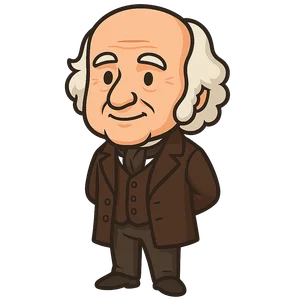
Sir George Cayley
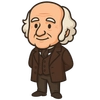
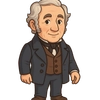
Sir George Cayley was an English engineer and inventor known as the 'Father of Aviation.' He was the first to…
Reads at Grades 3–5 Listens at Grades 1–5
Print & create
Answer keys·No prep·Free with an account
28 worksheets · answer keys · full story · quiz · Ages 8-10 · CEFR B1
Plus adds 244,000+ more stories in 27 languages, audio for every one, and printables for all of them.
Just want Sir George Cayley?
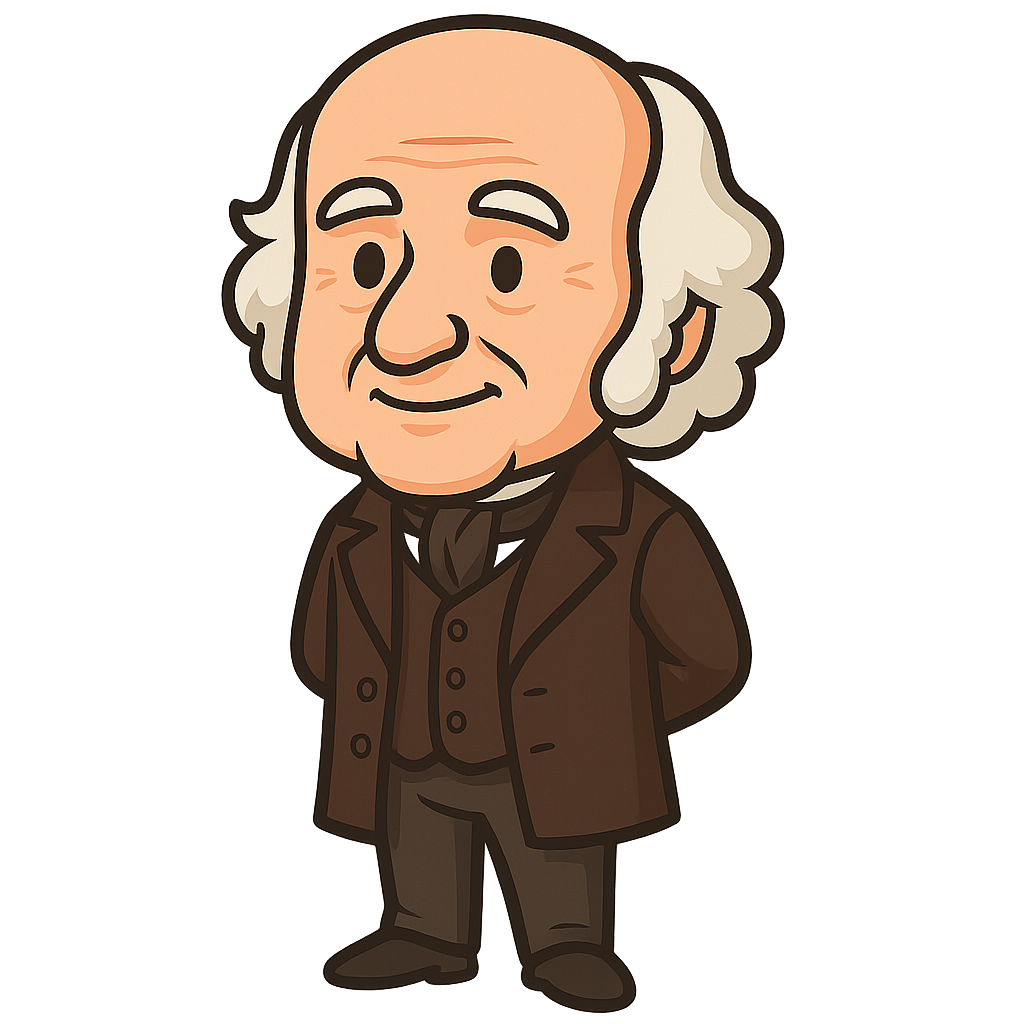
Hello there. My name is Sir George Cayley, and some people call me the 'Father of Aviation.' My story begins long ago, on December 27th, 1773, when I was born in a beautiful part of England called Yorkshire. As a boy, I didn't spend my time playing with ordinary toys. Instead, I loved to lie in the fields and watch the birds. I would gaze up at them for hours, amazed by how they could soar and dip through the air so effortlessly. I wondered how their wings worked to lift them so high above the ground. This curiosity sparked a question in my mind that would last my entire life: could humans fly, too? I believed that flight wasn't magic, but a puzzle that could be solved with science and careful observation.
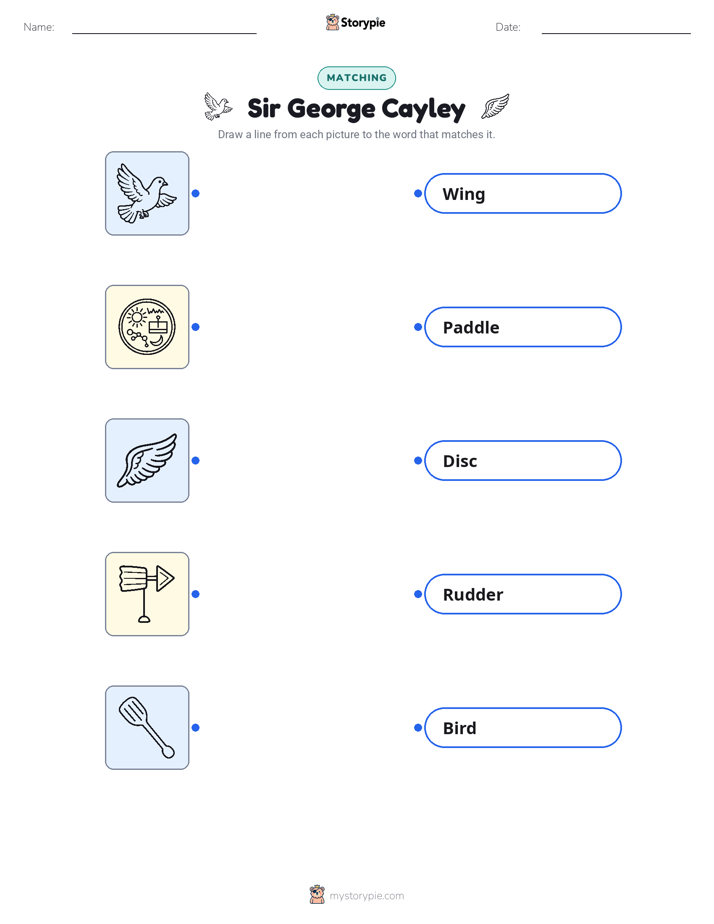
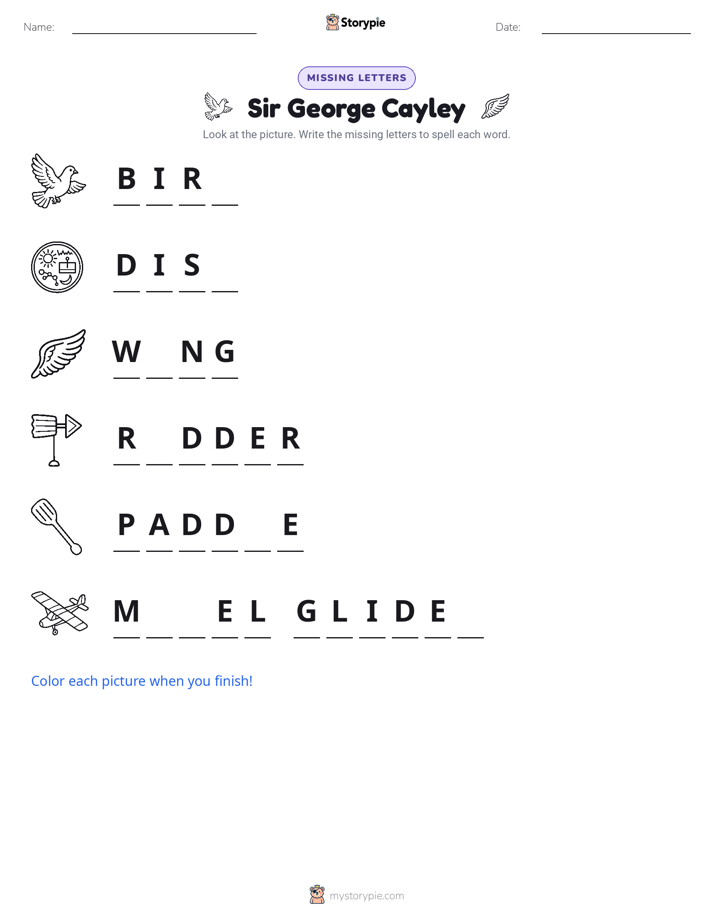
As I grew older, my fascination with flight only deepened. In the year 1799, I had a major breakthrough that would change everything. After countless hours of study, I realized that for anything to fly, it had to balance four main forces. I called these weight, lift, drag, and thrust. Weight is the force that pulls things down, while lift is the force that pushes them up. Drag is the force of air pushing back on a moving object, and thrust is the force that pushes it forward. To remember this important idea, I engraved it onto a small silver disc. On one side, I drew a diagram of the forces. On the other, I sketched a design for a flying machine with fixed wings, a tail to help it steer, and a place for a pilot. This was a truly revolutionary idea because, until then, most people thought flying machines had to flap their wings like birds. I understood that the system for creating lift—the wings—should be separate from the system for creating thrust, or forward movement.
Sir George Cayley: The Father of Aviation
Hello there. My name is Sir George Cayley, and some people call me the 'Father of Aviation.' My story begins long ago, on December 27th, 1773, when I was born in a beautiful part of England called Yorkshire. As a boy, I didn't spend my time playing with ordinary toys. Instead, I loved to lie in the fields and watch the birds. I would gaze up at them for hours, amazed by how they could soar and dip through the air so effortlessly. I wondered how their wings worked to lift them so high above the ground. This curiosity sparked a question in my mind that would last my entire life: could humans fly, too? I believed that flight wasn't magic, but a puzzle that could be solved with science and careful observation.
As I grew older, my fascination with flight only deepened. In the year 1799, I had a major breakthrough that would change everything. After countless hours of study, I realized that for anything to fly, it had to balance four main forces. I called these weight, lift, drag, and thrust. Weight is the force that pulls things down, while lift is the force that pushes them up. Drag is the force of air pushing back on a moving object, and thrust is the force that pushes it forward. To remember this important idea, I engraved it onto a small silver disc. On one side, I drew a diagram of the forces. On the other, I sketched a design for a flying machine with fixed wings, a tail to help it steer, and a place for a pilot. This was a truly revolutionary idea because, until then, most people thought flying machines had to flap their wings like birds. I understood that the system for creating lift—the wings—should be separate from the system for creating thrust, or forward movement.
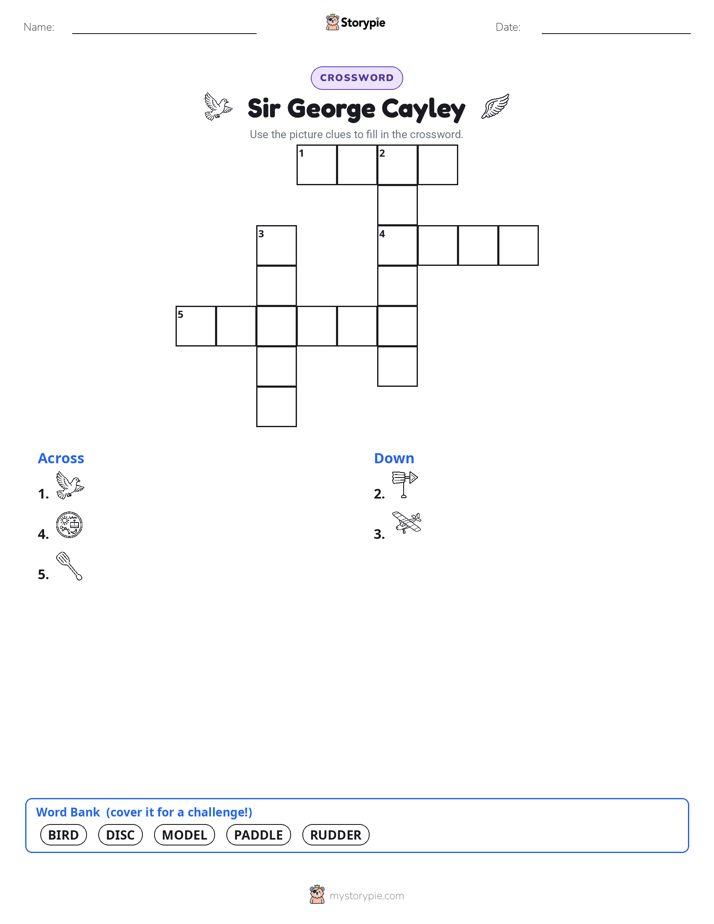
An idea is one thing, but making it real is another challenge altogether. I began by building small models based on my designs, testing them to see how they flew. Finally, after many years of experiments, my team and I were ready for something bigger. In 1849, we built our first full-sized glider. It was a thrilling moment when we asked a ten-year-old boy to be our first pilot. He climbed aboard, and the glider lifted into the air for a short but historic flight. It was proof that my ideas worked. But I knew we could do more. A few years later, in 1853, I designed an even larger and more stable glider. This time, my coachman was the pilot. With a running start, the glider sailed gracefully across a small valley at my home in Yorkshire. He became the first adult to fly in a glider, a moment that showed the world that human flight was truly possible.
Although I am most famous for my work in aviation, my curiosity didn't stop at the sky. I was an inventor who loved solving all kinds of problems to make life better for people. For example, I invented the tension-spoked wheel, which made wheels lighter and stronger. If you've ever ridden a bicycle, you've seen my idea in action. I also worked on designs for artificial limbs to help people who had been injured, and I created plans for safer lifeboats that were less likely to tip over in rough seas. I even designed an early version of a caterpillar tractor to help farmers work their fields more easily. For me, every problem was an opportunity to think, create, and find a solution.
I lived to be 83 years old and passed away in the year 1857. Although I never built a powered airplane myself, I was proud of the scientific groundwork I had laid. My discoveries about the forces of flight became the essential foundation that future inventors would build upon. Nearly 50 years after my time, two brothers named Wilbur and Orville Wright used my principles to build their first successful airplane. My story shows that a little bit of curiosity, like a boy watching birds in a field, can lead to ideas that change the world.
Wow facts
About
Sir George Cayley was an English engineer and inventor known as the 'Father of Aviation.' He was the first to understand and identify the four fundamental forces of flight: lift, drag, thrust, and weight.
Take a Quiz
Question 1 of 5
In the story, I said my idea was 'revolutionary.' What does the word 'revolutionary' mean in this context?
Explore next



Want to do even more?
Go beyond exploring. Unlock tools that turn every story into real learning.

Storypie Plus for families
Full stories, quizzes, and printables. Nights and car rides, sorted.
- Unlimited audio stories
- Create Mode: your child stars in the story
- Offline downloads
- Printable worksheets & coloring pages

Why Storypie for Schools
Students engaged. Prep in seconds. Evenings back to you.
- Worksheets & Quizzes
- Classroom Management
- Formative Assessment
- Custom Curriculum & Lesson Plans
- 27 Languages

Why Storypie for Homeschool
Curriculum done. They'll ask for more. Hours back in your day.
- Worksheet Generator
- First-Person Audio Stories
- Built-in Comprehension Quizzes
- Custom Curriculum & Lesson Plans
- Print & Go Activities