English

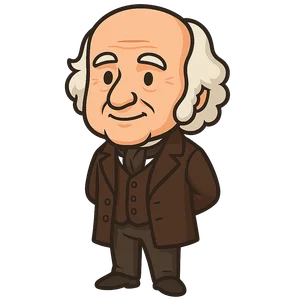
Sir George Cayley
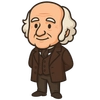
Sir George Cayley was an English engineer and inventor known as the 'Father of Aviation.' He was the first to…
Reads at Grades 6–8 Listens at Grades 4–8
Print & create
Answer keys·No prep·Free with an account
28 worksheets · answer keys · full story · quiz · Ages 10-12 · CEFR B2
Plus adds 244,000+ more stories in 27 languages, audio for every one, and printables for all of them.
Just want Sir George Cayley?
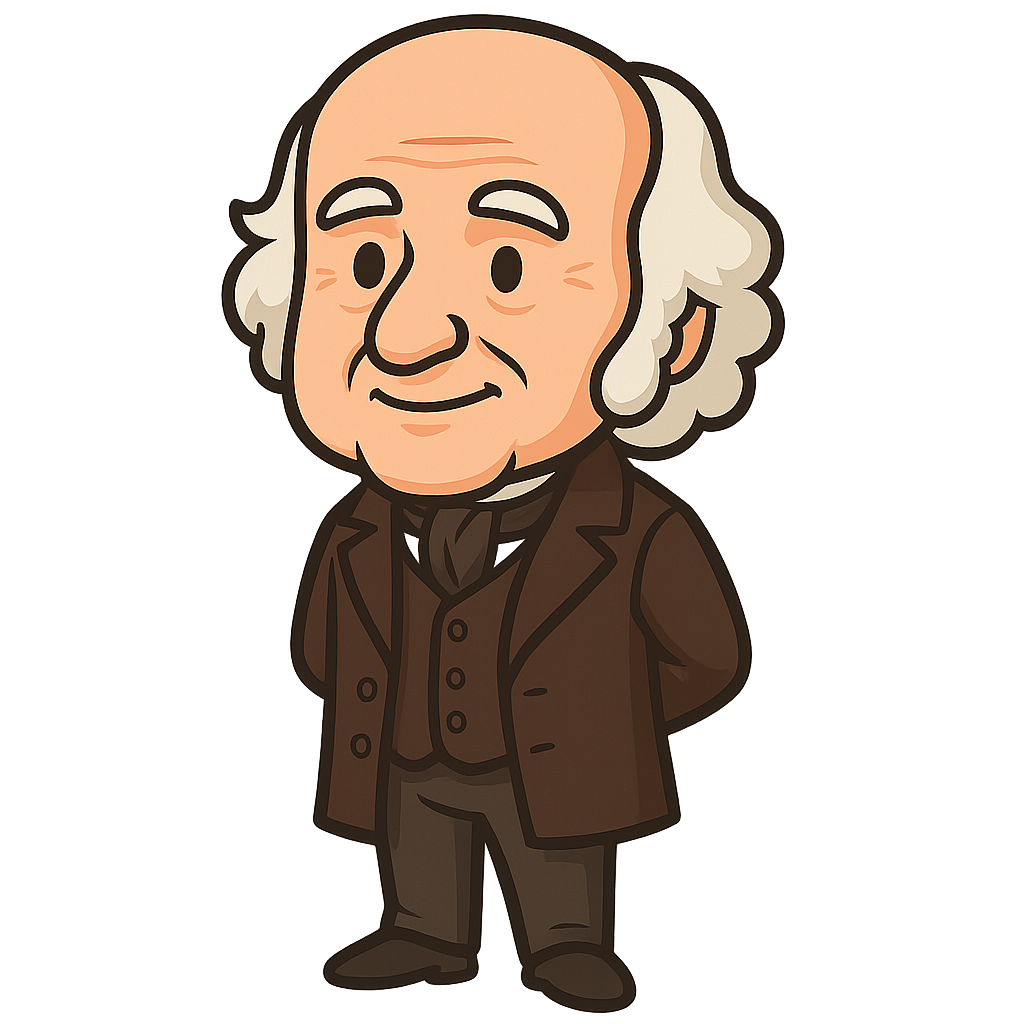
Hello there. My name is Sir George Cayley, and some people call me the 'Father of Aviation.' Long before airplanes filled the skies, I was a young boy in Yorkshire, England, who was completely fascinated by birds. I was born on December 27th, 1773, and I spent hours watching them soar and glide, wondering how they did it. It seemed like magic, but I knew it must be science. I wanted to understand the rules that governed flight so that one day, humans could fly, too.
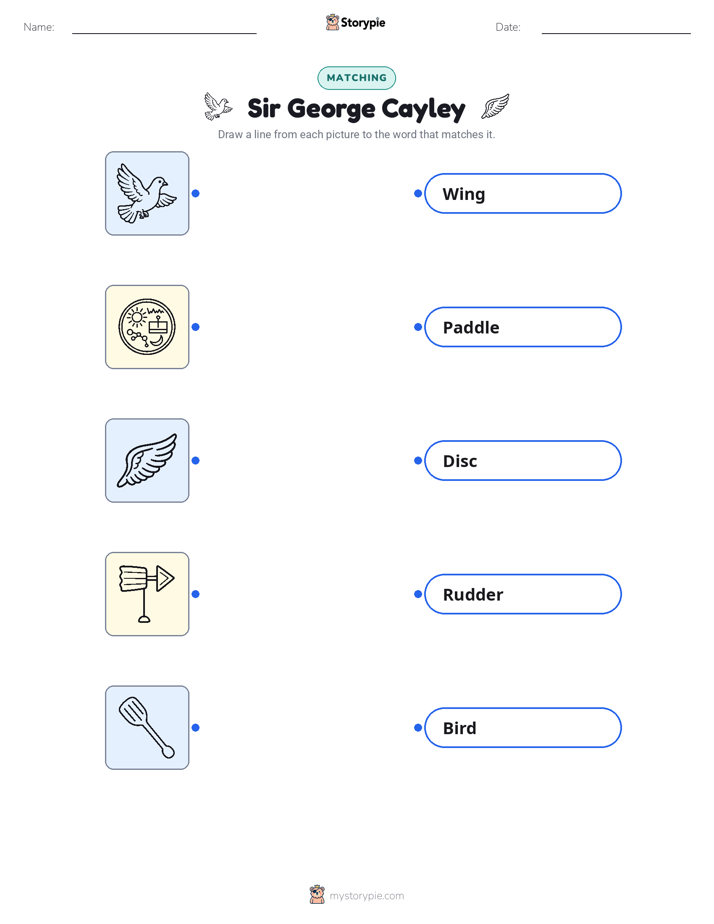
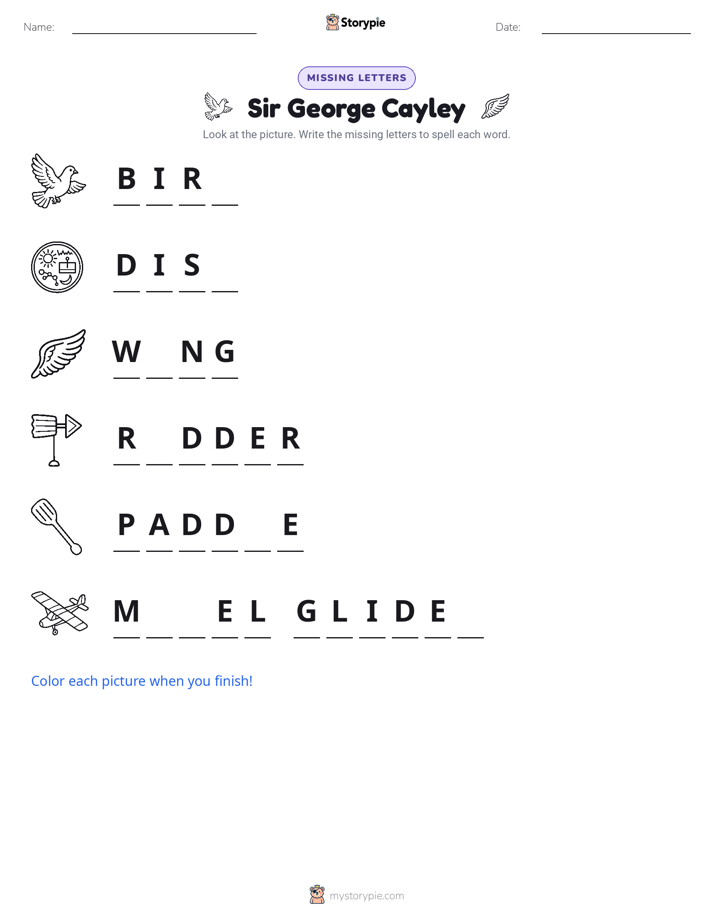
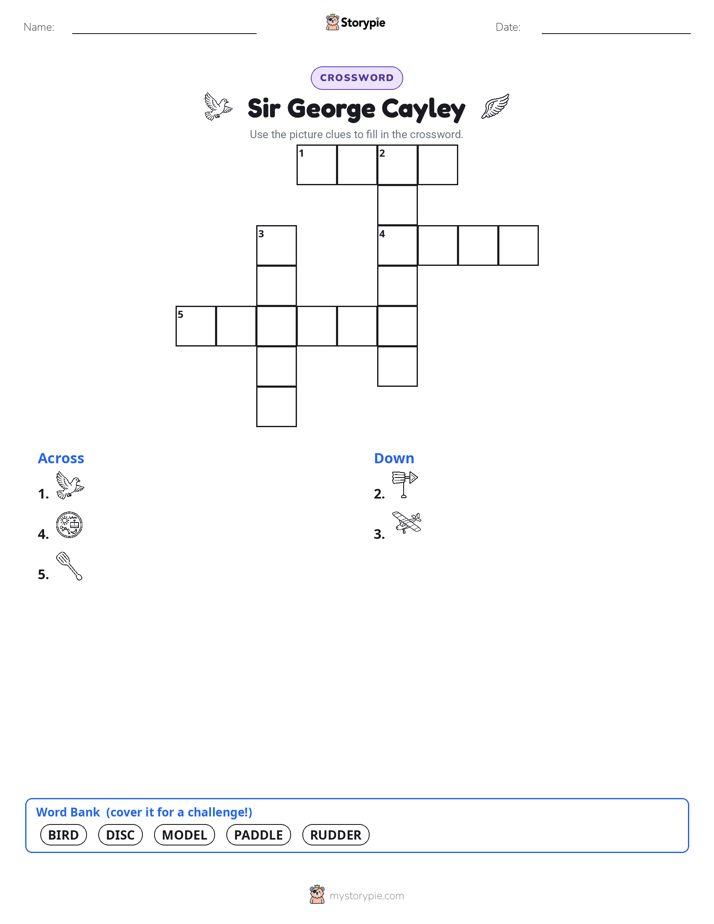
In my time, most people who thought about flying machines believed they should have flapping wings, just like a bird. But I realized that was far too complicated. I had a different idea. I understood that the force that lifts a bird, which we call lift, and the force that pushes it forward, called thrust, could be two separate things. In 1799, I etched my idea onto a small silver disc. On one side, I drew a diagram showing the forces of lift, drag, and thrust acting on a wing. On the other, I drew a design for a flying machine with a fixed wing for lift, a rudder and tail for steering, and paddles for propulsion. This was the basic design for the modern airplane, and I had figured it out more than 100 years before one would actually fly.
An idea is one thing, but proving it is another. I spent years building models based on my designs to test my theories. In 1804, I built my first successful model glider. It was small, but it flew beautifully. This successful flight proved my theories about the forces of flight were correct. I carefully wrote everything down, and in 1809, I published a long paper called 'On Aerial Navigation.' I wanted to share my knowledge so others could build upon my work. In the paper, I described the importance of a curved wing surface, now known as an airfoil, to generate lift and explained how a tail helps with stability. I was laying the foundation, piece by piece, for the future of flight.
Sir George Cayley: The Father of Aviation
Hello there. My name is Sir George Cayley, and some people call me the 'Father of Aviation.' Long before airplanes filled the skies, I was a young boy in Yorkshire, England, who was completely fascinated by birds. I was born on December 27th, 1773, and I spent hours watching them soar and glide, wondering how they did it. It seemed like magic, but I knew it must be science. I wanted to understand the rules that governed flight so that one day, humans could fly, too.
In my time, most people who thought about flying machines believed they should have flapping wings, just like a bird. But I realized that was far too complicated. I had a different idea. I understood that the force that lifts a bird, which we call lift, and the force that pushes it forward, called thrust, could be two separate things. In 1799, I etched my idea onto a small silver disc. On one side, I drew a diagram showing the forces of lift, drag, and thrust acting on a wing. On the other, I drew a design for a flying machine with a fixed wing for lift, a rudder and tail for steering, and paddles for propulsion. This was the basic design for the modern airplane, and I had figured it out more than 100 years before one would actually fly.
An idea is one thing, but proving it is another. I spent years building models based on my designs to test my theories. In 1804, I built my first successful model glider. It was small, but it flew beautifully. This successful flight proved my theories about the forces of flight were correct. I carefully wrote everything down, and in 1809, I published a long paper called 'On Aerial Navigation.' I wanted to share my knowledge so others could build upon my work. In the paper, I described the importance of a curved wing surface, now known as an airfoil, to generate lift and explained how a tail helps with stability. I was laying the foundation, piece by piece, for the future of flight.
After decades of work, I was ready to build a machine large enough to carry a person. In 1849, I built a new triplane glider, which had three wings stacked on top of each other. We tested it by having a ten-year-old boy—some say he was the son of one of my servants—take a short hop in it. He was the first human to fly in a glider. Then came the big test. In 1853, I convinced my coachman to be the pilot of my newest glider. He flew across a valley near my home in Brompton. It was a spectacular success. My coachman, however, was less than thrilled. I'm told he came to me afterward and said, 'Please, Sir George, I wish to give notice. I was hired to drive, not to fly.'
While flight was my greatest passion, my mind was always busy with other inventions. I designed the first tension-spoked wheel, which is the same principle used in bicycle wheels today. I also invented a type of continuous track for vehicles, which you now see on tanks and construction equipment, calling it the 'universal railway.' I even worked on designing artificial limbs, lifeboats, and improving air engines. I believed that science and engineering could solve many of the world's problems.
I never built a powered airplane myself; the engines of my day were far too heavy. But my work set the stage for those who came after me. I lived to be 83 years old, passing away in 1857. Decades later, inventors like the Wright brothers would study my papers and build upon my principles of lift, thrust, and control to achieve the first powered flight. I am proud to know that my childhood dream of understanding how birds fly helped give humanity its own wings.
Wow facts
About
Sir George Cayley was an English engineer and inventor known as the 'Father of Aviation.' He was the first to understand and identify the four fundamental forces of flight: lift, drag, thrust, and weight.
Take a Quiz
Question 1 of 5
What was the main scientific problem that Sir George Cayley solved, which was different from earlier ideas about flight?
Explore next




Want to do even more?
Go beyond exploring. Unlock tools that turn every story into real learning.

Storypie Plus for families
Full stories, quizzes, and printables. Nights and car rides, sorted.
- Unlimited audio stories
- Create Mode: your child stars in the story
- Offline downloads
- Printable worksheets & coloring pages

Why Storypie for Schools
Students engaged. Prep in seconds. Evenings back to you.
- Worksheets & Quizzes
- Classroom Management
- Formative Assessment
- Custom Curriculum & Lesson Plans
- 27 Languages

Why Storypie for Homeschool
Curriculum done. They'll ask for more. Hours back in your day.
- Worksheet Generator
- First-Person Audio Stories
- Built-in Comprehension Quizzes
- Custom Curriculum & Lesson Plans
- Print & Go Activities