English

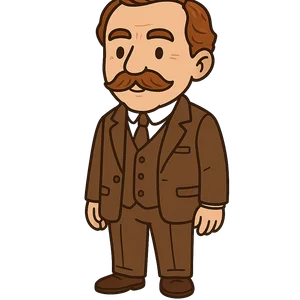
Sir Ronald Ross
Sir Ronald Ross was a British doctor and Nobel Prize winner who discovered that malaria is transmitted by…
Reads at Grades 3–5 Listens at Grades 1–5
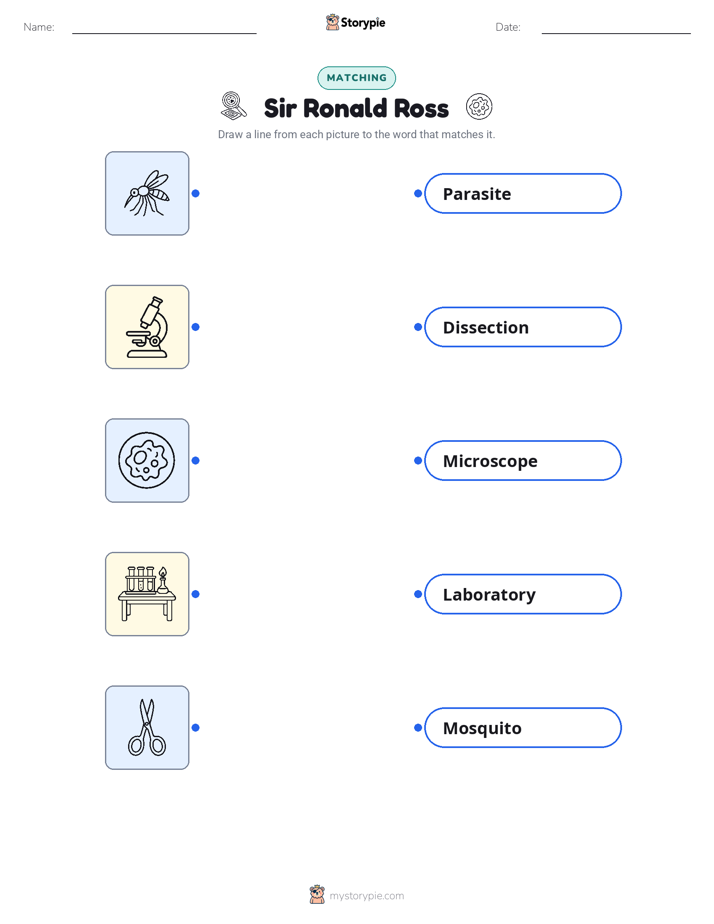
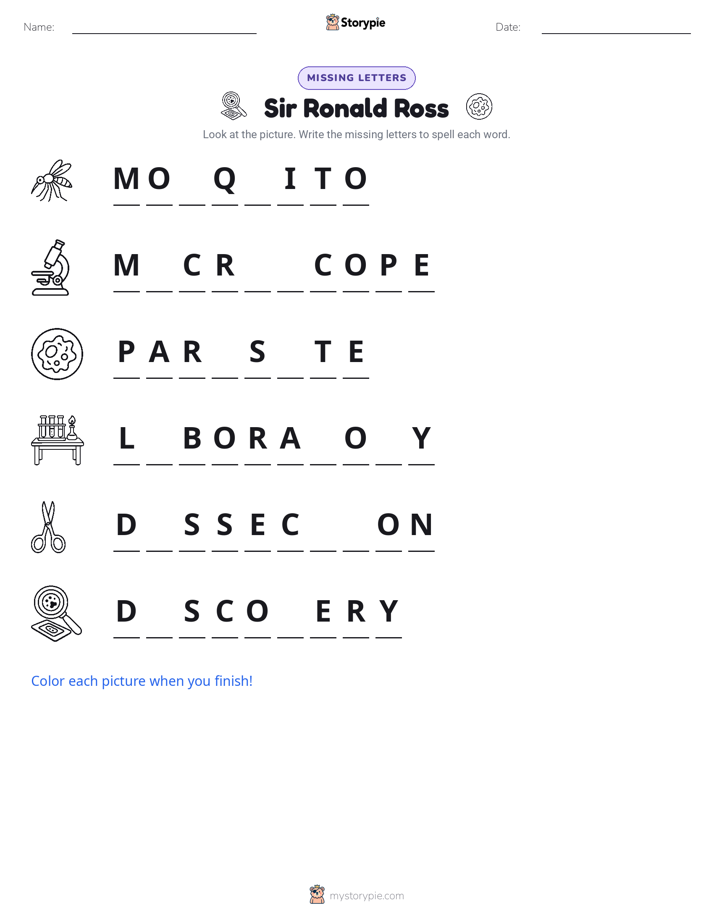
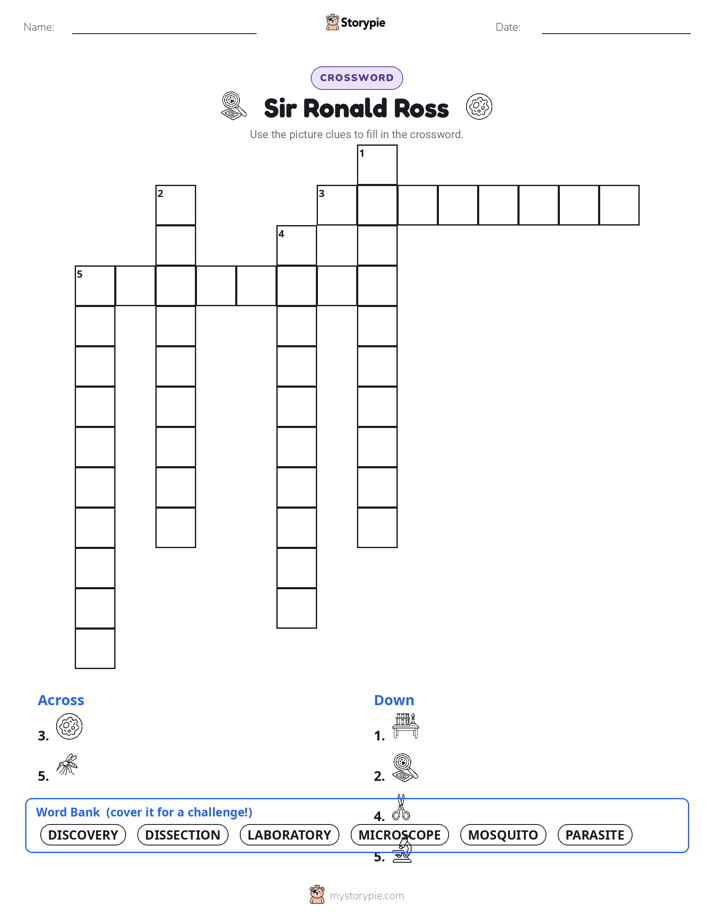
Print & create
Answer keys·No prep·Free with an account
28 worksheets · answer keys · full story · quiz · Ages 8-10 · CEFR B1
Plus adds 244,000+ more stories in 27 languages, audio for every one, and printables for all of them.
Just want Sir Ronald Ross?
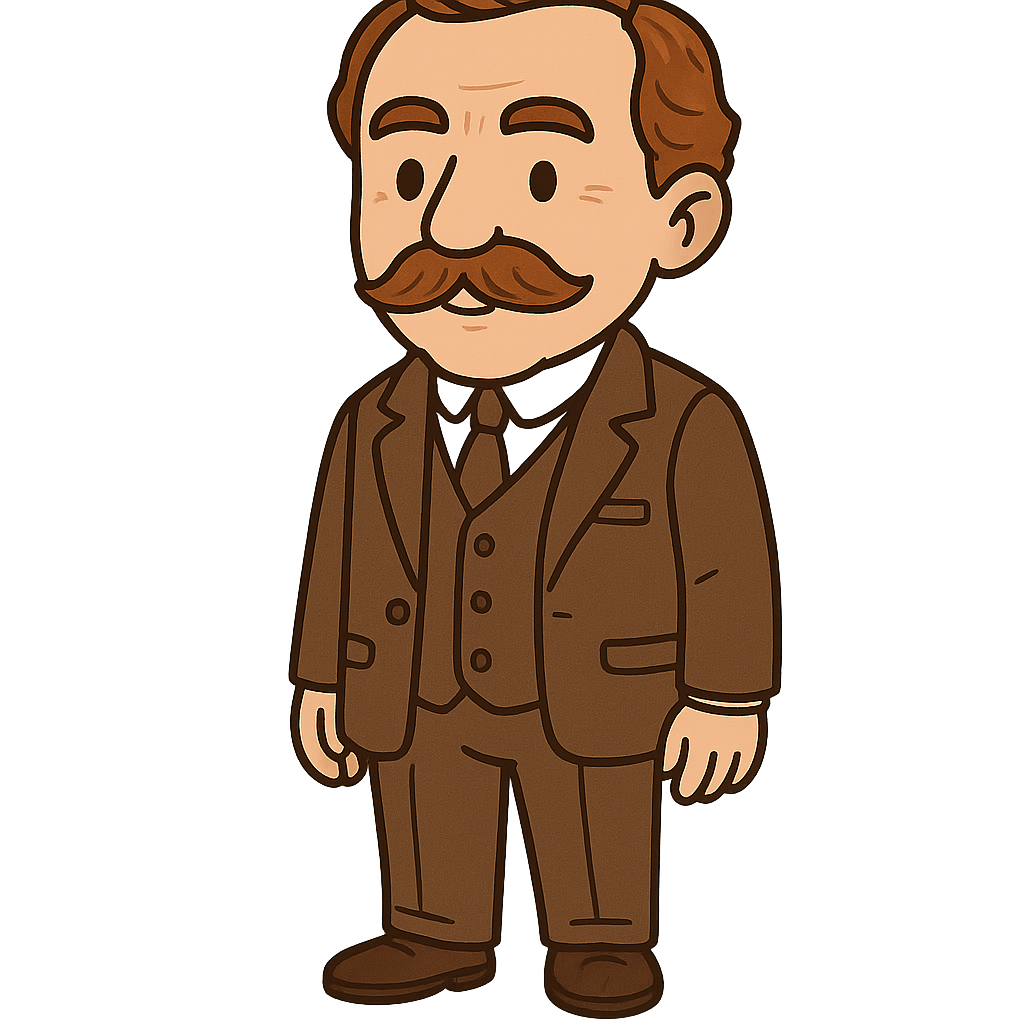
Hello, my name is Ronald Ross. I was born on May 13th, 1857, in a beautiful town called Almora, which is in India. As a boy, I was full of dreams that had nothing to do with science. I loved art and music, and I spent hours writing stories and poems. I imagined a life filled with creativity. However, my father had a different path in mind for me. He wanted me to have a steady and respectable career as a doctor. So, to follow his wishes, I joined the Indian Medical Service in 1881. I was ready to help people who were sick, but I promised myself I would never completely let go of my artistic dreams.
Working as a doctor in India, I saw so much suffering caused by a disease called malaria. It was a terrible sickness that gave people very high fevers and made them shake with chills. Back then, no one truly understood where it came from. The name itself, malaria, comes from the Italian words 'mal'aria,' which means 'bad air.' For centuries, people believed that breathing in damp, smelly air from swamps was what made them sick. I saw the effects of this disease every day, and the 'bad air' theory just didn't seem right to me. I felt a strong pull to solve this mystery. I was determined to find the real cause of this disease that was harming so many people.
My search for the truth was long and difficult. I had a very important clue from a wise doctor named Sir Patrick Manson. He had a theory that insects, not bad air, might be spreading the disease from person to person. This idea set me on a new path. I began to study mosquitoes, spending countless long, hot hours hunched over my microscope. I examined many different kinds of mosquitoes, carefully looking for any sign of what might be causing the illness. Finally, my moment of discovery arrived on August 20th, 1897. While looking at a specific type of mosquito, the Anopheles mosquito, I saw it. Hiding inside its stomach were the tiny parasites that cause malaria. I was so filled with excitement and relief that I forever called that day 'Mosquito Day.' The puzzle was starting to come together.
Ronald Ross: The Mosquito Detective
Hello, my name is Ronald Ross. I was born on May 13th, 1857, in a beautiful town called Almora, which is in India. As a boy, I was full of dreams that had nothing to do with science. I loved art and music, and I spent hours writing stories and poems. I imagined a life filled with creativity. However, my father had a different path in mind for me. He wanted me to have a steady and respectable career as a doctor. So, to follow his wishes, I joined the Indian Medical Service in 1881. I was ready to help people who were sick, but I promised myself I would never completely let go of my artistic dreams.
Working as a doctor in India, I saw so much suffering caused by a disease called malaria. It was a terrible sickness that gave people very high fevers and made them shake with chills. Back then, no one truly understood where it came from. The name itself, malaria, comes from the Italian words 'mal'aria,' which means 'bad air.' For centuries, people believed that breathing in damp, smelly air from swamps was what made them sick. I saw the effects of this disease every day, and the 'bad air' theory just didn't seem right to me. I felt a strong pull to solve this mystery. I was determined to find the real cause of this disease that was harming so many people.
My search for the truth was long and difficult. I had a very important clue from a wise doctor named Sir Patrick Manson. He had a theory that insects, not bad air, might be spreading the disease from person to person. This idea set me on a new path. I began to study mosquitoes, spending countless long, hot hours hunched over my microscope. I examined many different kinds of mosquitoes, carefully looking for any sign of what might be causing the illness. Finally, my moment of discovery arrived on August 20th, 1897. While looking at a specific type of mosquito, the Anopheles mosquito, I saw it. Hiding inside its stomach were the tiny parasites that cause malaria. I was so filled with excitement and relief that I forever called that day 'Mosquito Day.' The puzzle was starting to come together.
Finding the parasite inside the mosquito was a huge breakthrough for medicine and for the world. My discovery proved that these tiny insects were the ones spreading malaria. This changed everything. Before, doctors could only try to treat people after they were already sick. But now, we knew that we could stop the disease from spreading in the first place by controlling the mosquito population. This meant we could prevent people from ever getting sick. I continued my research to understand the full life cycle of the parasite, learning how it moved between the mosquito and a person. For all of this hard work, I was incredibly honored to receive the Nobel Prize in Physiology or Medicine in 1902. It was a wonderful feeling to know that my work would help save countless lives around the globe.
Looking back, I am proud of the path I took. I lived to be 75 years old, and I was grateful to have solved a medical puzzle that had stumped people for centuries. Today, people remember me as the man who uncovered the secret of how malaria spreads. My discovery on that 'Mosquito Day' in 1897 has helped scientists and doctors create new ways to protect millions of people from this dangerous disease. It just goes to show how staying curious and never giving up can truly change the world for the better.
Wow facts
About
Sir Ronald Ross was a British doctor and Nobel Prize winner who discovered that malaria is transmitted by mosquitoes, a breakthrough that has saved millions of lives.
Take a Quiz
Question 1 of 5
In the story, I say malaria was a 'puzzle.' What does this mean?
Explore next




Want to do even more?
Go beyond exploring. Unlock tools that turn every story into real learning.

Storypie Plus for families
Full stories, quizzes, and printables. Nights and car rides, sorted.
- Unlimited audio stories
- Create Mode: your child stars in the story
- Offline downloads
- Printable worksheets & coloring pages

Why Storypie for Schools
Students engaged. Prep in seconds. Evenings back to you.
- Worksheets & Quizzes
- Classroom Management
- Formative Assessment
- Custom Curriculum & Lesson Plans
- 27 Languages

Why Storypie for Homeschool
Curriculum done. They'll ask for more. Hours back in your day.
- Worksheet Generator
- First-Person Audio Stories
- Built-in Comprehension Quizzes
- Custom Curriculum & Lesson Plans
- Print & Go Activities