English

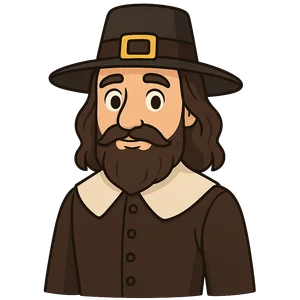
William Bradford
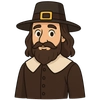
William Bradford was an English Separatist leader who sailed on the Mayflower in 1620 and became the…
Reads at Grades 3–5 Listens at Grades 1–5
Print & create
Answer keys·No prep·Free with an account
28 worksheets · answer keys · full story · quiz · Ages 8-10 · CEFR B1
Plus adds 102,000+ more stories in 27 languages, audio for every one, and printables for all of them.
Just want William Bradford?
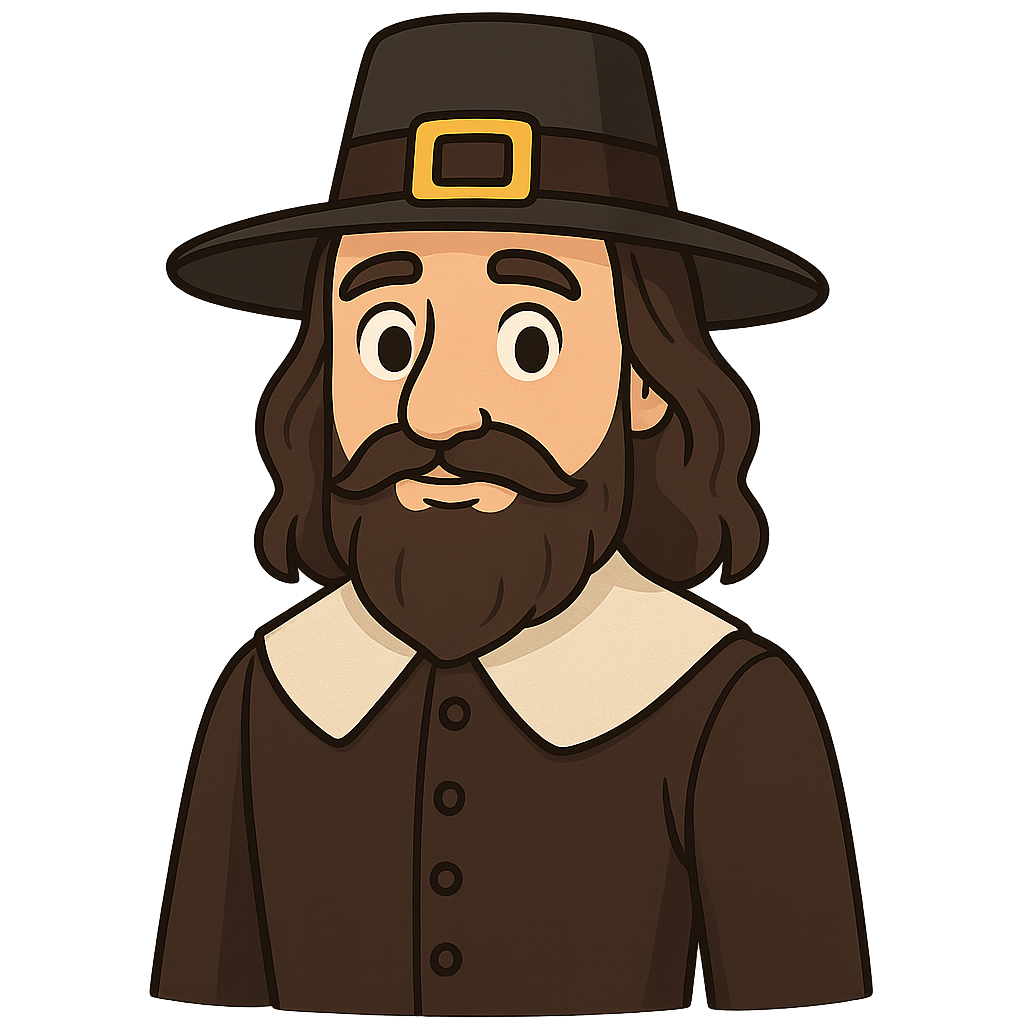
Hello. My name is William Bradford, and I want to tell you my story. I was born in a small village called Austerfield, England, way back in 1590. As a boy, I loved to read, and the book I read most was the Bible. Reading it made me believe that the Church of England, which was the main church in my country, was not following the Bible correctly. Around the year 1606, when I was a teenager, I joined a group of people who felt the same way. We called ourselves Separatists because we wanted to separate from the main church and worship in our own way. This was a very dangerous idea at the time, and the king of England did not like our group at all.
Because we could not worship God freely in England, my friends and I knew we had to leave. In 1609, we sailed across the sea to a city called Leiden in Holland. We lived there for more than ten years, and for a while, it was a good place for us. We were finally able to practice our religion in peace. But life in Holland was very hard. It was difficult to find work, and we worried that our children were starting to forget their English language and customs. We decided that we needed to find a new home, a place where we could build our very own community, live by our faith, and still be English people.
So, in the year 1620, we boarded a ship called the Mayflower to sail across the vast Atlantic Ocean to America. The journey was long and very difficult. For more than two months, we were crowded together on the small ship as it was tossed around by rough seas and powerful storms. Before we even set foot on the new land, all the men gathered together. We knew that to survive, we would need rules and a government to guide us. On November 11th, 1620, we wrote and signed an agreement we called the Mayflower Compact. In it, we all promised to work together and create fair laws for our new community. It was the first step we took toward building a new society based on cooperation.
William Bradford: A Pilgrim's Story
Hello. My name is William Bradford, and I want to tell you my story. I was born in a small village called Austerfield, England, way back in 1590. As a boy, I loved to read, and the book I read most was the Bible. Reading it made me believe that the Church of England, which was the main church in my country, was not following the Bible correctly. Around the year 1606, when I was a teenager, I joined a group of people who felt the same way. We called ourselves Separatists because we wanted to separate from the main church and worship in our own way. This was a very dangerous idea at the time, and the king of England did not like our group at all.
Because we could not worship God freely in England, my friends and I knew we had to leave. In 1609, we sailed across the sea to a city called Leiden in Holland. We lived there for more than ten years, and for a while, it was a good place for us. We were finally able to practice our religion in peace. But life in Holland was very hard. It was difficult to find work, and we worried that our children were starting to forget their English language and customs. We decided that we needed to find a new home, a place where we could build our very own community, live by our faith, and still be English people.
So, in the year 1620, we boarded a ship called the Mayflower to sail across the vast Atlantic Ocean to America. The journey was long and very difficult. For more than two months, we were crowded together on the small ship as it was tossed around by rough seas and powerful storms. Before we even set foot on the new land, all the men gathered together. We knew that to survive, we would need rules and a government to guide us. On November 11th, 1620, we wrote and signed an agreement we called the Mayflower Compact. In it, we all promised to work together and create fair laws for our new community. It was the first step we took toward building a new society based on cooperation.
We finally landed in a place that we named Plymouth. That first winter, from 1620 to 1621, was terribly hard and filled with sadness. Many of us became sick from the cold and the lack of good food. Almost half of the people in our group did not survive. But when spring finally arrived, we received unexpected help from the local Native American people, the Wampanoag. A man named Squanto, who could speak English, became our teacher. He showed us how to plant corn in this new soil, where to catch fish, and how to survive in this new world. In 1621, after our first governor, John Carver, passed away, the people chose me to be their new governor. That autumn, we had our first successful harvest, and to celebrate and give thanks, we held a large feast with our new Wampanoag friends. Many people today remember this as the first Thanksgiving.
I was chosen to be the governor of Plymouth Colony almost every year for about 30 years. It was my job to help our community grow, to keep everyone safe, and to make sure our laws were fair. As the years went by, I wanted to make sure that no one would forget our story. I wanted future generations to know why we came to America, the terrible hardships we faced, and how we worked together to build a new life. So, around the year 1630, I began writing a book about all of our experiences. Today, that book is called 'Of Plymouth Plantation,' and it tells the history of our journey and the first years of our colony, just as I saw it.
I helped lead our colony for many years and watched it grow from a small, struggling settlement into a strong and successful community. I lived to be about 67 years old, passing away in 1657. The book I wrote, 'Of Plymouth Plantation,' has helped people for hundreds of years understand the real story of the group of people you know as the Pilgrims. I am remembered as a leader who helped a small group of people cross an ocean to find freedom and build a new life, and I hope our story of courage and hope is one that is never forgotten.
Wow facts
About
William Bradford was an English Separatist leader who sailed on the Mayflower in 1620 and became the long-serving governor of Plymouth Colony. He is remembered for his journal, 'Of Plymouth Plantation,' and his leadership during the colony's early years, including the first Thanksgiving in 1621. However, his journal does not give a lot of details about that special day.
Take a Quiz
Question 1 of 5
The story says William Bradford's group was called 'Separatists.' What does the word 'separate' mean in this story?
Explore next


Want to do even more?
Go beyond exploring. Unlock tools that turn every story into real learning.

Storypie Plus for families
Full stories, quizzes, and printables. Nights and car rides, sorted.
- Unlimited audio stories
- Create Mode: your child stars in the story
- Offline downloads
- Printable worksheets & coloring pages

Why Storypie for Schools
Students engaged. Prep in seconds. Evenings back to you.
- Worksheets & Quizzes
- Classroom Management
- Formative Assessment
- Custom Curriculum & Lesson Plans
- 27 Languages

Why Storypie for Homeschool
Curriculum done. They'll ask for more. Hours back in your day.
- Worksheet Generator
- First-Person Audio Stories
- Built-in Comprehension Quizzes
- Custom Curriculum & Lesson Plans
- Print & Go Activities