English

William Bradford
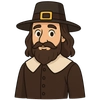
William Bradford was an English Separatist leader who sailed on the Mayflower in 1620 and became the…
Reads at Grades 6–8 Listens at Grades 4–8
Print & create
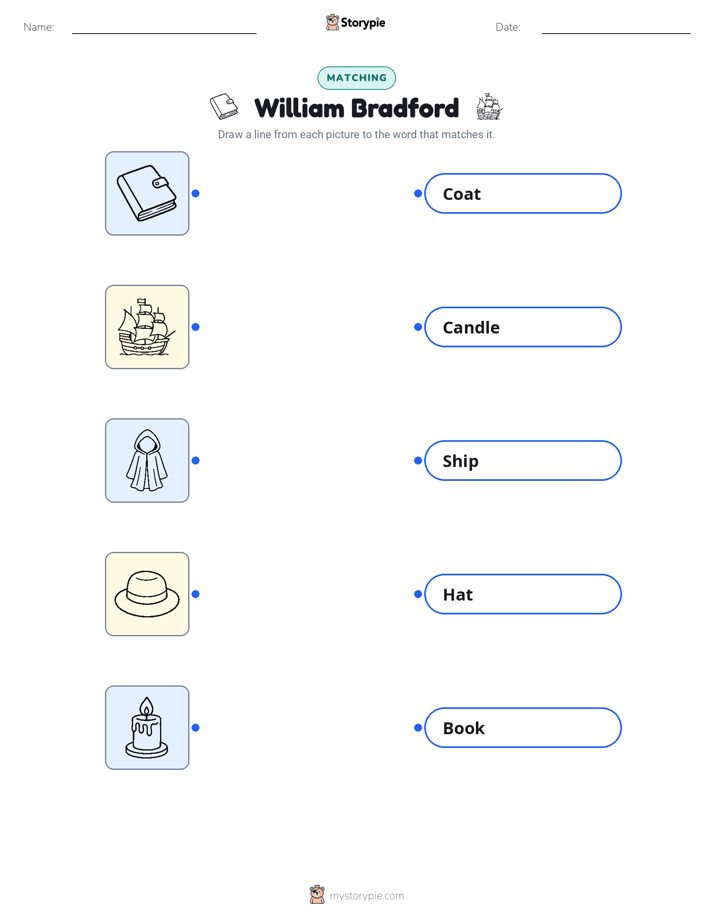
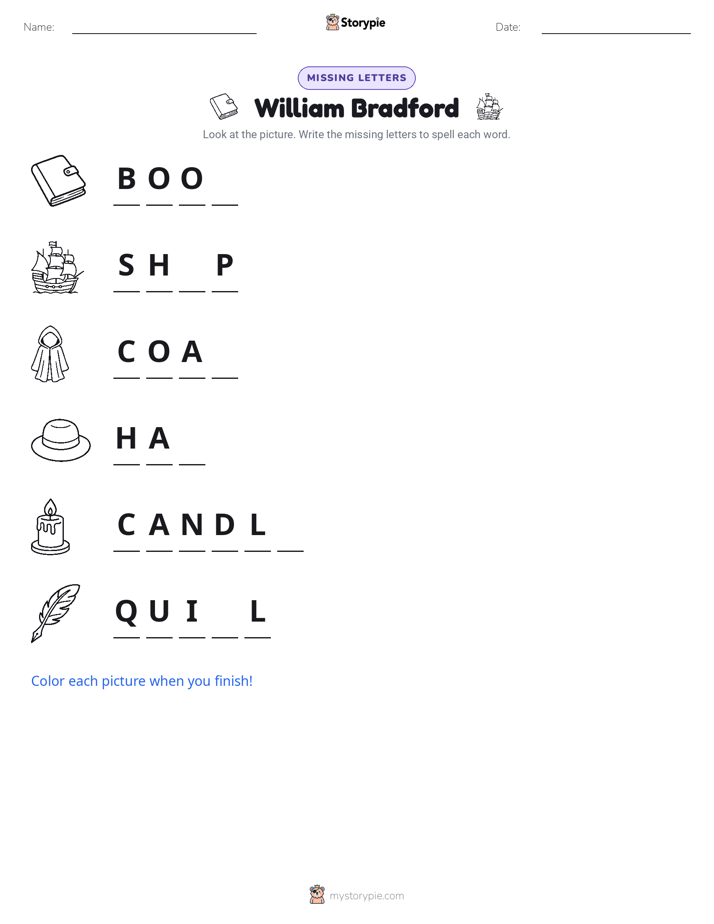
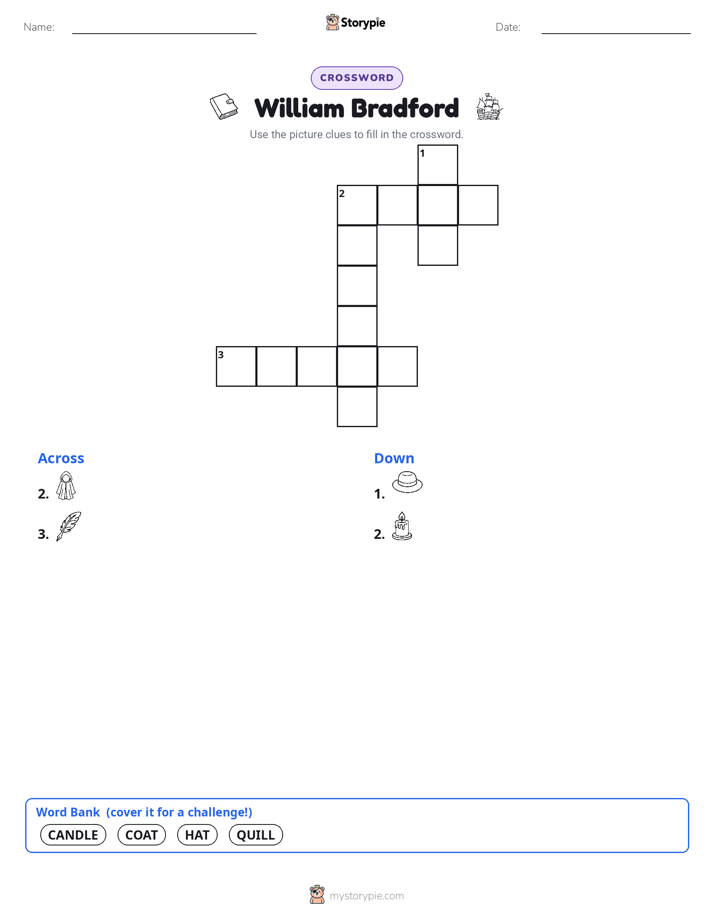
Answer keys·No prep·Free with an account
28 worksheets · answer keys · full story · quiz · Ages 10-12 · CEFR B2
Plus adds 102,000+ more stories in 27 languages, audio for every one, and printables for all of them.
Just want William Bradford?
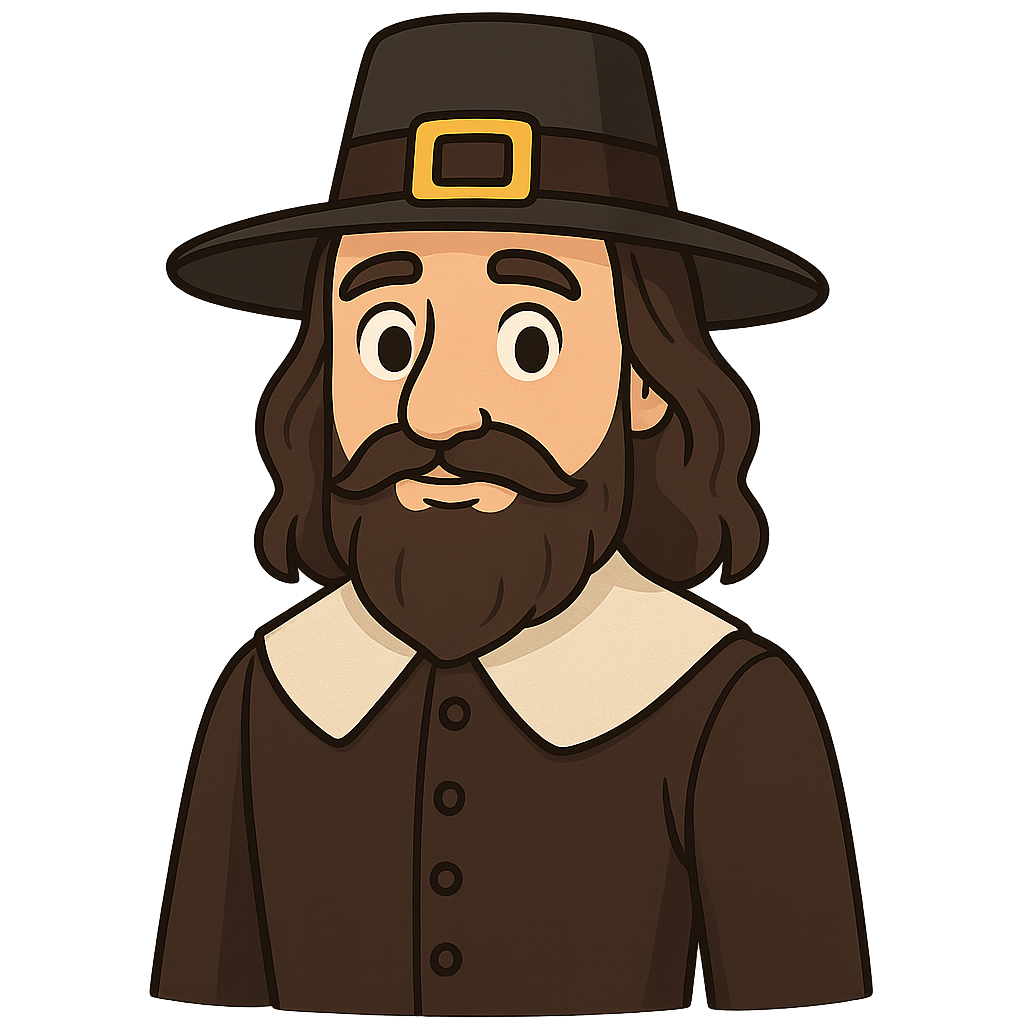
Hello, my name is William Bradford, and I was a leader of one of the first English colonies in America. My story begins in a small village in Yorkshire, England, where I was born on March 19th, 1590. My early life was marked by sadness, as I was orphaned at a young age and raised by relatives. As I grew into a teenager, I began to feel a deep unease with the official Church of England. Around the year 1602, I started to believe that its ceremonies and structure did not follow the true path of our faith. This led me to a momentous decision. I joined a small, secret group of people who called themselves 'Separatists.' We believed we had to separate from the official church to worship in a simpler, more pure way. This was a very dangerous choice. In those days, the king's law required everyone to belong to the Church of England, and meeting in secret could lead to prison or worse. But our faith was so strong that we were willing to risk everything to follow our conscience.
Our desire for religious freedom grew so strong that we knew we could not stay in England. We planned a risky escape to a country known for its tolerance: Holland. In 1609, after a difficult journey, our group settled in the bustling city of Leiden. For over a decade, I made a life there, working hard as a fustian weaver and starting a family of my own. In Holland, we finally had the freedom to worship as we pleased without fear of the king's guards. We were safe, but a new worry began to grow in our hearts. We noticed our children were growing up more Dutch than English. They were speaking the Dutch language and adopting Dutch customs. We feared that our unique English culture and identity would be lost within a generation. This concern led us to an even more daring plan. We decided we must cross the vast Atlantic Ocean and build a new society for ourselves in the New World, where we could live as English people and practice our faith freely.
William Bradford
Hello, my name is William Bradford, and I was a leader of one of the first English colonies in America. My story begins in a small village in Yorkshire, England, where I was born on March 19th, 1590. My early life was marked by sadness, as I was orphaned at a young age and raised by relatives. As I grew into a teenager, I began to feel a deep unease with the official Church of England. Around the year 1602, I started to believe that its ceremonies and structure did not follow the true path of our faith. This led me to a momentous decision. I joined a small, secret group of people who called themselves 'Separatists.' We believed we had to separate from the official church to worship in a simpler, more pure way. This was a very dangerous choice. In those days, the king's law required everyone to belong to the Church of England, and meeting in secret could lead to prison or worse. But our faith was so strong that we were willing to risk everything to follow our conscience.
Our desire for religious freedom grew so strong that we knew we could not stay in England. We planned a risky escape to a country known for its tolerance: Holland. In 1609, after a difficult journey, our group settled in the bustling city of Leiden. For over a decade, I made a life there, working hard as a fustian weaver and starting a family of my own. In Holland, we finally had the freedom to worship as we pleased without fear of the king's guards. We were safe, but a new worry began to grow in our hearts. We noticed our children were growing up more Dutch than English. They were speaking the Dutch language and adopting Dutch customs. We feared that our unique English culture and identity would be lost within a generation. This concern led us to an even more daring plan. We decided we must cross the vast Atlantic Ocean and build a new society for ourselves in the New World, where we could live as English people and practice our faith freely.
In the year 1620, we embarked on the greatest journey of our lives aboard a small vessel named the Mayflower. The ship was incredibly crowded, packed with our families and all the supplies we could carry for starting a new life. The voyage across the Atlantic Ocean was long and treacherous, lasting 66 grueling days. Fierce storms battered our ship, and many of us were sick for much of the journey. We were tested in body and spirit, but we held on to our faith. As we finally neared the coast of this new land, we knew we had to create a plan for how we would live together. Before we even set foot ashore, all the men gathered to sign an important document. On November 11th, 1620, we signed what is now known as the Mayflower Compact. This was not a set of laws, but a solemn promise to one another. We pledged to create a "civil body politic"—a fair government—and to enact just laws for the good of our new colony. It was our foundation, a commitment to stick together and govern ourselves.
When we finally came ashore, we found a cold and unwelcoming wilderness. We named our new home Plymouth. My heart was filled with a deep and personal sorrow shortly after our arrival, as my dear wife, Dorothy, tragically died. Our suffering was only beginning. The first winter, from 1620 to 1621, was a devastating period we later called the 'starving time.' The cold was bitter, our shelters were poor, and we did not have enough food. Sickness swept through our small community, and by the time spring arrived, nearly half of our people had perished. It was a time of immense grief and hardship. We could have given up and tried to sail back to England, but we did not. The survivors, though weakened, remained steadfast. We were determined to honor those we had lost by building the home we had sacrificed so much to find.
In the spring of 1621, our first governor, John Carver, passed away, and the colonists chose me to take his place. It was a heavy responsibility, but one I accepted with humility. I would go on to serve as the governor of Plymouth Colony for more than 30 years. That spring brought us new hope in the form of unexpected visitors. We met Native Americans, including a man named Samoset and another named Tisquantum, whom we called Squanto. Squanto had learned English from previous encounters with explorers and became our guide and interpreter. He showed us how to plant corn using fish for fertilizer, where to catch fish, and how to survive in this unfamiliar land. His help was a true blessing. Through him, we formed a peaceful relationship with the local Wampanoag people and their leader, Massasoit. To celebrate our first successful harvest in the autumn of 1621, we held a great feast. We invited our Wampanoag neighbors to join us in a moment of thanks and friendship, a meal that is now remembered as a symbol of peace.
I spent many of my later years carefully recording the story of our journey, our hardships, and our faith. I wrote it all down in a book titled 'Of Plymouth Plantation,' hoping that the generations to come would not forget the reasons we came here and the challenges we overcame. I lived to be 67 years old, and my life came to an end on May 9th, 1657. My book survived and remains one of the most important accounts of the Pilgrims' experience, helping people today understand our lives and beliefs. My leadership is remembered for guiding our small colony through its most difficult years, ensuring its survival, and helping to lay a small but important foundation for a new nation built on the ideals of freedom and self-governance.
Wow facts
About
William Bradford was an English Separatist leader who sailed on the Mayflower in 1620 and became the long-serving governor of Plymouth Colony. He is remembered for his journal, 'Of Plymouth Plantation,' and his leadership during the colony's early years, including the first Thanksgiving in 1621. However, his journal does not give a lot of details about that special day.
Take a Quiz
Question 1 of 5
The word 'Separatists' has the prefix 'se-', which means 'apart'. What does this tell you about William Bradford's group?
Explore next


Want to do even more?
Go beyond exploring. Unlock tools that turn every story into real learning.

Storypie Plus for families
Full stories, quizzes, and printables. Nights and car rides, sorted.
- Unlimited audio stories
- Create Mode: your child stars in the story
- Offline downloads
- Printable worksheets & coloring pages

Why Storypie for Schools
Students engaged. Prep in seconds. Evenings back to you.
- Worksheets & Quizzes
- Classroom Management
- Formative Assessment
- Custom Curriculum & Lesson Plans
- 27 Languages

Why Storypie for Homeschool
Curriculum done. They'll ask for more. Hours back in your day.
- Worksheet Generator
- First-Person Audio Stories
- Built-in Comprehension Quizzes
- Custom Curriculum & Lesson Plans
- Print & Go Activities