English

Abolition of Slavery
The historical movement and enduring idea dedicated to ending the practice of slavery…
Reads at Grades 6–8 Listens at Grades 4–8
Print & create
Answer keys·No prep·Free with an account
28 worksheets · answer keys · full story · quiz · Ages 10-12 · CEFR B2
Plus adds 102,000+ more stories in 27 languages, audio for every one, and printables for all of them.
Just want Abolition of Slavery?
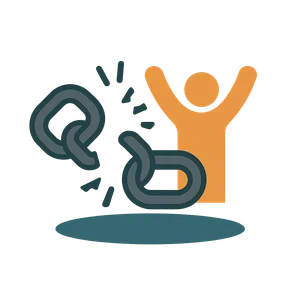
Before you knew my name, you knew my feeling. It's the feeling of wanting to run in an open field, to speak your own thoughts, to decide your own day. For much of human history, that feeling was stolen from millions of people. They were treated not as people, but as property, in a cruel system called slavery. Families were torn apart, and lives were controlled by others. They were forced to work without pay, under constant threat of violence. The world was a place of deep, accepted unfairness, where the color of your skin could determine if you were born free or in chains. In this world, a quiet but persistent question began to form in the hearts of the oppressed and in the minds of those who saw the injustice. How could one person own another? It was from that question, from that deep well of unfairness, that I was born—not as a person, but as a powerful, world-changing idea. I am the belief that every single person has the right to be free. I am Abolition.
For centuries, I was just a quiet thought, a philosophical debate, or a desperate prayer in the minds of a few. But in the 1700s, my voice began to grow louder, carried by people of great conscience. Groups like the Quakers in America and Britain started to argue that owning another person was a sin and fundamentally wrong in the eyes of God. They were some of the first organized groups to stand up for me, publishing essays and speaking out within their communities. The real turning point, however, came in London. On May 22nd, 1787, a group of twelve men, a mix of Quakers and other reformers, gathered in a printing shop to form the Society for Effecting the Abolition of the Slave Trade. They knew they couldn't end the entire system of slavery all at once; it was too deeply woven into the economies of powerful nations. So, they started with a strategic goal: fighting the horrific trade of enslaved people across the Atlantic Ocean. They used tools you'd recognize today: they wrote pamphlets filled with facts and emotional appeals, gathered thousands of signatures on petitions to present to Parliament, and supported powerful speakers like Olaudah Equiano, a formerly enslaved man who wrote a famous book about his experiences. It was a slow, difficult fight against powerful business interests, but it was the start of a global movement.
I Am Abolition
Before you knew my name, you knew my feeling. It's the feeling of wanting to run in an open field, to speak your own thoughts, to decide your own day. For much of human history, that feeling was stolen from millions of people. They were treated not as people, but as property, in a cruel system called slavery. Families were torn apart, and lives were controlled by others. They were forced to work without pay, under constant threat of violence. The world was a place of deep, accepted unfairness, where the color of your skin could determine if you were born free or in chains. In this world, a quiet but persistent question began to form in the hearts of the oppressed and in the minds of those who saw the injustice. How could one person own another? It was from that question, from that deep well of unfairness, that I was born—not as a person, but as a powerful, world-changing idea. I am the belief that every single person has the right to be free. I am Abolition.
For centuries, I was just a quiet thought, a philosophical debate, or a desperate prayer in the minds of a few. But in the 1700s, my voice began to grow louder, carried by people of great conscience. Groups like the Quakers in America and Britain started to argue that owning another person was a sin and fundamentally wrong in the eyes of God. They were some of the first organized groups to stand up for me, publishing essays and speaking out within their communities. The real turning point, however, came in London. On May 22nd, 1787, a group of twelve men, a mix of Quakers and other reformers, gathered in a printing shop to form the Society for Effecting the Abolition of the Slave Trade. They knew they couldn't end the entire system of slavery all at once; it was too deeply woven into the economies of powerful nations. So, they started with a strategic goal: fighting the horrific trade of enslaved people across the Atlantic Ocean. They used tools you'd recognize today: they wrote pamphlets filled with facts and emotional appeals, gathered thousands of signatures on petitions to present to Parliament, and supported powerful speakers like Olaudah Equiano, a formerly enslaved man who wrote a famous book about his experiences. It was a slow, difficult fight against powerful business interests, but it was the start of a global movement.
While people were debating in government halls and signing petitions, enslaved people were fighting for me in their own courageous ways. They resisted through small acts of defiance and large-scale rebellions, proving they were not passive victims. The most powerful example of this erupted on the French island of Saint-Domingue. In August of 1791, enslaved people there rose up in a massive, organized revolution led by brilliant military minds like Toussaint Louverture. After thirteen years of brutal fighting against French, Spanish, and British armies, they won their freedom. On January 1st, 1804, they declared their independence and created a new nation: Haiti, the world's first free Black republic. Their victory sent a shockwave of hope and fear across the world. It was undeniable proof that freedom could be won through struggle. In the United States, brave leaders emerged to carry my banner. A man named Frederick Douglass, who had escaped slavery himself, used his powerful voice and brilliant writing to expose the hypocrisy of a nation that claimed to be the 'land of the free.' And a woman named Harriet Tubman, often called 'Moses,' risked her life again and again, returning to the South about thirteen times to guide hundreds of enslaved people to freedom on the Underground Railroad. They weren't just waiting for me to arrive; they were actively building the path for me with their bare hands and unwavering courage.
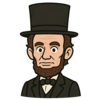
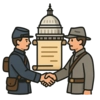
In the United States, the argument over me became so intense that it split the nation in two. The tension between the states that depended on slave labor and those that wanted me to triumph finally exploded into war—the American Civil War, which began in 1861. It was a terrible, bloody conflict, but it forced the country to confront the issue of slavery head-on. In the middle of the war, on January 1st, 1863, President Abraham Lincoln issued the Emancipation Proclamation. It declared that enslaved people in the rebelling Confederate states were 'thenceforward, and forever free.' It was a monumental step, a turning point that transformed the war into a fight for freedom. But my work wasn't finished, as the proclamation didn't apply to all states. After the war ended in 1865, the country passed a new law to make me permanent and universal. On December 6th, 1865, the Thirteenth Amendment was ratified and added to the Constitution, officially abolishing slavery across the entire United States. Slowly, other countries followed. Brazil, the last country in the Americas to practice slavery on a massive scale, finally abolished it in 1888, bringing a long and painful era to a close.
Today, slavery is illegal in every country. My initial goal has been written into law around the globe, and my core principle was famously enshrined in the Universal Declaration of Human Rights in 1948, which states that 'no one shall be held in slavery or servitude.' But my work is not over. The fight for true freedom is never truly finished. The spirit of slavery—treating people as objects to be used, controlled, and profited from—still exists in the shadows as human trafficking and forced labor. So I continue to inspire people. I am the energy behind organizations that rescue victims and the motivation for lawmakers who create stronger protections. I remind you to stand up for fairness, to speak out against injustice wherever you see it, and to protect the freedom and dignity of every single person. I am the promise that no one should be owned, and that promise is a light that we must all work together to keep shining brightly for everyone, everywhere.
Wow facts
About
The historical movement and enduring idea dedicated to ending the practice of slavery, a system where individuals are owned and controlled by others as property.
Take a Quiz
Question 1 of 5
What is the main lesson the story, told from the perspective of Abolition, is trying to teach us?
Explore next

Want to do even more?
Go beyond exploring. Unlock tools that turn every story into real learning.

Storypie Plus for families
Full stories, quizzes, and printables. Nights and car rides, sorted.
- Unlimited audio stories
- Create Mode: your child stars in the story
- Offline downloads
- Printable worksheets & coloring pages

Why Storypie for Schools
Students engaged. Prep in seconds. Evenings back to you.
- Worksheets & Quizzes
- Classroom Management
- Formative Assessment
- Custom Curriculum & Lesson Plans
- 27 Languages

Why Storypie for Homeschool
Curriculum done. They'll ask for more. Hours back in your day.
- Worksheet Generator
- First-Person Audio Stories
- Built-in Comprehension Quizzes
- Custom Curriculum & Lesson Plans
- Print & Go Activities