English


Aerodynamics
Aerodynamics is the science that studies how air moves and how objects, like airplanes or cars…
Reads at Grades 6–8 Listens at Grades 4–8
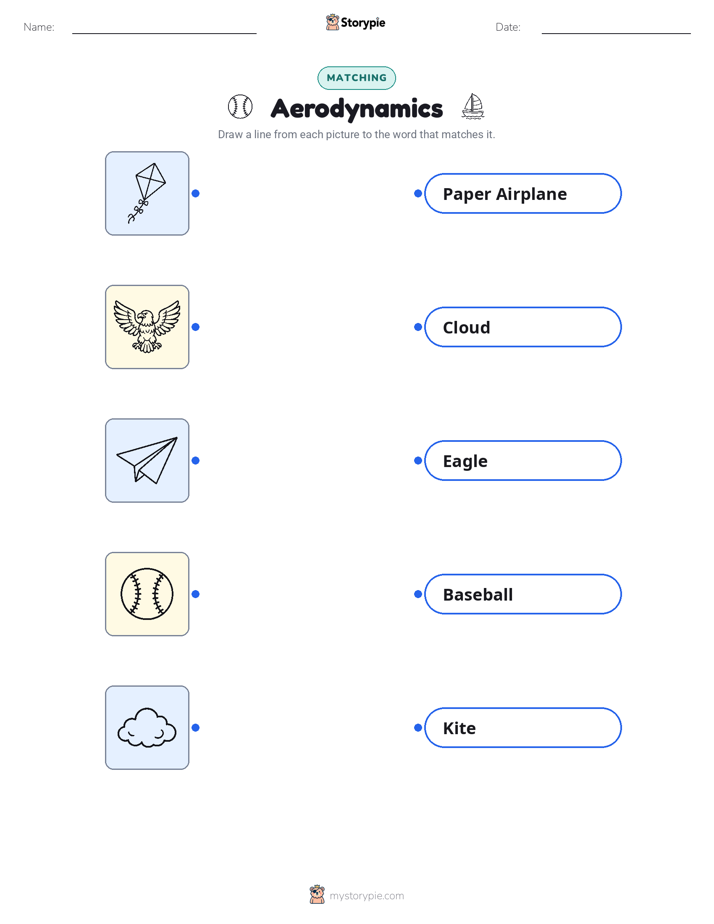
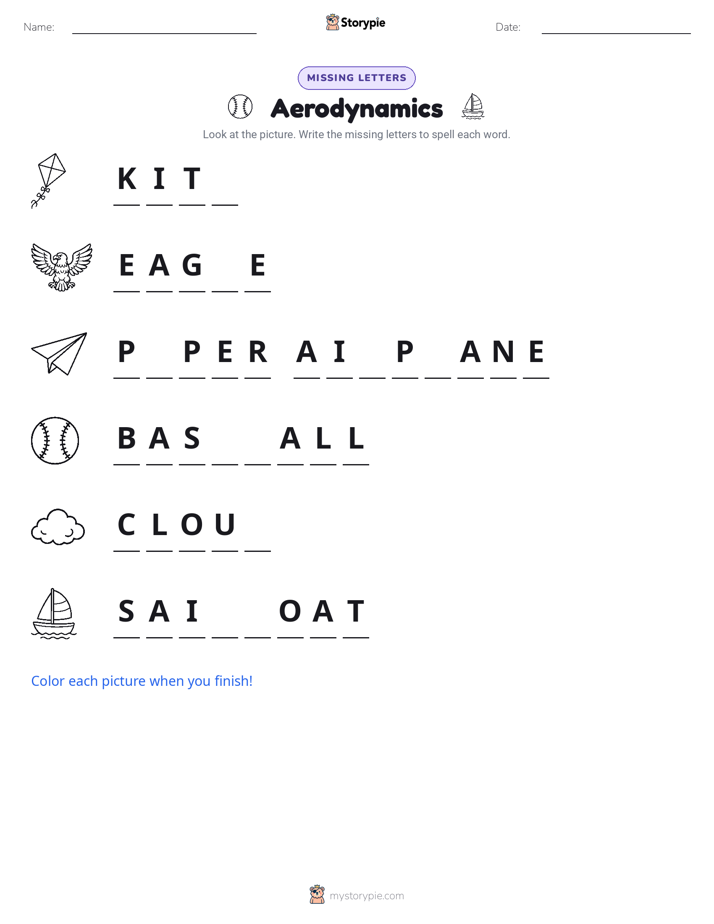
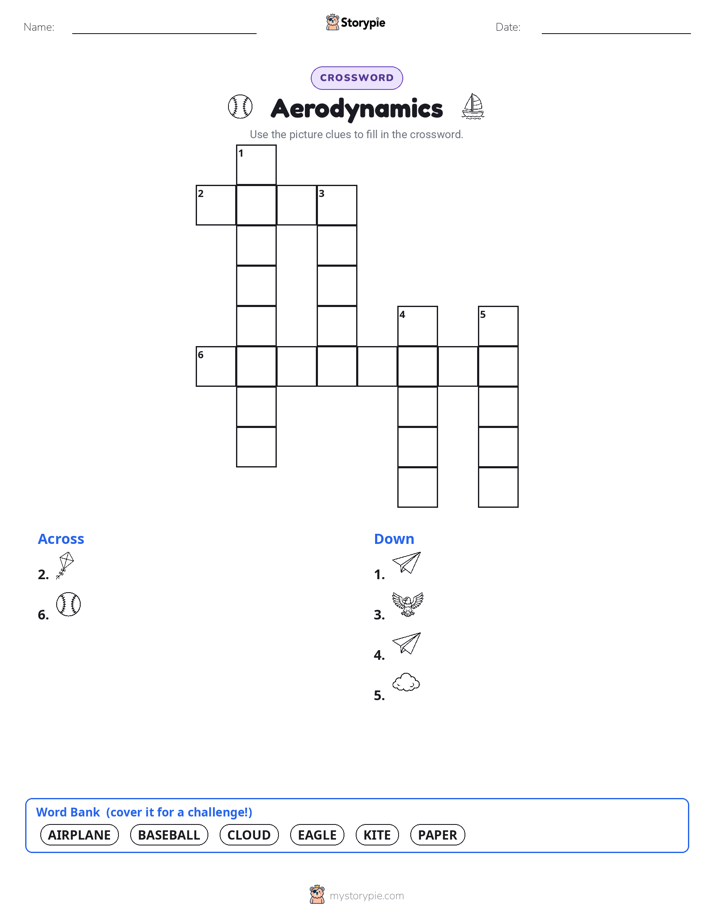
Print & create
Answer keys·No prep·Free with an account
28 worksheets · answer keys · full story · quiz · Ages 10-12 · CEFR B2
Plus adds 164,000+ more stories in 27 languages, audio for every one, and printables for all of them.
Just want Aerodynamics?
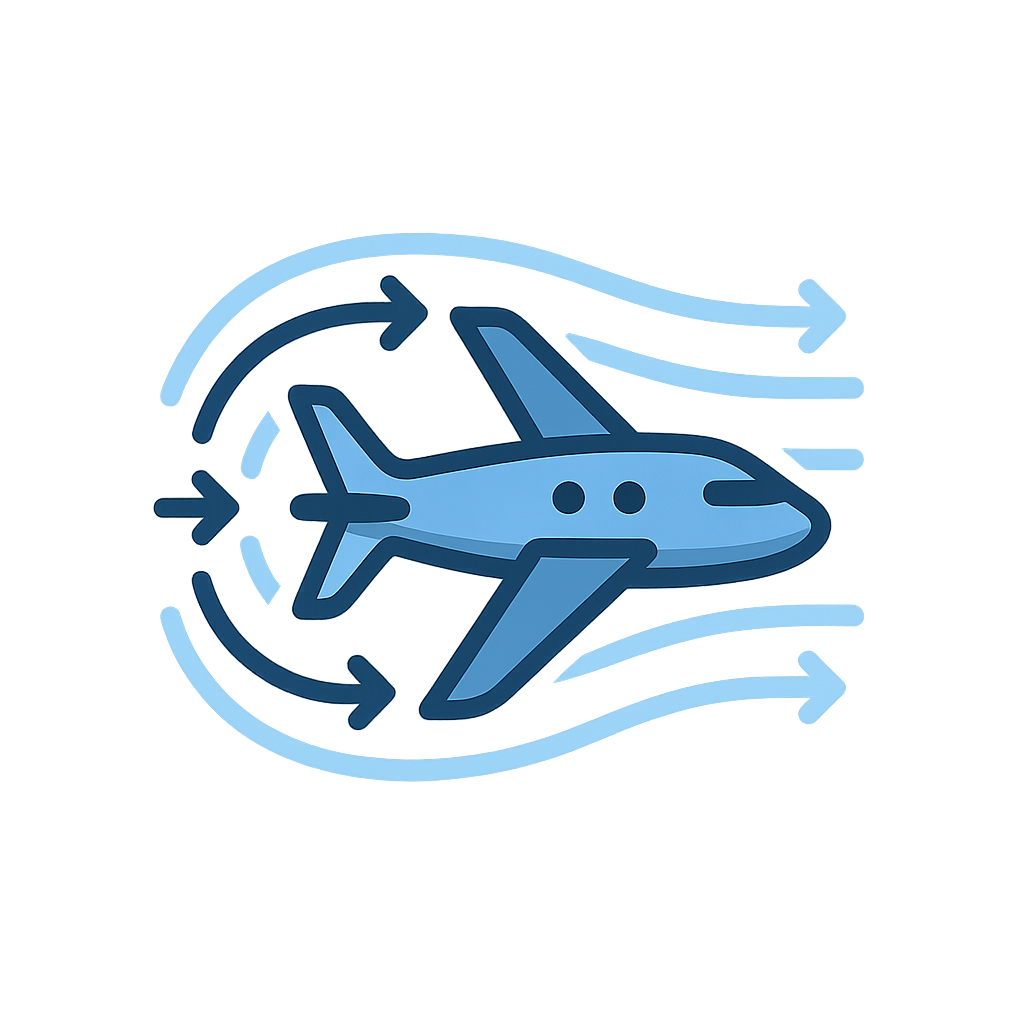
I am the invisible push that makes a kite soar high on a string, and the secret that lets a majestic eagle glide for miles without a single flap of its wings. I am the reason a carefully folded paper airplane can sail gracefully across a classroom, and why a skilled baseball pitcher can make a ball curve unexpectedly past the batter. You have felt me as a gentle whisper of wind on your face and seen my power as I sculpt fluffy clouds into new shapes or push sailboats across the vast, blue ocean. For a long time, I was a mystery, an unseen force that governed everything that moved through the air. I am the science of that movement, a complex and beautiful dance between objects and the atmosphere that surrounds them. Hello. You can call me Aerodynamics.
For centuries, people saw me at work but didn't know my name or understand my rules. They would lie in fields, gazing up at the birds, marveling at how they owned the sky, and they dreamed of one day flying, too. They made myths about winged gods and men with feathers, but true understanding was a long way off. One of the first people to study me with the mind of both an artist and a scientist was the brilliant Leonardo da Vinci. Around the year 1505, he filled his notebooks with hundreds of detailed sketches of bird wings, analyzing their shape and movement. He designed fantastic flying machines, like the ornithopter, which was meant to flap its wings like a bird. Though his machines were never built, he grasped a fundamental truth: air wasn't just empty space. He described it as a fluid, something you could push against to create a force that could lift you toward the sky. His ideas were centuries ahead of their time, but they planted a critical seed for the dreamers and engineers who would follow.
The Invisible Dance of Flight
I am the invisible push that makes a kite soar high on a string, and the secret that lets a majestic eagle glide for miles without a single flap of its wings. I am the reason a carefully folded paper airplane can sail gracefully across a classroom, and why a skilled baseball pitcher can make a ball curve unexpectedly past the batter. You have felt me as a gentle whisper of wind on your face and seen my power as I sculpt fluffy clouds into new shapes or push sailboats across the vast, blue ocean. For a long time, I was a mystery, an unseen force that governed everything that moved through the air. I am the science of that movement, a complex and beautiful dance between objects and the atmosphere that surrounds them. Hello. You can call me Aerodynamics.
For centuries, people saw me at work but didn't know my name or understand my rules. They would lie in fields, gazing up at the birds, marveling at how they owned the sky, and they dreamed of one day flying, too. They made myths about winged gods and men with feathers, but true understanding was a long way off. One of the first people to study me with the mind of both an artist and a scientist was the brilliant Leonardo da Vinci. Around the year 1505, he filled his notebooks with hundreds of detailed sketches of bird wings, analyzing their shape and movement. He designed fantastic flying machines, like the ornithopter, which was meant to flap its wings like a bird. Though his machines were never built, he grasped a fundamental truth: air wasn't just empty space. He described it as a fluid, something you could push against to create a force that could lift you toward the sky. His ideas were centuries ahead of their time, but they planted a critical seed for the dreamers and engineers who would follow.
That seed took a long time to sprout. The true mystery began to unravel thanks to a visionary English engineer named Sir George Cayley. In 1799, he was the first person to truly understand and define my four fundamental secrets. He called them Weight, the force of gravity pulling an object down; Lift, the upward force that opposes weight; Thrust, the forward push that overcomes resistance; and Drag, the backward pull of the air itself. Cayley realized that to fly, an aircraft couldn't just flap its wings wildly. It had to be a system where these four forces were in perfect balance. He sketched designs for fixed-wing aircraft, a revolutionary idea. In 1853, a glider based on his designs successfully carried his coachman on a short flight across a valley, a historic moment that proved his theories were sound. Later, in the 1890s, a courageous German engineer named Otto Lilienthal took the next brave step. He built and flew his own elegant gliders, making over 2,000 successful flights. He became known as the "Glider King," and his daring experiments showed the world that controlled human flight wasn't just a dream—it was an engineering problem waiting to be solved.
Lilienthal's daring flights and tragic death in a glider crash inspired two clever bicycle makers from Dayton, Ohio: Orville and Wilbur Wright. They understood that simply having wings wasn't enough. To truly conquer the air, they needed to master my principles. They read everything they could, but soon realized that the existing data about lift and drag was unreliable. So, with the same precision they used to build bicycles, they decided to find the answers themselves. In 1901, they built a small wind tunnel in their shop. Inside this wooden box, they tested over two hundred different wing shapes, meticulously measuring which ones created the most lift with the least drag. This careful research was their secret weapon. They also devised a brilliant system for control called 'wing warping,' which allowed the pilot to twist the wings to turn and balance the aircraft, much like a bird. On the cold, windy morning of December 17th, 1903, at Kitty Hawk, North Carolina, Orville piloted their plane, the Wright Flyer. For 12 glorious, world-changing seconds, it flew under its own power. They had finally learned my language.
That first short, shaky flight opened the door to the heavens. In the century since, my work has expanded in ways the Wright brothers could have never imagined. Today, I am busier than ever. I help engineers design enormous jets that can carry hundreds of people across entire continents in just a few hours, their wings precisely shaped to create lift efficiently. I shape the sleek bodies of race cars, not to lift them, but to create a downward force that pushes them onto the track, allowing them to take corners at incredible speeds. I am at work in the graceful blades of wind turbines, which I turn to capture clean energy from the breeze. I even help slow down spacecraft as they re-enter the atmosphere, using drag to ensure a safe return to Earth. I am the silent partner in every journey through the air, the invisible force that makes flight possible. So the next time you see a plane streaking across the sky, feel a gust of wind, or watch a seed pod helicopter to the ground, remember me. I am Aerodynamics, and I am always ready to help the next great idea take flight.
Wow facts
About
Aerodynamics is the science that studies how air moves and how objects, like airplanes or cars, move through it. It explains the forces of lift, drag, thrust, and weight.
Take a Quiz
Question 1 of 5
What is the main idea of the section titled 'Cracking the Code'?
Explore next



Want to do even more?
Go beyond exploring. Unlock tools that turn every story into real learning.

Storypie Plus for families
Full stories, quizzes, and printables. Nights and car rides, sorted.
- Unlimited audio stories
- Create Mode: your child stars in the story
- Offline downloads
- Printable worksheets & coloring pages

Why Storypie for Schools
Students engaged. Prep in seconds. Evenings back to you.
- Worksheets & Quizzes
- Classroom Management
- Formative Assessment
- Custom Curriculum & Lesson Plans
- 27 Languages

Why Storypie for Homeschool
Curriculum done. They'll ask for more. Hours back in your day.
- Worksheet Generator
- First-Person Audio Stories
- Built-in Comprehension Quizzes
- Custom Curriculum & Lesson Plans
- Print & Go Activities