English

Conservation of Energy
The fundamental principle of physics stating that the total energy of an isolated system remains constant…
Reads at Grades 6–8 Listens at Grades 4–8
Print & create
Answer keys·No prep·Free with an account
28 worksheets · answer keys · full story · quiz · Ages 10-12 · CEFR B2
Plus adds 164,000+ more stories in 27 languages, audio for every one, and printables for all of them.
Just want Conservation of Energy?
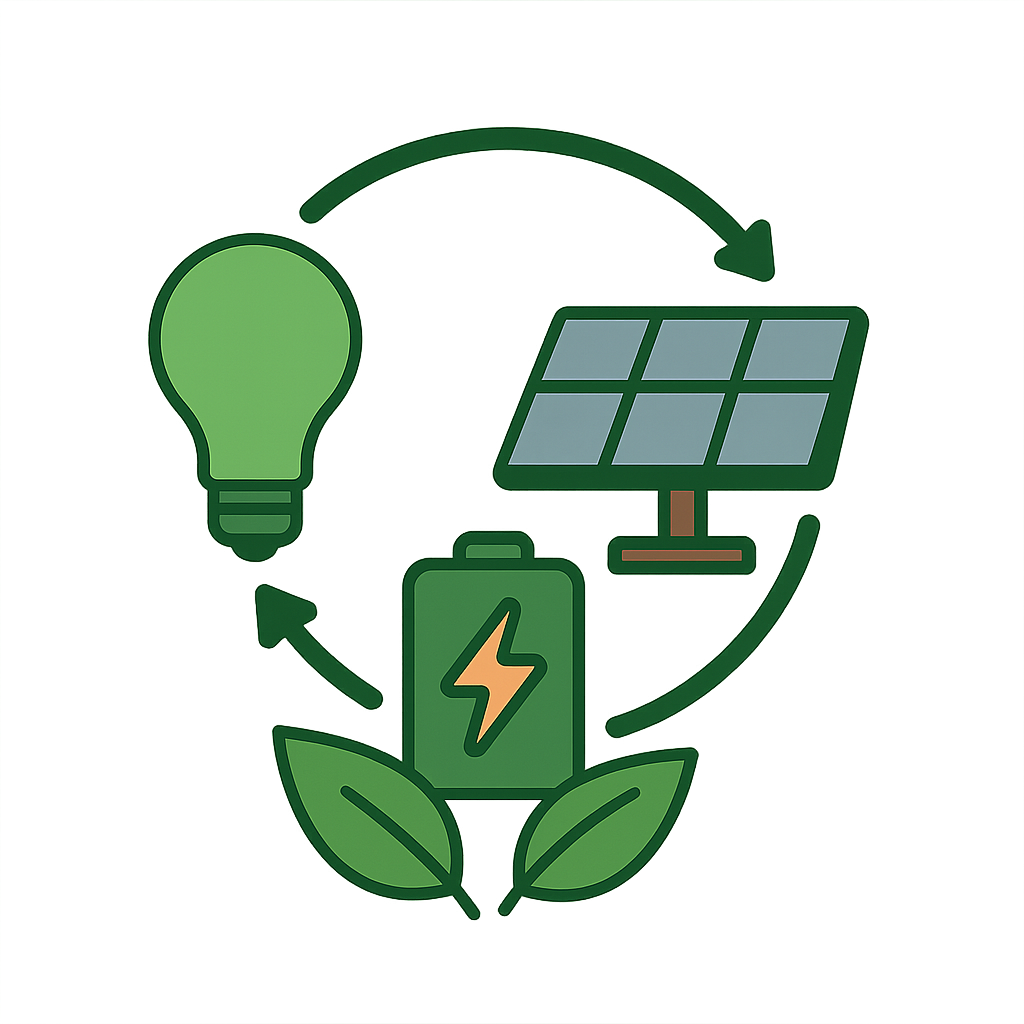
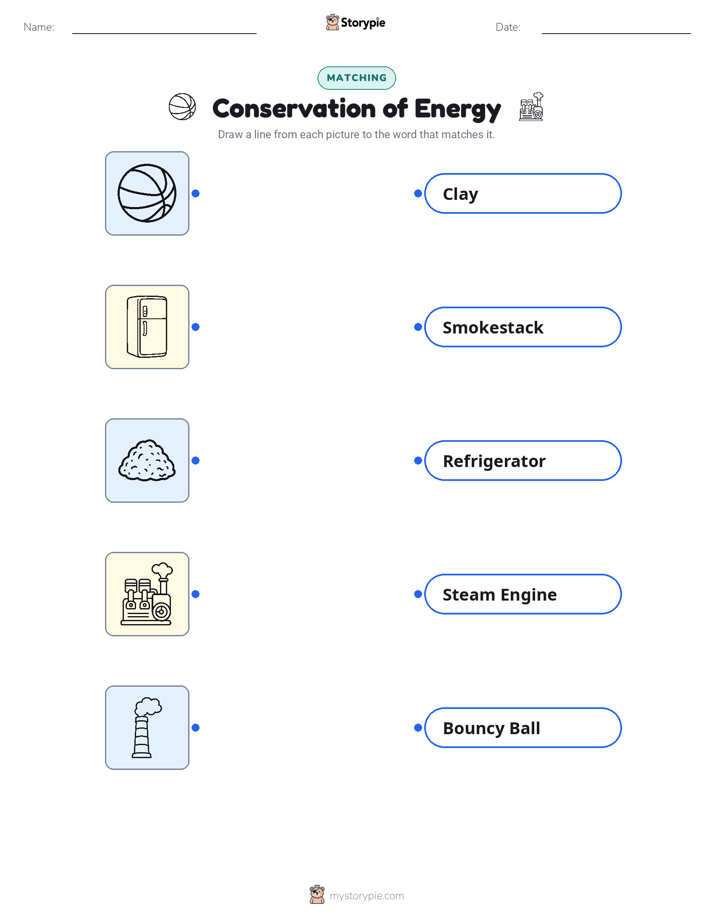
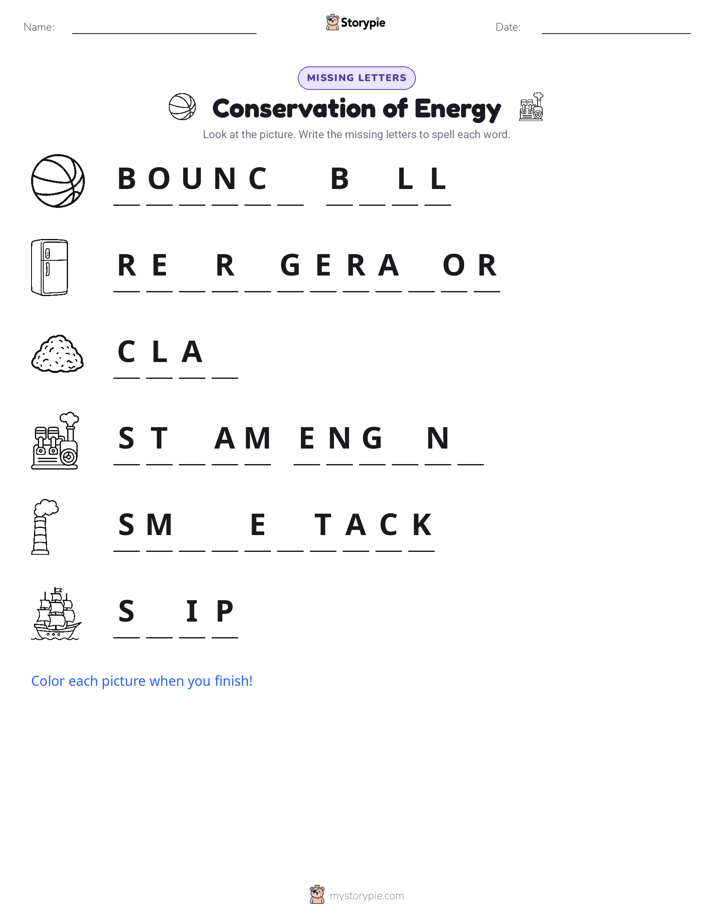
Have you ever dropped a bouncy ball and watched it spring back up, but never quite as high as where it started? Have you ever rubbed your hands together on a cold day and felt them grow warm? Or have you heard the quiet, constant hum of a refrigerator working to keep food cold, feeling the warm air it pushes out from its back? In each of these moments, you were watching me, even if you didn't know my name. A little bit of the ball's bounce energy became sound and heat. The motion of your hands transformed into warmth. The refrigerator used electrical energy to move heat from the inside to the outside. The energy never just vanished. It simply changed its clothes, slipping into a new disguise. That is my secret, the fundamental rule I enforce throughout the entire universe, from the tiniest atom to the largest galaxy. I am the Law of Conservation of Energy. My one, unbreakable principle is this: energy can never be created from nothing, nor can it ever be truly destroyed. It can only be transformed from one type into another, passed along like a baton in an endless relay race.
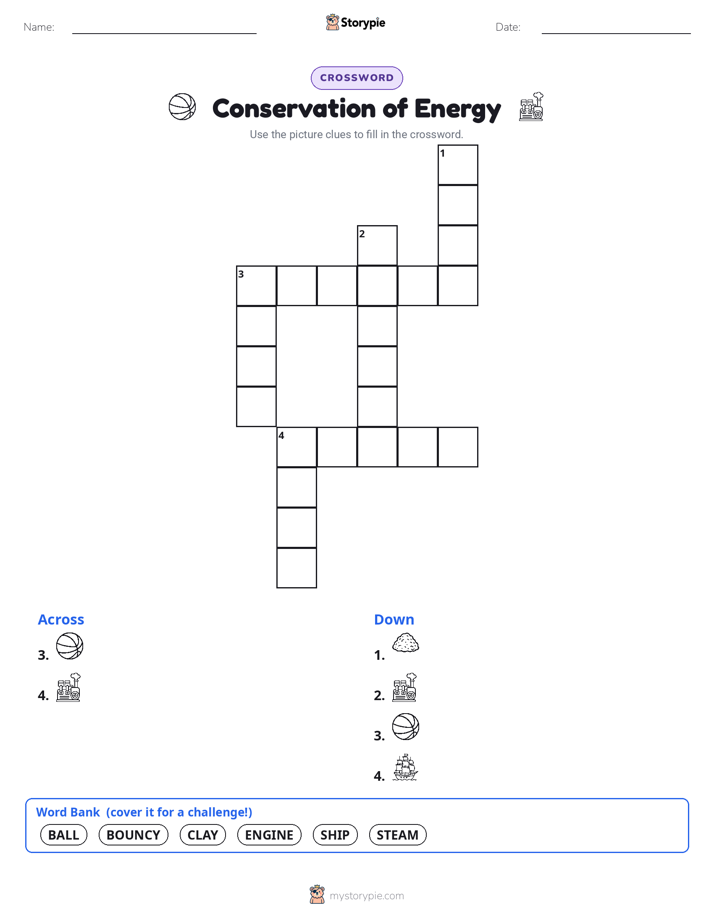
For thousands of years, people saw my work everywhere but couldn't quite put their finger on the rule behind it all. They built machines, lit fires, and watched things move, but the idea that a single, unchangeable quantity was behind it all remained a mystery. In the late 17th century, a brilliant German thinker named Gottfried Wilhelm Leibniz got close. He talked about a “vis viva,” or “living force,” that he believed was conserved in moving objects. It was a powerful glimmer of the truth, a key piece of the puzzle. But the picture wasn't complete. Then, in the 1740s, an amazing French scientist and philosopher named Émilie du Châtelet took a giant leap forward. She wasn't content to just accept the ideas of famous men like Isaac Newton. She translated his work, but she also tested it, questioned it, and improved upon it. She conducted experiments, including dropping lead balls into clay, and realized that an object's energy was related to its mass and the square of its speed. This crucial insight helped her argue that the total amount of my energy was always conserved. She helped clarify the difference between potential energy, which is stored and ready to be used, and kinetic energy, the energy of motion. She was building the very foundation for understanding my true nature.
The Universe's Unbreakable Rule
Have you ever dropped a bouncy ball and watched it spring back up, but never quite as high as where it started? Have you ever rubbed your hands together on a cold day and felt them grow warm? Or have you heard the quiet, constant hum of a refrigerator working to keep food cold, feeling the warm air it pushes out from its back? In each of these moments, you were watching me, even if you didn't know my name. A little bit of the ball's bounce energy became sound and heat. The motion of your hands transformed into warmth. The refrigerator used electrical energy to move heat from the inside to the outside. The energy never just vanished. It simply changed its clothes, slipping into a new disguise. That is my secret, the fundamental rule I enforce throughout the entire universe, from the tiniest atom to the largest galaxy. I am the Law of Conservation of Energy. My one, unbreakable principle is this: energy can never be created from nothing, nor can it ever be truly destroyed. It can only be transformed from one type into another, passed along like a baton in an endless relay race.
For thousands of years, people saw my work everywhere but couldn't quite put their finger on the rule behind it all. They built machines, lit fires, and watched things move, but the idea that a single, unchangeable quantity was behind it all remained a mystery. In the late 17th century, a brilliant German thinker named Gottfried Wilhelm Leibniz got close. He talked about a “vis viva,” or “living force,” that he believed was conserved in moving objects. It was a powerful glimmer of the truth, a key piece of the puzzle. But the picture wasn't complete. Then, in the 1740s, an amazing French scientist and philosopher named Émilie du Châtelet took a giant leap forward. She wasn't content to just accept the ideas of famous men like Isaac Newton. She translated his work, but she also tested it, questioned it, and improved upon it. She conducted experiments, including dropping lead balls into clay, and realized that an object's energy was related to its mass and the square of its speed. This crucial insight helped her argue that the total amount of my energy was always conserved. She helped clarify the difference between potential energy, which is stored and ready to be used, and kinetic energy, the energy of motion. She was building the very foundation for understanding my true nature.
My big reveal, however, came during the 1840s, a time of clanking steam engines and billowing smokestacks. The Industrial Revolution was in full swing, and understanding heat, power, and work was the most urgent scientific quest of the age. It was like a great race between curious minds scattered across Europe, each finding a different clue. In 1842, a German doctor named Julius Robert von Mayer, working on a ship in the tropics, made a strange observation. He noticed that the sailors' blood was a brighter red than it was in colder climates. He reasoned that their bodies didn't need to burn as much energy to stay warm, which meant there had to be a direct link between heat and the work done by the body. He was the first to suggest a numerical value for this connection, the mechanical equivalent of heat. Meanwhile, in England, a meticulous brewer and physicist named James Prescott Joule was determined to prove my existence with pure, undeniable numbers. Starting in 1843, he performed a series of brilliant experiments. In his most famous one, he used falling weights to turn a paddle wheel inside a sealed container of water. With extreme precision, he measured how the mechanical work of the falling weights caused a tiny but consistent increase in the water's temperature. He proved, beyond any doubt, that a specific amount of work always produced a specific amount of heat. The final piece of the puzzle was placed by the German scientist Hermann von Helmholtz. In a landmark paper in 1847, he connected all the dots. He took the work of Mayer, Joule, and others and showed that I wasn't just about motion and heat. I was a universal law that governed everything: motion, heat, light, electricity, and magnetism were all just different faces of the same conserved quantity. I had finally been understood.
Today, you and I are partners in everything you do. When you eat breakfast, your body transforms the chemical energy stored in the food into the kinetic energy you use to run and play, and the thermal energy that keeps you warm. The electricity that powers your home is me in another form, converted at a power plant from the chemical energy in fuel, the kinetic energy of wind, or the radiant energy from the sun. Think of me as the universe’s ultimate recycler. The total amount of energy that exists has been the same since the beginning of time and will be the same forever. It just keeps moving around and changing its appearance. This knowledge is one of humanity’s greatest tools. Understanding my unbreakable rule allows scientists and engineers to design more efficient cars, create powerful batteries, and develop clean energy sources. By learning how to cleverly guide my transformations—from sunlight into electricity with a solar panel, or from wind into motion with a turbine—we can power our world in smarter, more sustainable ways. I am a constant, a promise that nothing is ever truly lost, only changed, waiting to be used in a new and brilliant way.
Wow facts
About
The fundamental principle of physics stating that the total energy of an isolated system remains constant; it can be transformed from one form to another, but cannot be created or destroyed.
Take a Quiz
Question 1 of 5
What is the main idea of this story?
Want to do even more?
Go beyond exploring. Unlock tools that turn every story into real learning.

Storypie Plus for families
Full stories, quizzes, and printables. Nights and car rides, sorted.
- Unlimited audio stories
- Create Mode: your child stars in the story
- Offline downloads
- Printable worksheets & coloring pages

Why Storypie for Schools
Students engaged. Prep in seconds. Evenings back to you.
- Worksheets & Quizzes
- Classroom Management
- Formative Assessment
- Custom Curriculum & Lesson Plans
- 27 Languages

Why Storypie for Homeschool
Curriculum done. They'll ask for more. Hours back in your day.
- Worksheet Generator
- First-Person Audio Stories
- Built-in Comprehension Quizzes
- Custom Curriculum & Lesson Plans
- Print & Go Activities