English

Deforestation
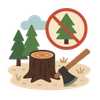
Deforestation is the clearing of forests to make room for something besides trees…
Reads at Grades 6–8 Listens at Grades 4–8
Print & create
Answer keys·No prep·Free with an account
28 worksheets · answer keys · full story · quiz · Ages 10-12 · CEFR B2
Plus adds 102,000+ more stories in 27 languages, audio for every one, and printables for all of them.
Just want Deforestation?
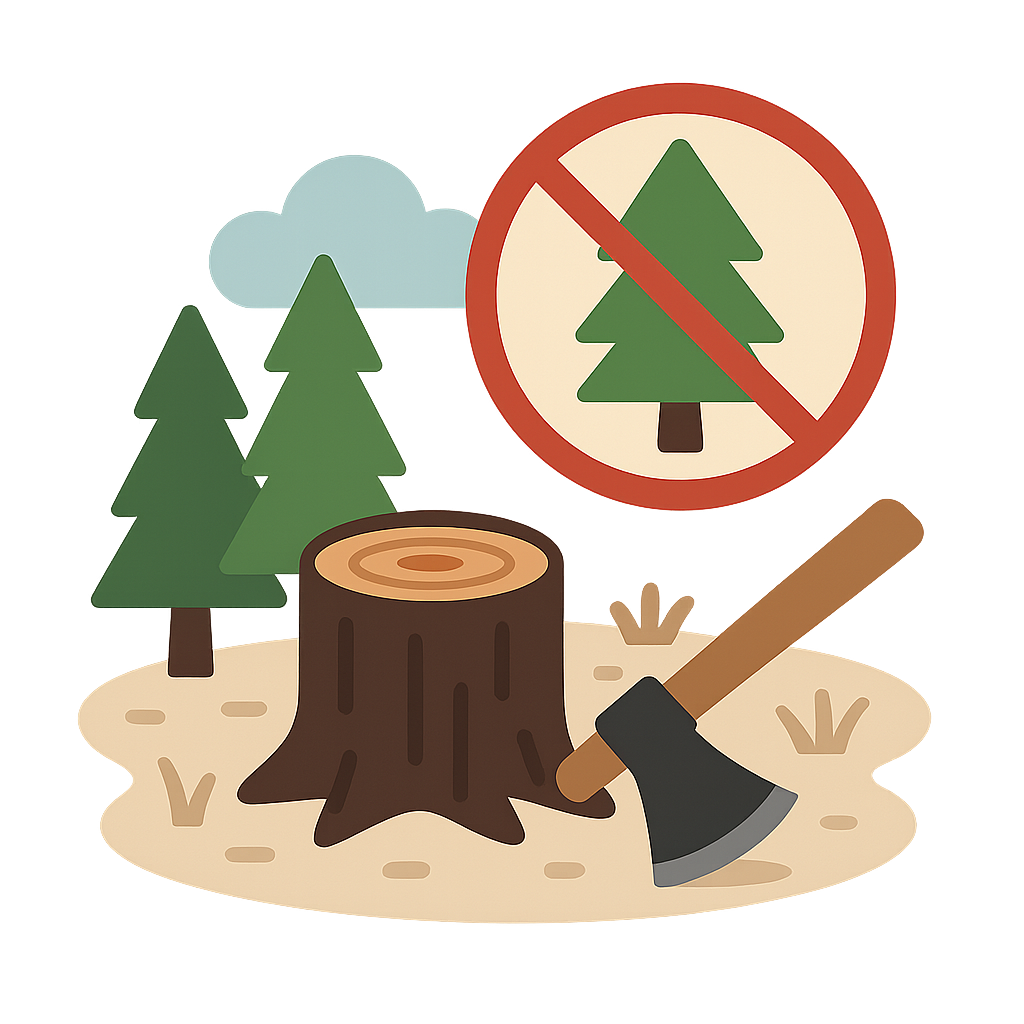
Have you ever stood in a quiet place where a great noise used to be. Imagine a forest, so thick with ancient trees that the sunlight dapples on the ground like scattered coins. For centuries, the only sounds were the rustle of leaves, the chatter of unseen animals, and the gentle hum of life. Then comes a new sound, a sharp crack that echoes for miles, followed by a tremendous crash that shakes the very earth. It is the sound of a giant falling. Soon, the buzz of machinery joins in, a relentless drone that fills the air. And then, one day, it stops. A profound silence descends, a quiet so vast and empty it feels louder than the noise that came before it. Sunlight now floods the bare ground, warming soil that hasn't felt its direct touch in a thousand years. I am that change. I am the sudden quiet, the wide-open space where a bustling, shaded kingdom once stood. I am the story of what happens when the trees are gone.
I am Deforestation. It is a heavy name, and today it carries a great weight of concern. But I was not born a villain. My story is as old as human ingenuity itself, a process that began when people first learned to shape the world to meet their needs. My earliest traces can be found around 10,000 BCE, during what historians call the Neolithic Revolution. The very first farmers discovered they could grow their own food, but to do so, they needed sunlight and open ground. They carefully cleared small patches of forest, making room for the first precious crops that would feed their families and allow their small communities to grow. As civilizations blossomed, so did I. The ancient Romans, beginning around 500 BCE, were masters of engineering and expansion. To build their magnificent cities, their powerful fleets of ships, and to fuel the fires of their forges and homes, they cleared enormous tracts of forest across Europe and North Africa. In those days, I was seen as a symbol of humanity’s triumph over wilderness, a sign of progress and the spread of civilization.
The Story of Deforestation
Have you ever stood in a quiet place where a great noise used to be. Imagine a forest, so thick with ancient trees that the sunlight dapples on the ground like scattered coins. For centuries, the only sounds were the rustle of leaves, the chatter of unseen animals, and the gentle hum of life. Then comes a new sound, a sharp crack that echoes for miles, followed by a tremendous crash that shakes the very earth. It is the sound of a giant falling. Soon, the buzz of machinery joins in, a relentless drone that fills the air. And then, one day, it stops. A profound silence descends, a quiet so vast and empty it feels louder than the noise that came before it. Sunlight now floods the bare ground, warming soil that hasn't felt its direct touch in a thousand years. I am that change. I am the sudden quiet, the wide-open space where a bustling, shaded kingdom once stood. I am the story of what happens when the trees are gone.
I am Deforestation. It is a heavy name, and today it carries a great weight of concern. But I was not born a villain. My story is as old as human ingenuity itself, a process that began when people first learned to shape the world to meet their needs. My earliest traces can be found around 10,000 BCE, during what historians call the Neolithic Revolution. The very first farmers discovered they could grow their own food, but to do so, they needed sunlight and open ground. They carefully cleared small patches of forest, making room for the first precious crops that would feed their families and allow their small communities to grow. As civilizations blossomed, so did I. The ancient Romans, beginning around 500 BCE, were masters of engineering and expansion. To build their magnificent cities, their powerful fleets of ships, and to fuel the fires of their forges and homes, they cleared enormous tracts of forest across Europe and North Africa. In those days, I was seen as a symbol of humanity’s triumph over wilderness, a sign of progress and the spread of civilization.
For thousands of years, my pace was slow and steady, but then came a time when the world seemed to shrink and speed up all at once. It began during the Age of Exploration in the 15th century. As European ships crossed vast oceans and arrived in the Americas, they found continents covered in forests unlike any they had ever seen. They also found opportunities. To satisfy a growing demand back home for valuable goods, they cleared massive areas to create plantations for sugar, tobacco, and cotton. My reach expanded across the globe. Then, the Industrial Revolution of the 18th and 19th centuries ignited a new and insatiable hunger for resources. The world was in a hurry. New steam engines needed coal and wood to burn, thousands of miles of railways required timber for their tracks, and booming cities were built from the skeletons of forests. The need for food for these growing urban populations meant that even more land was cleared for farming. I was no longer just a small clearing for a village; I was a vast operation, pushing deeper into the world’s ancient woods at a speed never before imagined.
In the 20th century, my speed became breathtaking. With powerful new technologies, humans could clear more land in a single day than ancient farmers could in a lifetime. My presence became most dramatic in the world's lush tropical rainforests, like the incredible Amazon. The reasons for my expansion changed, too. It was no longer just about timber for building; it was about creating enormous spaces for large-scale agriculture. Vast areas were cleared for cattle ranching to produce beef, for immense fields of soybeans to feed livestock, and for sprawling plantations of palm oil trees used in countless products. But as I grew at this frantic pace, a new understanding began to dawn. People started to notice the consequences. They saw that animals were losing their homes, leading some species to the brink of extinction. Scientists began to understand the vital role forests play in regulating the Earth's climate and how my expansion was connected to a warming planet. This realization sparked a great awakening. On April 22nd, 1970, the first Earth Day was celebrated, a global event to raise awareness about the environment. Then, at the Earth Summit in Rio de Janeiro in 1992, leaders from all over the world gathered to discuss my impact and to find ways to protect the planet’s remaining forests.
But my story is not an ending. I, Deforestation, am a process that humans started, and they also have the power to guide my future. As people have learned about the problems I can cause, they have also discovered solutions. They are planting millions of new trees in a hopeful process called reforestation, bringing green life back to barren lands. They are creating protected areas, setting aside precious forests as national parks where nature can thrive undisturbed—an idea that got a major start in the United States with the creation of Yellowstone National Park on March 1st, 1872. And there have been heroes, like the Kenyan activist Wangari Maathai, who showed the world that even small communities, by planting trees together, could bring entire forests back to life. Understanding my long and complicated history is not about placing blame. It is about gaining wisdom. It gives you the power to make thoughtful choices and to be part of a new story, one of balance, where both humanity and the world's beautiful forests can flourish together for centuries to come.
Wow facts
About
Deforestation is the clearing of forests to make room for something besides trees, such as clearing land for farming or grazing, or using the wood for fuel, building, or making things.
Take a Quiz
Question 1 of 5
In your own words, describe the main stages of Deforestation's story as told in the narrative.
Explore next




Want to do even more?
Go beyond exploring. Unlock tools that turn every story into real learning.

Storypie Plus for families
Full stories, quizzes, and printables. Nights and car rides, sorted.
- Unlimited audio stories
- Create Mode: your child stars in the story
- Offline downloads
- Printable worksheets & coloring pages

Why Storypie for Schools
Students engaged. Prep in seconds. Evenings back to you.
- Worksheets & Quizzes
- Classroom Management
- Formative Assessment
- Custom Curriculum & Lesson Plans
- 27 Languages

Why Storypie for Homeschool
Curriculum done. They'll ask for more. Hours back in your day.
- Worksheet Generator
- First-Person Audio Stories
- Built-in Comprehension Quizzes
- Custom Curriculum & Lesson Plans
- Print & Go Activities