English

Granite
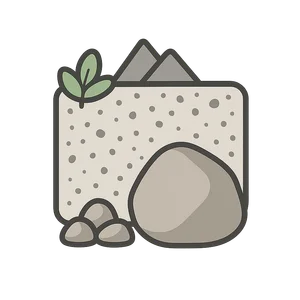
Granite is a common type of igneous rock formed from the slow cooling of magma.
Reads at Grades 3–5 Listens at Grades 1–5
Print & create
Answer keys·No prep·Free with an account
28 worksheets · answer keys · full story · quiz · Ages 8-10 · CEFR B1
Plus adds 244,000+ more stories in 27 languages, audio for every one, and printables for all of them.
Just want Granite?
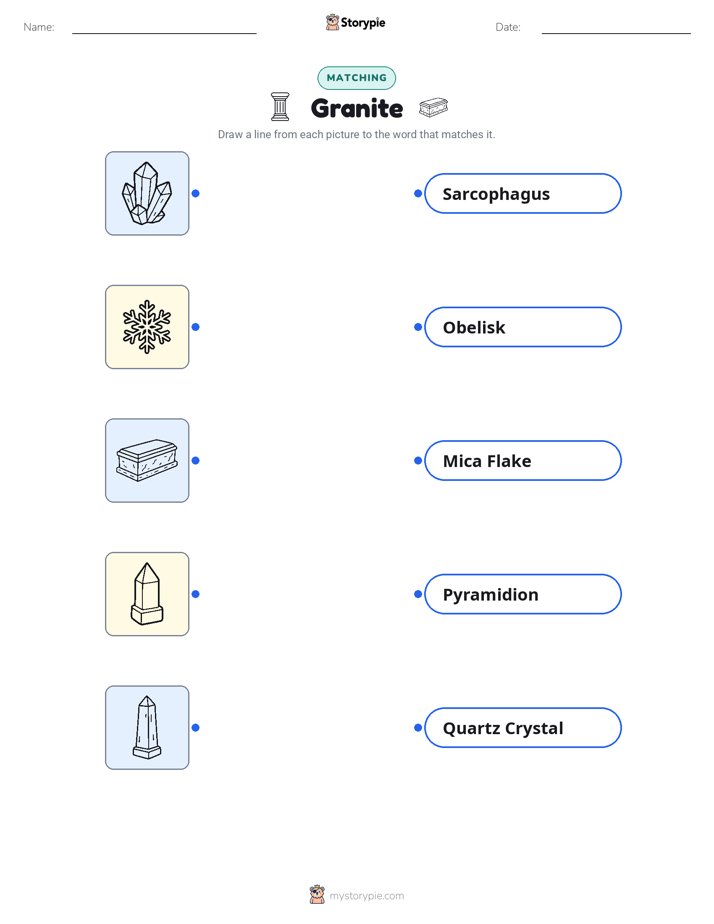
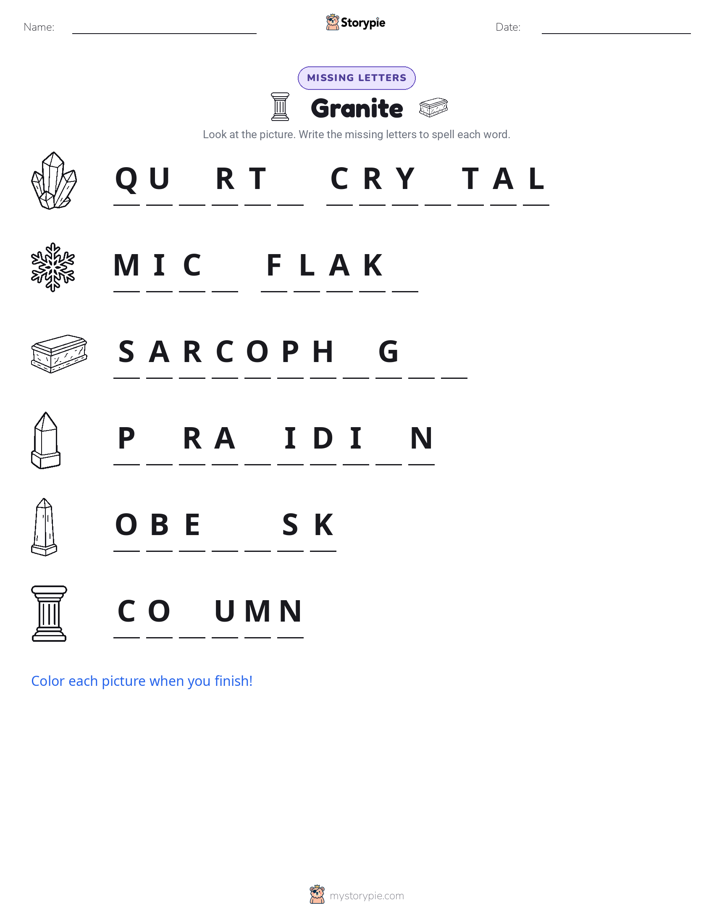
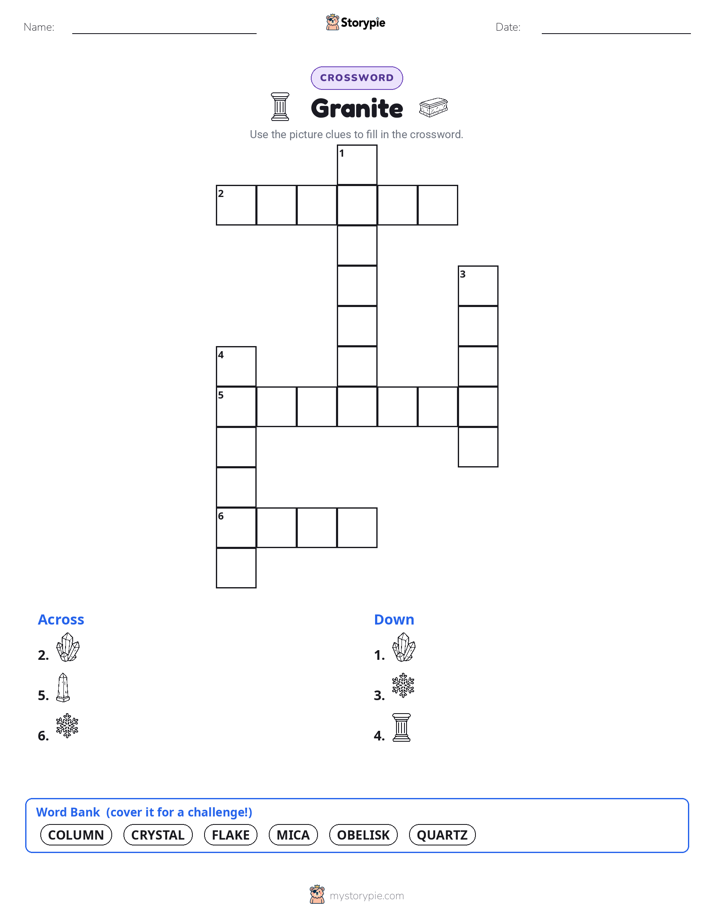
Have you ever run your hand over a cool, smooth stone that glitters with tiny, shiny specks. Or maybe you’ve seen a big, strong building that looks like it’s made of salt and pepper. That might be me. I’m not just one thing; I’m a team of minerals all squished together. I have sparkly quartz, which can be clear like glass, feldspar that’s often pink or white, and dark little flakes of mica. I was born deep inside the Earth, where it was so hot that rocks melted into a fiery soup called magma. I am what happened when that magma cooled down very, very, *very* slowly over millions of years, giving my mineral crystals plenty of time to grow. This slow birth gave me my superpower: I am incredibly strong and tough. You can call me Granite.
For a long, long time, I rested deep underground. But as mountains rose and rain and wind wore them down, I was finally revealed to the world. People who lived in ancient Egypt, more than 4,500 years ago, were some of the first to discover my strength. Around 2600 BCE, they used huge blocks of me to build the burial chambers deep inside pyramids, like the Red Pyramid of Dahshur. They knew I could hold up the weight of a whole mountain of stone. They also carved me into towering, pointed monuments called obelisks, which they polished until I shone in the sun. On the other side of the world, in ancient India, builders of the Chola Dynasty around the 11th century CE carved entire magnificent temples from my body. In the Roman Empire, people used me for the mighty columns of their temples and for paving stones on their famous roads. For centuries, I was very hard to work with. It took a lot of patience and skill to cut and shape me, so I was saved for the most important projects.
The Story of Granite
Have you ever run your hand over a cool, smooth stone that glitters with tiny, shiny specks. Or maybe you’ve seen a big, strong building that looks like it’s made of salt and pepper. That might be me. I’m not just one thing; I’m a team of minerals all squished together. I have sparkly quartz, which can be clear like glass, feldspar that’s often pink or white, and dark little flakes of mica. I was born deep inside the Earth, where it was so hot that rocks melted into a fiery soup called magma. I am what happened when that magma cooled down very, very, very slowly over millions of years, giving my mineral crystals plenty of time to grow. This slow birth gave me my superpower: I am incredibly strong and tough. You can call me Granite.
For a long, long time, I rested deep underground. But as mountains rose and rain and wind wore them down, I was finally revealed to the world. People who lived in ancient Egypt, more than 4,500 years ago, were some of the first to discover my strength. Around 2600 BCE, they used huge blocks of me to build the burial chambers deep inside pyramids, like the Red Pyramid of Dahshur. They knew I could hold up the weight of a whole mountain of stone. They also carved me into towering, pointed monuments called obelisks, which they polished until I shone in the sun. On the other side of the world, in ancient India, builders of the Chola Dynasty around the 11th century CE carved entire magnificent temples from my body. In the Roman Empire, people used me for the mighty columns of their temples and for paving stones on their famous roads. For centuries, I was very hard to work with. It took a lot of patience and skill to cut and shape me, so I was saved for the most important projects.
For a long time, only kings and pharaohs could use me for their grandest projects. But then, in the 1830s, people invented powerful new steam-powered tools that could cut and polish me much more easily. Suddenly, I wasn't just for pyramids anymore. Cities started using me for important buildings, bridges, and sidewalks. The city of Aberdeen in Scotland used me so much that it became known as 'The Granite City.' In the United States, I became the stone of choice for remembering heroes. Between October 4th, 1927, and October 31st, 1941, sculptors carved the giant faces of four presidents into a mountain of me in South Dakota. That famous monument, Mount Rushmore, is still there today because I am so good at standing up to wind, rain, and snow.
Today, you can find me in all sorts of places, maybe even your own home. I might be the shiny, speckled countertop in your kitchen or the smooth, cool tiles on a floor. I am still used for the outside of important buildings that need to look beautiful and last for centuries. I am a piece of the Earth’s ancient history, a reminder of the slow, powerful forces that shape our planet. When you see my sparkly, strong surface, remember that some of the most beautiful and enduring things in the world take a very long time, and a lot of pressure, to create. I am proof that strength and beauty can last for ages.
Wow facts
About
Granite is a common type of igneous rock formed from the slow cooling of magma. Known for its hardness and durability, it has been used for thousands of years in construction, monuments, and decoration.
Take a Quiz
Question 1 of 5
Why was Granite saved for only the most important projects in ancient times?
Explore next




Want to do even more?
Go beyond exploring. Unlock tools that turn every story into real learning.

Storypie Plus for families
Full stories, quizzes, and printables. Nights and car rides, sorted.
- Unlimited audio stories
- Create Mode: your child stars in the story
- Offline downloads
- Printable worksheets & coloring pages

Why Storypie for Schools
Students engaged. Prep in seconds. Evenings back to you.
- Worksheets & Quizzes
- Classroom Management
- Formative Assessment
- Custom Curriculum & Lesson Plans
- 27 Languages

Why Storypie for Homeschool
Curriculum done. They'll ask for more. Hours back in your day.
- Worksheet Generator
- First-Person Audio Stories
- Built-in Comprehension Quizzes
- Custom Curriculum & Lesson Plans
- Print & Go Activities