English

How a Seed Grows
A first-person narrative explaining the process of seed germination and how human understanding of…
Reads at Grades 3–5 Listens at Grades 1–5
Print & create
Answer keys·No prep·Free with an account
28 worksheets · answer keys · full story · quiz · Ages 8-10 · CEFR B1
Plus adds 244,000+ more stories in 27 languages, audio for every one, and printables for all of them.
Just want How a Seed Grows?
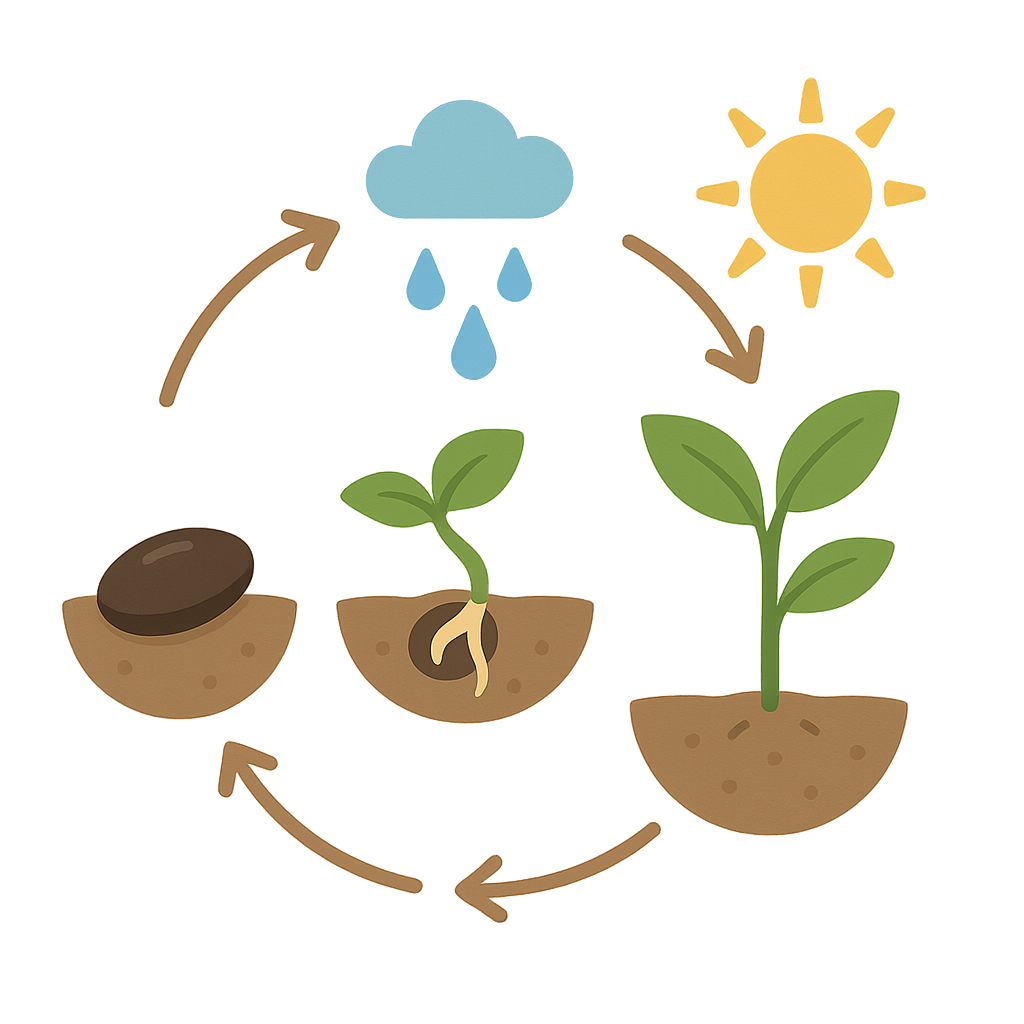
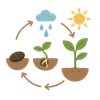
I am a secret, a promise of something big wrapped in a tiny package. I might look like a brown speck, a striped shell, or a wrinkly little pebble, but I hold a whole world of potential inside me. I wait patiently in the dark, cool earth for just the right moment. Can you imagine waiting for weeks or even months for the perfect signal. I listen for the pitter-patter of rain and feel for the warmth of a spring sunbeam. When the time is right, my great adventure begins. I drink up the water, and something inside me wakes up. I wiggle and stretch, breaking free from my tough outer coat. A tiny root pushes down, anchoring me in the soil, and a little green sprout pushes up, up, up toward the light. I am the magic that turns a tiny, sleeping thing into a giant sunflower that dances in the wind, or a strong oak tree that stands for a hundred years, or a vine that grows juicy red tomatoes. I am the amazing journey of how a seed grows, and my story is the story of life itself, a cycle of waiting, growing, and starting all over again.
For a very, very long time, people didn't plant me on purpose. They were nomads, wanderers who moved from place to place, gathering the berries, nuts, and grains that my parent plants made. Their lives depended on finding me in the wild. But way back, around 10,000 BCE, during a special time of change called the Neolithic Revolution, humans had a brilliant idea that changed the world forever. They noticed that if they dropped me in the ground in a good spot, a new plant would appear right where they left me. This was an amazing discovery. Instead of spending all their time wandering for food, people could stay in one place and grow their own. This is how the very first farms and villages started. People learned to work together, clearing land and watering the soil to take care of me. It was the beginning of a whole new way of life. Great civilizations were built on this idea. The Ancient Egyptians, around 3,000 BCE, became expert farmers. They built their lives around the great Nile River. They knew that when the river flooded each year, it left behind rich, dark soil that was perfect for me to grow strong. They depended on me for the wheat to make their bread and the barley for their drinks. A few thousand years later, a curious man in Ancient Greece named Theophrastus, who lived between 371 BCE and 287 BCE, became one of the first people to study me like a scientist. He wasn’t just a farmer; he was a thinker. He watched me, wrote down what he saw, and tried to understand all my secrets. He wrote whole books about plants, carefully describing how I work and giving names to all my different parts, from my tough outer coat to the tiny plant sleeping inside. He was one of the first true botanists, someone who truly appreciated the science behind my magic.
The Story of a Seed
I am a secret, a promise of something big wrapped in a tiny package. I might look like a brown speck, a striped shell, or a wrinkly little pebble, but I hold a whole world of potential inside me. I wait patiently in the dark, cool earth for just the right moment. Can you imagine waiting for weeks or even months for the perfect signal. I listen for the pitter-patter of rain and feel for the warmth of a spring sunbeam. When the time is right, my great adventure begins. I drink up the water, and something inside me wakes up. I wiggle and stretch, breaking free from my tough outer coat. A tiny root pushes down, anchoring me in the soil, and a little green sprout pushes up, up, up toward the light. I am the magic that turns a tiny, sleeping thing into a giant sunflower that dances in the wind, or a strong oak tree that stands for a hundred years, or a vine that grows juicy red tomatoes. I am the amazing journey of how a seed grows, and my story is the story of life itself, a cycle of waiting, growing, and starting all over again.
For a very, very long time, people didn't plant me on purpose. They were nomads, wanderers who moved from place to place, gathering the berries, nuts, and grains that my parent plants made. Their lives depended on finding me in the wild. But way back, around 10,000 BCE, during a special time of change called the Neolithic Revolution, humans had a brilliant idea that changed the world forever. They noticed that if they dropped me in the ground in a good spot, a new plant would appear right where they left me. This was an amazing discovery. Instead of spending all their time wandering for food, people could stay in one place and grow their own. This is how the very first farms and villages started. People learned to work together, clearing land and watering the soil to take care of me. It was the beginning of a whole new way of life. Great civilizations were built on this idea. The Ancient Egyptians, around 3,000 BCE, became expert farmers. They built their lives around the great Nile River. They knew that when the river flooded each year, it left behind rich, dark soil that was perfect for me to grow strong. They depended on me for the wheat to make their bread and the barley for their drinks. A few thousand years later, a curious man in Ancient Greece named Theophrastus, who lived between 371 BCE and 287 BCE, became one of the first people to study me like a scientist. He wasn’t just a farmer; he was a thinker. He watched me, wrote down what he saw, and tried to understand all my secrets. He wrote whole books about plants, carefully describing how I work and giving names to all my different parts, from my tough outer coat to the tiny plant sleeping inside. He was one of the first true botanists, someone who truly appreciated the science behind my magic.
For many centuries, people knew that I worked, but they couldn't see exactly how. My insides were a complete mystery, a tiny black box of miracles. Then, around the year 1590, a wonderful invention called the microscope came along. It was like giving people superhero eyes that could see into worlds they never knew existed. Suddenly, they could peek inside my tiny shell. For the very first time, scientists could see the little plant, called an embryo, curled up inside me, just waiting for the right moment to wake up. They could also see the special food I had stored up, like a packed lunch, to help me get started on my journey. It was incredible. Much later, in the 1860s, a quiet and patient monk named Gregor Mendel did some amazing detective work in his monastery garden. He was very observant, and he loved patterns. He carefully watched thousands and thousands of pea plants, tracking everything about them from their height to the color of their flowers. He realized that I carry a secret code, a set of instructions passed down from my parent plants. This code, which we now call genetics, decides everything about the new plant. He discovered the rulebook that I follow every single time I grow, showing that my magic wasn't random at all, but followed a clear and beautiful pattern of inheritance.
Today, understanding my journey from a tiny speck to a full-grown plant is more important than ever. Farmers use the knowledge that people like Theophrastus and Gregor Mendel discovered to grow enough food to feed billions of people all over the world. Scientists study my secret genetic code to help plants grow stronger and healthier, so they can survive in tough places with very little water or too much heat. And you. You can see me in action every day. Have you ever planted a bean in a cup on your windowsill and watched me sprout, pushing my way into the world. Or have you helped in a garden and seen me slowly turn into crunchy carrots or sweet strawberries. I am a tiny miracle that proves how something very small can grow into something wonderful and strong. I am a reminder that every big thing in the world, every tall tree, every field of golden wheat, and every great idea, starts with a single, hopeful seed.
Wow facts
About
A first-person narrative explaining the process of seed germination and how human understanding of agriculture and botany developed over time, from early farming to modern genetics.
Take a Quiz
Question 1 of 5
According to the story, what major change happened in human life during the Neolithic Revolution around 10,000 BCE?
Explore next



Want to do even more?
Go beyond exploring. Unlock tools that turn every story into real learning.

Storypie Plus for families
Full stories, quizzes, and printables. Nights and car rides, sorted.
- Unlimited audio stories
- Create Mode: your child stars in the story
- Offline downloads
- Printable worksheets & coloring pages

Why Storypie for Schools
Students engaged. Prep in seconds. Evenings back to you.
- Worksheets & Quizzes
- Classroom Management
- Formative Assessment
- Custom Curriculum & Lesson Plans
- 27 Languages

Why Storypie for Homeschool
Curriculum done. They'll ask for more. Hours back in your day.
- Worksheet Generator
- First-Person Audio Stories
- Built-in Comprehension Quizzes
- Custom Curriculum & Lesson Plans
- Print & Go Activities